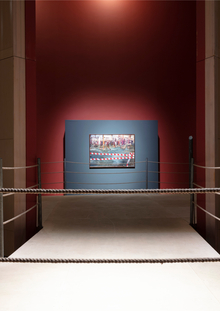
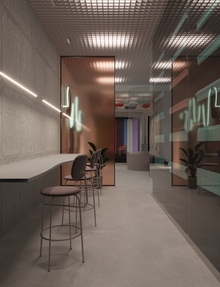
In 2003—twenty years ago—the completely lost Amber Room, destroyed during the Second World War, was reconstructed. Fossilized tree resin, which originated on the shores of the Baltic Sea, became a symbol of friendship and diplomatic relations between two major states. An allusion to this phenomenon is presented in an exhibition in the pre-dawn Portrait Hall of the Catherine Palace.


The room—a 100-square-meter cabinet of sorts—a work of art unique in its very nature, was recreated from the ground up by a young team of restorers under the direction of architect Alexander Kedrinsky. It is difficult for the modern viewer to imagine that the restoration project was based on only a few black-and-white photographs, watercolor paintings, and a couple of dozen small fragments of the original decor.

During the exhibition, the Amber Room was filled with allusions and references to Kedrinsky’s workshop, designed to immerse the viewer in the reconstruction process that occupied nearly 30 years of two hundred and seventy craftsmen. Inseparable from the Amber Room was the royal Amber Workshop, which maintained the panels made of fragile and capricious material in proper condition.