The goal of this research is to examine the phenomenon of cultivating an informal aesthetic in the age of social media, the motivations behind this movement’s popularity among youth, and the reactions of both target and irrelevant audiences to alt-personas.
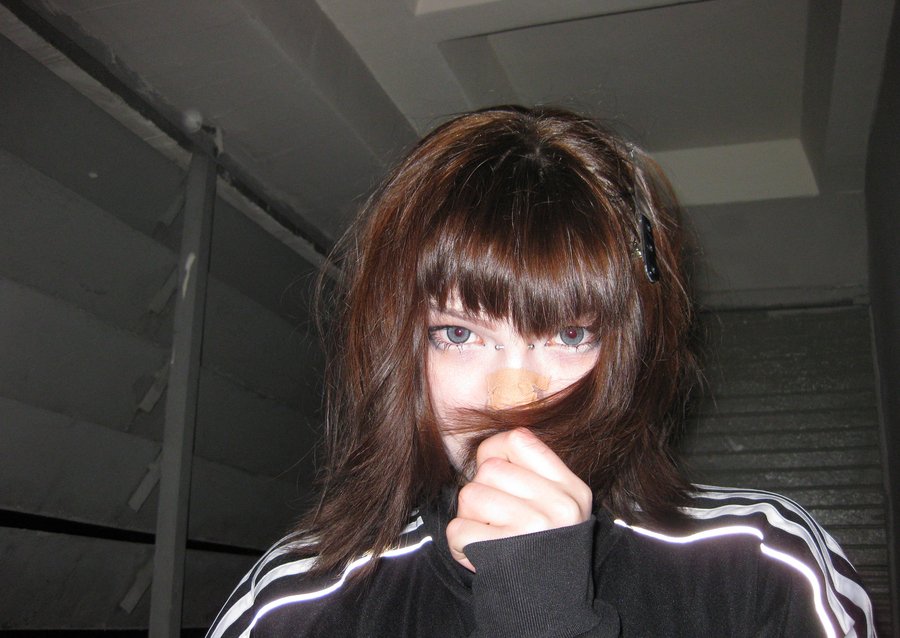
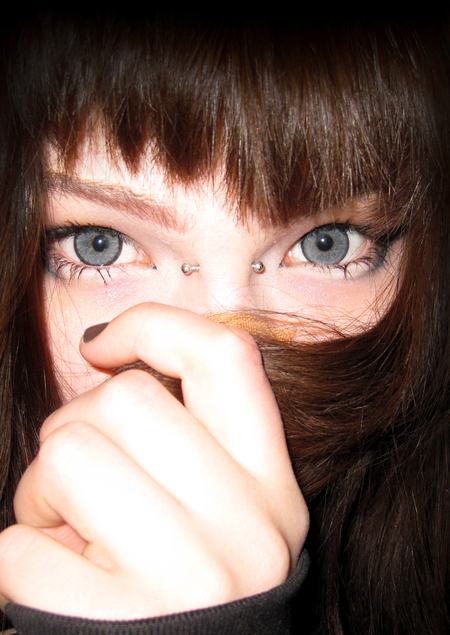
Photomaterials were created specifically to demonstrate canonical aesthetics within the visual research.
Table of Contents.1. «Hey, I’m your sudden desire to be an alt girl».2. «Dream of me naked, please»: What impact do alt personas have on society, and what reactions do they provoke?3. «Darling fringe, how much longer can you be straightened?»: The authoritarian-authoritarian generation.4. «Mom, buy me ears like an alt girl»: Cultivation in marketing.5. «Sorry for suffocating you. I was trying to flirt»: Conclusion.
«Hi, I’m your sudden urge to become an alt girl.»
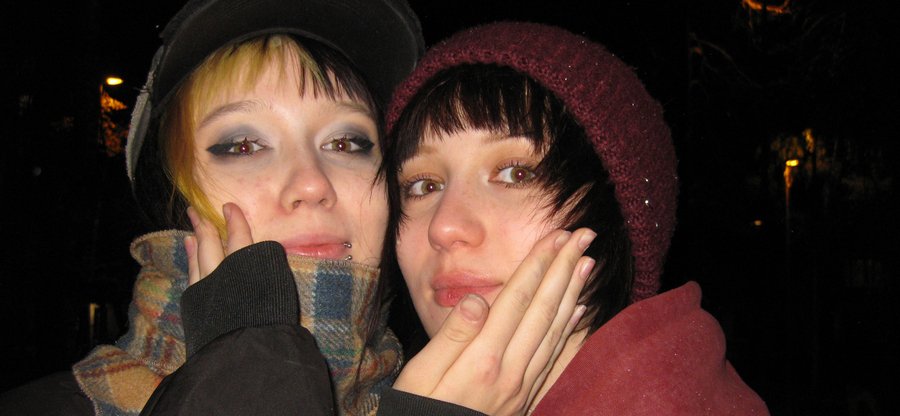
To begin, let’s define the term «alt, » upon which the descriptive concept of «alt girl» is based. In the internet vernacular, the designation is: «Alt is modern slang (from English alternative), designating an informal aesthetic, lifestyle, and corresponding subculture. An „alt persona“ or „alt girl“ is a representative of this movement.»In reality, as the movement developed within the cultural landscape, the word alt separated itself from the simple category of «nonconformists» and evolved into a distinct phenomenon. Simply put: all alt girls are nonconformists, but not all nonconformists are alt girls. Moreover, it moved away from ideological content, becoming, for the most part, a visual marker. But what are the characteristics of alt girls? It is difficult to name specific stylistic techniques used because a unique paradigm has formed over the movement’s history, allowing us to identify representatives of this archetype. However, at a minimum, it is not too difficult to recognize an alt girl by appearance. The article in RBC, «Who are alt girls and what do „State Services“ have to do with it?» provides this description: «Wardrobe oxymorons. Alt girls often mix incompatible items in their clothing—for example, pink Hello Kitty socks with black Dr. Martens high boots, which were long a characteristic trait of skinheads.» Meanwhile, the article on Lenta.ru, «Who are alt girls?», describes their traits as follows: «A girl might, for example, wear a short skirt, a huge hoodie, fishnet stockings, sneakers, and a headband with cat ears. And adorn all of this with multiple rings and chains. Among young men and women, dyeing hair black—or, conversely, in bright colors—is fashionable.»
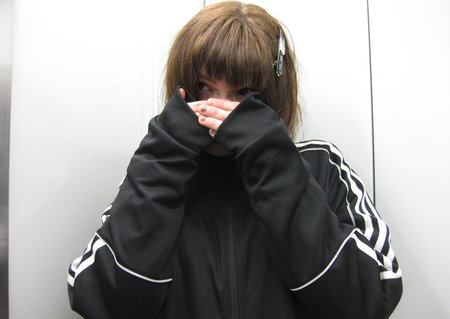
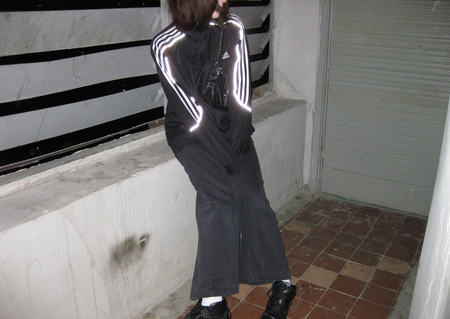
But any movement must be based on some ideological foundation; one outfit is not enough. In the case of alt subcultures, it is far more complex: what unites them is the reason behind their preference for that style.
To understand the motivations, we delve into Vygotsky’s periodization. If we consider adolescents as the subject of the stages of personality formation, we can observe that during the ages of 13–17, they experience puberty. Their attitude toward their place in society changes, and active separation from parental opinion begins. Standing out, experimenting with one’s appearance—these are components of this period. Furthermore, egocentrism (the «phenomenon of the imaginary audience”—the feeling of being constantly observed by everyone) dominates the perception of reality, leading to an interest in their own identity and expressing the message: „this is who I am.“ More precisely, it is not so much about the possibility of the statement itself, but about its distinct presentation.A striking image may also be a result of active brain development coupled with underdevelopment of the frontal cortex (critiques are sparse, but character and pretentiousness are abundant). The „reward system“ matures before the prefrontal cortex, making peer approval (especially within their social group) highly significant.What does this suggest? The primary task becomes not destroying the bastions of the social order, but letting society know about the aggregated state of one’s „self“?
A clearer picture emerges:
Altushka is an individual with a specific desire for a declaration of personal identity, expressed through external appearance and behavior, rather than ideological agenda.
We are accustomed to the idea that individuals who stand out from the crowd must demonstrate some form of protest against the world or challenge societal consensus. However, in reality, the desire to be «different from everyone else» in this context often leads only to pink hair and chunky boots. It becomes clear that this is her internal conflict, and everything mentioned above does not guarantee that an alt persona is predisposed to rebellious ideas. We shouldn’t expect individuals to be drawn to Satanism in the same way that a person with a childfree stance is drawn to skull-shunning. (Shura Bogacheva, in an interview with Ksenia Sobchak regarding whether modern nonconformists protest, responded with a similar position: “I think this is also a protest, just an internal one.»).
The desire to stand out is compounded by another intrinsic factor in personal development—insecurities. I assume everyone knows what it’s like to wake up one day and hate their reflection. For a teenager suffering from dysmorphophobia (a disorder where a person is excessively preoccupied with a minor flaw in their appearance), covering their face with white foundation can be an effective way to avoid self-hatred (leading to, in the literal sense, avoidance rather than resolution of the problem).
Finally, I would highlight the teenager’s social environment and media space. Recalling Maslow’s hierarchy of needs, one naturally connects this to the need for recognition. When most friends want to be «different from everyone else, ” the teenager expresses a desire to be part of their ideas. This is a normal psychological process. More than that, it is a healthier one than alienation.
The following questions arise: How can the desire in a person to belong to a group yet not be like everyone else exist? If everyone wants to be different, do they ultimately become different?
We will address them in order (based on the article «Group Pressure and Group Influence: Conformity, Nonconformity, Personal Identity» from the journal «Social Psychology and Society» in 2012). The desire to belong to a group and to stand out from it stems from a single aspect. Ultimately, a person’s decision depends on the behavior of their social group. A different matter is their response to pressure—whether they confront it or submit to it. Furthermore, an individual’s response depends on the different social groups and conditions into which they are placed. If a person feels firmly grounded in their personal identity within a specific social structure, it does not mean they will feel the same way in another group. In summary, the alt girl at the food court with friends is not the same as she is at a family dinner.Next, we move on to the second question. From Marilyn Brewer’s «Theory of Optimal Distinctiveness,» we can identify a feature of social behavior called «average inclusion.» The personal and social aspects continuously strive for balance. If one structure falters, the other attempts to adjust to it, growing larger and more elaborate. For instance, if the alt girl is too separated from her environment of normies, her social inclusion adjusts and tries to bridge the gap with the outside world by filling an empty window. This hypothesis also works in reverse: if a normie girl sees an abundance of informal content on her VK feed, the influence of society on her changes, and her inclusion adapts to the new context. (Otherwise, this is behavior distinct from the norm, which is rarely seen in real life.) To conclude the second question, there are very few truly «different» individuals. Social beings are much more similar to the rest of society than they might assume.
«Dream of me naked, please»: What influence do alt-personas have on society, and what reactions do they provoke?
Any idea that gains traction is destined for recognition. Based on Vygotsky’s same periodization, all adolescents go through puberty, meaning the movement’s target audience is vast. Being an «alt» teen is simple—you just have to draw long arrows and wear fishnet stockings—but you mustn’t play with fire or tell your mother to go to God’s green earth. Expressing one’s sense of self, in this case, happens without fighting behind the garages for the «City of the Sun» or abandoning friends to sleep at a cemetery. Ultimately, this large demand for individuality leads to colossal shifts in social ideals.
The image of the protesting nonconformist has become an object of adoration for people who are seeking an object to decipher and defend. One cannot ignore the word «object». This is how alt girls are primarily perceived by society. In an article on Lenta.ru titled «I’m looking for an alt girl»: why guys like nonconformists and what their sexualization leads to, ” there is a segment featuring an interview with the author of the Telegram channel «Clump of Ash and Shit, ” Lisa. In this interview, the young woman says the following: „The sexualization of nonconformists is influenced by pop culture and social media. Nonconformity has become a symbol of individuality, creative interests, and appeal. Not just for young guys, but also for adult men—it is these types who are most likely to speak profanities. Fetishization leads to the devaluation of the image; attributes that are serious to one group of people are reduced to a costume. Goths, for instance, cease to be seen as human beings and are viewed only as a mysterious, silent, and sad image, even though in real life, the girl might be completely different.“ Relationships built on devaluing one’s inner world in favor of external appearance lead to serious mental health consequences for girls. However, there is another aspect to this interview that warrants attention: »…even though in real life, the girl might be completely different.» The first part of the study describes the phenomenon of the alt movement lacking an ideological message. But does this mean that nonconformists are deprived of opinions and moral guidance? Absolutely not. It simply means that they are not subject to a mainstream message; they hold separate views. In the context of the interview, I would interpret Lisa’s words as: «People see an image based entirely on the observer’s prejudices and patterns in their head.»—which naturally provokes rejection from alt girls because it directly contradicts their statements about identity.
It is also crucial to address the issue of personal boundary violations. After reading numerous stories from individuals within the alt subculture, some passages describe strangers touching girls. For instance, in the monologue by Diana, who runs the social media account @diavised: «When I sport bold outfits, I inevitably encounter increased attention, including sexualized scrutiny. This ranges from harmless prolonged stares to physical intrusions that pose a real threat. Sometimes I play with my wit, responding to questions like, „Does piercing prevent kissing?“ or „Will black lipstick withstand oral sex?“ or „Is there a leash for a collar?“ I have to ask people to delete photos taken without my permission in public transport, speed up my pace on the street when I notice leering gazes, and even brush off hands that are too forward. I see this as a fair price for being distinctive and a source of cringey stories for my friends.» (From the Lenta.ru article, «Searching for an Alt Girl»: Why Guys Like Nonconformists and What Their Sexualization Leads To). The blatant audacity of some men raises a valid question: why do they believe they have the right to act this way? A 2022 study from the University of Melbourne, «Catcalls, homophobia and racism: we studied why people (and especially men) engage in street harassment, ” describes certain traits of such men: blue-collar workers, potential victims of racism, or individuals with a rural background. Furthermore, there is the factor of homosociality („if a guy can get a girl’s number, he’s cool“). This leads to the following conclusion: „The attempt to regain control over one’s life leads to a desire to trample on others’.“In summary, men react to alt individuals with overt sexual displays.
But why do they excite us? One possible reason is their resemblance to childhood idols. The sexologist Zoya Prishivalko confirmed in the same article on Lenta.ru that “during childhood and early adolescence, people can indeed experience intense emotions from contact with characters, images, or situations, especially if it coincided with the first signs of sexual attraction. These impressions are registered in the imagination and subsequently become triggers for fantasies.».There is also another aspect—the attraction to the unusual and the forbidden. Jake Breaugh’s theory of psychological reactance from 1966 provides a foundation for reflecting on this topic. The author cites studies confirming astronger desire for what is prohibited, using the example of an album that was banned from radio (the subjects hadn’t heard a single note. Thus, to desire physical contact with an alt woman, one doesn’t necessarily need that experience; it is enough to have her claim to opposition, expressed through her outward appearance).
The attraction to alt girls as sexual objects has been discussed, but what about long-term relationships?The first thing that comes to mind is young men with a «rescuer–victim» behavioral pattern in interpersonal relationships, according to Karpman’s triangle, who are drawn to the helpless archetype, including alt girls. The former constantly crave validation for their care (or for their own self-image, such as in the case of a deficit narcissist), while the latter exist in a melancholic state out of self-negation. This attachment style negatively affects both partners by reinforcing their narcissistic traits through indulgence.Another scenario (also within Karpman’s triangle) is the «persecutor–victim» dynamic. Within this model, an alt teen is often used either as a source of self-affirmation at her expense or as a direct target for demeaning actions—exploiting her emotional vulnerability. The roles can be perfectly mirrored: the guy becomes the victim, and the alt girl becomes the persecutor. Perhaps this is why social media feeds feature so many videos with takes like: “What he has to listen to every day: an audio track saying, ‘you don’t love me, ’ or I call all his girlfriends sluts, « with teens as the protagonists.
In summary of the topic of perceiving alt-personas, it is logical to conclude that individuals are perceived as objects of sexual desire in the role of a victim.