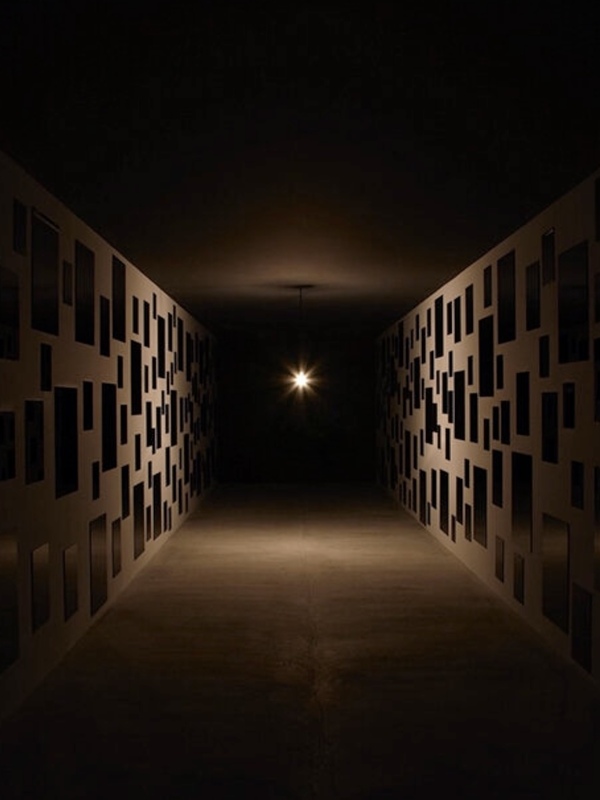
Archive in contemporary art theory
Definition of the term «archive»
The archive has become one of the most contested and overloaded concepts in contemporary art theory. «Archival turn» or «archival impulse», as Hal Foster states in his article (2004), occurred in the early 2000s, but it is not considered to be a radically new phenomenon. Based on text of philosophers —Michel Foucault, Jacques Derrida, Walter Benjamin, and others, the archive today can no longer be understood as a passive repository of documents, but must be approached as a dynamic system of discursivity, of «what can be said». Rather than accumulating neutral facts, archives shape the very conditions under which statements become visible, legible, or possible. In this sense, the archive is inseparable from questions of power, control, historical memory, coloniality/modernity, and institutional authority.
«Censorship is also connected to closed archives, which are linked to dictatorial political regimes. They always hold the potential for promoting a rewriting of history» (Cristina Freire, 2014)
Archives within contemporary art institutions expose tensions between documentation and artistic practice, revealing alternative trajectories of institutional memory that may disrupt dominant narratives. The archive, therefore, becomes not a stable structure but a performative and often contradictory’site where past and present collide, generating what Cristina Freire in Glossary of common knowledge calls «dialectical images» that open possible futures. This dynamic becomes even more pronounced in the contemporary digital era. As Dušan Grljà argues, neoliberal modes of governance transform archives into vast data pools that enable new forms of surveillance and behavioral control. Yet these same technologies also produce opportunities for alternative, decentralized, or activist uses of the archive. What matters, Grlja suggests, is not simply the content of an archive but the modes of access and usage that determine its political meaning.
Christian Boltanski
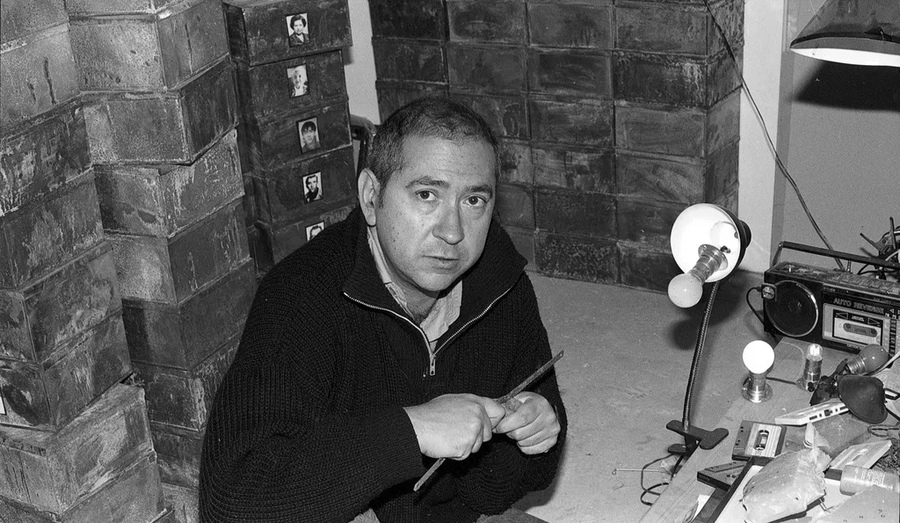
Christian Boltanski
One of the most emblematic examples of Christian Boltanski’s engagement with archiving, memory, and absence is the large-scale installation «Personnes» (translated both People and Nobody from French), presented at the Grand Palais in Paris in 2010. The vast hall, intentionally left unheated at the artist’s request, was transformed into a grid of pathways bordered by rectangular plots covered with worn clothing. In Boltanski’s practice, garments function as quasi-relics — traces of individuals who are no longer present. Walking through the installation resembled moving among anonymous mass graves, where each pile of clothes evoked the ghostly outline of a life once lived. At one end of the hall, a monumental mound of clothing rose like a funerary barrow. Suspended above it, a mechanical claw periodically descended, seized a random cluster of garments, lifted it skyward, and released it back onto the heap. The gesture was at once absurdly banal and quietly terrifying. Boltanski described this device as a kind of divine hand: an indifferent mechanism that «chooses» without reason or pattern. The work stages the logic of chance that governs birth, death, and catastrophe — a meditation on the arbitrary distribution of fate. In its starkness, Personnes becomes not a spectacle of despair but a sober invitation to contemplate mortality and the fragility of human presence.
Personnes / Christian Boltanski
Running parallel to this meditation on disappearance is another of Boltanski’s long-term projects, «Les archives du cœur» (The Archives of the Heart). Begun in the mid-2000s, the work consists of an ever-growing collection of recorded heartbeats. When «Personnes» was exhibited in 2010, the archive counted around fifteen thousand recordings; today, it contains more than seventy-five thousand. Stored on the remote Japanese island of Teshima, the archive has become a site of pilgrimage for visitors who wish to listen to the heartbeat of a deceased relative or to preserve the sound of their own.
Les archives du cœur / Christian Boltanski
«No doubt, the heartbeats synchronized with the flashing lights symbolize life while the darkness suggests death. Life and death have been important themes to the work of Boltanski» (Ren Fukuzumi)
Les archives du cœur / Christian Boltanski
Here, Boltanski constructs a different kind of archive — one that captures the most intimate sonic signature of life. A heartbeat is the quintessential sign of presence, yet its recording is only a trace, a fragile imprint detached from the body that produced it. As in «Personnes», Boltanski uses the language of the archive to navigate the tension between life and its remains, between what endures and what is irretrievably lost.
The entrance. Les archives du cœur / Christian Boltanski
Susana de Sousa Dias
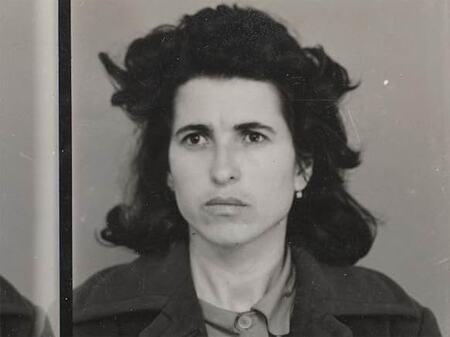
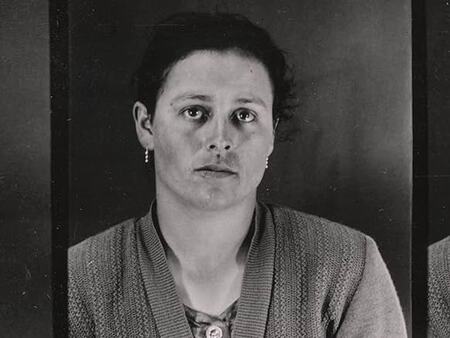
48 / Susana de Sousa Dias
Susana de Sousa Dias’s documentary «48» (2009) offers a stark example of how archival material can be reactivated to confront state violence. The film draws entirely on mugshots taken by Portugal’s political police (PIDE) during the Salazar dictatorship — images originally produced as tools of surveillance and control. Dias keeps the photographs static on screen while the voices of former prisoners recount their arrests, interrogations, and the emotional scars that followed. This disjunction between the still image and the living voice exposes the violence inscribed in the archive itself. The mugshots, once meant to silence and objectify, become sites where the subjects reclaim their stories. By reframing these bureaucratic records as instruments of testimony, «48» transforms a disciplinary archive into an arena of counter-memory. In doing so, the film exemplifies how archival practices can challenge official histories and open space for alternative forms of remembrance.
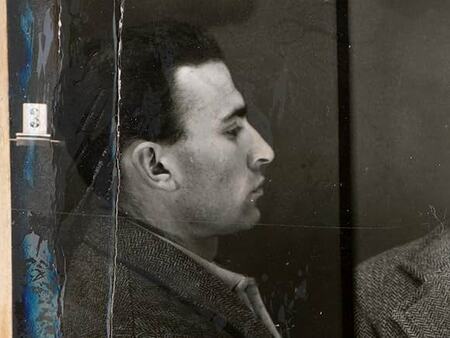

48 / Susana de Sousa Dias
Harun Farocki
Serious Games / Harun Farocki
Harun Farocki’s multi-channel installation «Serious Games» (2009–2010) offers a pointed reflection on how digital technologies reshape the logic of the archive. The work examines U.S. military training simulations and VR therapy programs for soldiers with PTSD, presenting them as systems that continuously generate and store visual data. These images serve not only to rehearse future combat but also to revisit past trauma, turning the archive into an active, operational instrument. By juxtaposing training footage, virtual battlefields, and scenes of soldiers immersed in simulated environments, Farocki reveals how contemporary warfare depends on image-based knowledge. In «Serious Games», the archive is no longer a passive repository but a dynamic apparatus that produces, manages, and circulates experience. The work exposes the extent to which digital archives now function as tools of governance, perception, and control.
Serious Games / Harun Farocki
Walid Raad
The Atlas Group / Walid Raad
A final example is Walid Raad’s long-term project «The Atlas Group» (1989–2004), which presents itself as an archival research initiative devoted to documenting the history of the Lebanese Civil War. Raad gathers photographs, notebooks, video fragments, and testimonies that appear to come from diverse historical sources — only to later reveal that many of these materials are fictional. By fabricating archival documents, he draws attention to the instability of historical narratives and to the ways archives shape, frame, and sometimes distort collective memory. The project’s hybrid form — part pseudo-archive, part conceptual performance — exposes how every archive is structured by omissions, interpretations, and power relations. Rather than preserving a definitive account of the war, «The Atlas Group» stages the very impossibility of such an account. Raad’s invented documents operate as critical tools: they highlight the gaps in official histories and reveal how trauma, conflict, and geopolitical forces resist clear documentation. In this sense, the project turns the archive into a speculative space where fact and fiction intertwine to question what counts as evidence and who gets to author history.
The Atlas Group / Walid Raad
Conclusion
Taken together, these works show how the archive in contemporary art has moved far beyond a neutral storehouse of documents. Whether through Boltanski’s meditations on presence and loss, de Sousa Dias’s reclamation of state surveillance records, Farocki’s analysis of digital image systems, or Raad’s fictional reengineering of historical evidence, the archive becomes an arena where power, memory, and narrative are constantly renegotiated. What emerges is not a stable history but a field of competing traces — vulnerable, constructed, and deeply human. Contemporary artists do not simply preserve the past; they expose the conditions under which it is written, forgotten, or imagined anew.
Cristina Freire. Dušan Grljà. «Archive» // Glossary of Common Knowledge. https://www.internationaleonline.org/publications/glossary-of-common-knowledge/
Pavel Kurnosov. What you have to know: Christian Boltanski // ArtGuide. https://artguide.com/posts/2453
Hal Foster. Archival impulse // Moscow Art Magazine. https://moscowartmagazine.com/issue/10/article/133
Anton Svetlichniy. The Infinite Archive — the Archive of Infinities // Masters‑Journal. https://masters-journal.ru/beskonechnyj-arkhiv