Project Idea
The practical part of the project was executed in the Google Colab cloud environment, utilizing GPU hardware acceleration (NVIDIA T4). The basis was a modern diffusion model, Stable Diffusion XL 1.0, which possesses high inherent detail.
To transfer the artistic style, the DreamBooth method was used in conjunction with LoRA (Low-Rank Adaptation).
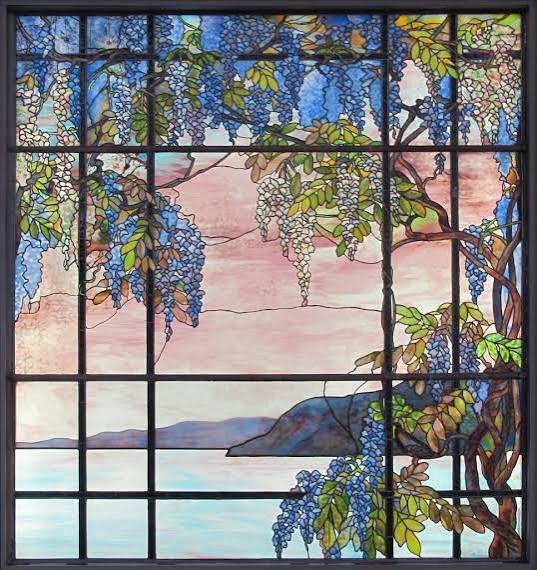
Louis Comfort Tiffany, Glass Window from the Tiffany Residence at Laurelton Hall, Oyster Bay, New York, The Metropolitan Museum of Art, New York, NY, USA. Photograph by Sailko via Wikimedia Commons (CC-BY-SA-3.0).
The project explores the potential of translating classic decorative and applied arts (Art Nouveau style, Tiffany stained glass) into the digital medium by fine-tuning generative neural networks (LoRA for SDXL). It is founded on the idea of syncretism: the historical technique of mosaic glass from the Public Domain era is applied to familiar modern or fairytale objects, creating a unique visual synthesis of craftsmanship and algorithms.
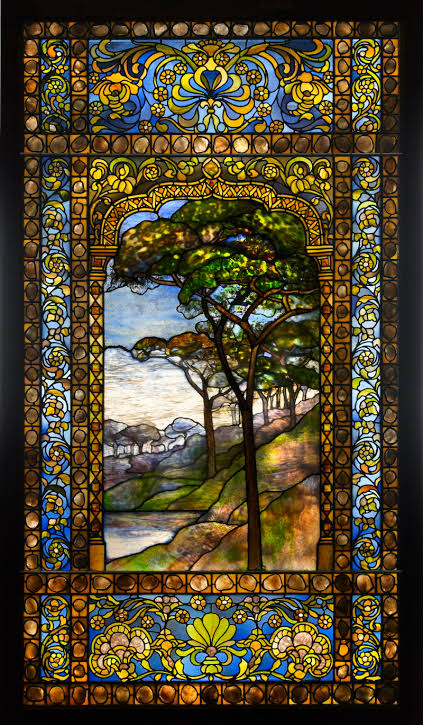
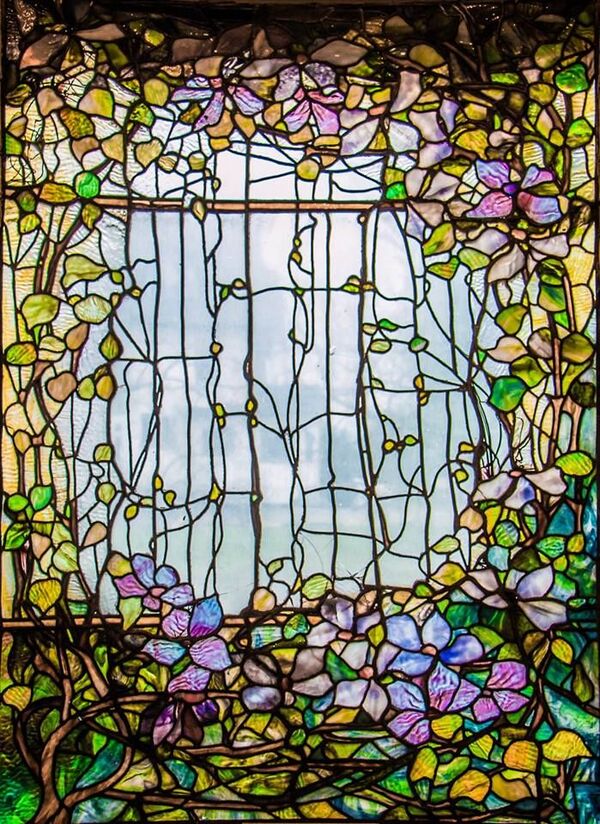
The model’s learning process
For training, a dataset of 10 high-quality images of classic Tiffany-style stained glass and mosaic patterns was compiled, and then cropped to a 1:1 aspect ratio.
Environment and Data Preparation
Before training the neural network, we needed to «unpack the files.» First, we unpacked the archive of stained-glass images so the program would know what to train on. Then, we downloaded the official tools for working with neural networks and configured their precise versions to prevent the cloud computer from throwing errors due to software conflicts.
Google Colab Code Snippet
Model Training (LoRA)
The heart of the project. We take a large base SDXL model and have it study your stained glass images 300 times. The flags—mixed_precision="fp16" and --gradient_checkpointing—allow us to save VRAM on the T4 GPU so that Colab doesn’t crash with an OOM error. In the end, a small adapter file (tiffany_lora) that has learned the Tiffany style is created in 1 minute and 20 seconds.
Google Colab code snippet
Generating the final series of images
When the training is complete, we need to see the results. This code loads a base neural network, applies our new «stained-glass filter» to it, and sequentially runs eight different concepts (a cat, a car, a mug, a castle, a tree, a portrait, a planet, and a bird). The neural network transforms each of these concepts into a beautiful stained-glass window.
Google Colab Code Snippet
Link to notebook: Google Colab
Image Series
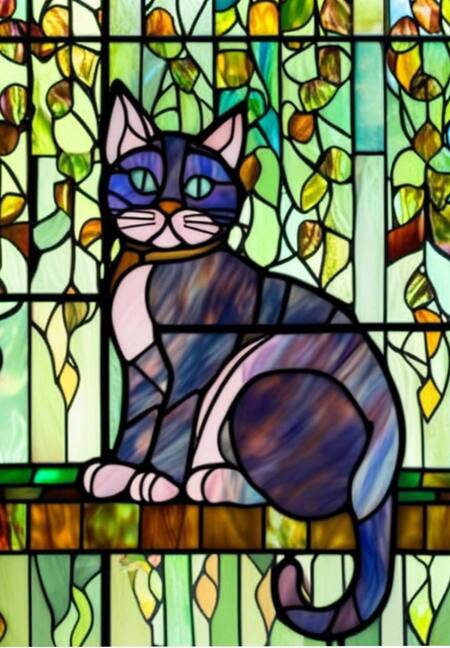
As a result of the fine-tuned model’s work, a series of 8 conceptual images was created in a unified stylistic key, demonstrating the neural network’s versatility in transferring various objects into the aesthetics of Tiffany stained glass:1. «Cat on the Windowsill» (integrating a living creature into a stained-glass mosaic structure).2. «Vintage Retro Automobile» (transforming a complex industrial object into colored glass).3. «Cozy Coffee Mug» (object design in the style of artistic stained glass).4. «Fairy Tale Castle in the Mountains» (an architectural landscape viewed through the prism of classic stained-glass aesthetics).5. «Glowing Magic Tree» (transferring organic forms of nature and fantastical motifs into translucent panes).6. «Mysterious Woman’s Portrait» (creating portrait graphics with characteristic glass outlines and texture).7. «Futuristic Planet with Rings» (a cosmic landscape stylized as a mosaic panel).8. «Colorful Exotic Bird» (rendering the bright iridescence of plumage through the texture of stained glass).
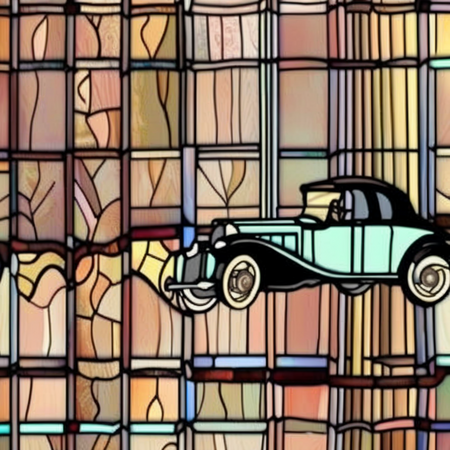
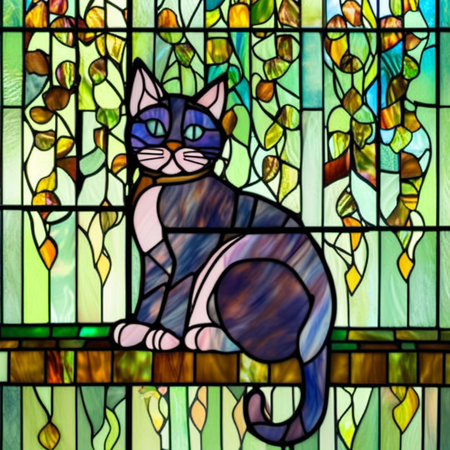

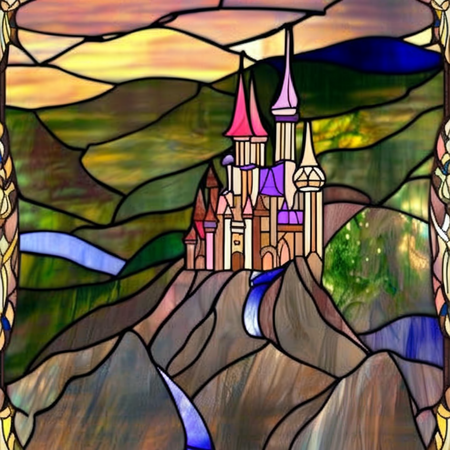
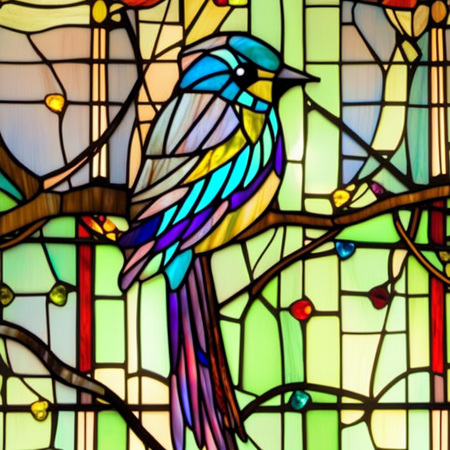
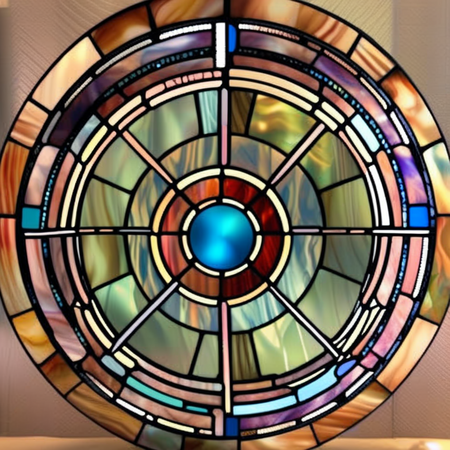
The final series clearly demonstrates how the digital model «assimilates» the DNA of historical craft. Stained glass ceases to be merely a flat window and begins to form the volume of objects through colored glass segments and the characteristic contours of the soldering.
Description of Generative Model Applications
Stable Diffusion XL (SDXL 1.0): A foundational open-source diffusion neural network that ensures high quality and detail in the initial generation (1024×1024 pixels).DreamBooth + LoRA (Low-Rank Adaptation): A fine-tuning method used to create an individualized visual style (tiffany_lora) based on a proprietary dataset of stained glass. This allowed the characteristic aesthetic of late 19th-century craftsmanship to be translated into the digital medium.
Google Colab (GPU T4): A cloud service that provided the necessary computational power for running heavy neural network training scripts and generating images.
In addition to the trained neural network (LoRA SDXL) used for generating the artwork, the project also utilized the text AI assistant Gemini:
— Idea Generation and Legal Concept: Assistance in selecting a Public Domain theme (Tiffany stained glass) to ensure absolute legal clarity for the project.
— Support in structuring the art historical analysis and composing the explanatory report.