Communication strategy for the clay modeling workshop project «Lepushka»
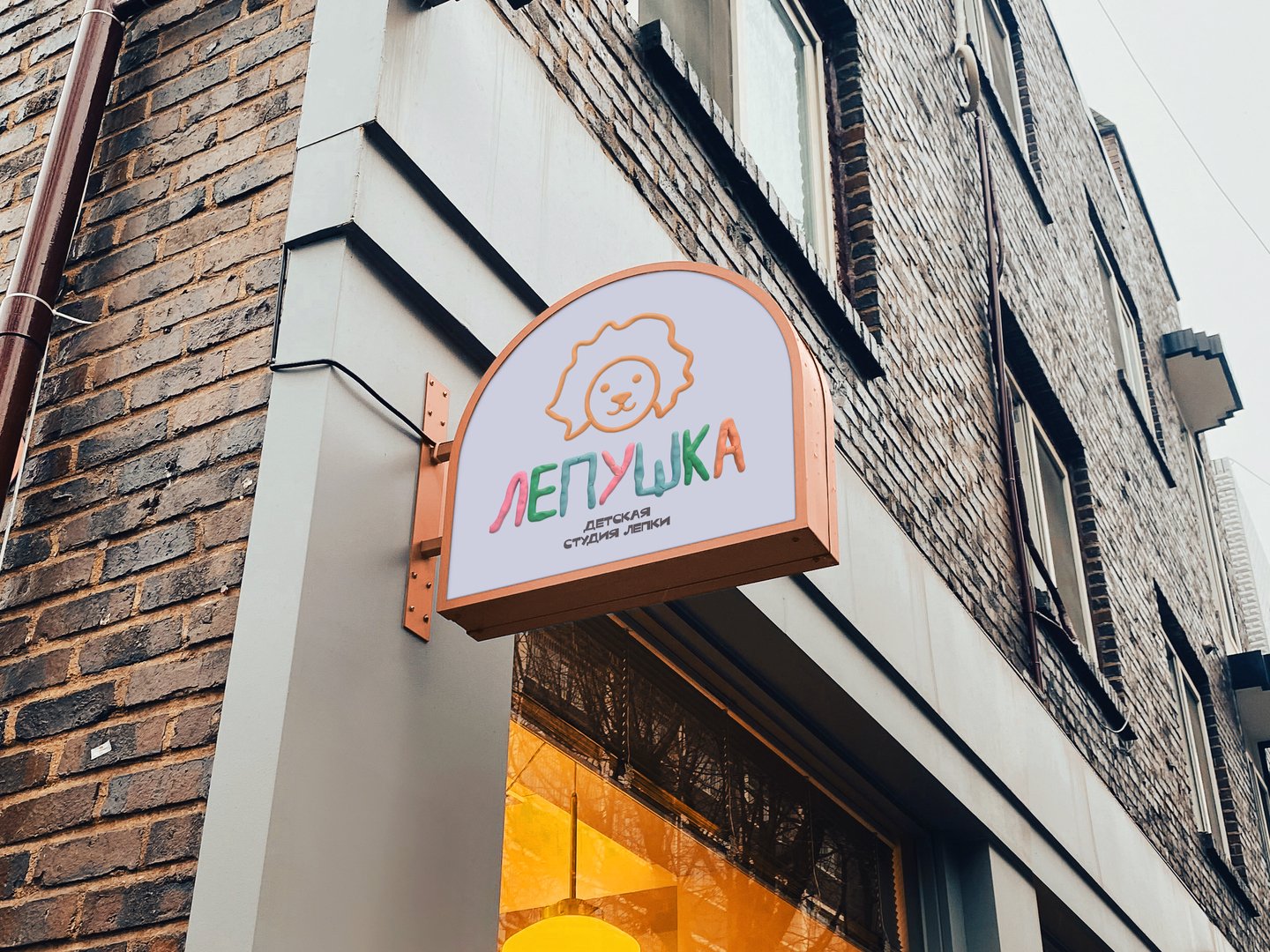
«Lepushka» signboard
Communication theory in the field of design
In the context of design, communication theory is not an abstract academic concept, but a crucial system for creative practice and its implementation through the establishment of a strong communicative connection between creator and consumer. It moves us beyond the outdated model in which a designer conveys a static, empty message to a passive audience. Instead, it opens up a dynamic space for information exchange, where not only designers but also consumers themselves become active participants.
Communication theory in design and contemporary art demonstrates that any visual object functions as a message to be encoded by the artist/designer and interpreted by the viewer. Through this lens, design ceases to be «decoration» and contemporary art ceases to be «self-expression» and becomes a practice of constructing meaning and managing attention [1].
Thus, every designed object, interface, or work of art functions as a proposition within a complex semiotic field. Through a vocabulary of form, material, color and interaction, the creator encodes intentions: aesthetic, functional, critical. However, true meaning is never formed at the moment of creation, it is activated upon perception.
Set of modeling stacks
Therefore, in the context of communication theory, the following strategies were formed:
Socio-Psychological Tradition
Brand uses mechanisms of social psychology (reinforcement, identification, modeling) to create a safe, supportive environment that motivates participation, fosters loyalty, and turns one-time clients into members of an ongoing community.Socio-Cultural Tradition
Attending «Lepushka» means participating in modern, socially approved practices — engaging in «proper» child development, caring for their psychological comfort, and demonstrating a mindful approach to leisure.Semiotic Tradition
Brand helps to decode this visual-tactile language for the audience (parents and children) so that «clay» is read not as «dirt and mess» but as «opportunity and development», and an «imperfect craft» as a «personal victory and unique artifact».Presentation for a general audience
Core message
«Lepushka» is a series of developmental plasticine modeling workshops for children, where through tactile interaction with natural clay and pliable materials, children explore the world, develop motor skills, and imagination.
Modeling board
The brand offers a space where the simple magic of plasticine under children’s fingers transforms into meaningful form. It’s a ritual of mindful, hands-on creation that fosters confidence, connection with the material world, and the pure joy of bringing imagination to life.
More than a product, «Lepushka» creates an experience of collaborative discovery — a shared story written in clay by every child and parent.
«Lepushka» is not just a modeling class. It’s the first journey into the world of three-dimensional thinking, where small hands create big ideas
Target audience
Set of air plasticine
Our message speaks to families seeking meaningful, screen-free connection and development:
Children (Ages 4-10):
Curious explorers who see clay as pure magic — a chance to play, create, and proudly say, «I made this myself!»Parents:
Modern, conscious caregivers. They seek more than just entertainment; they look for developmental value (fine motor skills, creativity, focus) and a way to create quality, shared memories with their children.Gift-Givers:
Relatives and friends looking for a meaningful present. For them, «Lepushka» is not a toy, but a gift of experience and emotion — a memorable adventure.Brand values
Shopping bag
The brand offers a friendly and educational space where children can gradually become involved in the process of sculpting, instead of boring courses with dry theory. Thus, «Lepushka» fosters several values.
Tactile discovery is expressed through natural, safe materials (clay, eco-plasticine) that invite exploration and connect children to the sensory world. Another value is that the brand positions mindful play as our workshops are a digital detox — a slow, focused ritual that contrasts with fast-paced digital consumption. Creative confidence is considered as safe, supportive environment where every child feels like a true creator, building self-esteem through doing. Natural connection is encoded through earthy colors, organic materials, and a calm atmosphere symbolize our link to nature and sustainable values.
Tone of voice
Invitation to a master class
Our communication style is that of a
warm, inspiring, and supportive mentor.
Warm & Playful:
We speak with kindness and joy, like a favorite teacher. («Look at the amazing shape you’ve discovered!»)Encouraging & Empowering:
We focus on effort and imagination, not comparison. («You are such an inventive sculptor!»)Inspiring, Not Instructing:
We offer possibilities and tools, not rigid rules. We are facilitators of creativity.Authentic & Calm:
Our language is genuine and down-to-earth, reflecting the mindful, unhurried nature of our workshops.Communication channels
Apron
Social media platforms such as VKontakte and TikTok are used as communication channels, allowing not only to maintain audience interest through short videos but also to connect with them. Furthermore, maintaining a Telegram channel allows for closer brand communication with potential visitors through a dedicated chat and surveys. The website was created to make it easy to sign up for classes, select a workshop, and choose a teacher. It also features sections featuring exhibitions of children’s work and potential competitions.
Presentation for a professional audience
«Lepushka» is a brand-as-environment. Brand views communication theory not as abstract concepts, but as a unified system for creating meaning, influencing behavior, and building a loyal community.
Engineering a world of meaning (The semiotic tradition)
Handmade brand mascot toy
The concept is designed for polysemy (multiple readings) within a safe boundary. A «lopsided vase» can be decoded by a child as «my dragon», by a parent as «fine motor skill development», and by an educator as «creative problem-solving». The brand manages this spectrum of meaning.
Architecting interaction and influence (The socio-psychological tradition)
«Lepushka» uses psychological principles to shape attitudes, motivate behavior, and build community, fostering self-efficacy and intrinsic motivation, creating a sense of belonging to a special community, and encouraging ongoing engagement and support through incremental investment. The strategy moves beyond transaction to transformation. The desired end-state is not just a satisfied customer, but a brand advocate whose self-concept is intertwined with the brand’s values.
Positioning within macro narratives (The socio-cultural tradition)
A board for modeling with figures
The brand derives legitimacy and relevance by embedding itself within larger cultural conversations and societal shifts. «Lepushka» doesn’t just sell to a culture, it sells a culture. It provides a tangible, consumable enactment of the very values its audience aspires to live by, offering cultural legitimacy («I am participating in mindful parenting») through brand participation.
How communication theory became the basis of project
The creation of «Lepushka» began not with a product, but with a theoretical framework. The goal was to build a brand that operates on multiple levels of human understanding and interaction. The socio-cultural, semiotic, and socio-psychological traditions were not merely lenses for analysis post-creation; they served as the active design principles during the brand’s development.
Poster
The socio-cultural Tradition posits that meaning is not created in a vacuum but is negotiated within shared social practices and cultural narratives. For «Lepushka», this was the starting point for brand positioning. This tradition provided the brand’s reason for being and its core value proposition. It answered the question: «Why would a family need this?» by aligning the brand with powerful, pre-existing cultural currents, granting it immediate relevance and legitimacy.
With the cultural role defined, the semiotic tradition was used to build the brand’s tangible and visual language —the system of signs (signifiers) that would evoke the desired cultural and emotional concepts (signifieds). This tradition built the brand’s recognizable sensory and visual world. It translated abstract cultural values into a concrete, experienceable reality. A family doesn’t just hear about «mindful play», they see it, touch it, and smell it in the «Lepushka» studio.
Boxes
The socio-psychological Tradition was employed to design the interactions within this semiotically charged environment. This is about influencing attitudes, shaping behavior, and building lasting relationships through understood principles of human psychology in social contexts. This tradition ensures stickiness and community formation. It transforms one-time visitors into repeat participants and eventually into brand advocates. The experience is designed to be psychologically rewarding, meeting deep needs for competence, autonomy, and relatedness.
«Lepushka» was not created by intuition alone. It is a designed communication system. Together, these traditions moved the brand beyond commerce into the realm of cultural practice and community identity, ensuring its resilience and emotional equity in a competitive market.
Zhang J. Exploring the Nature and Evolution of Communication Design: Perspectives from China [Электронный ресурс] // Advances in Humanities Research. 2024. Vol. 6. P. 56-60. URL: https://ahr.ewapub.com/article/view/14119 (Дата обращения: 13.12.2025).
https://leonardo.ai/ (Дата обращения: 13.12.2025).