Communication theory: land (e)scape
The author’s reasoning about how communication theory works in the field of design
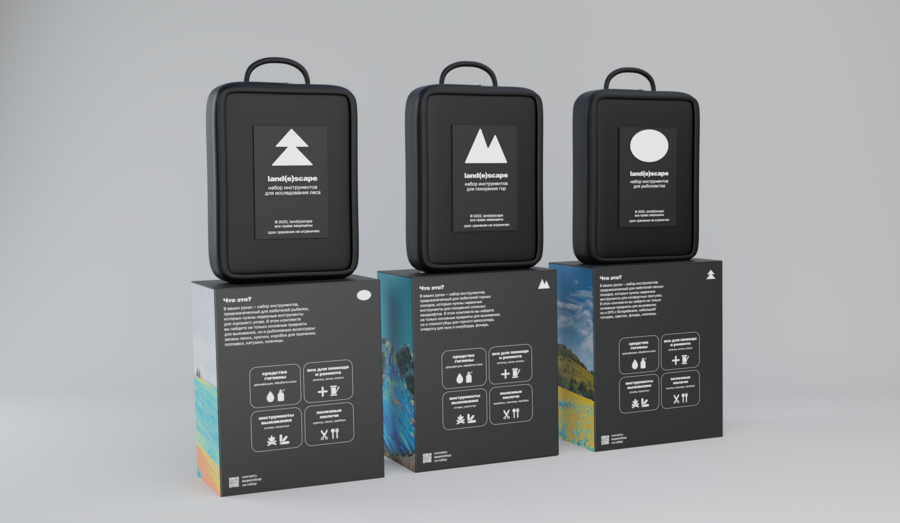
Product packaging
Design is, at its core, a communicative act. All its forms — including brand identity systems and interactive media — operate to solidify this connection between the creator and its audience. This act is a calculated process of encoding intention into a perceptible form, and its efficacy is evaluated based on the extent to which the audience accurately decodes the intended message. Design is therefore not only an applied art, but rather a dedicated communication discipline.
Therefore, effective design dictates a systematic, theory-driven approach that moves beyond mere aesthetic and intuitive decisions. This outlook points to the necessity of communication theory not existing to simply inform design; it provides the operational framework that defines its challenges, dictates its methods, and evaluates its outcomes.
This systematic analysis of design communication functions across three critical, theoretically-defined dimensions
1. The Semiotic and Experiential Dimension
This dimension of design communication is focused on managing meaning and experience. Designers act as masters of signs and symbols, utilizing visual codes, typography, and composition to immediately convey specific meaning and cultural relevance to the audience. Successful design demands the prioritization of the user’s subjective and authentic experience. The design’s quality is guaranteed when the communicated meaning aligns perfectly with the user’s intuitive, lived interaction, thus acting as a constant mediator between the creator’s intent and the audience’s perception.
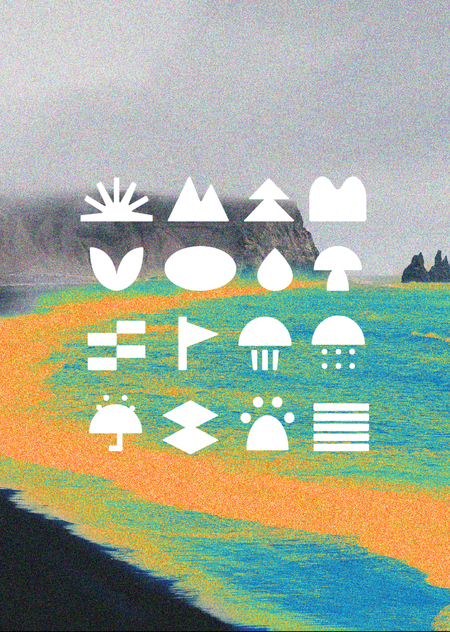
A system of pictograms representing landscapes and weather conditions
2. The Systemic and Behavioural Dimension
The main focus of this dimension lies in efficiency and influence. Any type of communication operates in accordance with a particular system, and design is no exception. Within design the system must manage the flow of information, minimize confusion (or «noise») and establish clear channels for feedback. Crucially, design is also a tool for influencing human behavior. Whether guiding a user through an application workflow or persuading a customer to make an ethical choice, effective design utilizes psychological principles already proven to be true to predict the user’s action, making the desired behaviour the easiest, most appealing path.
Design as part of a contemporary social communication environment
3. The Relational and Critical Dimension
The final dimension focuses on the social context and ethical norms. Design operates within a broad sociocultural reality, constantly shaping norms and expectations. Given that design products and brands embody choices — about accessibility, sustainability, and resource allocation — they inherently carry political and ethical weight. Thus, effective communication must be coherent, foster loyalty, and remain critically mindful of its role in either reinforcing or challenging existing power structures.
In conclusion, the efficacy of any brand or design project is directly proportional to the deliberate and strategic application of communication principles. The forthcoming analysis of our project demonstrates how these theoretical lenses were systematically employed to craft communication strategies tailored precisely to two distinct target audiences
Interaction between the brand and the audience in a public space
land (e)scape Brand Presentation for a General Audience
land (e)scape is a travel brand that offers reliable equipment for outdoor recreation across diverse natural landscapes. Its product range covers everything from forest hikes and mountain ascents to fishing by rivers and lakes, providing practical solutions tailored to each type of terrain.
All-weather reliability
Product reliability across diverse natural conditions
land (e)scape products are designed to withstand changing weather conditions and diverse climates. Rain, wind, or heat do not compromise performance: the equipment retains its protective and functional qualities, allowing users to enjoy nature in any season.
For different types of outdoor users
Adapted solutions for different types of outdoor users
The brand addresses the needs of diverse user groups. Whether it is a young explorer embarking on a scientific expedition, a photography enthusiast searching for the perfect shot, or a parent going fishing with children, land (e)scape offers suitable equipment for each scenario. Functional clothing and durable backpacks serve extreme conditions, while visually appealing gear supports creative practices, and reliable, easy-to-use products ensure comfort for family-oriented recreation.
Emotional value
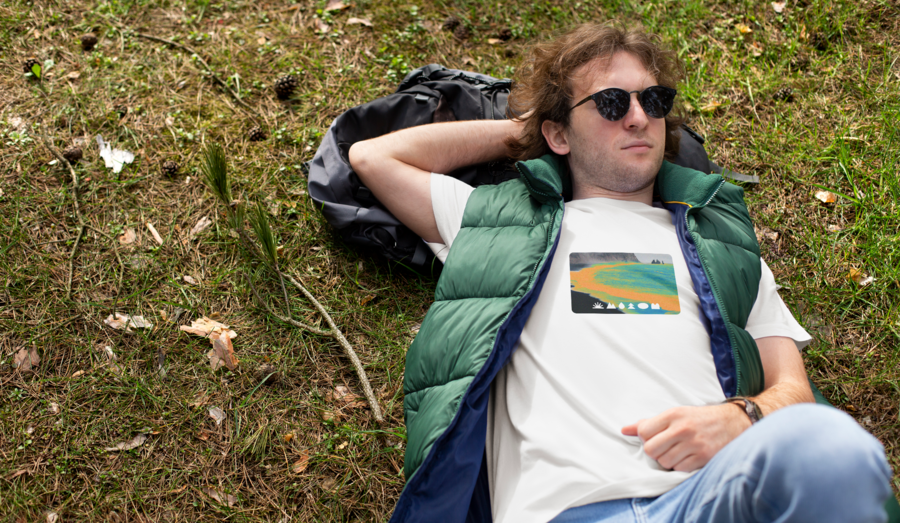

Emotional connection between the user and the brand
Using land (e)scape products fosters a sense of protection and freedom within natural environments. The brand seeks to evoke feelings of inner warmth and confidence, allowing users to focus on the surrounding landscape and social interaction without concern for everyday discomforts.
Visual identity and concept
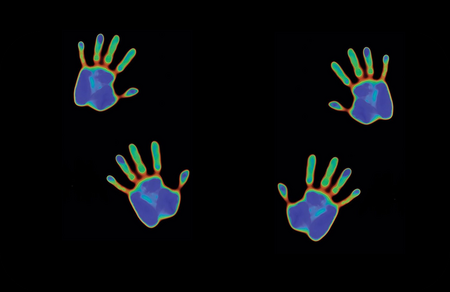
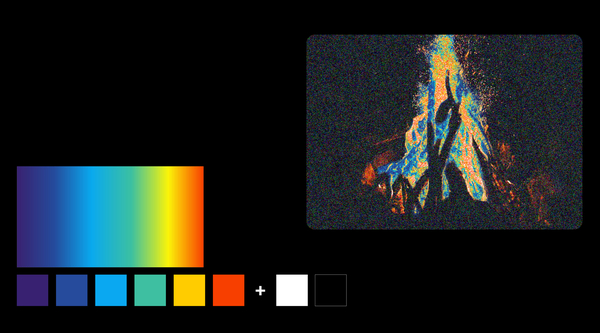
Thermography-inspired visual identity
The visual identity of land (e)scape is based on the concept of thermography — a heat-map system that shifts in color and intensity. This serves as a metaphor for changing climates and terrains, as well as for the user’s internal emotional state during travel. The dynamic color palette represents transitions from the coolness of morning to the warmth of an evening campfire, visually reflecting the emotional comfort gained through experiences with land (e)scape.
land (e)scape Brand Presentation for a Professional Audience
Brand positioning
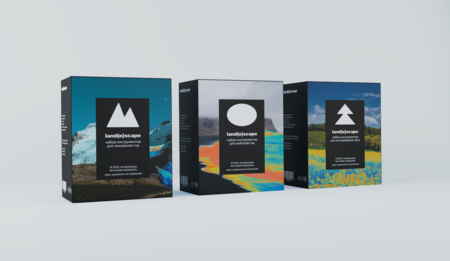
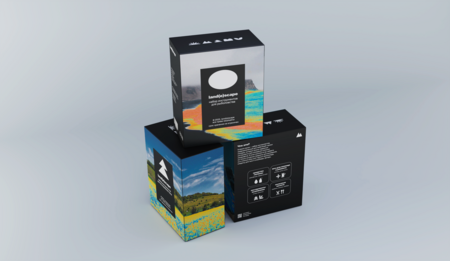
Visual identity as a tool of brand positioning
land (e)scape is positioned as an innovative outdoor brand offering comprehensive solutions for nature-based recreation. The brand occupies a niche of universal outdoor equipment suitable for forests, mountains, and river landscapes alike, enabling retailers and partners to address a broad spectrum of consumer needs within the outdoor market.
Values and philosophy
Brand values expressed through product composition and functionality
The core values of land (e)scape are comfort, safety, and connection with nature. Each product is developed with a focus on quality, reliability, and durability, fostering trust among both consumers and professional partners. Sustainability and adaptability are central principles: land (e)scape equipment performs effectively in both hot climates and harsh northern conditions.
Brand archetype and communication

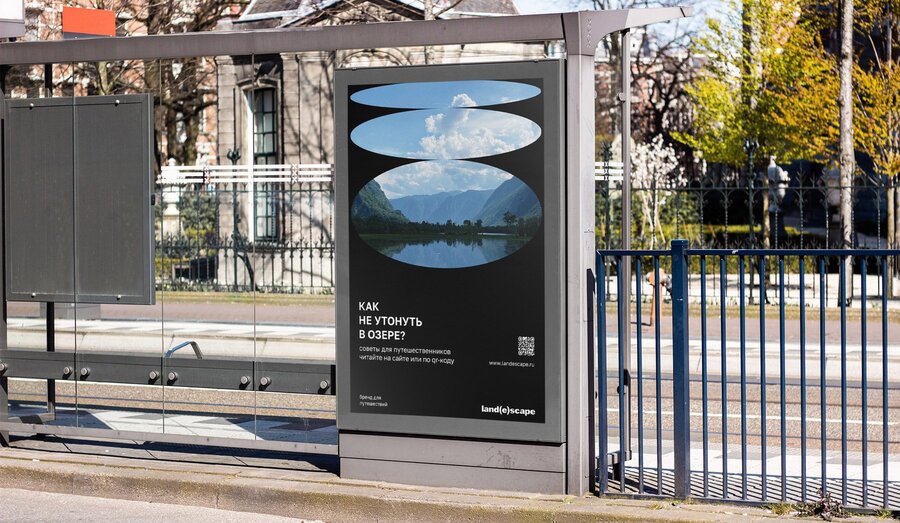
The Explorer archetype expressed through spatial and visual communication
The brand archetype of land (e)scape is the Explorer — combining a spirit of discovery with care for the user. In communication, land (e)scape acts as a guide through natural environments, inspiring exploration while providing reassurance and protection. The tone of voice is professional and inspirational, emphasizing the brand’s expertise in outdoor solutions and its emotional resonance with nature-oriented audiences.
Rational product advantages
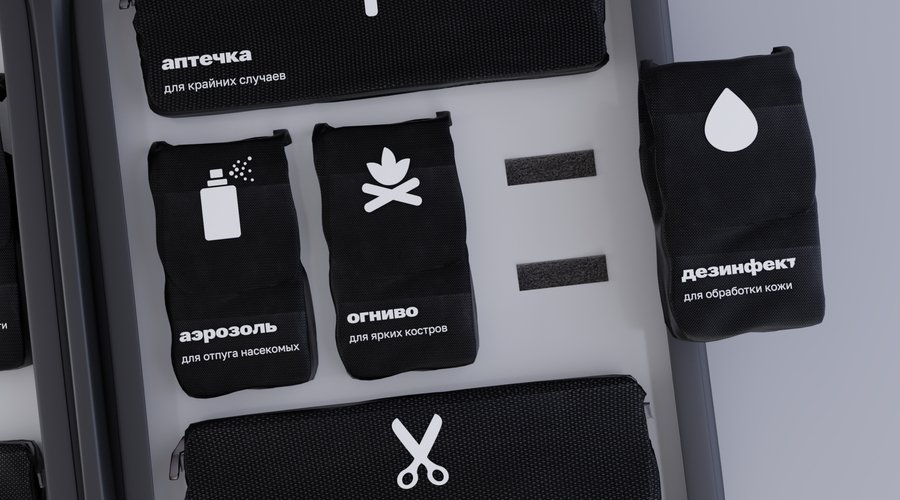
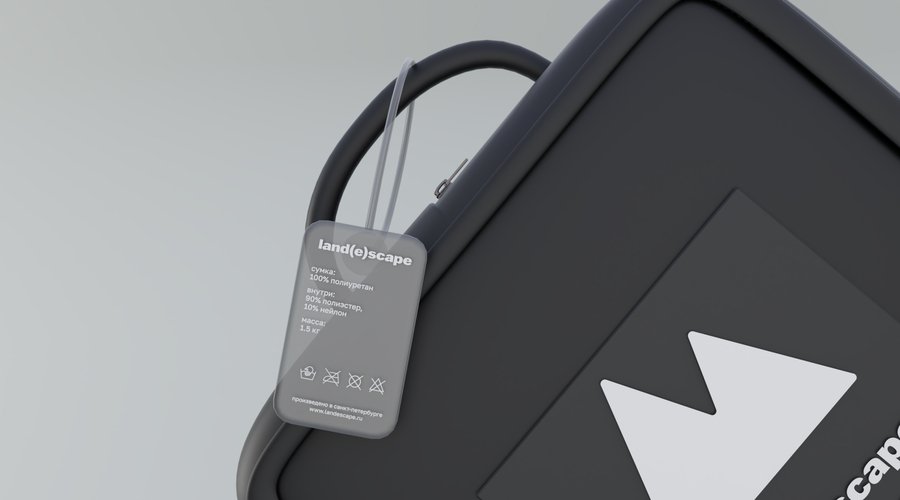
Functional design solutions enhancing usability and durability
land (e)scape products are defined by carefully engineered functionality. Waterproof materials, wind and thermal insulation, modular construction, and lightweight design deliver clear practical benefits. Rational arguments for consumers and partners include reduced risk through durability, versatile use across seasons, and a distinctive aesthetic that differentiates the products within a competitive market.
Concept and brand differentiation
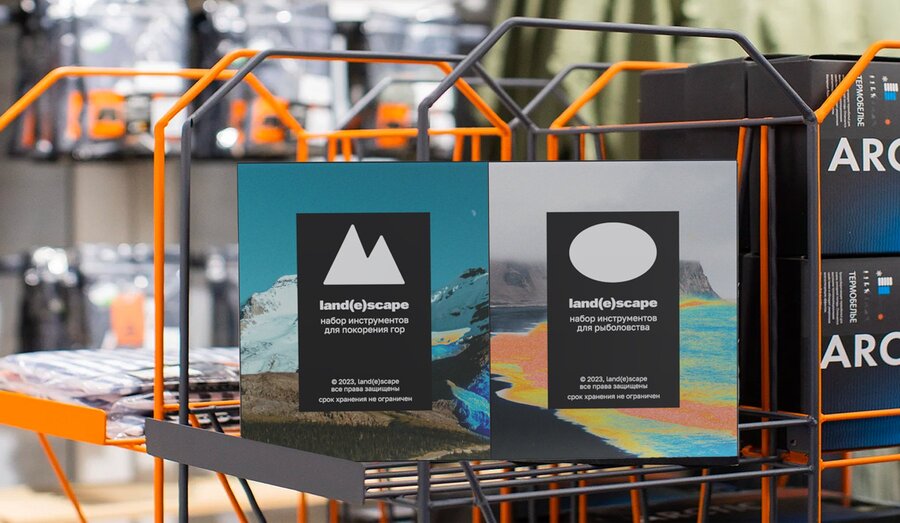
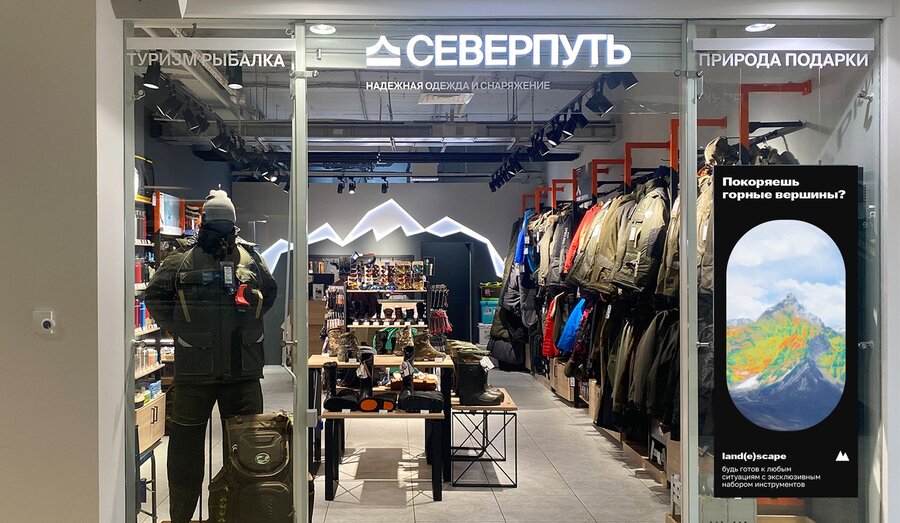
The brand concept translated into the retail environment
The creative concept of land (e)scape differentiates it from competitors. The thermography metaphor communicates adaptation to changing environments and emotional warmth. The evolving color gradients within the visual identity symbolize transitions across climates and emotional states — from the coolness of morning dew to the warmth of sunset. For designers and brand specialists, this identity provides rich opportunities for visual storytelling, while for retailers it delivers a strong emotional narrative that enhances in-store presence.
Application of communication theories in the land (e)scape project
The land (e)scape brand project applies communication theory as an analytical and practical foundation for shaping its design and communication strategy. Rather than treating theory as a descriptive add-on, the project uses it to structure how meaning, value, and user behaviour are produced. Three theoretical approaches were particularly relevant: Craig’s communication traditions, Social Exchange Theory, and the Theory of Planned Behaviour.
Craig’s traditions
— allow the brand to be understood as a communication system operating on multiple levels. The semiotic tradition explains how land (e)scape communicates through visual identity, materials, and functional design, with the thermography-inspired color logic acting as a symbolic representation of environmental change and emotional comfort. The socio-cultural tradition situates the brand within everyday outdoor practices, framing interaction with nature as a regular, shared activity oriented toward rest and recovery rather than performance or achievement. The critical tradition informs the brand’s ideological position, enabling land (e)scape to distance itself from dominant outdoor narratives of conquest and instead promote care, adaptability, and responsible engagement with nature. The phenomenological tradition complements this analysis by focusing on the lived experience of interaction with the brand. In land (e)scape, meaning emerges not only through signs and social practices, but through bodily and emotional perception — sensations of warmth, protection, and adaptation experienced directly in the landscape. Brand meaning is therefore produced as lived experience rather than as a pre-defined message.Social Exchange Theory
— is applied to explain the perceived value of the brand. Interaction with land (e)scape products involves certain costs, such as financial investment and preparation effort, which are balanced by functional reliability and emotional rewards. These rewards include a sense of safety, confidence, and reduced anxiety in unpredictable natural conditions, forming the basis for trust and long-term engagement.The Theory of Planned Behaviour
— supports the project’s behavioural logic by addressing how attitudes, perceived control, and social norms shape user action. By presenting outdoor activity as accessible and emotionally safe, land (e)scape encourages positive attitudes, increases perceived behavioural control through reliable design, and reinforces social norms of shared leisure and regular contact with nature.Together, these theories demonstrate how communication theory directly informed the design, positioning, and experiential logic of the land (e)scape brand
Communication Theory: Bridging Academia and Practice // edu.hse.ru URL: https://edu.hse.ru/course/view.php?id=133853 (дата обращения: 14.12.2025).
All pictures are from Alina Gabitova’s projects: https://hsedesign.ru/project/168684b0760940c9acd0544ac3362374 (дата обращения: 14.12.2025).
https://hsedesign.ru/project/d87b226a2cee4b189fa7f835d4bc0e2f (дата обращения: 14.12.2025).