Communication Theory: Gang Fest
Communication theory in the field of design
After studying Communication Theory as a Field by Robert T. Craig and Communication as Social Science (and More)by Craig Calhoun, along with the foundational concepts from our communication theory course, we have developed our collective perspective on how communication theory functions within the field of design. In this essay, we articulate our reasoning about the relationship between communication and design, and how theoretical frameworks enable a deeper, more critical understanding of design practice.
Communication as a Constitutive Process: Our Starting Point
Сommunication is not merely the transmission of information but a constitutive process that creates meaning and shapes social reality.
Communication Theory as a Field:
This perspective aligns strongly with how we understand design. When we design interfaces, visual identities, or service experiences, we are not simply arranging elements or decorating content. Instead, we participate in shaping how individuals interpret a situation, an object, or a technological environment.
If we understand communication as a process that shapes our perception of the world, then design emerges as one of its forms. Any visual decision, interaction pattern, or spatial arrangement becomes a deliberate act of meaning-making. From this perspective, design is not a supplementary element of communication but one of its central mechanisms.
The Multiplicity of Communication Traditions and Their Relevance for Design
Craig’s model of communication theory as a «dialogical-dialectical field» consisting of multiple traditions has further shaped our reasoning. He outlines seven major traditions—rhetorical, semiotic, phenomenological, cybernetic, sociopsychological, sociocultural, and critical—arguing that they collectively illuminate different dimensions of communication.
For us as design researchers, this plurality is not a complication but a resource. Each tradition provides insights that enrich our understanding of design:
The semiotic tradition helps us interpret visual signs and symbolic structures.
The cybernetic tradition informs our work with interaction, systems, and user flows.
The sociopsychological tradition supports predictable and user-centered design decisions.
The sociocultural tradition allows us to analyze cultural contexts and shared meaning.
The rhetorical and critical traditions help us see design as persuasive and ideological.
Thus, this approach suggests that design should not be explained through a single universal theory. Instead, it is important to draw on various communication theories, each offering different analytical perspectives. This view allows us to understand design as a multifaceted phenomenon that includes visual communication, social interaction, meaning-making, and engagement with the environment.
The Underintegration of Design in Communication Studies: Our Response to Calhoun
Calhoun points out that communication studies, despite their interdisciplinary character, often fail to integrate design, engineering, and related technological fields. He notes that communication programs tend to overlook design, even though contemporary communication increasingly depends on designed media, platforms, and interfaces.
Communication as Social Science: This argument supports our belief that design should be fully recognized and incorporated into communication scholarship. If communication is mediated through visual, digital, and material forms, then design is a central—not peripheral—component of how communication occurs. The lack of integration that Calhoun describes reveals a gap that, in our view, interdisciplinary research and education should actively address.
Theory as a Tool for Description, Explanation, Prediction, and Transformation
According to the course description, theory serves four key purposes: to describe, explain, predict, and transformcommunication processes. These functions translate directly into our design practice:
- To describe means to articulate how a design communicates through form, structure, and interaction.
- To explain is to understand why certain design elements produce particular meanings or user responses.
- To predict allows us to anticipate how people interpret or behave within a designed system.
- To transform means using theory to improve design outcomes and address ethical or social concerns.
Through this framework, communication theory becomes a practical instrument that guides our design decisions and strengthens the rationale behind them.
Our Synthesis: Communication Theory as a Framework for Critical and Constructive Design
Integrating the insights from Craig, Calhoun, and our course materials, we view communication theory as a meta-framework that enables us to:
- understand design as a process of meaning-making,
- analyze design through multiple communication traditions,
- situate design within broader cultural and social contexts,
- critically reflect on the power structures and ideologies embedded in visual and interactive systems.
In our view, communication theory does not distance us from the practical aspects of design; rather, it deepens our analytical capacity and broadens the social responsibilities of design practice.
Conclusion
We conclude that communication theory is crucial for understanding design as a communicative and socially grounded practice. When we view design as a process of creating meaning and draw on different communication traditions, we gain a clearer and more comprehensive framework for both analyzing and producing design.
In this sense, communication theory is not an outside academic tool but a fundamental perspective that shows design to be a meaningful and socially influential form of communication.
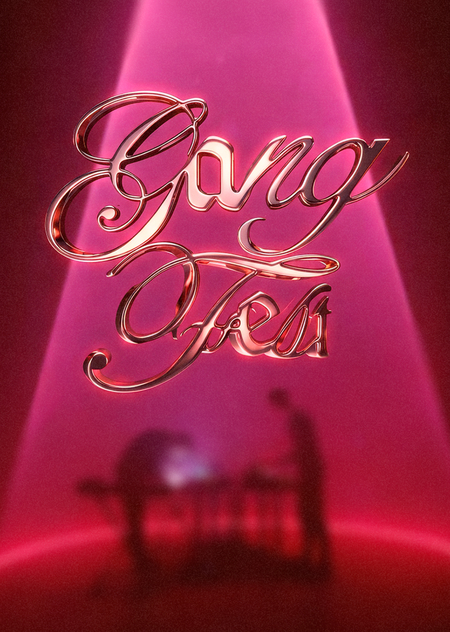
Gang Fest
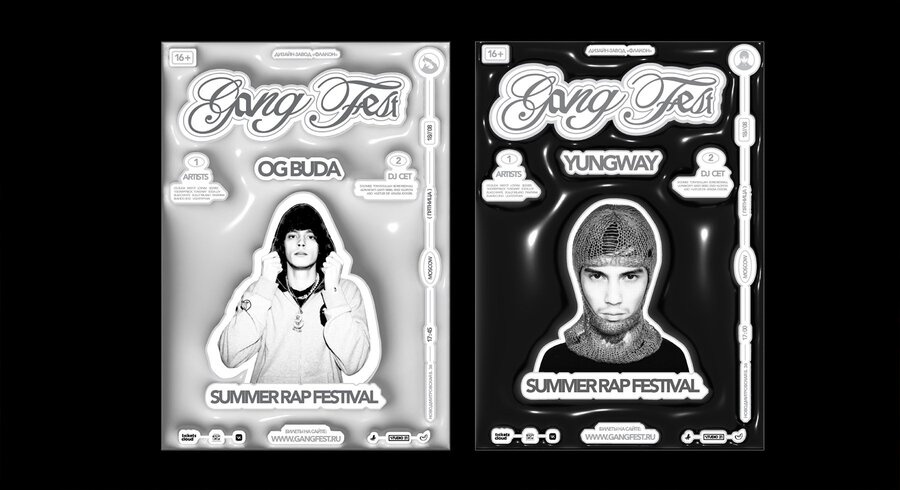
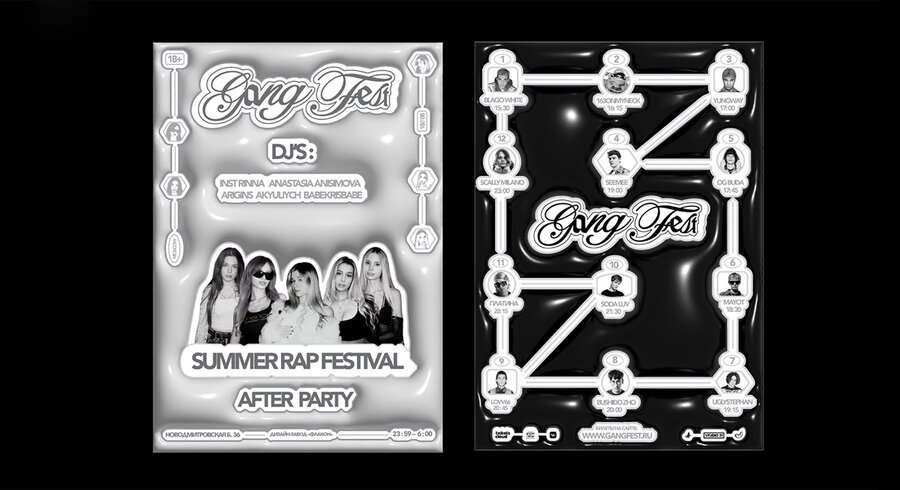
Gang Fest is a music festival dedicated to the new school of rap.
It is the first major open-air festival in Russia focused on the young rap scene. The event will feature performances by a large number of contemporary and ambitious rap artists. In addition to the performances, there will be various workshops tailored to the interests of the target audience, as well as specially designed photo zones and relaxation areas. The most dedicated fans will also have the opportunity to meet their idols in person.
Presentation for a general audience
GANG FEST — New Wave Rap Festival
Hello everyone, and thank you for joining us.
Today we’re excited to present GANG FEST, a music festival dedicated to the new school of rap and the culture surrounding it.
GANG FEST is more than just a concert — it’s a full-scale experience built for people who live and breathe modern rap. Our lineup features a large number of fresh, ambitious, and influential rap artists, all bringing their unique sound and energy to one stage. Whether you’re into melodic trap, experimental beats, or high-energy performances, you’ll find something that matches your vibe.
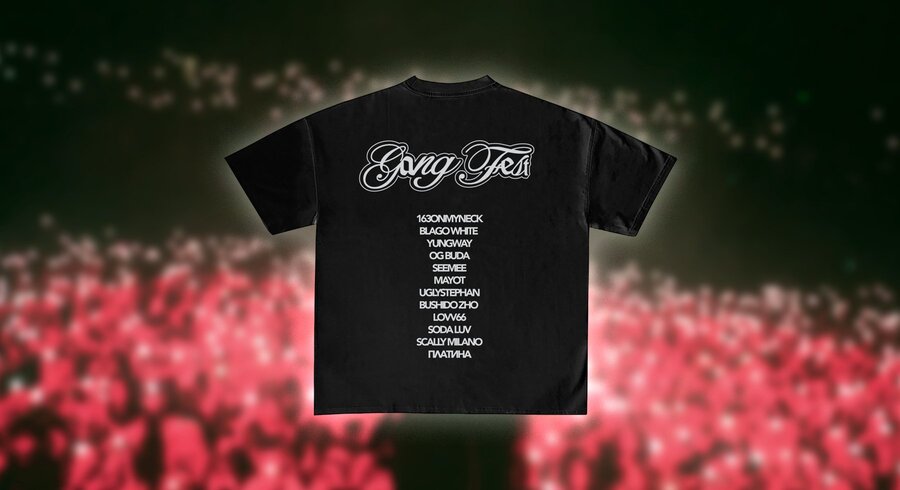
But music is only one part of what GANG FEST is about. Throughout the day, we offer exclusive masterclasses, where fans can learn directly from artists and industry professionals — about writing lyrics, producing beats, or navigating the world of modern rap culture.
We also designed immersive photo zones, rest areas, and interactive spaces where you can chill, express yourself, and create content with your friends. For the most devoted fans, GANG FEST provides a rare opportunity: meet-and-greetswith the artists you admire.
Our mission is to create a festival where people connect through music, creativity, and shared passion. GANG FEST is a place to discover new artists, celebrate the culture, and become part of a growing community.
We’re excited to welcome you to GANG FEST — where the new wave of rap lives, grows, and inspires. Thank you!
Presentation for a professional audience
GANG FEST — Communication Design Concept and Strategic Positioning
Good afternoon. We would like to present GANG FEST, a communication and design project centered around a contemporary music festival dedicated to the new school of rap.
GANG FEST is designed as a multimodal communication environment, combining live performances, educational formats, spatial design, and fan-community engagement. Our objective is to build a cohesive brand identity that reflects the aesthetic, values, and communicative practices of today’s rap culture.
From a strategic standpoint, GANG FEST addresses three core communication goals:
Cultural relevance. We position the festival within the rapidly growing new-wave rap movement, which prioritizes individuality, experimentation, and digital-first creativity. This informs our visual language, tone of voice, and narrative structure.
Interactive experience design. Beyond the musical program, we integrate masterclasses, curated rest zones, and photo installations to create distinct communicative touchpoints. These interactions allow audiences to engage with the brand not only as spectators but as participants.
Community building and audience segmentation. By offering fan-oriented activities such as meet-and-greets, we strategically address the needs of core audience groups: enthusiastic listeners, content-creators, and devoted fans. This reinforces long-term engagement and brand loyalty.
From a design perspective, the project involves developing a consistent visual identity, navigation system, spatial elements, and communication materials. Each element is conceptualized through communication theory principles: symbolism and meaning-making, user interaction patterns, context-sensitive messaging, and multimodal coherence.
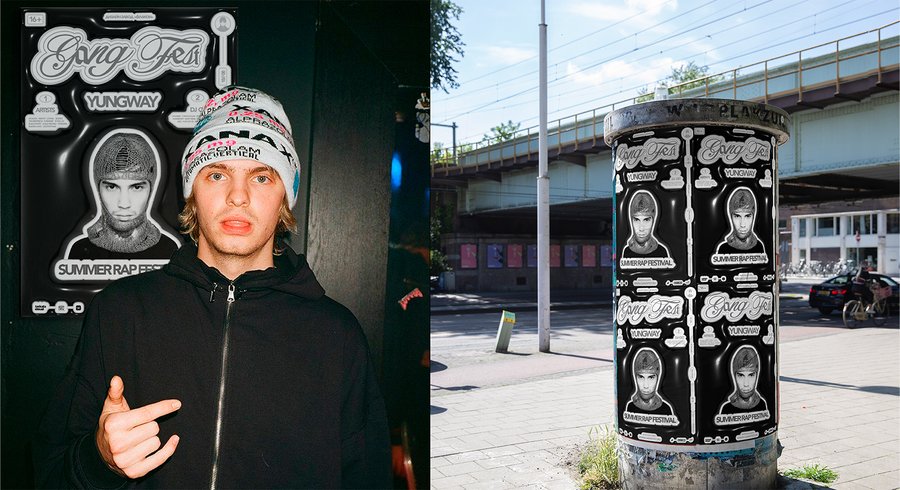
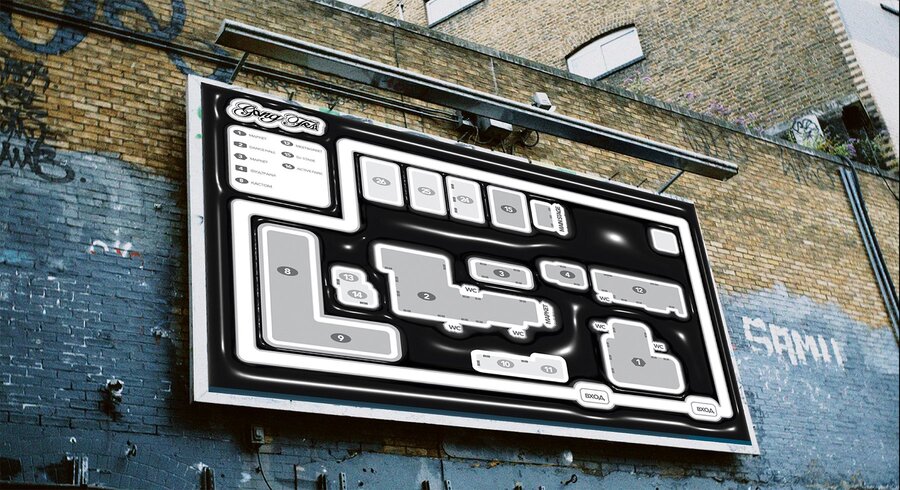
Our approach frames GANG FEST not simply as an entertainment event but as a constructed communicative space, where meaning, identity, and user experience are intentionally shaped through design.
We believe that this framework enables the festival to function as both a cultural product and a communication system, accomplishing our goals of engagement, immersion, and relevance within contemporary music culture. Thank you for your attention.
A detailed explanation of how the communication theory presented in the online course served as the basis for creating these presentations
The communication theory introduced in our online course played a central role in shaping both presentations for GANG FEST. We relied on key theoretical principles — including the communication process model, the role of context, the difference between verbal and non-verbal symbols, and the fundamental functions of theory (to describe, explain, predict, and transform). These concepts guided how we structured our messages, how we adapted them to different audiences, and how we made design-oriented decisions.
1. Understanding communication as a process guided our structure
The course defined communication as a process involving a sender, a receiver, a message, and contextual factors. This helped us recognize that the two presentations require different communication strategies because the receivers — general visitors versus professionals — differ in expectations, knowledge, and goals.
— For the general audience, we simplified the message, emphasized emotions, immersion, and personal benefits, and used accessible language. — For the professional audience, we adopted analytical language, emphasized strategy, design reasoning, and communication objectives.
In both cases, we consciously shaped our role as the sender and crafted messages that fit the receiver’s needs and context.
2. Distinguishing verbal and non-verbal symbols shaped our storytelling
The course emphasized that communication includes verbal and non-verbal symbols. Even though the presentations are textual, we treated the tone of voice, structure, and word choices as symbolic tools that communicate meaning beyond literal content.
— For the general audience, non-verbal cues appear through a more energetic tone, emotionally charged words, and a rhythm that mirrors the musical identity of the festival. — For the professional audience, we used academic terminology, structured arguments, and strategic framing, functioning as non-verbal indicators of professionalism and expertise.
This aligns with the semiotic tradition in communication theory, where meaning is constructed through symbols and the associations they evoke.
3. Context shaped how we adapted the message
The course highlighted the role of context in determining meaning. This was crucial in differentiating the two presentations.
— The context of the general audience is entertainment, anticipation, and personal experience. — The context for the professional audience is evaluation, critique, and academic rigor. Using contextual awareness allowed us to prioritize different communicative goals: emotional engagement for the general audience and theoretical clarity for professionals.
4. The theory’s four functions guided our design process
The course defined theory as serving four purposes: to describe, explain, predict, and transform. These functions directly influenced the presentations.
— We described the festival and its communication environment. — We explained the strategic choices behind GANG FEST’s identity and communication touchpoints. — We predicted audience expectations and tailored our language and structure accordingly. — We transformed raw information into meaningful, audience-centered narratives.
This approach ensured that both presentations were not arbitrary texts but purposeful communication artifacts designed through theoretical reasoning.
5. Craig’s constitutive model influenced how we conceptualized the festival
From Craig’s perspective, communication is constitutive — it creates meaning and shapes reality. We applied this idea by treating the presentations not merely as descriptions of GANG FEST but as tools for constructing the brand identity. — In the general audience presentation, we constructed GANG FEST as a cultural experience and an emotional environment. — In the professional audience presentation, we constructed GANG FEST as a strategic communication system and design project.
In other words, the presentations themselves participate in shaping what the festival is in the minds of different audiences.
6. Multi-tradition perspective helped us choose the right framing
Craig’s model of seven communication traditions informed our approach: — Semiotic: attention to visual identity and symbolic meaning. — Sociopsychological: understanding audience expectations and motivations. — Cybernetic: conceptualizing GANG FEST as an interactive system of touchpoints (rest areas, photo zones, masterclasses). — Rhetorical: crafting persuasive narratives for both presentations. — Critical: reflecting on power, cultural relevance, and representation in the festival’s concept.
This theoretical diversity allowed our presentations to be not just informative but conceptually robust.
Conclusion
In summary, communication theory served as the conceptual backbone of our presentations. It guided how we analyzed our audiences, structured our messages, chose our symbols, and articulated the festival as both a cultural and communicative event. By applying these theoretical principles, we ensured that our presentations were not only well-written but also aligned with the deeper processes of meaning-making, audience engagement, and professional communication.
A list of sources of images
A list of literature
- All pictures are from Kamila Garaeva’s project https://hsedesign.ru/project/5a34fced564949e2989e0dcd1c90197a
Communication Theory course
«Communication Theory» by Robert T. Craig
«Communication as Social Science» by Craig Calhoun