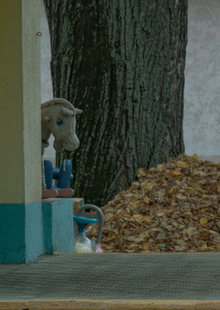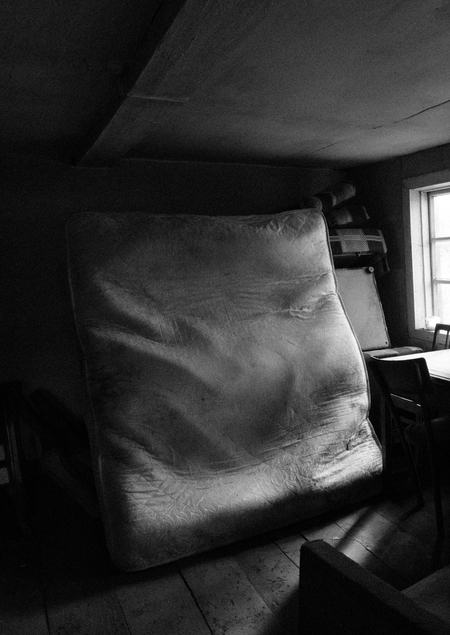
A house does not disappear the moment its inhabitants leave. It continues to retain their presence for a long time—in the arrangement of the furniture, in the layers of wallpaper, in the discarded papers, in the scuffs on the doors and window sills. Objects remain in place, even if they are no longer needed by anyone. The space continues to exist, but it gradually loses its purpose.
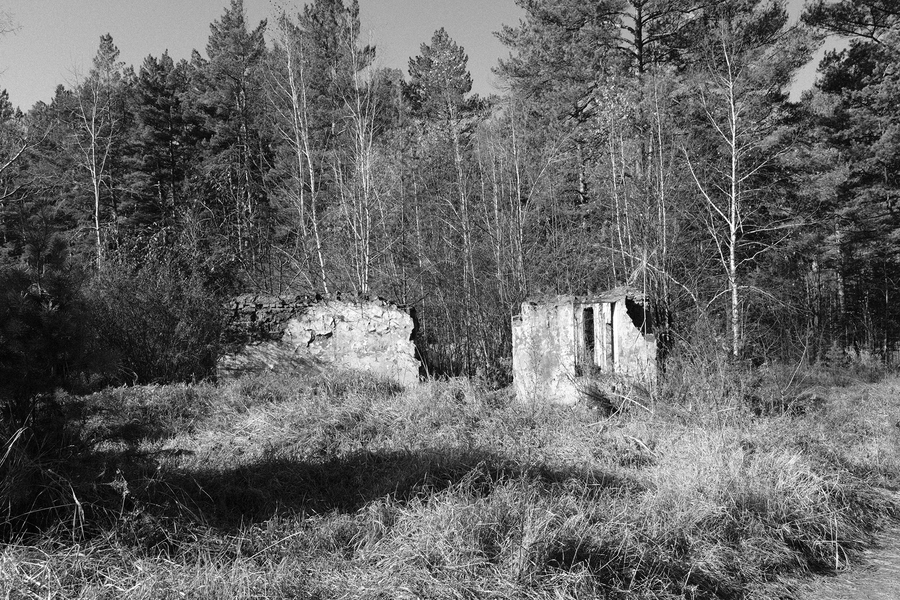
In Atamanovka, I photographed abandoned and ruined structures, trying to understand the precise moment when a residential space ceases to be a home.
Externally, these buildings retain their familiar silhouettes. They have roofs, windows, and doors; they are recognizable among the trees and neighboring structures. However, upon getting closer, it becomes apparent just how conventional this preservation is.
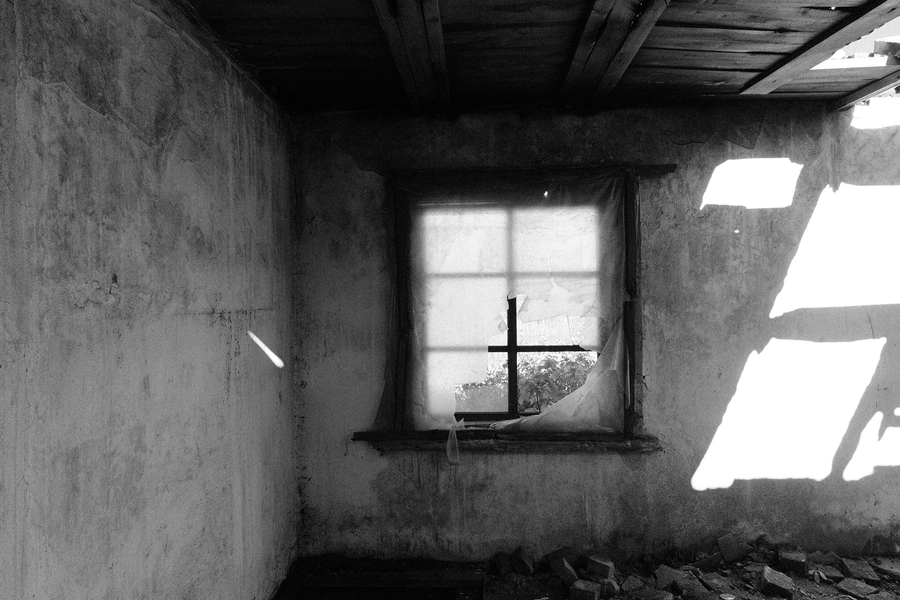
The window no longer defends against the street. The door invites no one in. The interior space ceases to be separated from the exterior.
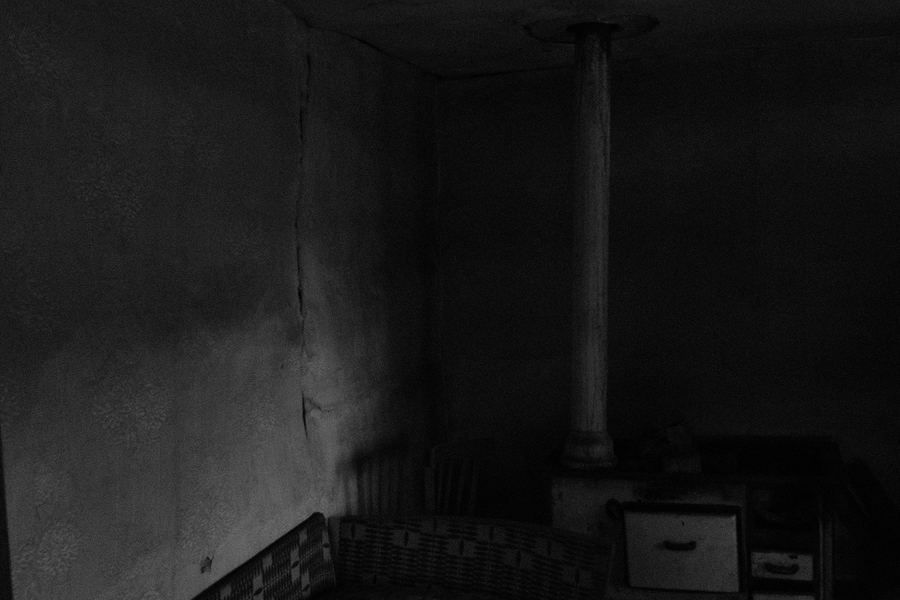
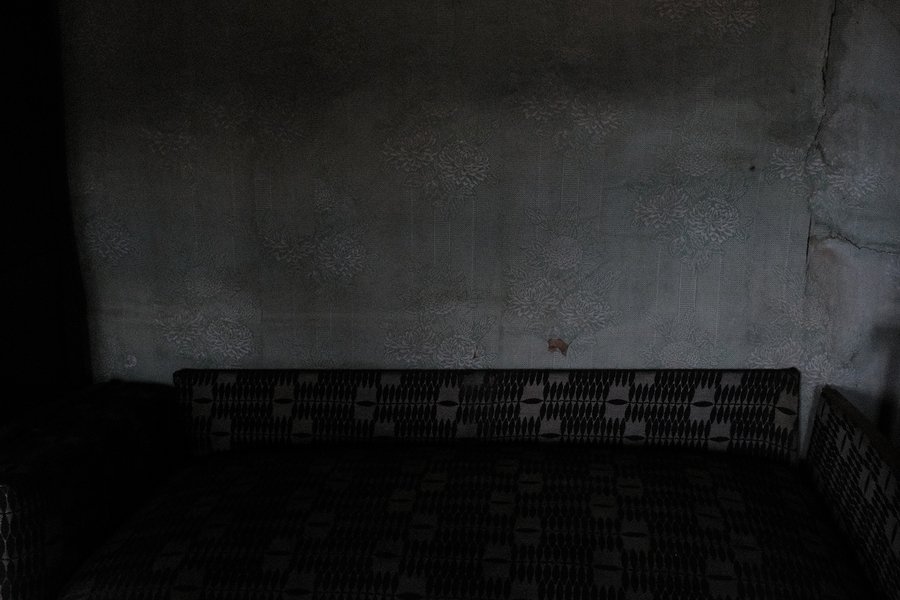
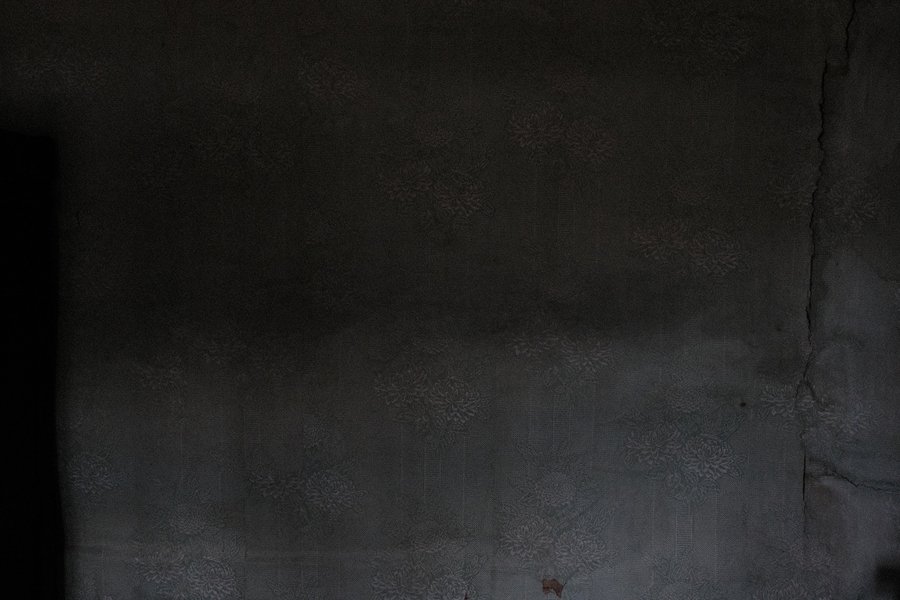
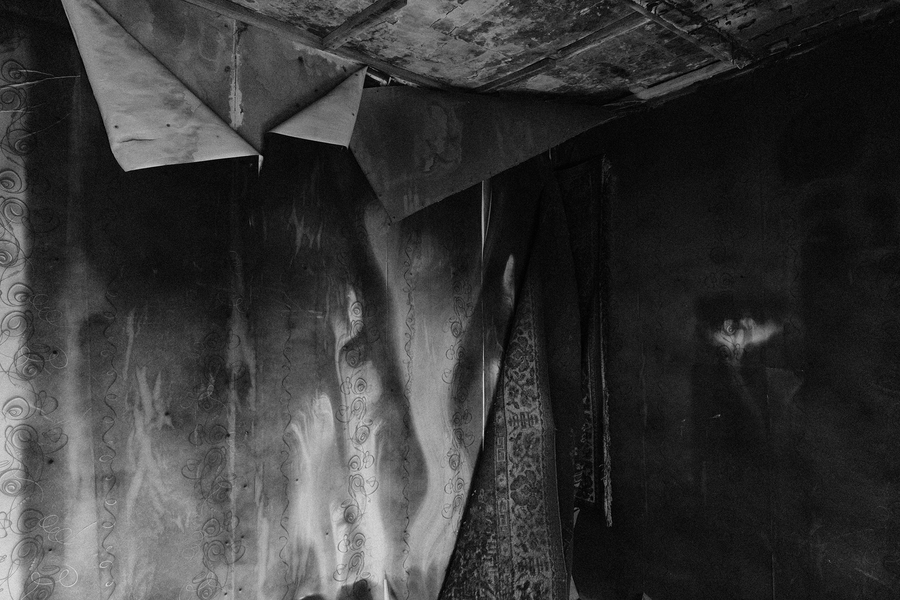
Items remain in the rooms whose function is easy to imagine, but whose history is impossible to reconstruct. Old papers lie on the shelves. Furniture occupies a space once chosen by a person. The wallpaper retains the pattern intended for an everyday life that no longer continues here.
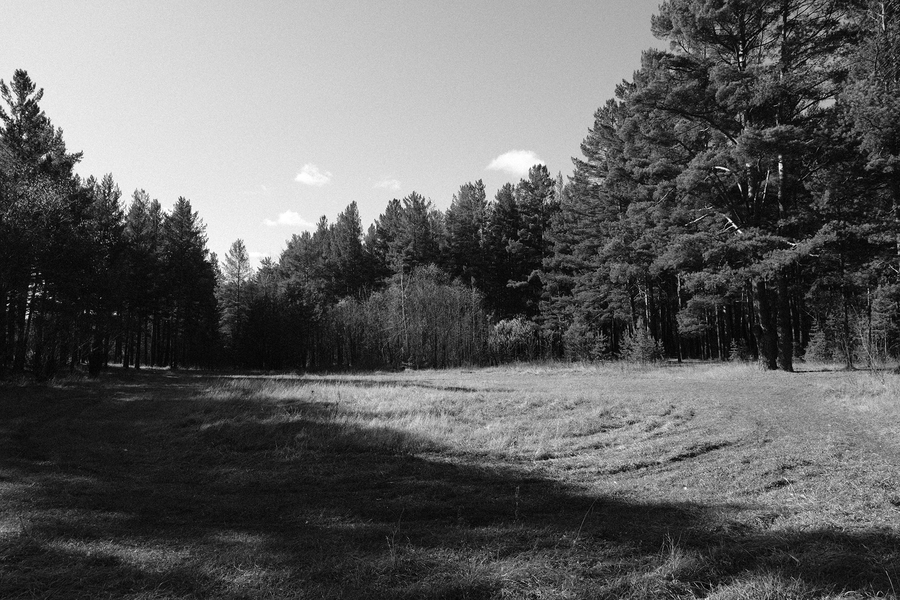
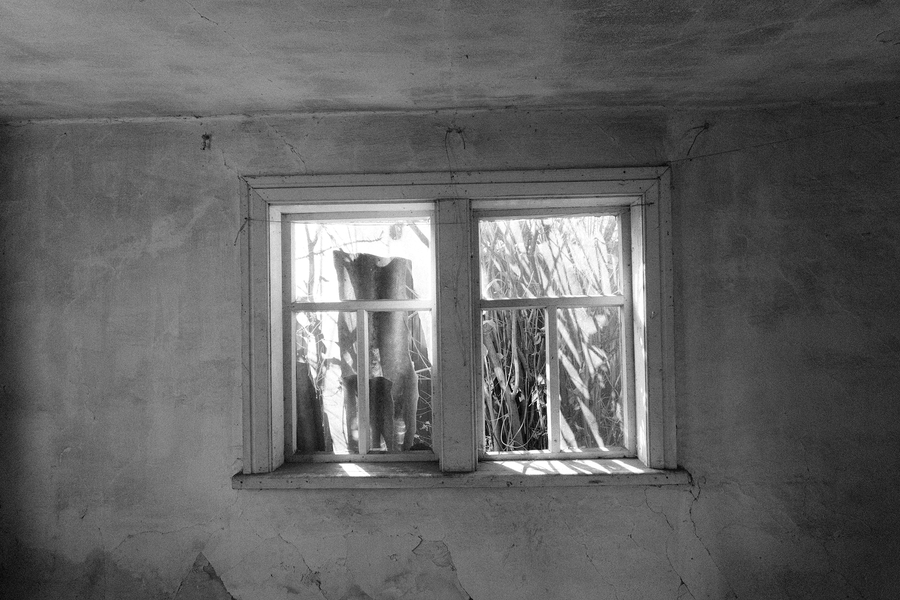
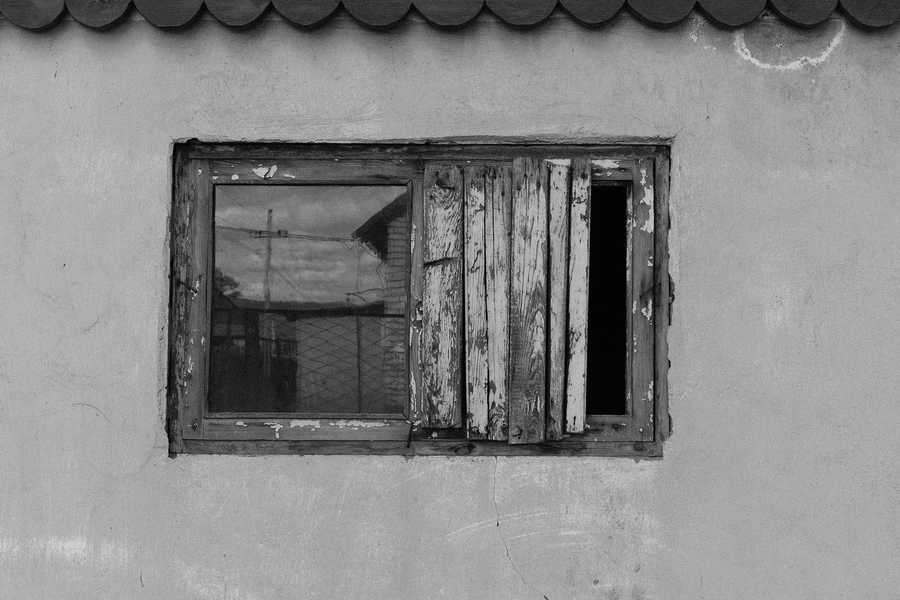
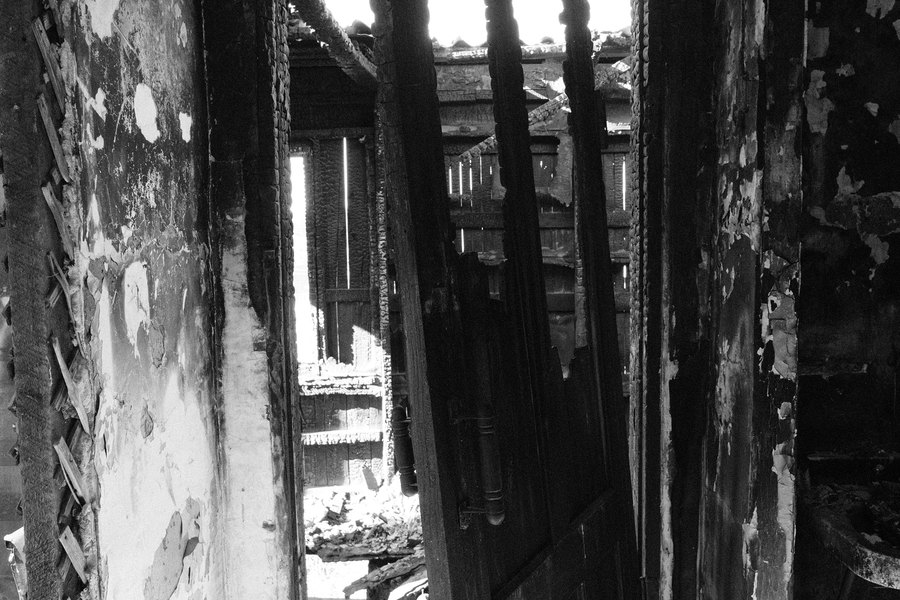
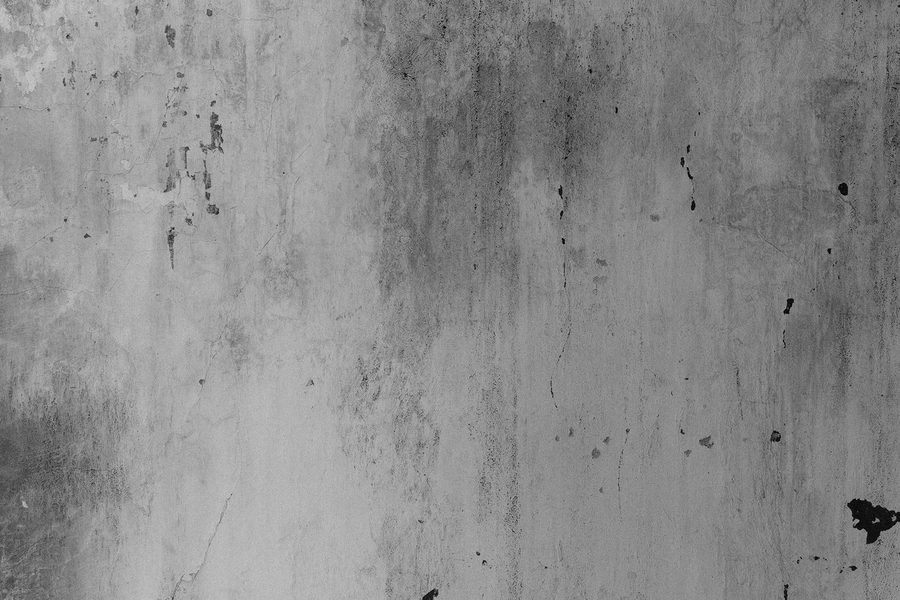
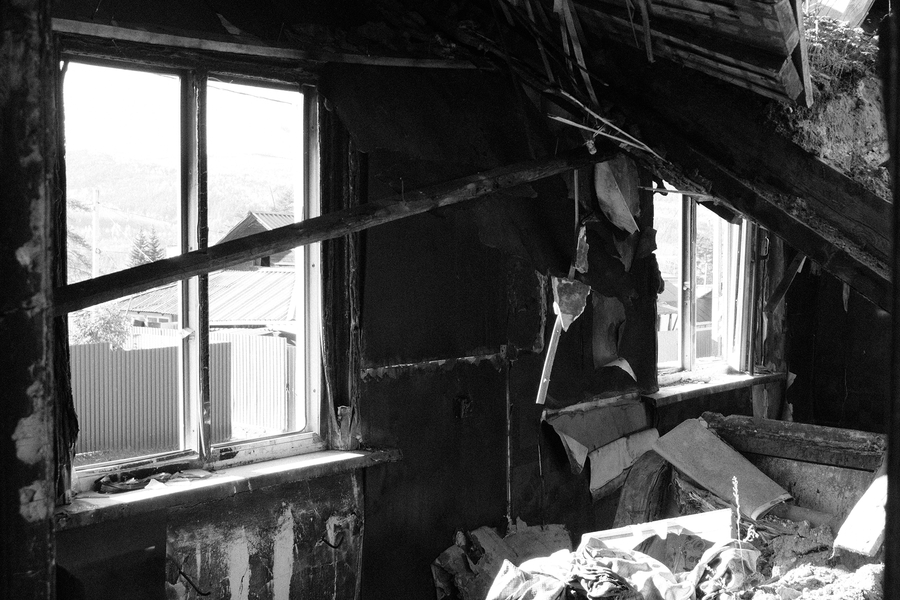
Gradually, the traces of a lived-in space give way to the marks of destruction. Burnt-out wood, crumbling plaster, damaged walls, and ceilings become the house’s new surfaces. Fire obliterates familiar forms, but simultaneously reveals what was previously hidden—the structure of the walls, the layers of materials, the interior arrangement of the rooms.
In these spaces, I am particularly interested in light. It filters through empty windows and broken ceilings, falls upon the walls, and illuminates objects long unused. At times, its presence seems almost inappropriate—too clear and serene amidst the signs of decay.But light does not restore the home to its former life. It merely allows one to glimpse what remains of it for a short time.
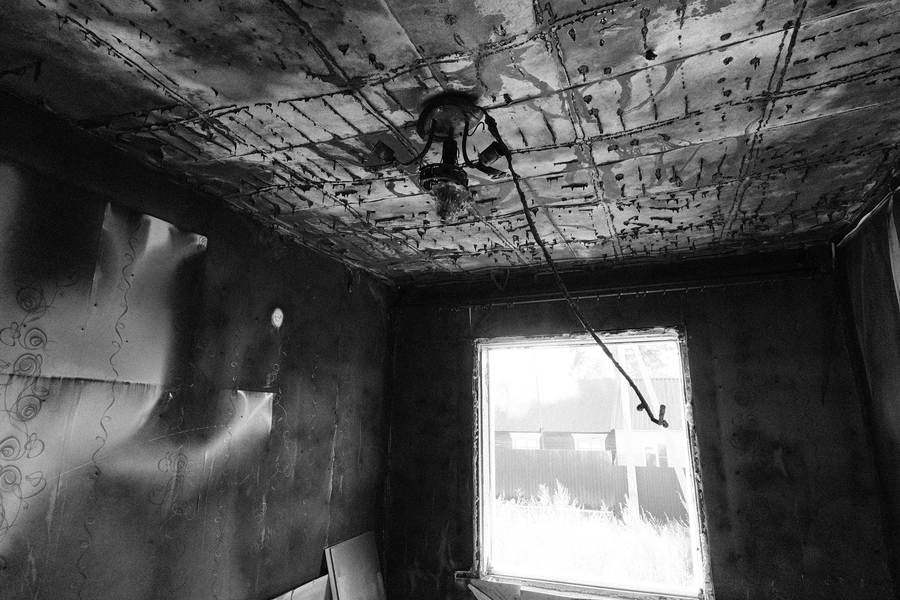
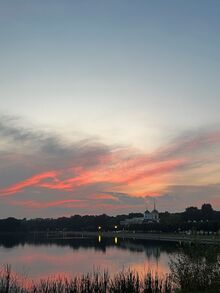
The most recent photographs in this series have been shot in color. After the black-and-white interiors, the color feels unusual: the sky is still blue, the sun illuminates the scorched walls, and life continues normally beyond the ruined structures.The house remains part of this landscape, even when it can no longer be a home. And perhaps its disappearance happens not when the last walls crumble, but much earlier—when there is no one left to remain in it.