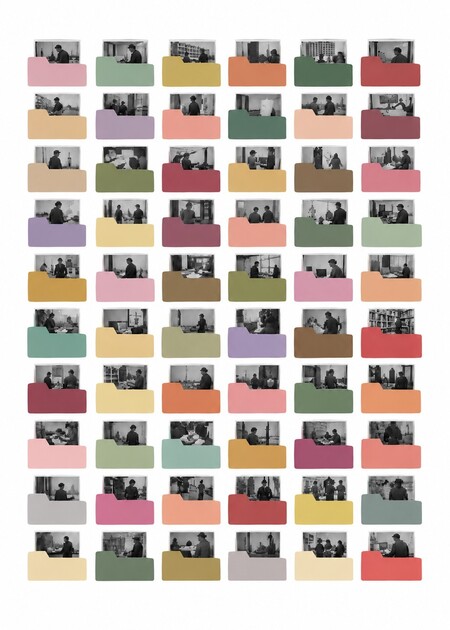
Photography holds a unique place in contemporary art due to its ability not only to capture reality but also to reimagine our familiar ways of perceiving the world. It can serve not just as a means of documentation, but as an independent artistic tool through which the artist explores social relationships, the mundane, identity, and historical memory. Photographic imagery allows attention to be drawn to phenomena that often remain outside the scope of public awareness, transforming the ordinary into an object of artistic inquiry.
A photo collection takes on particular significance in this context—a sequence of images unified by a common theme, selection principle, or organizational method. Unlike a single photograph, a collection allows one to reveal recurring actions, compare diverse situations, and demonstrate the scope of a specific phenomenon. Through its seriality, photography can become a means of exploring the unnoticed: it captures not only individual actions and their subjects, but also repetition, conditions, and traces. In contemporary art, a photo collection can serve as a visual archive, enabling a re-evaluation of the role of labor in social and economic life.
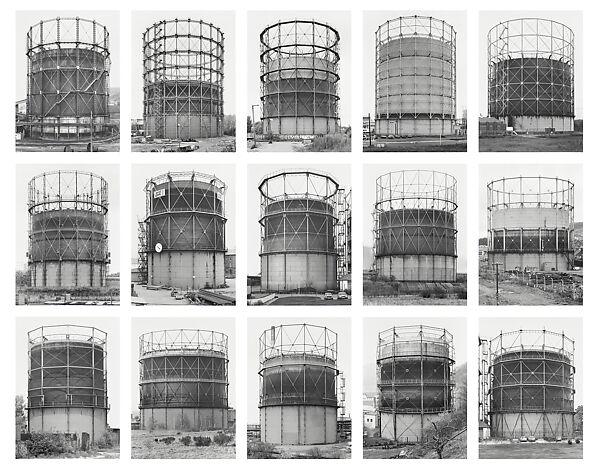
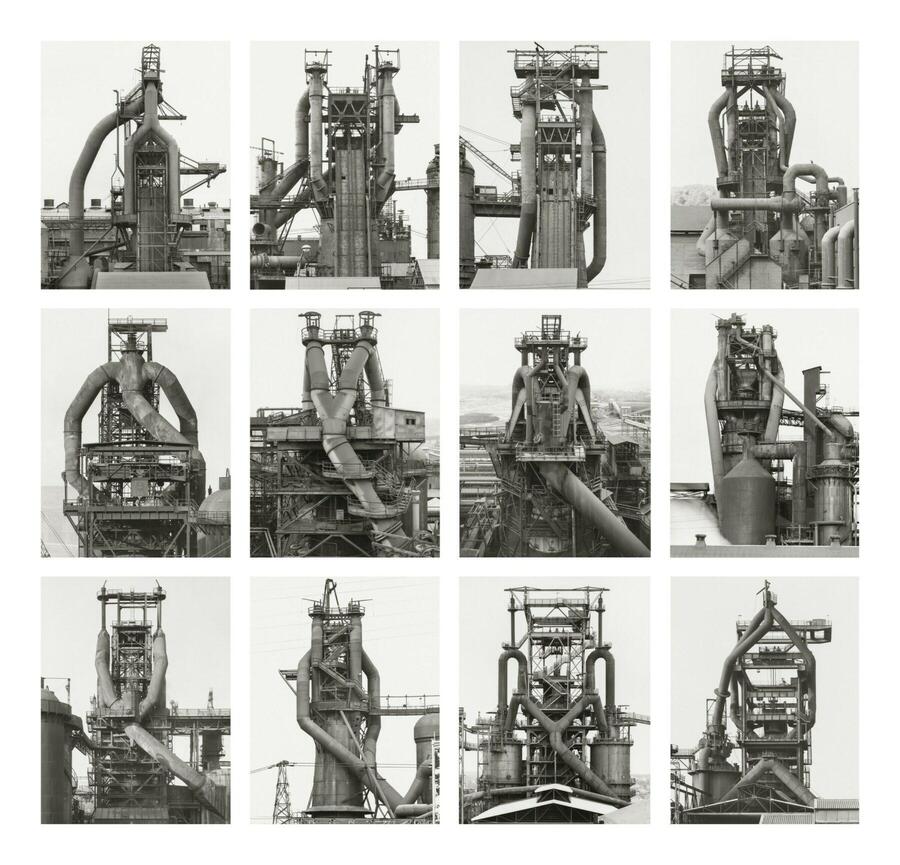
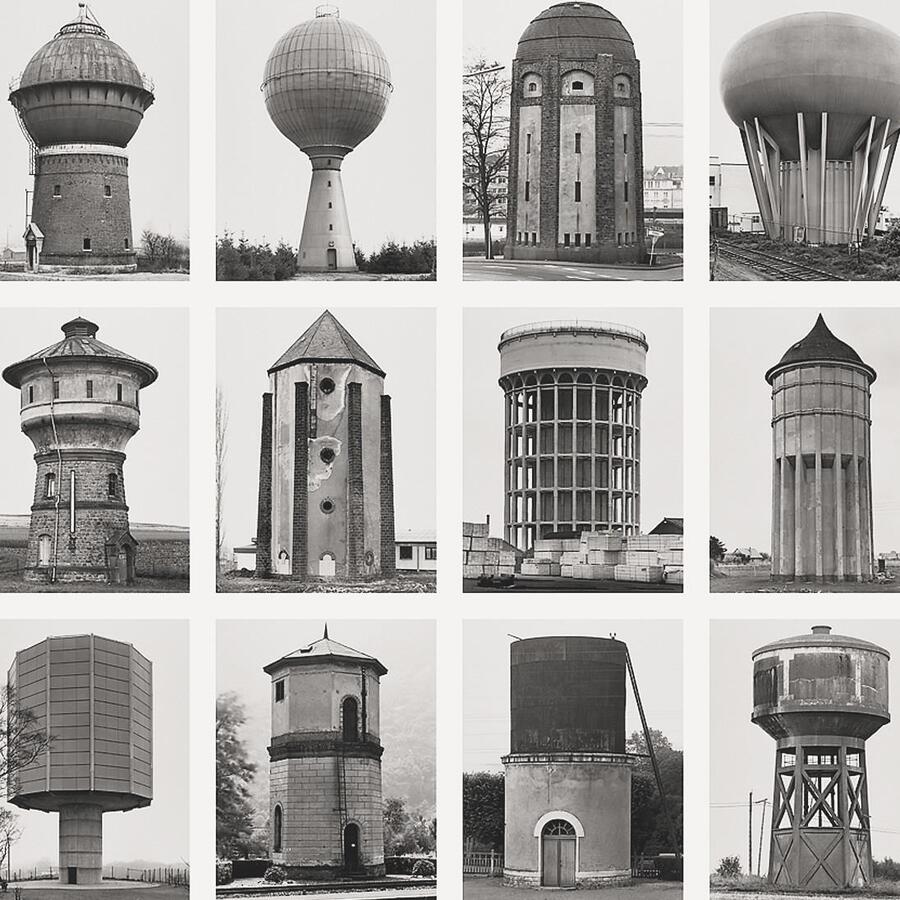
Bernd and Hilla Becher created series of black-and-white photographs of industrial structures: water towers, blast furnaces, mine headframes, and gas holders. By photographing the objects from the same angle and under similar lighting, the artists organized the images into typological compositions. This arrangement of photographs allows for a comparison of the structures and the identification of recurring elements of industrial architecture.
Instead of directly documenting workers, the Bechers document the industrial infrastructure they created. The serial nature of the work showcases numerous objects as the result of systematic activity that extends beyond a single working moment. The photo collection preserves the material traces of labor even when the production processes cease and the structures lose their original function.
In the Yukeles project, the artist interacted with the staff who maintain the office building and photographed them while performing their daily duties. The artist created a collection of 720 Polaroid photographs, accompanying them with notes and responses from the workers on whether they consider their work to be art or merely labor. The images, unified into a single installation, document the variety of tasks and personnel that ensure the building’s functionality.
Through this serial documentation, the artist elevates service labor from the backdrop of everyday life into the realm of art. While an individual photograph captures only a brief moment, the entire collection reveals the consistency, repetition, and collective scope of the work. The project challenges the division between art and service, underscoring the social significance of activities that are often perceived as secondary or unnoticed.
Throughout the year, Teaching Se marked his time on the work clock and photographed himself at each checkpoint. He created a sequence of images documenting the regular repetition of the same action. The series of photographs allows viewers to see not an isolated action, but an exhausting cycle of repetitions that governs the artist’s daily life. Each photograph bears witness to adherence to a set schedule, and the entire sequence demonstrates how time can transform into a tool of control. The project investigates labor discipline, alienation, and human dependence on the regulated system characteristic of modern work organization.
Working as a maid in a Venetian hotel, Sophie Calle photographed hotel rooms, guests' personal belongings, and the traces they left behind. She augmented the photographs with written observations, describing the objects and reconstructing possible narratives of the absent individuals.The project explores the relationship between ephemeral labor and personal identity and privacy, demonstrating how professional activity can intersect with the intimate aspects of another person’s life. Inconspicuous labor becomes the mediator between public and private space, and the fleeting traces of human presence become a means of contemplating an identity that remains concealed behind daily routines.
Bertinski portrays labor through its material consequences, infrastructure, and environmental impact. Large-scale compositions often sideline individual workers, emphasizing how deeply human activity is embedded in the global production system. The project raises questions of consumption, industrialization, and ecological responsibility, prompting us to view labor not in isolation, but within the context of its economic and social ramifications.
In his project, Allan Sekula combined photographs and texts dedicated to maritime trade, port infrastructure, and the people who facilitate the movement of goods. For the Kassel version, a series of photographs was displayed on billboards in the urban space, presenting his artistic statement on the significance of this labor.
Repeating windows, workstations, and human figures form a visual grid, within which individual offices become elements of a unified architectural structure. The collection brings together numerous such fragments, creating a generalized image of the modern office space. The serial structure emphasizes the uniformity and repetition of office work, while the camera distance visually anonymizes the workers. The individual becomes part of an architectural and corporate system, where personal actions are lost among countless similar workspaces. The project explores alienation and anonymity in modern labor, focusing on how the organization of workspace affects the perception of the individual and their role in society.
Sharon Lockhart observed the workers at the Bath Iron Works shipyard in Maine, documenting their behavior during lunch breaks. The images capture individual moments within the broader work schedule, forming a visual archive of the workers' daily lives. Lockhart shifts focus from direct production to a time interval usually perceived merely as a pause between work tasks. The juxtaposition of images reveals the diversity of personal habits and forms of interaction present within the collective work environment. The project emphasizes the human element of industrial labor, showing that a worker’s life is not confined to their production function.
In the project Untitled (Archive Ravne Steelworks), Viktor Popovych draws upon archival photographs of workers from the Ravne steelworks, taken in the 1950s and 1960s. The artist selected 196 portraits and combined them into a composition, employing silkscreen printing using pigment collected from the factory grounds.This photographic collection allows for a comparison between the historical presence of the workers and the contemporary depiction of production, where the human figure visually recedes into the background. The pale, almost fading impressions underscore the fragility of memory regarding the people whose work formed the foundation of industrial history.