Hapticality in Contemporary Art
Introduction
More than just the physical sense of touch, hapticality in contemporary art refers to the evocation, invocation, and prioritization of tactile experience as a central mode of artistic engagement and meaning-making. The term «hapticality» derives from the Greek haptō, meaning «to touch» or «to fasten». This phenomenon is not merely about making art that is tactile, but about engaging the entire embodied experience, the memory of touch, the weight of materials, the trace of the body, and the visceral, emotional resonance of physical presence.
Therefore, this essay will interpret hapticality as a strategy to create embodied, multi-sensory encounters that forge intimate connections between the artwork, the viewer, and concepts of memory, trauma, and the phenomenological world, demonstrating its relevance through five pivotal examples.
I will explore the term as part of artistic practice, as artists' desire to make perception more bodily and sensory, breaking the usual boundaries of visual perception and involving tactile sensations.
Examples
Ernesto Neto, «Leviathan Thot», 2006
Ernesto Neto, «Leviathan Thot», 2006
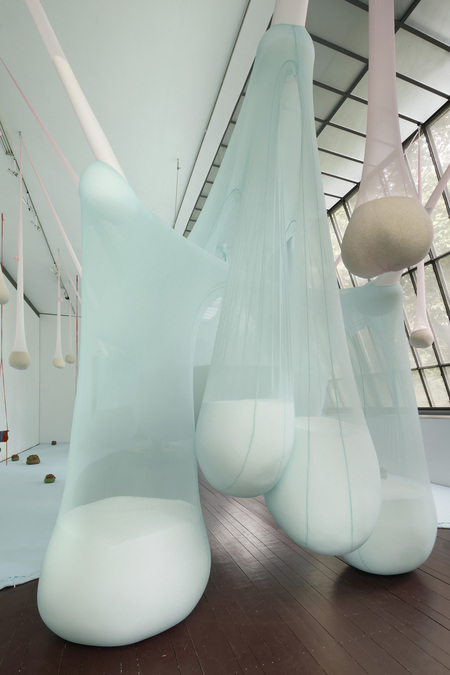
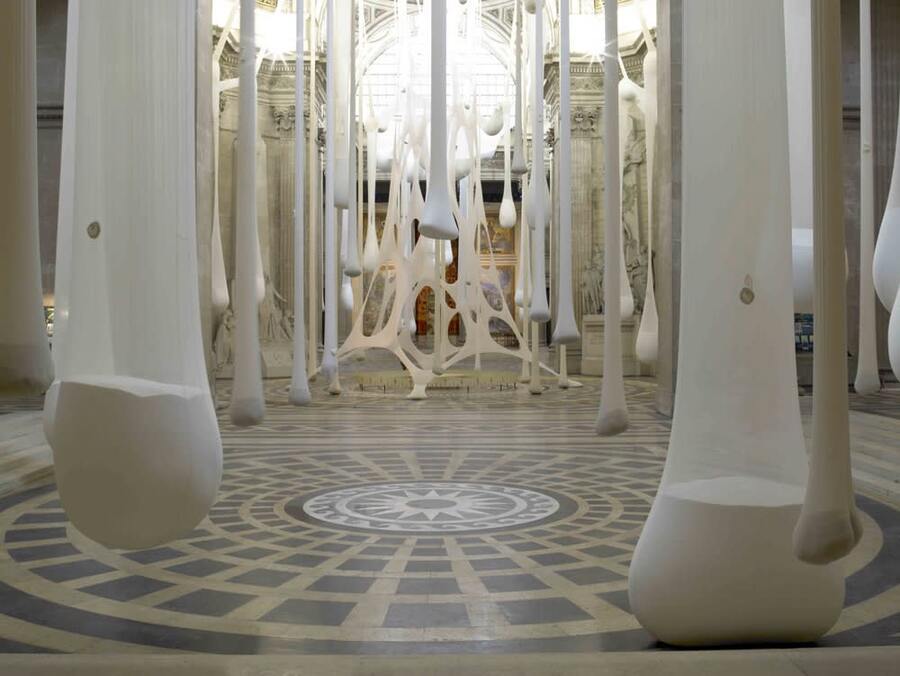
Ernesto Neto’s immersive environment of tactile objects called «Leviathan Thot» violates the museum’s favorite commandment: «Do not touch». The Brazilian artist’s installations, made of translucent synthetic materials, eagerly await «bodily» contact with the viewer. The biomorphic objects are designed to appeal to all senses at once: when you touch the installation, you feel, see, and hear it come to life. It was essential to the artist that viewers could actively engage with his art and gain a physical experience.
Rachel Whiteread, «House», 1993
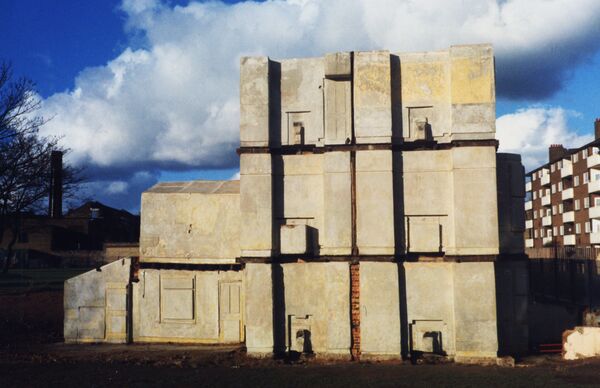
Rachel Whiteread, «House», 1993
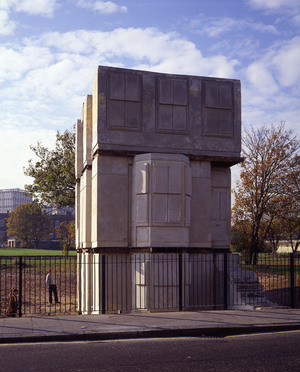
Rachel Whiteread’s most famous work «House» (1993), was a concrete cast of the interior space of a terraced house. While the public could not physically touch the negative space, the work’s hapticality is overwhelming. It monumentalizes a whole history of domestic relationships between generations of residents. Every door handle, fireplace, and wall texture has been depicted turned inside out, transforming the invisible space of the house into a haptical object. The work is a profound reflection on memory and absence, gaining strength from its material presence. It’s an example of how the intangible can become tangible, giving concrete form to the void left by lost lives.
Marina Abramovic, «Rhythm 0», 1974
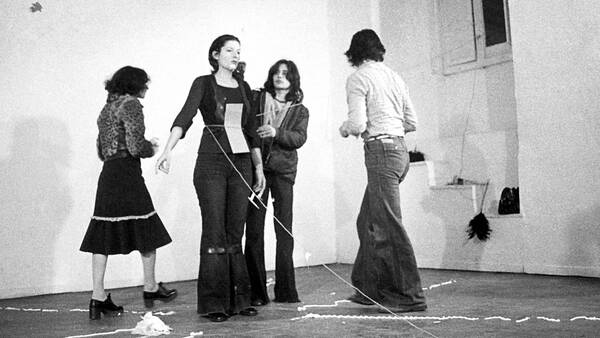
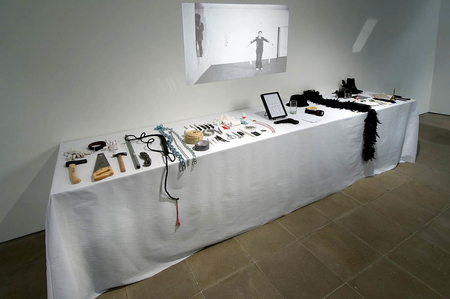
Marina Abramovic, «Rhythm 0», 1974
While artists like Ernesto Neto create a safe hapticality, and Harney and Mowat speak of a indirect, monumental hapticality, Marina Abramović’s «Rhythm 0» reveals the raw, unpredictable, and potentially destructive force that is unleashed when tactile interaction is stripped of all social conventions and prohibitions. This is also very significant in the context of the artist-viewer relationship.
The performance involved the artist standing still for 6 hours, and the audience was allowed to do whatever they wanted with her, including using 72 objects that were placed in front of her.
Pinaree Sanpitak, «Breast Stupa Cookery», 2020
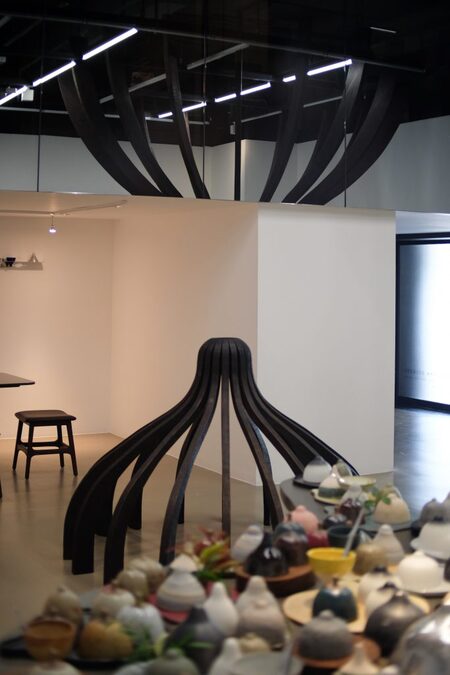
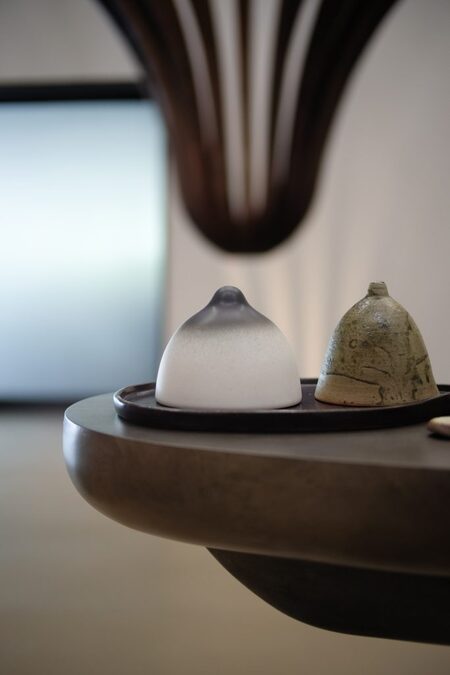
Pinaree Sanpitak, «Breast Stupa Cookery», 2020
Thai artist Pinaree Sanpitak’s work explores the form of the female breast and the Buddhist stupa, both symbols of nourishment and spirituality. In her performative project Breast Stupa Cookery, she creates edible sculptures made of rice, jelly, and other foodstuffs in these organic shapes. The hapticality here is communal and ritualistic. Participants are invited to touch, handle, and ultimately consume the artworks. This act dissolves the artwork entirely through touch and taste, making the aesthetic experience a literal form of nourishment. Sanpitak uses hapticality to break down the hierarchies between art and life, the sacred and the everyday, and the viewer and the object.
Doris Salcedo, «La Casa Viuda» («Widowed House»), 1994
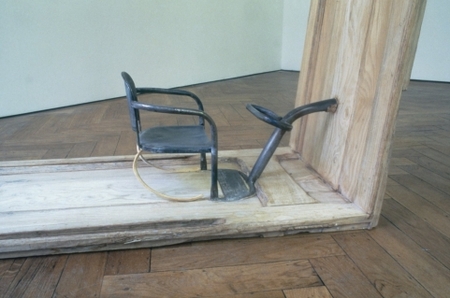
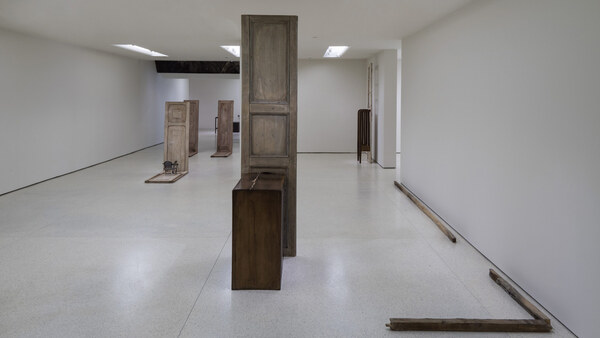
Doris Salcedo, «La Casa Viuda», 1994
Hapticality is a powerful tool for exploring themes of memory, trauma, and the human trace. The work of Doris Salcedo is a masterful example. Her sculpture «La Casa Viuda» contained domestic objects, chairs, tables, clothing, infused with materials like concrete, silk, or human hair. We see the ghost of touch in these pieces: the impression of a body on a chair, the fragility of woven thread, the cold finality of poured cement. Salcedo’s art is haptic because it makes palpable the evoking a profound sense of loss and memory that bypasses intellectual interpretation and strikes directly at a visceral, empathetic level. The work doesn’t just represent trauma. It embodies it, and invites us to feel its weight.
Conclusion
By privileging touch, texture, and embodied experience, artists have been able to address complex themes from personal trauma to spiritual nourishment, in ways that are immediate, intimate, and profoundly human.
In an increasingly digital and disembodied world, the use of hapticality reaffirms the artwork as a site of sensory, bodily connection, ensuring that the sense of touch remains as critical to art history as the sense of sight.