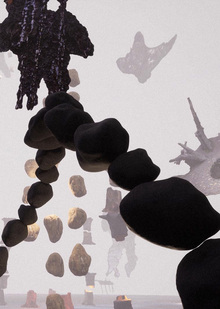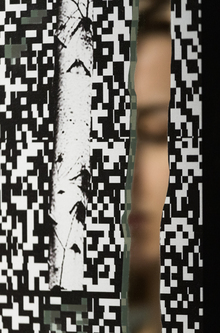
When does a space become a home, and how quickly can that happen? Today, almost every place has a digital representation—composed of photos and data—that exists separately from the physical space itself. We create these images every day when we photograph a room and send the picture to someone who has never been inside it. The image always reaches us before the place does: people first view a city on a satellite map before traveling there, so the first encounter never happens, and every arrival feels like a repetition. Before this expedition, I had never given the Arctic a second thought, and my introduction to it began with one single room. The room is small enough to know entirely, and through it, everything around begins to feel less foreign.
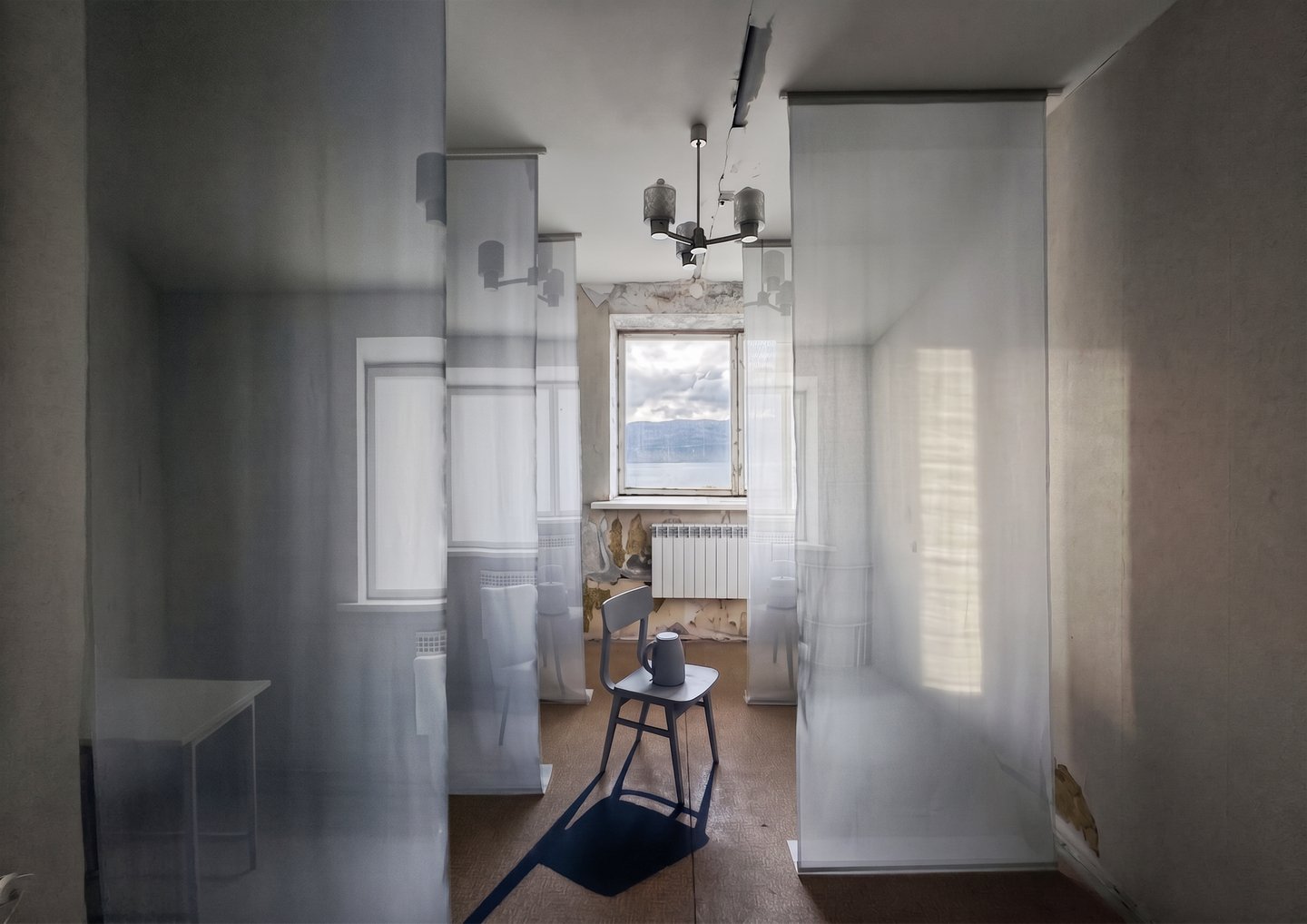
«Room in Building 2, ” 2026. Cotton with digital print, objects dyed a matte gray. 1st Arctic Biennale of Contemporary Art, Barentsburg, Svalbard
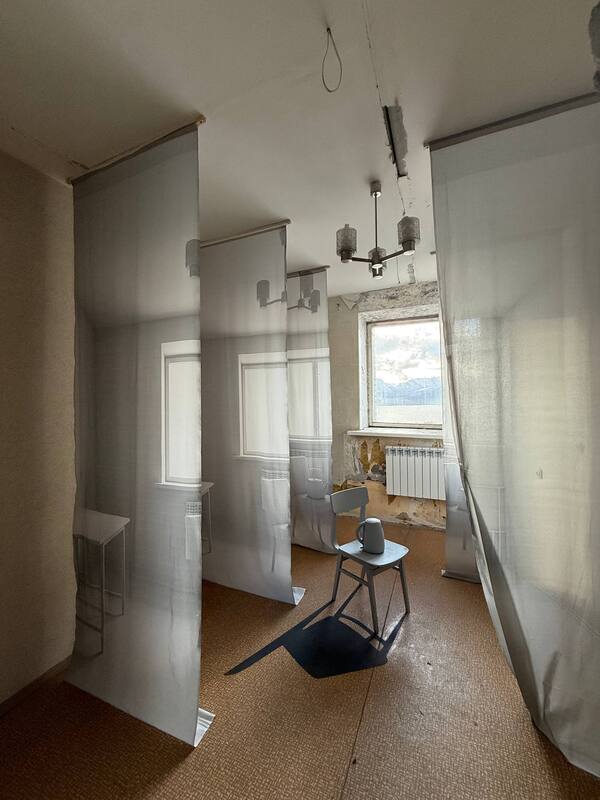
In an empty apartment in Building 2, translucent cotton canvases hang across the room, each featuring a printed 3D image of that very same space. The image conveys the room’s form without texture, while alongside it, peeling paint and worn flooring become the main material. I painted some objects a matte gray to match the image, and I sketched one of the shadows on the floor. The digital and physical versions of the room are nested within one another and exist simultaneously.
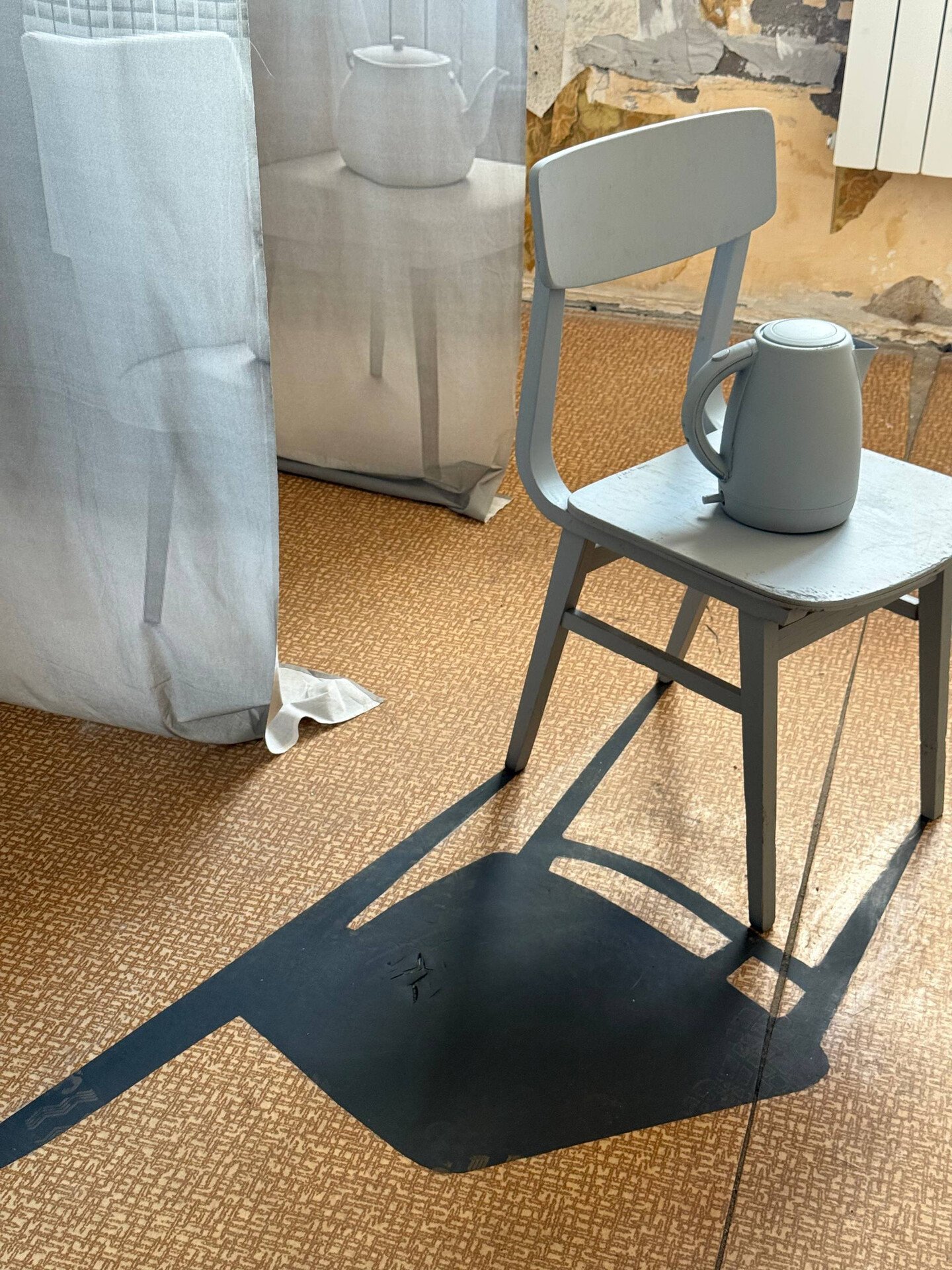
«Room in Building 2, ” 1st Arctic Biennale, Barentsburg, Svalbard, 2026
«Room in Building 2,» 1st Arctic Biennial, Barentsburg, Svalbard, 2026
«Room in Building 2, ” 1st Arctic Biennial, Barentsburg, Svalbard, 2026
«Room in Building 2, ” 1st Arctic Biennale, Barentsburg, Svalbard, 2026
The 1st Arctic Biennale of Contemporary Art, Barentsburg, Svalbard. Curator: Alexander Ponomarev
Concept and Installation: Yulia Nemova
Fabric and Print: «Shuysky Sitces, ” a partner of the Arctic Biennale
The work was created as part of the Arctic Biennale’s first art-scientific expedition