LUMIROOT
Communication theory in the field of design
Communication theory within the field of design can be understood as a framework that explains how meaning is constructed, transmitted, and interpreted through visual and material forms. According to theoretical approaches, design functions as a communicative act in which objects, spaces, and visual systems operate as messages rather than neutral artifacts. The designer encodes meaning through form, color, material, scale, and context, while the user decodes this meaning based on personal experience, cultural knowledge, and situational perception. A key concept of communication theory is that meaning is not fixed or guaranteed. Even when a designer has a clear intention, interpretation remains open and dependent on the receiver. This principle is evident in branding and product design. For example, the visual identity of Apple communicates simplicity, innovation, and trust through restrained color palettes, minimal forms, and precise material choices. These qualities are not explicitly stated, but are decoded by users through repeated visual and tactile experiences. Similarly, IKEA communicates accessibility and everyday practicality through modular forms, neutral lighting, and familiar visual language, shaping user expectations before any verbal explanation is provided.
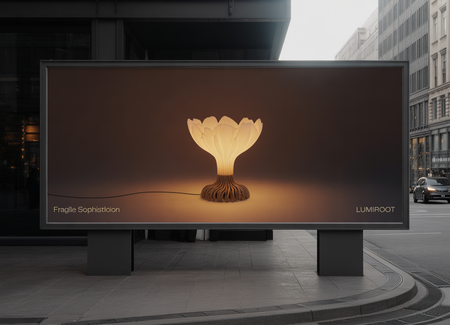
In lighting design, communication theory becomes particularly visible because light itself functions as a non-verbal language. Warm, diffused light often communicates intimacy and comfort, as seen in hospitality brands such as Muji or boutique hotel interiors, while cold, directional lighting is associated with efficiency and control, commonly used in retail or office environments. These lighting choices operate as communicative signals that guide behavior and emotional response without direct instruction.
Within the framework of the course, communication is understood not as a one-way transfer of information, but as a dynamic process shaped by interpretation. This approach is especially relevant to product and lighting design, where an object communicates not only function but also emotion, atmosphere, and symbolic value. Light, in this sense, becomes a medium of communication rather than a purely technical element.

Generated in Leonardo AI
In this lighting design project, communication theory is applied through the intentional use of form, material, and light behavior. The lamp is designed not merely to illuminate space, but to convey a specific mood and narrative. For example, the organic shape of the luminaire and the warm, diffused light encode ideas of fragility, growth, and calmness. These visual signals guide the viewer’s emotional response even before any conscious analysis occurs. According to communication theory discussed in the course, meaning emerges at the point of interaction between the object and the observer. This means that the success of the design is not determined solely by the designer’s intention, but by how clearly the visual language can be interpreted. In my project, the contrast between the natural, flower-like form and the constructed base creates a visual dialogue between nature and object, inviting the user to engage with the lamp beyond its functional role. Thus, communication theory allows design to be understood as a system of signs and messages embedded in physical objects. In the context of this lighting project, the lamp functions as a communicative artifact that transmits emotional and symbolic content through light, form, and materiality. This demonstrates how design operates as a bridge between intention and perception, transforming everyday objects into meaningful visual experiences.
PRESENTATION FOR A GENERAL AUDIENCE
Generated in Leonardo AI
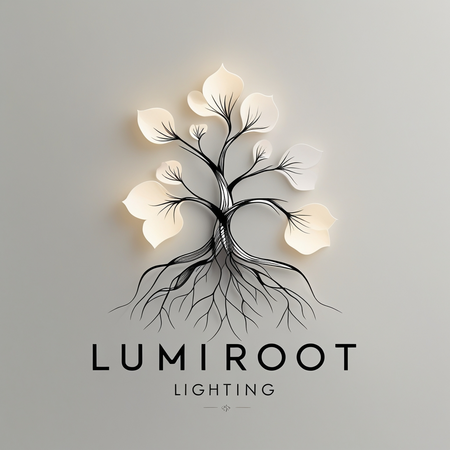
LUMIROOT — a brand that brings the silent pulse of nature into your home through light.

In a world of constant noise and visual overload, our interior space should be a sanctuary for calm and restoration. We believe that light is not just for seeing, but for feeling. Visual research in environmental design shows that natural forms and warm, diffused light are often associated with feelings of calm and emotional comfort. That’s why we create objects that mimic the quiet grace of living plants, offering their beauty and serenity without any need for care. Our guide is nature itself, distilled into form and gentle radiance.
Generated in Leonardo AI
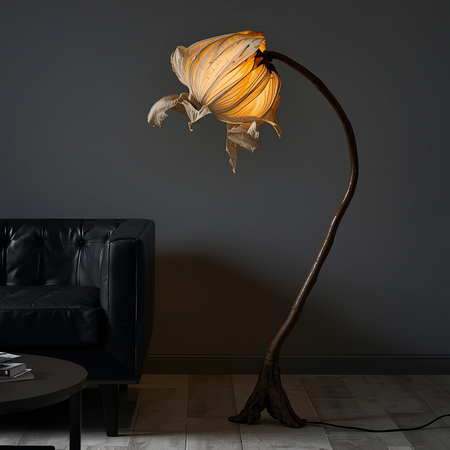
Living Light Sculptures are more than lamps. Their organic, botanical forms — inspired by unfurling petals and soft growth — create the illusion of a living presence. The heart of each sculpture is its Gentle Glow Core, emitting a warm, diffused light that mimics the soft caress of evening sun. This light doesn’t illuminate a room harshly; it atmospherises it, bathing walls in a calming, shadow-free warmth that helps the mind unwind and the space breathe.
Generated in Leonardo AI
The Silent Presence. Unlike a decorative plant, a LUMIROOT requires no water, no sun, no worry. A simple touch turns it into an instant oasis. It works as a serene visual anchor in any room — a quiet companion for reading, reflection, or conversation that supports the atmosphere without ever demanding attention.

1, 2. Generated in Leonardo AI
Touch of Warmth Control. Embedded subtly in the base of each light is an intuitive touch interface. A gentle swipe allows you to adjust the brightness — from a faint, ember-like whisper for deep relaxation to a soft, comforting glow for gentle background illumination, letting you sculpt the perfect mood for any moment of pause. Designed to blend seamlessly into everyday life, LUMIROOT reveals its character through the spaces it inhabits.


1, 2. Generated in Leonardo AI

LUMIROOT naturally finds its place in spaces designed for respite and meaning:
The home sanctuary: a soft glow on a bedroom nightstand, a tranquil accent in the living room, or a calming presence in a reading nook.
Spaces of wellness and focus: a subtle source of ambient light in spa treatment rooms, yoga studios, or private consultation areas.
Hospitality with atmosphere: creating an instantly warm and inviting welcome in boutique hotel lobbies, serene restaurant corners, or cozy cafe spaces.
Our Philosophy: Light as a Quiet Dialogue At its core, LUMIROOT is built on a philosophy of intentional calm. We don’t create light that shouts for attention, but light that whispers of comfort and space. Our design is an exercise in restraint, where every curve and every lumen serves a single purpose: to provide a visual and emotional respite. We believe in the power of passive beauty—objects that don’t demand interaction but reward it with a profound sense of peace. For Those Who Seek a Pause LUMIROOT is for anyone who feels the need to carve out a moment of stillness. For the urban professional creating a mindful corner at home. For the design enthusiast seeking an organic counterpoint to minimalist lines. For the individual who views self-care as the cultivation of a peaceful environment. It’s a tool for the subtle but powerful act of changing the mood of a room, and by extension, the mind.
Generated in Leonardo AI
The Final Essence: Not a Lamp, but an Atmosphere Ultimately, LUMIROOT offers more than illumination. We offer a reliable source of tranquility. It is an invitation to slow down, to reconnect with a simpler, more organic rhythm, and to cultivate a personal haven where light doesn’t just show you the space — it helps you feel it anew.
PRESENTATION FOR A PROFESSIONAL AUDIENCE

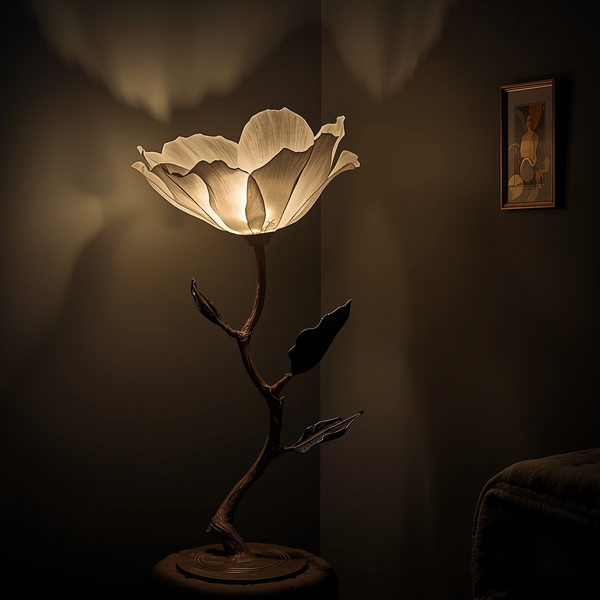
1, 2. Generated in Leonardo AI
LUMIROOT is a brand of designer lamps shaped like glowing flowers. Our products create an atmosphere of harmony and nature within the interior, enhancing the aesthetic value of the space. The realistic detail and use of modern materials ensure that the flowers are as lifelike as possible, creating a sense of nature and magic.
Key Features

Unique Design: Each lamp is a mini-sculpture inspired by nature, created by professional designers and artists. Plausibility: The use of innovative lighting technologies and materials ensures a realistic imitation of real flowers and petals. Customized solutions: The ability to customize the shape and color scheme to match any interior concept. High quality: Reliable components, durability and easy maintenance. Environmental friendliness: The use of energy-efficient light sources and environmentally friendly materials.
Target audience: Our product is aimed at design studios, architectural bureaus, hotels, restaurants, wellness complexes and private clients who appreciate original style and quality.
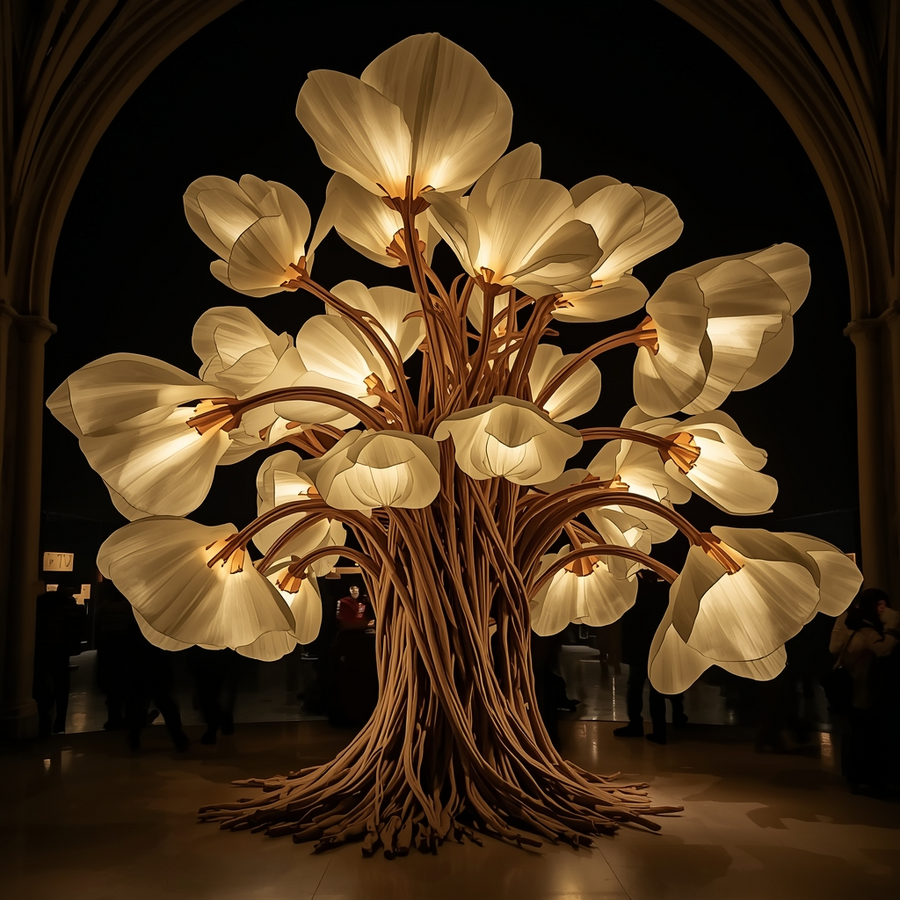
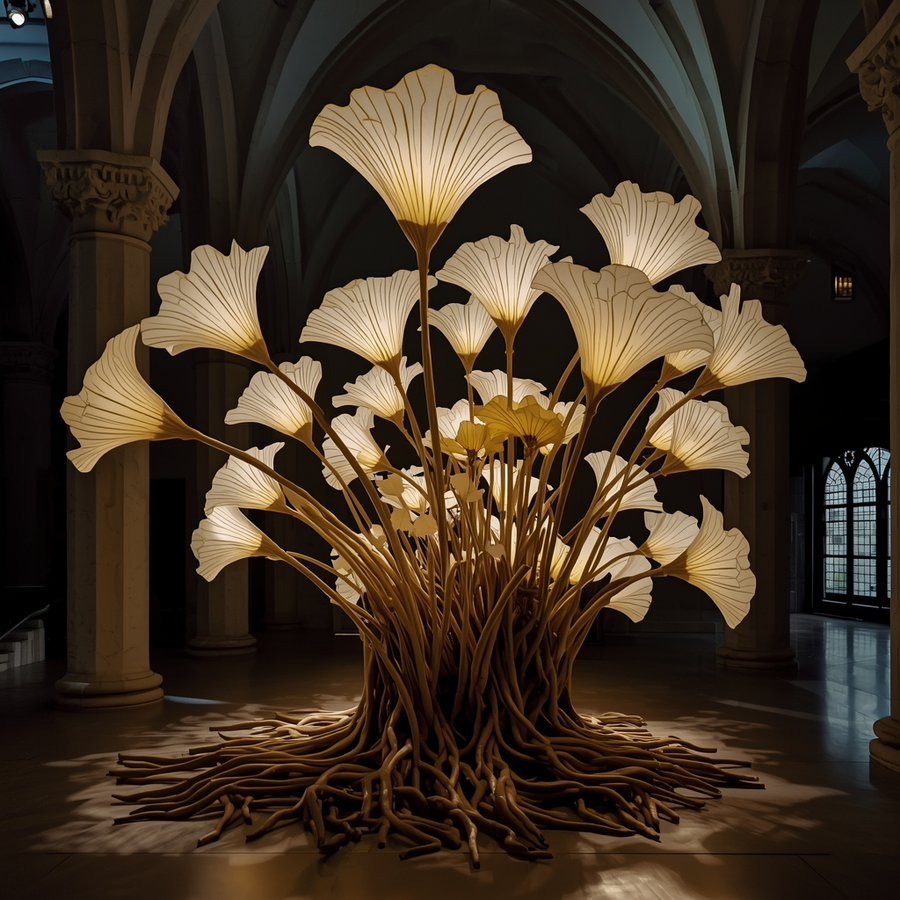

Generated in Leonardo AI
Advantages of luminaires for professional audiences: 1. Innovative design and technological features — The materials used are high-strength, wear-resistant, and easy-to-clean polymers, which ensure durability and minimal maintenance requirements.
— The luminaires are equipped with energy-efficient LED sources with adjustable brightness and color temperature, allowing you to customize the lighting for specific tasks and create the desired atmosphere.
— The built-in drivers ensure stable operation and protection against voltage fluctuations.

2. Ergonomic installation and maintenance — The design without complex elements allows for quick and convenient installation even in hard-to-reach places, including high ceilings or narrow spaces.
— The lightweight and modular design facilitates the quick replacement of individual elements without the need to dismantle the entire structure.
— All parts of the luminaire are removable and compatible with popular mounting systems, making maintenance and repair much easier.
Generated in Leonardo AI
3. Practicality of use The design of the finish prevents dust and dirt from accumulating and maintains its appearance for a long time. 4. Safety — The devices have built-in protection systems against overheating, short circuits, and overloads. 5. Environmental friendliness and energy efficiency — The use of LED technologies ensures low energy consumption and a long service life of up to 50,000 hours without the need for replacement. — The materials are environmentally friendly and safe for human health.
Advantages for partners
— Competitive advantage due to the uniqueness of the product — High demand for creative and eco-friendly solutions — The opportunity to expand the portfolio of original interiors
LUMIROOT is an art that enlivens the space, making it unusual and cozy at the same time. The brand aims to create accent luminous interior elements that not only imitate realistic flowers, but also strive for their fantastic depiction, for the style of fairy-tale and magic.
Generated in Leonardo AI
Two Audiences, Two Worlds: The Objective vs. Interpretive Split
For the Professional Audience (architects, designers), we applied an Objective Theory approach. The product is presented as a system of measurable variables: lumens, lifespan hours, material properties. The goal is prediction—offering a universal, practical solution by demonstrating reliability and ROI. For the General Audience (end consumers), we chose an Interpretive Theory approach. We engage not with facts, but with personal meaning and experience. Light is not «illumination,» but a «quiet dialogue,» a «feeling,» an «atmosphere.» The goal is clarification of values (calm, harmony, mindfulness) and the co-creation of a shared emotional reality.
Choosing the Lens: Craig’s Seven Traditions
Theory acts as a lens, focusing attention on what matters most. For Professionals, the Cybernetic Tradition is the primary lens. The product is framed as an efficient, reliable component within a larger system (the project), with clear «inputs» (specs) and «outputs» (client results). The emphasis is on eliminating «noise» — complications in installation and maintenance. For the General Audience, the Phenomenological Tradition guides the narrative. The entire presentation is built around personal experience and perception («light for feeling,» «helps the mind unwind»). We invite the audience to «try on» the experience of tranquility and restoration, making it their own.
The Pillars of Persuasion: Aristotle’s Rhetorical Appeals
A persuasive message is a careful balance of three elements: Pathos (Emotion): For the general audience, this is the dominant channel. The language is rich with imagery of the «silent pulse of nature», «sanctuary» and «magic». For professionals, Pathos speaks to professional pride and confidence («competitive advantage», «portfolio expansion»). Logos (Logic): For professionals, Logos is the foundation. We build chains of rational argument: «durable polymers → longevity → low maintenance costs». For the general audience, Logos explains cause-and-effect in simple terms: «natural forms → associations with calm → therefore, our design». Ethos (Credibility): For the general audience, credibility is built on philosophical depth and allegiance to nature as the ultimate guide. For professionals, Ethos is established through expertise, demonstrated via technical details, certifications (implied), and proof of quality.
The Mechanics of Influence: The ELM & The Narrative Paradigm
We actively manage how information is processed. The Elaboration Likelihood Model (Two Processing Routes): — Professionals are guided to the Central Route. They have the motivation and ability to analyze. We provide them with strong arguments (precise data) for deep processing, leading to enduring attitude change. — The General Audience is often addressed via the Peripheral Route. We employ powerful mental shortcuts (cues): Social Proof («used in boutique hotels»), the Authority of Nature, and the Scarcity of calm in a noisy world. This leads to a swift positive impression, which is then reinforced by the logic of a good story. Fisher’s Narrative Paradigm (The Power of Story): The general audience presentation is not a feature list; it is a compelling story. It has a hero (the overwhelmed individual), a problem (noise and stress), a guide (LUMIROOT), and a transformation (a personal oasis). This story is evaluated on narrative fidelity (it rings true with the audience’s values) and narrative coherence (every detail — design, light, philosophy — works in harmony to support the core idea of peace).
From Thought to Action: The Theory of Planned Behavior
To turn a positive attitude into a purchase or partnership intention, persuasion is not enough. We shape the Attitude through emotion and logic. We appeal to the Subjective Norm: for consumers, these are the values of self-care and mindfulness; for professionals, it’s the industry trend toward sustainable design and client expectations. Most Critically, we enhance Perceived Behavioral Control by removing barriers. — For the Consumer: «a simple touch», «requires no care», «blends seamlessly.» — For the Professional: «quick installation», «easy replacement of modules», «compatibility with standard systems.»
Conclusion: The Strategic Synthesis

Communication theory provided us not with abstract concepts, but with a practical toolkit and a strategic blueprint. It enabled us to: 1. Consciously choose distinct communicative strategies for each audience. 2. Design not just informative, but psychologically precise messages. 3. Manage the persuasion process at every stage — from capturing attention via peripheral cues and stories to fostering a firm behavioral intention by lowering barriers to action. 4. Create not two versions of one text, but two fundamentally different acts of communication, each speaking to its audience in their own language, addressing their deepest needs and motivations.
Communication Theory: Bridging Academia and Practice. Smart LMS. — URL: https://edu.hse.ru/course/view.php?id=133853 (дата обращения: 14.12.2025).
Leonardo.AI. AI-generated images. Accessed 2025.