The issue of oncology is acutely relevant in contemporary society; physicians and scientists are deeply immersed in it, and it spills over into all spheres, including the realm of art.
Looking at the issue more broadly, concerning sickness in creative work—literature is the most prominent example (Camus’s The Plague, Pushkin’s A Feast During the Plague). In classical painting, this is generally not the case; the visual impact conveys a greater emotional resonance. Furthermore, classical painting is fundamentally about the Beautiful, and illness and death are not beautiful. Oncology holds a particular place among diseases, invoking associations with death. Depicting death or a corpse is generally avoided. The exception is the depiction of the dead Christ in Catholic tradition, which is meaningful due to its inextricable link to the Resurrection—the experience of «deadness» highlights the grandeur of the Resurrection.
My professional work is connected with the Blokhin Oncology Center. We engage in creative activities with children who are ill. This experience gave me an understanding of the value of art as psychological support. However, setting aside art therapy, as an artist, I am contemplating the theme of oncology in Art. The aspects of this theme are diverse: ethical questions; public relevance—attracting societal attention while simultaneously carrying a traumatic impact; and questions of artistic embodiment—realism versus symbol or metaphor. Ultimately, if Art is Beauty and Meaning, how does the theme of oncology fit into that definition?
We must acknowledge the artists who have survived cancer and have reflected their experience with the illness in their work. Art gave them the meaning and strength to overcome their illness. They possess personal experience and have the moral right to depict the tragedy of disease. But how can this theme be present in the work of those who are «external» to the illness? From these questions, a matrix for project analysis was formed.
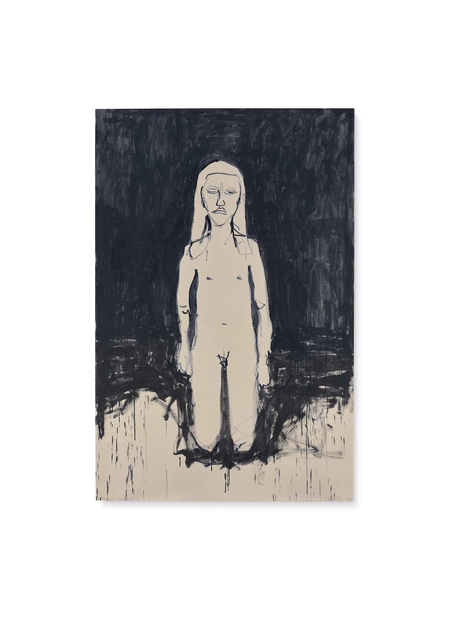
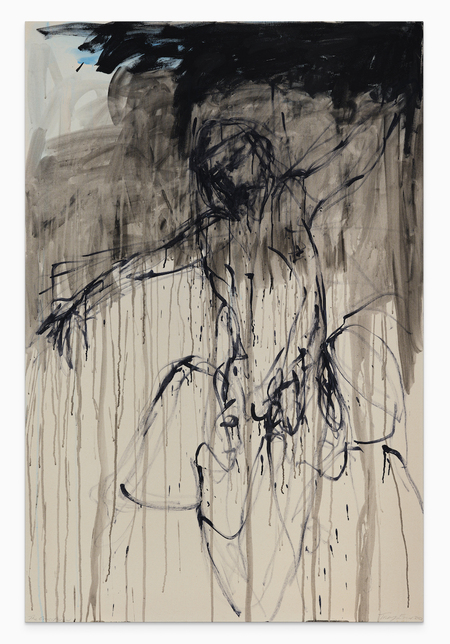
«You Should Have Saved Me, ” Tracey Emin, Galleria Lorcan O’Neill, Rome, 2023
Artwork Creation Date: 2022–2023
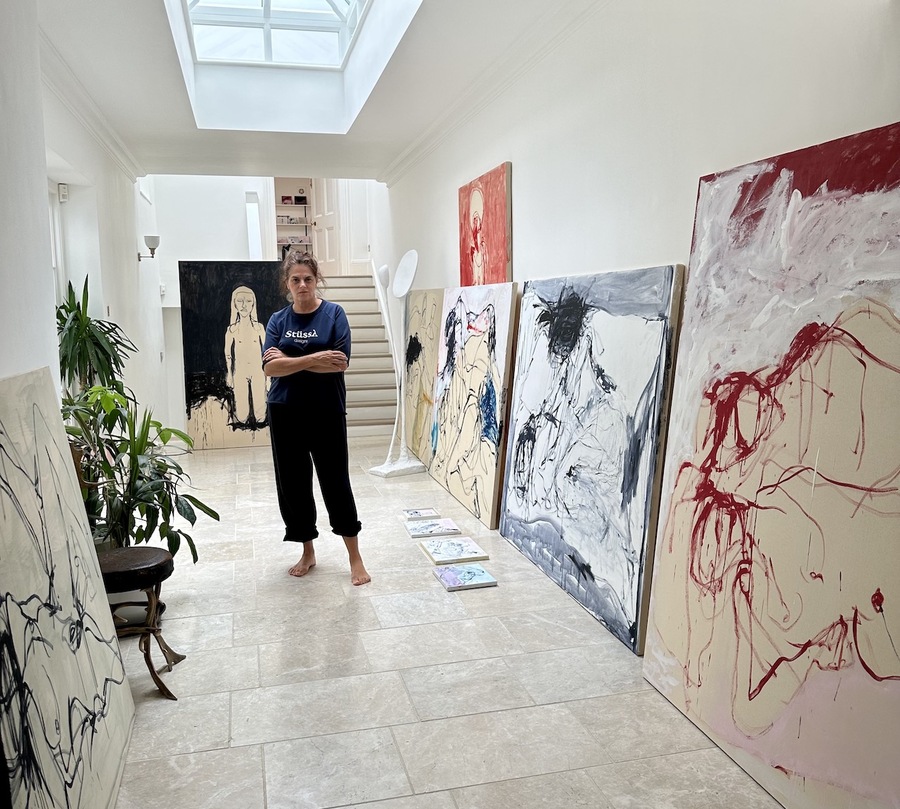
Tracey Emin in her studio, 2023
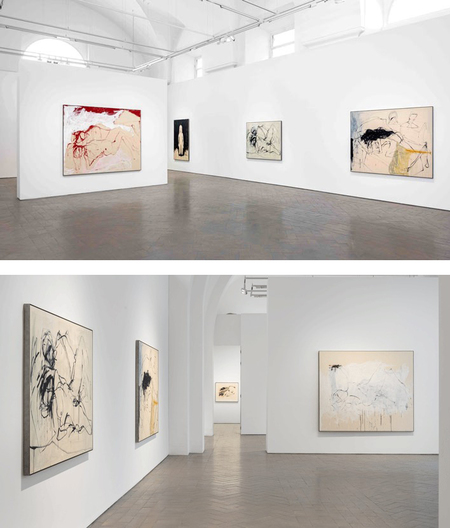
«Tracey Emin’s new exhibition in Rome, You Should Have Saved Me, presents a collection of works created over the last two years in her studios in London and Margate. These paintings and works on paper bear witness to the healing power of art. They invite the viewer to confront their own vulnerabilities and find hope when facing life’s trials. 'Patience is so important in art… especially in painting… it is important to know when to begin and when to stop, not to be afraid of letting go or destroying, to know when to pause and reflect, and most importantly, to understand when the work is complete.' — Tracey Emin, 2023.» — Exhibition description on the Galleria Lorcan O’Neill website
I want people to feel something when they look at my work. Or, I want them to feel something about themselves—that is the most important thing. I don’t want them to say, «Oh, what a beautiful painting.» I want them to say, «Damn, that’s me.»
«You Should Have Saved Me, ” 2023
In my view, the topic of oncology cannot be the primary idea of a work of art or a project. Physical illness exists as a given, and depicting it as central—for example, in a painting—seems primitive and vulgar to me. Tracy Emin’s project is noteworthy for this; oncology is not the central theme, but rather the human experiences and the relationship between the artist and the art come to the forefront. The connection to cancer is revealed through the artist’s interviews and the biographical context of the works. Due to the expressive nature of the painting, we do not see physiological details that would signal the illness to the viewer. However, in most works from the exhibition, the outlines of a bed and a room can be sensed. This repetition illustrates how the world of a person suffering from cancer narrows—how they lose freedom. Even so, a viewer without personal experience of illness can sense a personal, different experience—that of their own emotional pain—within this «restriction.» This is what makes this project valuable to me—it blurs the boundary between the theme of oncology, illness, and the theme of spiritual suffering and self-acceptance. In doing so, it opens up a topic that could be said to have been taboo, existing for people in a separate world.
International Modern Art Exhibition «Together, ” Moscow City Oncology Hospital No. 62 in Skolkovo, 2026
Photo: Press Service of the Moscow City Department of Health
«The 'Together' exhibition demonstrates that a hospital can be more than just a place of treatment; it can be a space where a person feels good and beautiful, where they feel calm. In this sense, art is not merely decoration—it becomes a vital part of the environment that fosters a sense of inner strength. This represents not just a new format, but a challenge. A challenge for us as a creative community, and for medicine as a system. How do you merge two fields that seem vastly different at first glance—art and healthcare? Do they have points of intersection?» — Sabina Chagina, curator of the 'Together' exhibition. The art newspaper Russia, 2026.
«Above the Water, ” Denis Patrakeev, 2025
The focus of our exhibition is not the perfect image, but the real person—vulnerable, searching for support, needing understanding, and ready to reach out and accept assistance.
This project example, which deals with the theme of oncology, is valuable because it doesn’t raise the question: «How ethical is it to address this topic…?» The goal and approach here are completely different. The authors are not trying to make a statement on a sensitive issue—instead, they make their works, their project, become a part of it. They don’t open up the world of illness to viewers without having experienced it themselves; rather, they create a bridge between two worlds separated by disease and death.
While Tracy Emin’s project connects ordinary viewers and cancer patients through shared pain and emotional suffering, the «Together» project does this through the shared social role of art—by narrowing the distance between people united by common aesthetic values. The curator states, «a place where a person feels good and beautiful, where they feel peaceful.»
To me, this is the crucial element: the unification of people, rather than an attempt to mobilize society’s involvement with individuals in such a life situation. My experience working in a hospital allows me to say that people undergoing treatment primarily need to feel like everyone else, not like they are uniquely marked or receiving special attention for themselves and their problems.
Therefore, in this project, the «therapeutic» aspect of the exhibition, as mentioned by the curator, takes a secondary role for me. The social dimension of the project is largely realized through its aesthetic quality within the medical space. Structurally, the exhibition could be called a «biennial of comfortable art,» where its various parts could exist independently in other spaces, including galleries. Because of this, the emphasis on creating a «healing environment» (article about the project on design-mate.ru) seems inappropriate to me. Nevertheless, the project itself is a unique example of oncology coexisting with contemporary art.
Project «Colonies,» Vic Muniz and Tal Danino
2012–2015
«HeLa Pattern 1,» Vic Muniz and Tal Danino, 2014
«Muniz created the Colonies series in collaboration with Tal Danino, an artist and researcher from the Massachusetts Institute of Technology. This series, first shown in France, demonstrates the plasticity and ability of cells to take on various shapes. Intrigued by the complex and diverse forms these organisms adopt during their development, the artist began creating patterns using bacterial and viral cultures. To achieve this, he uses adhesive surfaces, such as collagen, which serve as a foundation for the attachment and proliferation of bacteria and cells. As they multiply, they reproduce the intended design. This process offers a visual representation of the infinitely small world—the living world existing within us—thereby shifting our perspective on bacteria and viruses. These organisms, which initially provoke fear, are presented as abstract and mesmerizing forms that invite contemplation.» — Exhibition description for «Vik Muniz, ” Xippas Gallery, Paris, 2015
«Flowers Vaccinia,» Vik Muniz and Tal Danino, 2014
To transform something so frightening into something that can inspire with its beauty
For the viewer, this project presents a collision between the familiar understanding of beauty and the hidden biological processes of a dangerous illness. Furthermore, like any ordinary person, these biological processes are intangible and invisible, and the very topic of oncology as a human experience dissolves within the collaborative project, «Colonies.» To me, the works in this series are less about a human perspective on disease and more about the disease’s perspective on humanity—the biological process of cellular destruction or transformation presented to the viewer in the familiar aesthetic form of a pattern. As if this person could appear this way on a different—biological—level. This work is important, primarily as a tool to illuminate the issue, as a way to draw attention to it. It was included in the international campaign The Art of Saving a Life, organized by Bill and Melinda Gates, becoming part of the public conversation about medicine and health. And, in my opinion, this is how the project should be viewed. If we set aside the facts of using cancerous cells and cells infected with a vaccine virus, such works could serve as striking images of art’s symbiosis with biology, accessible to a broad audience. But we are talking about the topic of oncology, which is considered «acute» in society precisely because of human perception, and this topic is much deeper and broader than the existence of the biological world we cannot see. Personally, to me, viewing «Colonies» as an attempt to reflect «the terrible through the beautiful» makes it seem superficial and too simple when compared to other projects under consideration.
Sources
- Galleria Lorcan O’Neill. Tracey Emin: You Should Have Saved Me. Rome, 2023. Official exhibition page and description. https://www.lorcanoneill.com/site/dettaglioEsibizioneArtista.php?idArtista=5&idEsibizione= 229
- Giuffrida, A. Tracey Emin speaks about her cancer at opening of exhibition in Rome // The Guardian. May 11, 2023. https://www.theguardian.com/artanddesign/2023/may/11/tracey- emin-speaks-about-her-cancer-at-opening-of-her-exhibition-in-rome
- Dudakova-Kashuro, A. Sabina Chagina: «The medical system has taken a step toward art» // The Art Newspaper Russia. April 15, 2026. https://www.theartnewspaper.ru/posts/20260415-pvrp/
- Ivanova, A. «Art creates support in difficult moments»: an interview with the curator Sabina Chagina of the «TOGETHER» exhibition // Afisha. May 8, 2026. https://www.afisha.ru/article/iskusstvo-sozdaet-oporu-v-trudnye-momenty-intervyu-s- kuratorom-vystavki-vmeste-sabinoy-chaginoy/
- The Art Newspaper Russia. The «TOGETHER» exhibition at Hospital 62 in Skolkovo. April 20, 2026. https://www.theartnewspaper.ru/posts/20260420-pung/
- Xippas Gallery. Vik Muniz. Paris, June 6 — July 31, 2015. Exhibition page and description. https://www.xippas.com/exhibitions/vik-muniz-vik-muniz/
- The Creators Project. Colonies | Vik Muniz And Tal Danino Turn Living Cells Into Art // VICE. August 19, 2014. https://www.vice.com/en/article/colonies-turning-living-cells-into- art-video/
- Danino, T. Colonies. Tal Danino’s official website. https://www.taldaninoart.com/colonies
- Danino Lab. Colonies. Columbia University, Department of Biomedical Engineering. https://www.daninolab.nyc/colonies.html
- Hond, P. The Miraculous Beauty and Healing Power of Ordinary Bacteria // Columbia Magazine. Winter 2019–2020. https://magazine.columbia.edu/article/miraculous-beauty-and-healing-power-ordinary-bacteria
- Sheets, H. M. At M.I.T., Science Embraces a New Chaos Theory: Art // The New York Times. March 6, 2016. https://vikmuniz.net/library/at-m-i-t-science-embraces-a-new-chaos- theory-artNeural Network: ChatGPT Search for English interviews and sources, translation into Russian