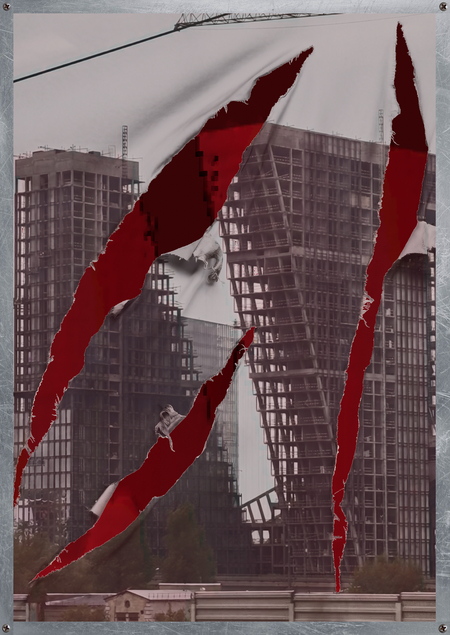
Concept
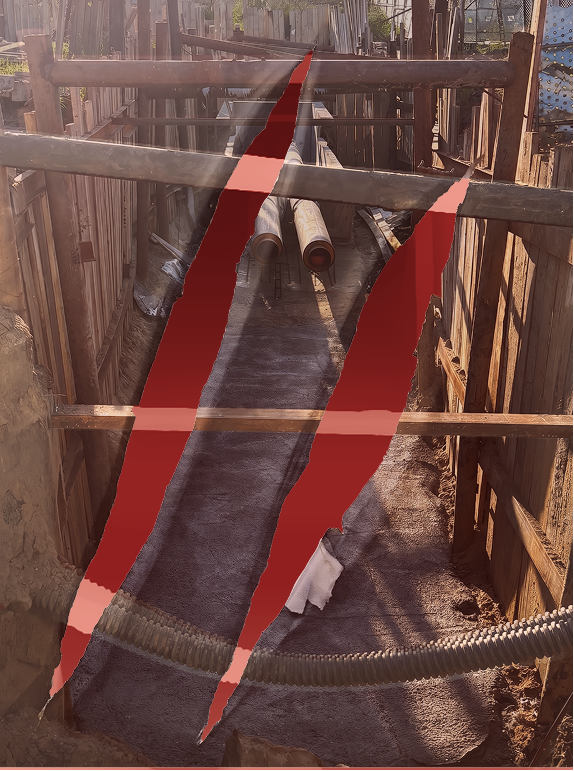
Surgeons engage with the body through intervention. The regularity of their practice alters perception when the body loses its wholeness, being segmented into categories of organs, and when the gaze becomes technical. Tools are necessary for intervention because the bare hand is not precise enough. A city, too, has its own covering and internal structures (rebar in unfinished or ruined buildings, load-bearing structures of highways, excavated road surfaces, pipelines). However, it is inoperable for a person directly due to the incomparable scale.
The cut reveals what is hidden.
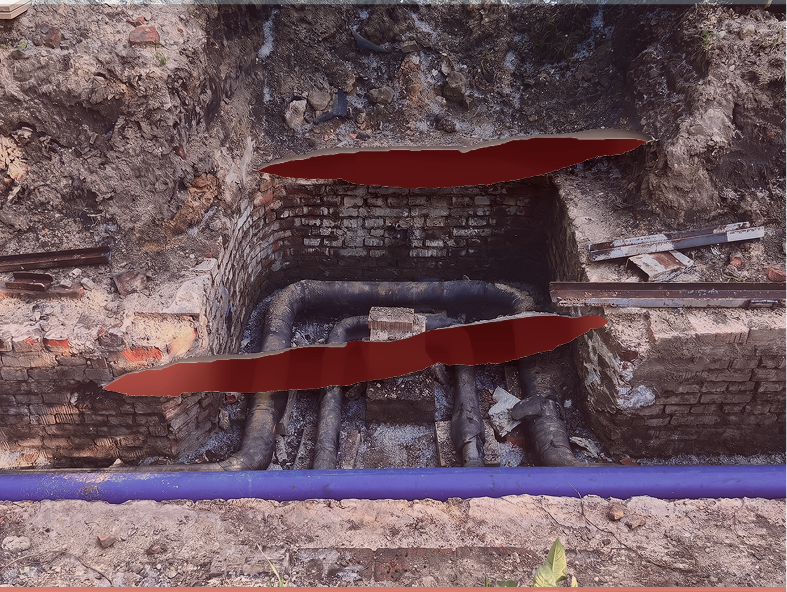
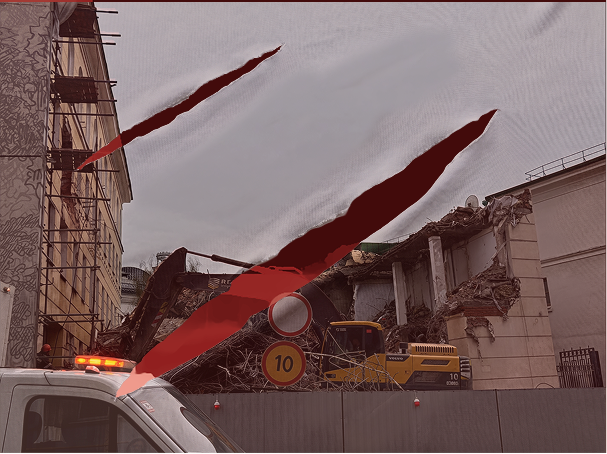
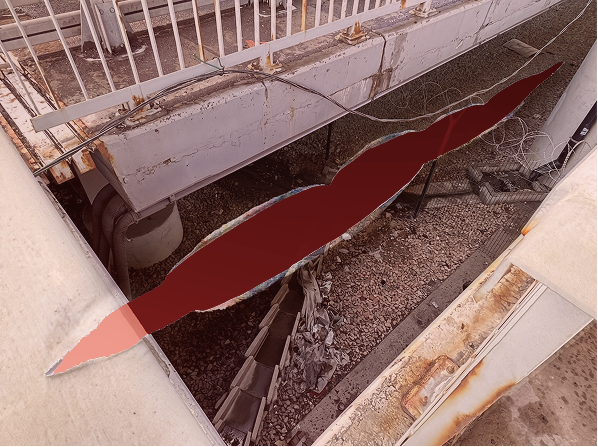
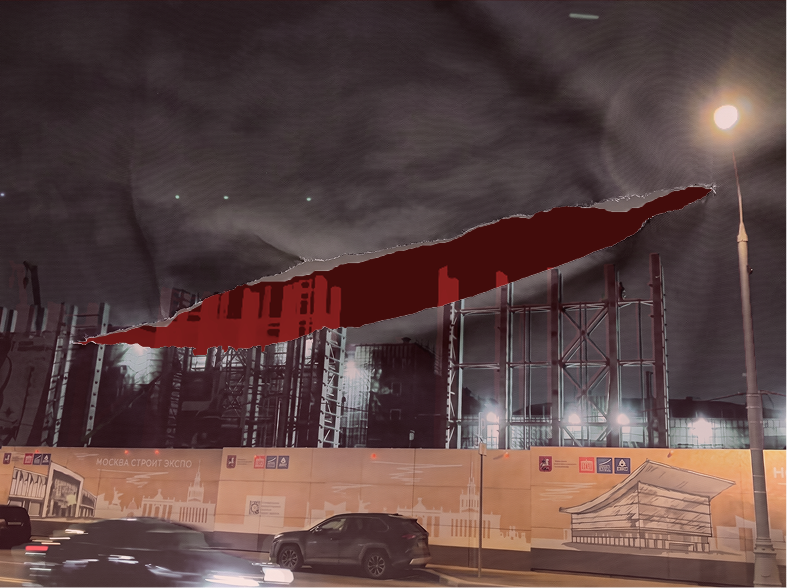
In this project, a neural network becomes a tool that enables surgical intervention into the city. Depth maps are extracted from photographs of opened urban skeletons. The result of averaged machine vision transforms the objects in the photos into monolithic fragments by category. This geometry is then converted into a three-dimensional relief scaled to a human-comparable size. A reverse surgical operation is performed: machine vision dissects the city and brings it to human scale. The relief is colored and takes on an appearance similar to human flesh. Over this, a photograph is stretched across a semi-transparent biflex material. Cuts are made into the tissue with surgical instruments, through which the relief of urban flesh emerges.
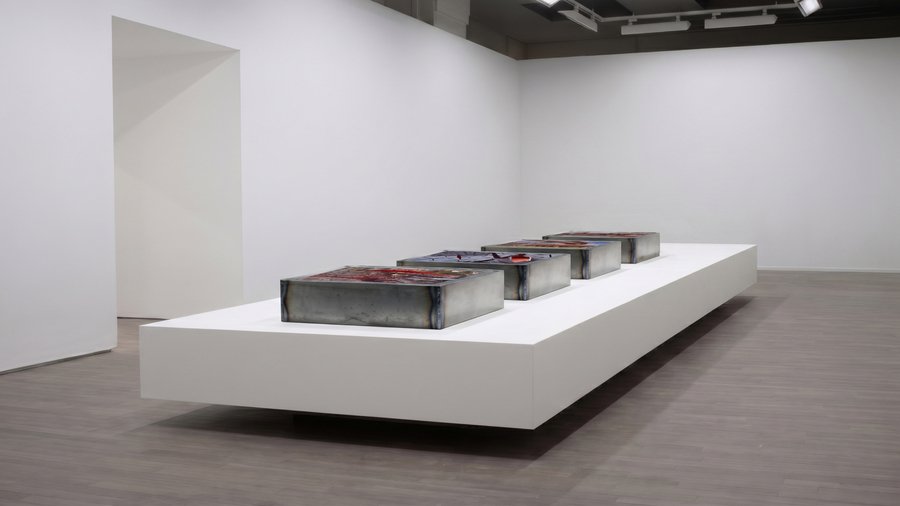
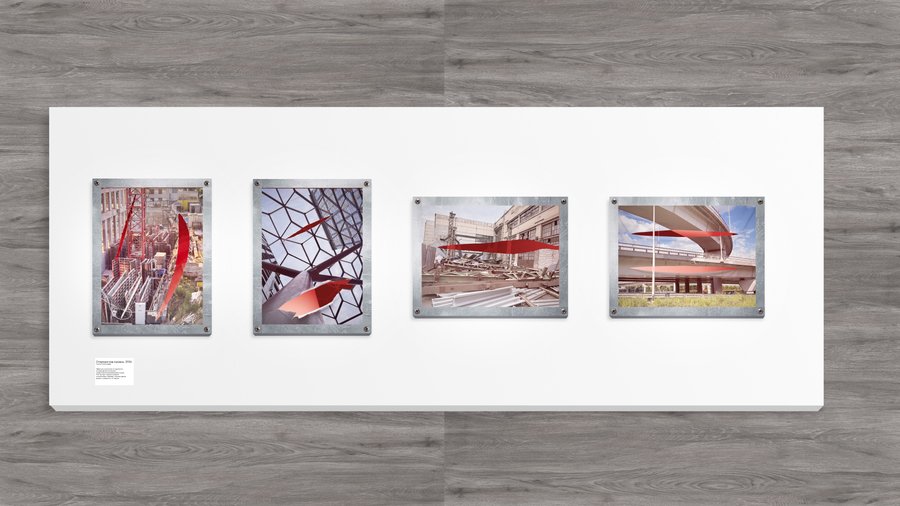
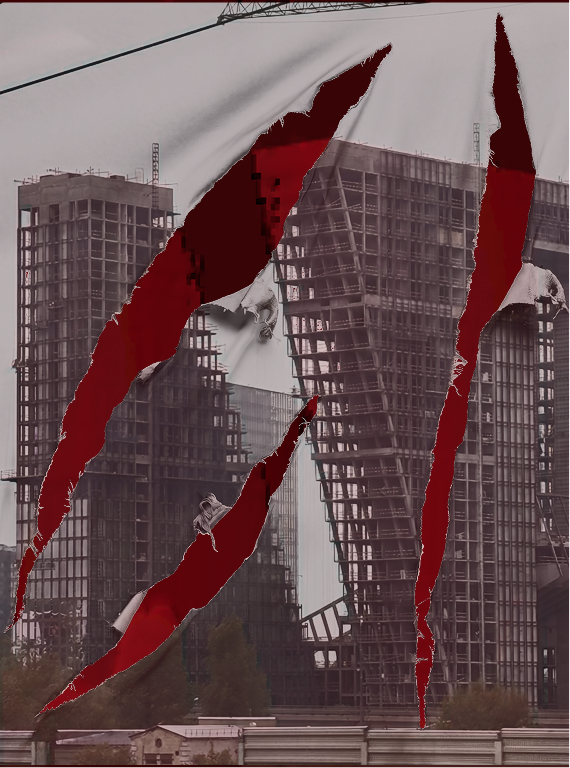
Reliefs beneath the photographs