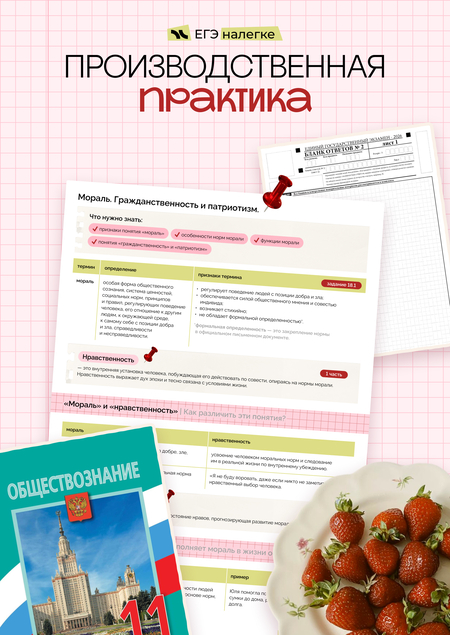
«EGE Effortlessly» — an online school preparing students for social studies and history exams. After rebranding, the school adopted a new style, but they only managed to draft a few pages, and an entire course still needed to be put together.
I started by breaking the style down into components: what kinds of blocks exist, how much white space is between them, and what color is responsible for what. From these elements, I created a system—a kit—that allows a notebook to be quickly assembled rather than built from scratch.
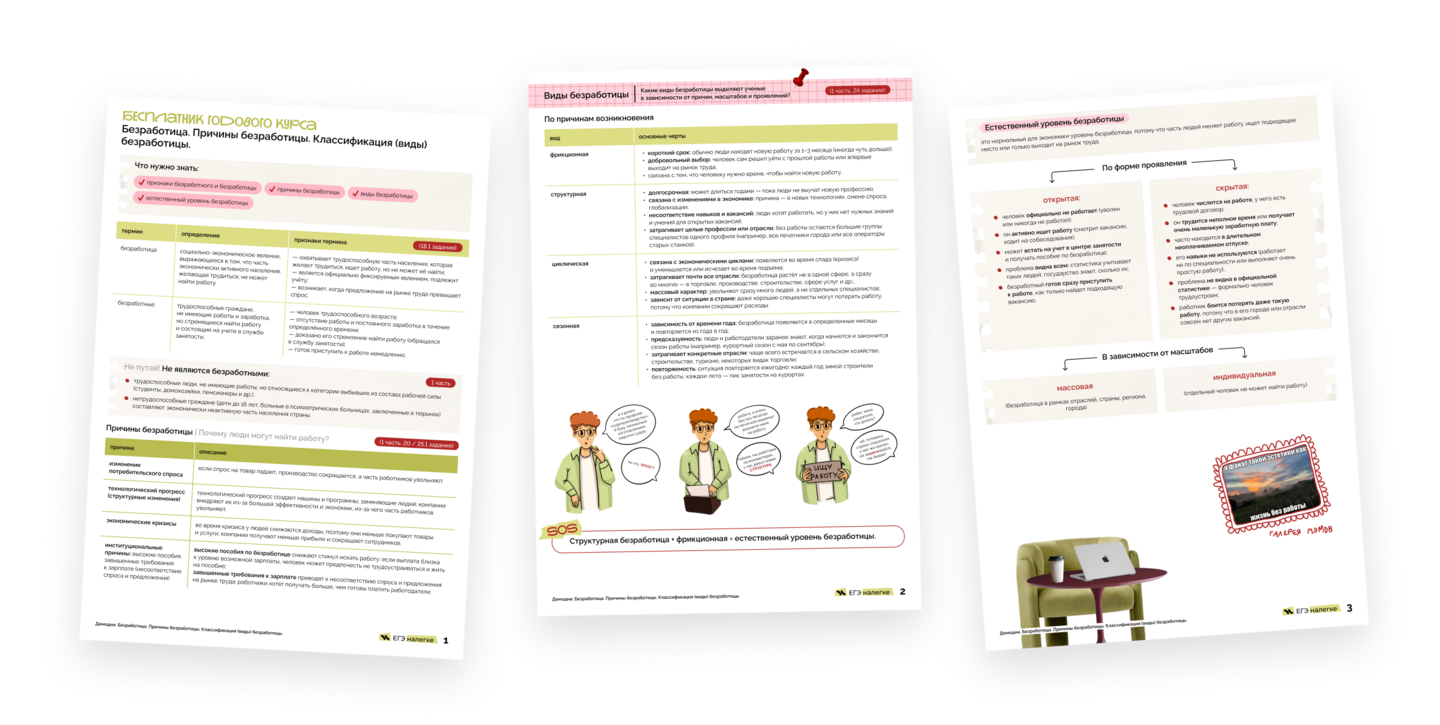
Starting point: several example pages after rebranding
Style answers the question, «What does the course look like?»
The system answers the question, «How quickly can I put a lesson together?»
In educational materials, it is crucial for information to be easy to find and remember, and to have as few pages as possible since students often print notebooks.
In our approach, typography, color, and spacing handle this: the former establishes hierarchy, the latter provides emphasis and cues the user about the content in focus, and the former two make the page feel dense but not cluttered.
This allows the student to quickly read the page structure: where the definition is, where the table is, and where the information they cannot forget for the exam is located.
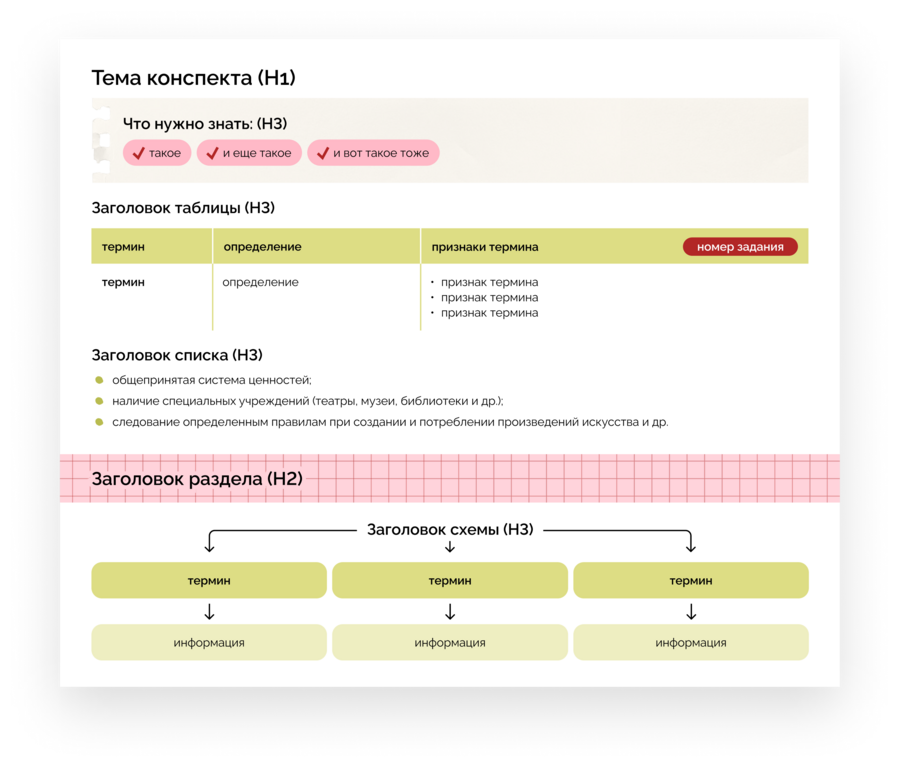
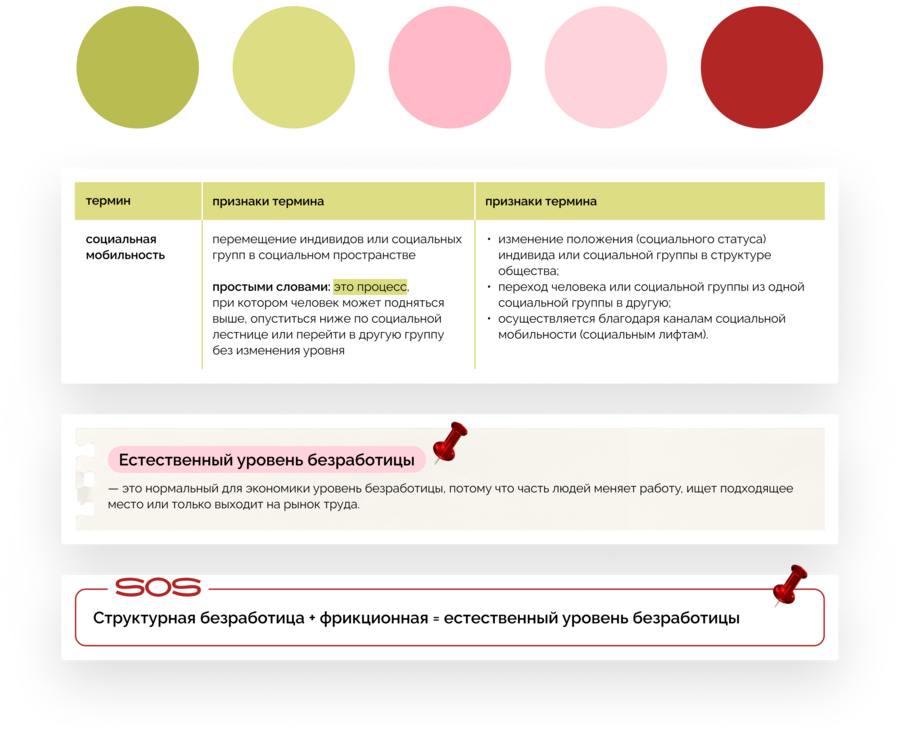
On the left is the heading hierarchy for the notebook page; on the right is the color palette and blocks, each with its own assigned role.
Three levels of padding: inside a block, between blocks, and between sections
More than 10 standard blocks
Definition, table, diagram, SOS, «note to self, ” assignment, meme gallery, and other elements—each content type has its own dedicated block in several variants to accommodate different text lengths.
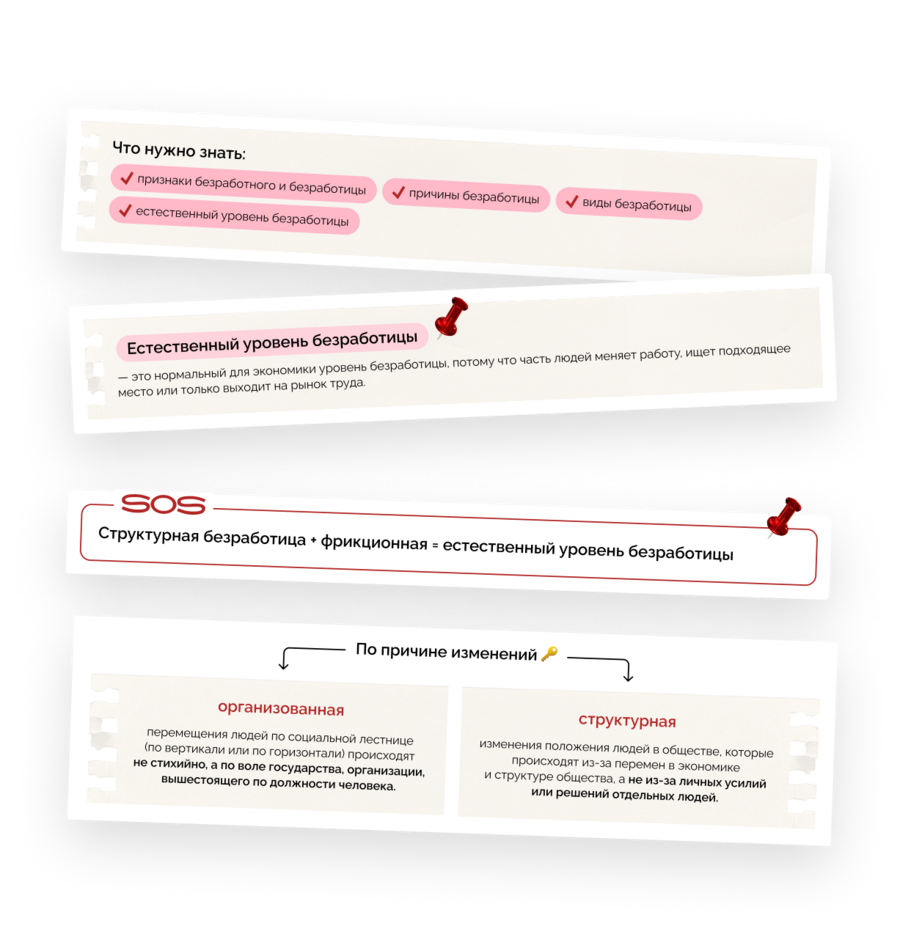
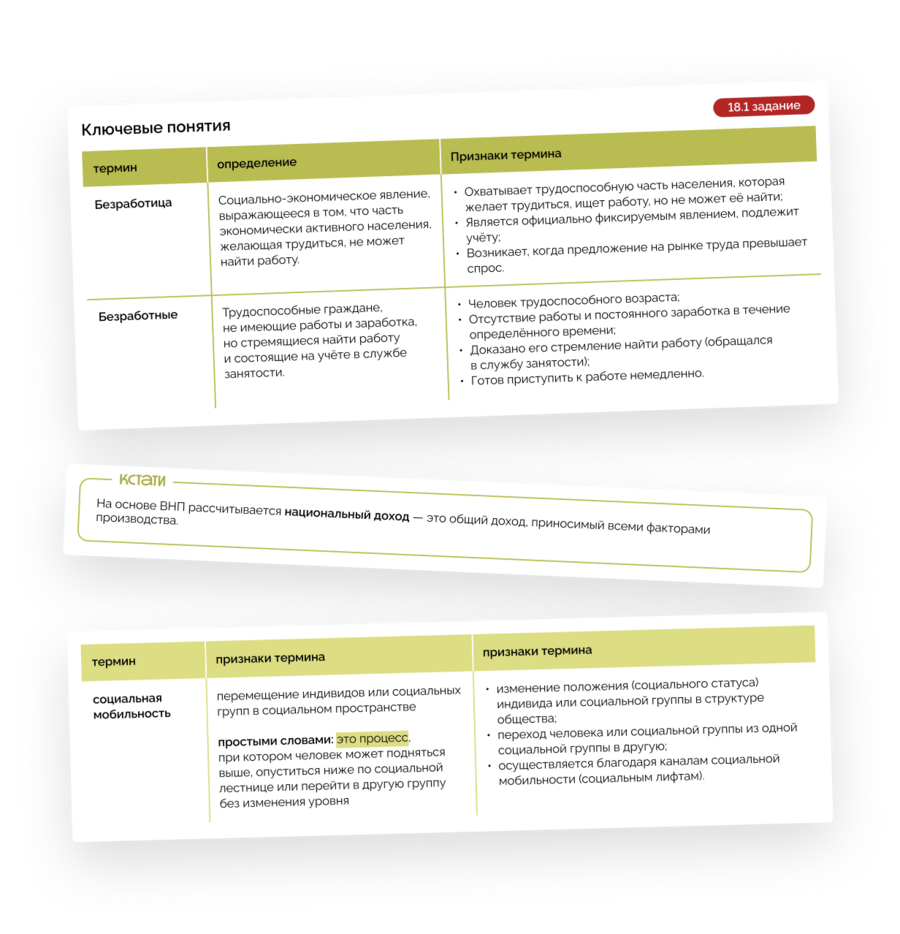
By November, the department had collected over 20 notebooks on social studies—totaling about 150 pages.
The system is adaptive
The blocks are assembled using auto-layout: to transfer any of them from a notebook to a presentation, you simply need to narrow its width from 1641 to 1220 px — the text will reflow automatically.Practice books, guides, flashcards, reference materials, and other educational resources are also put together using the same principles.
The design system passed the ultimate test—it works without me.
I created a brief guide on how to use the constructor, and I successfully onboarded two new designers from the department using it. Now, all school materials are organized according to common standards.
Results: 20+ notebooks on social studies, 30–60 minutes per notebook assembly, and three designers working according to the same rules.
The main thing the practice taught me was how to see the system behind the style and explain decisions in a way that others could implement.