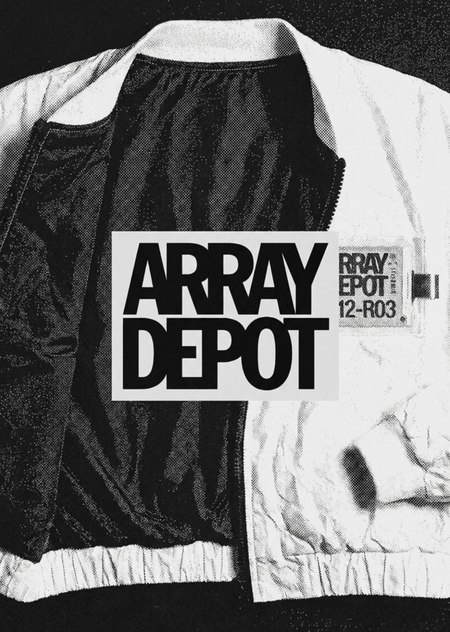
Array Depot is a network of automated local storage points integrated into the urban residential environments of European cities. The service allows users to store excess belongings off-site while retaining 24/7 access and the ability to transfer goods between cities.
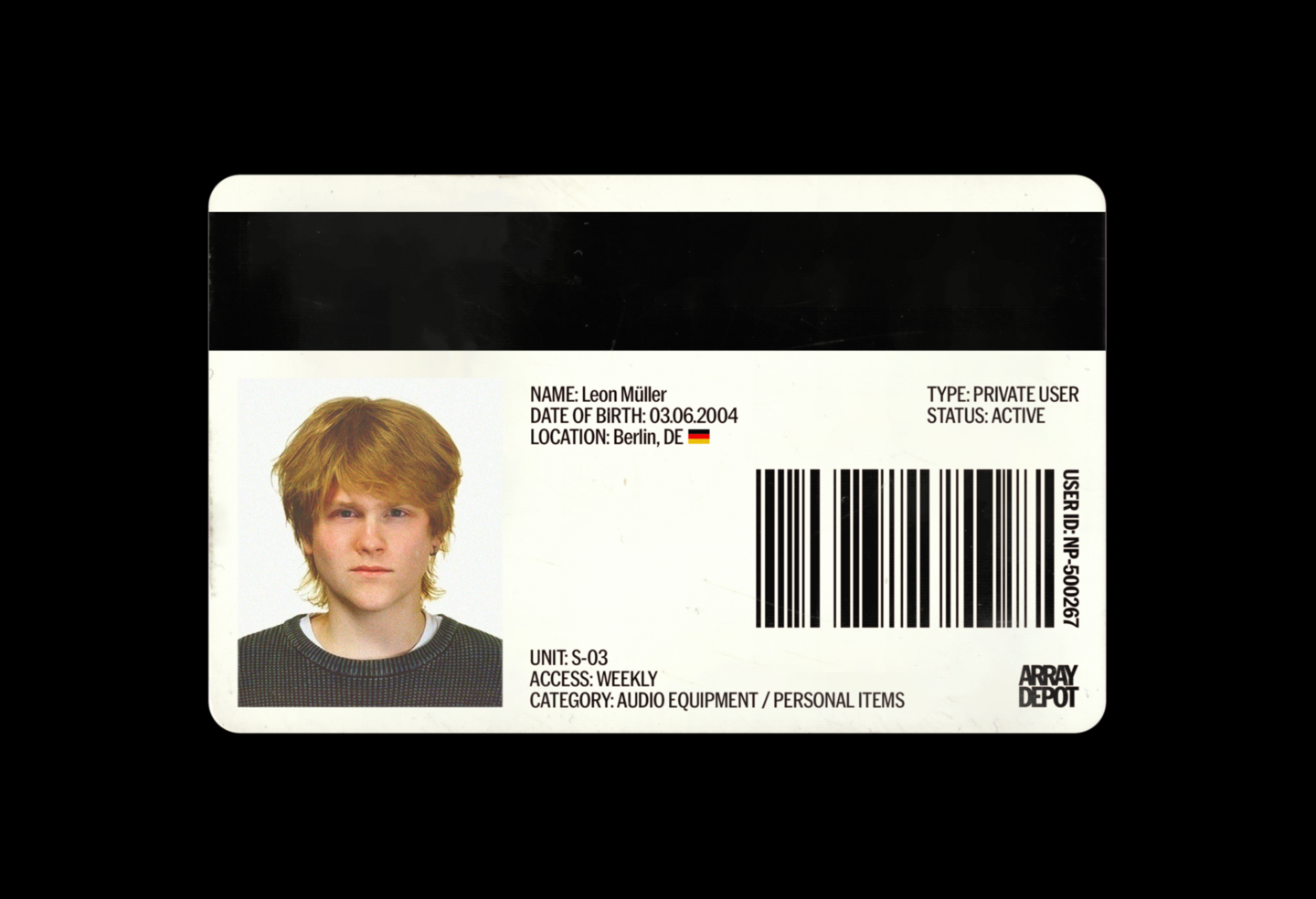
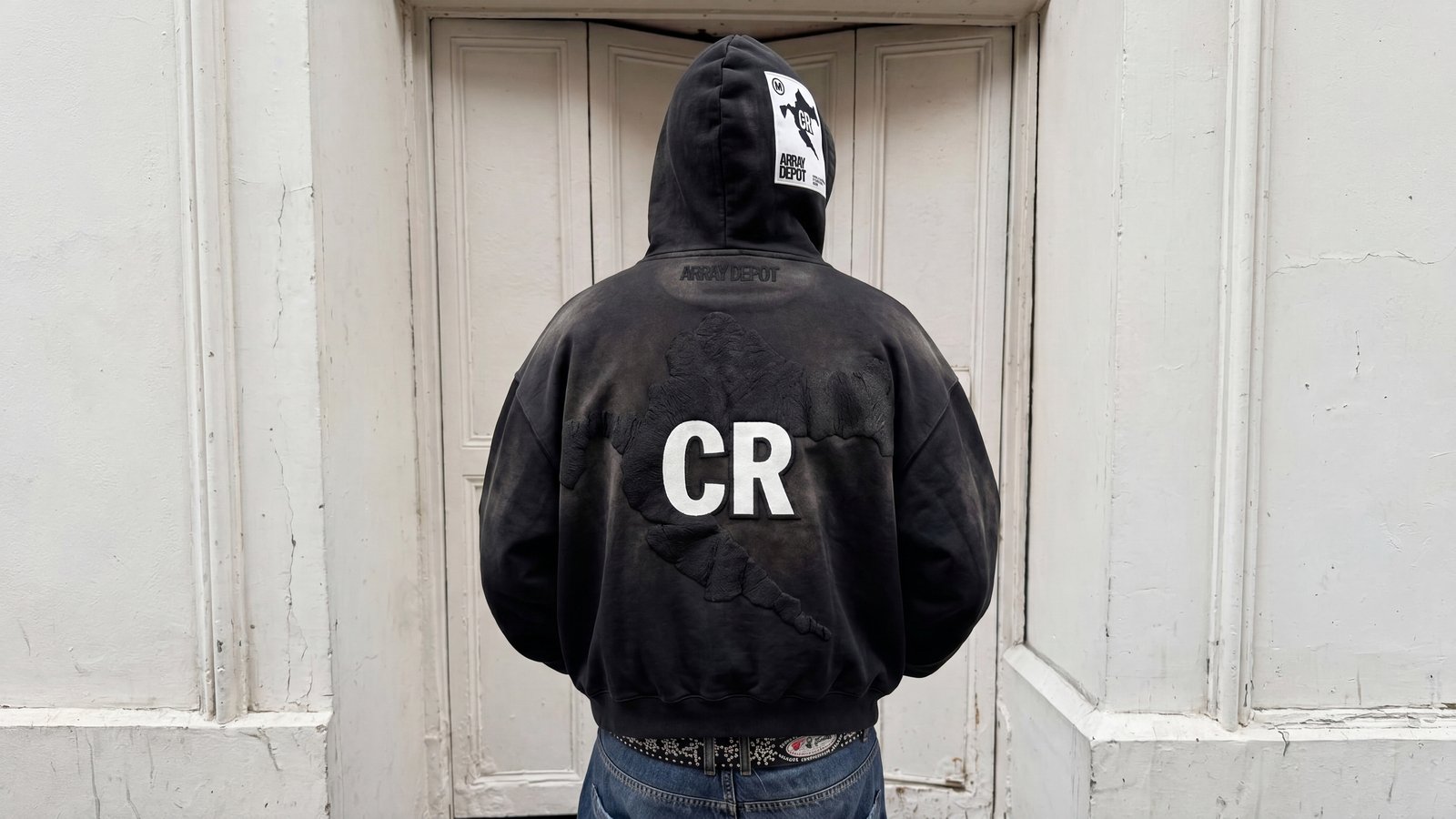
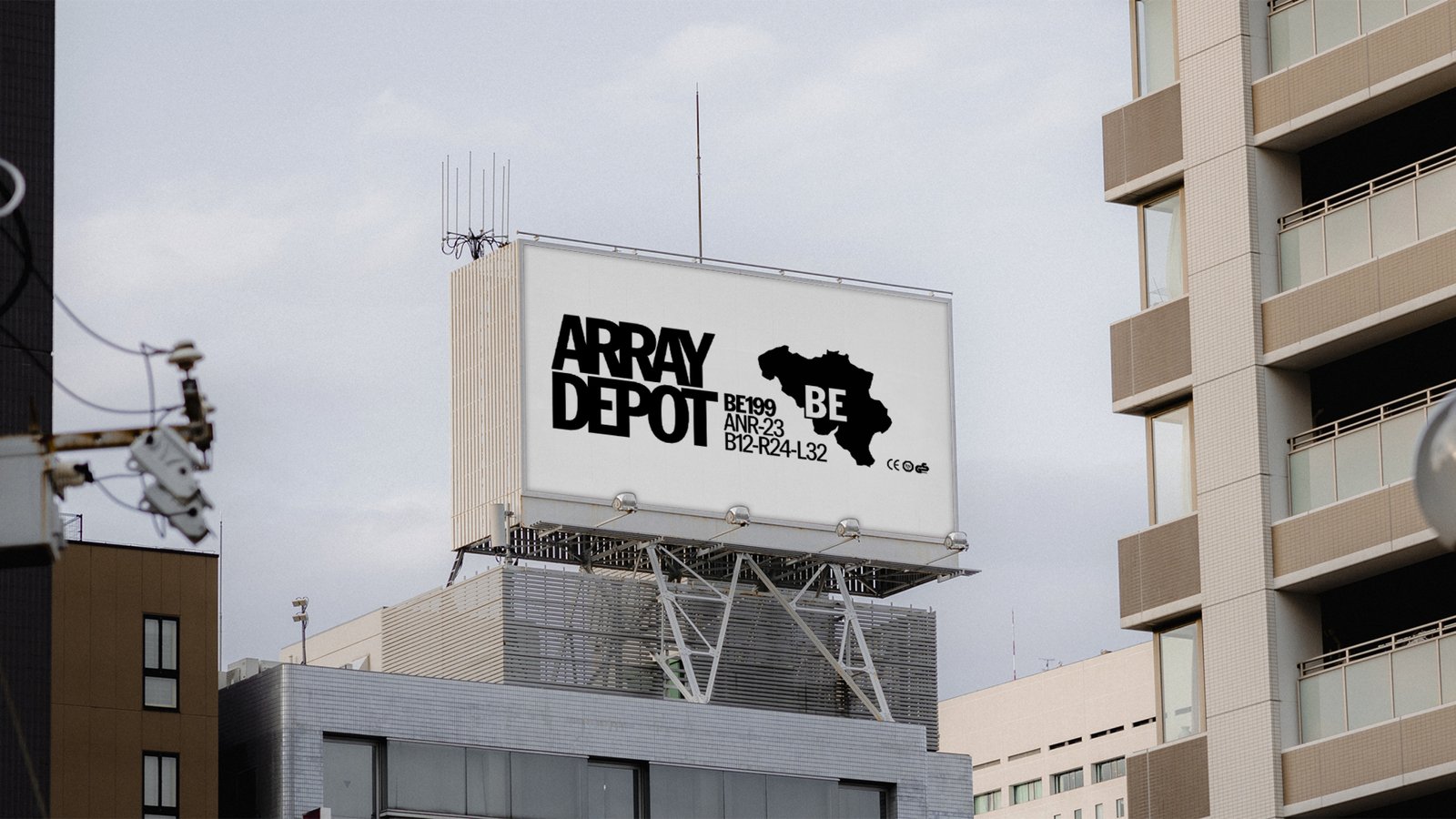
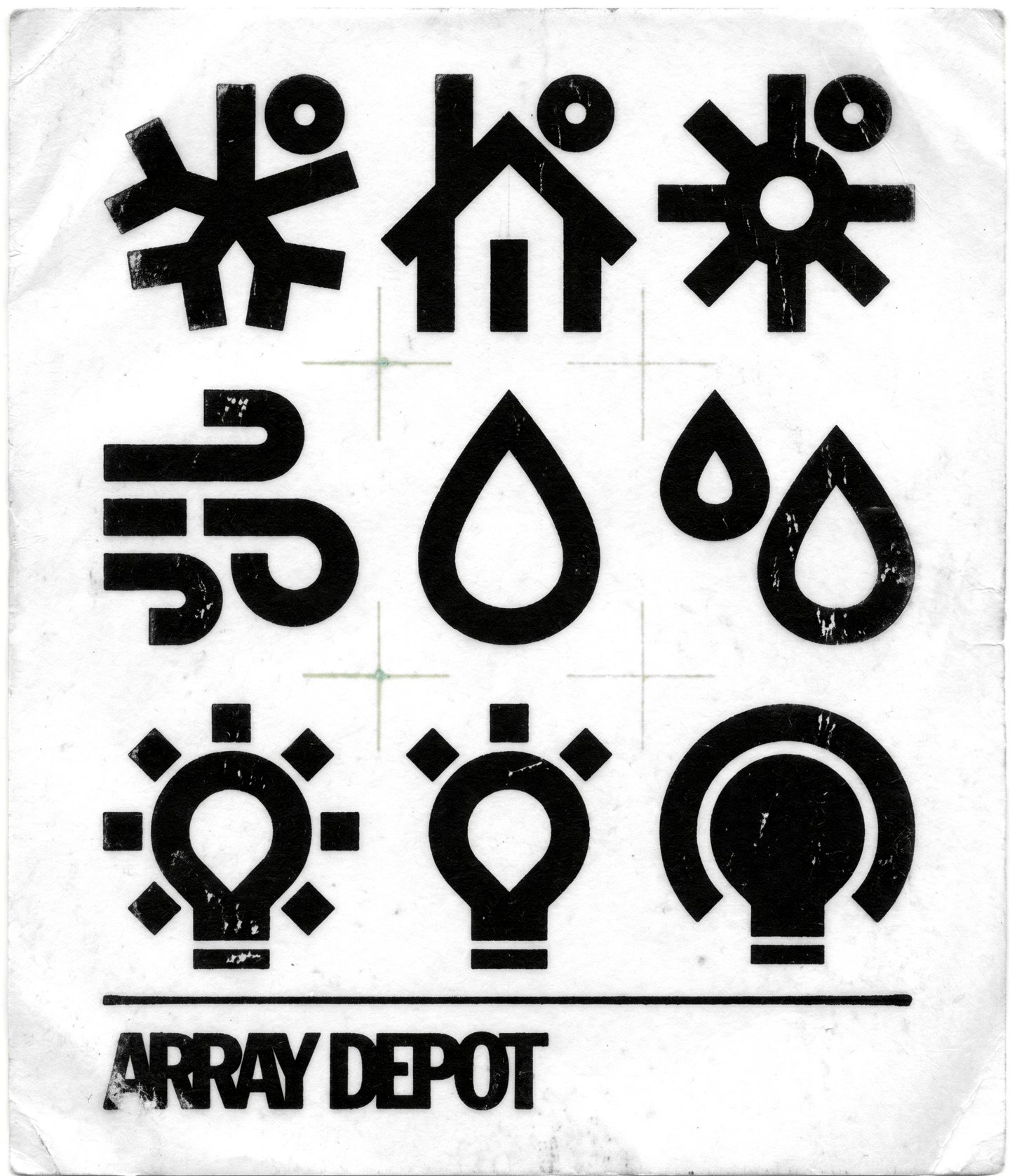
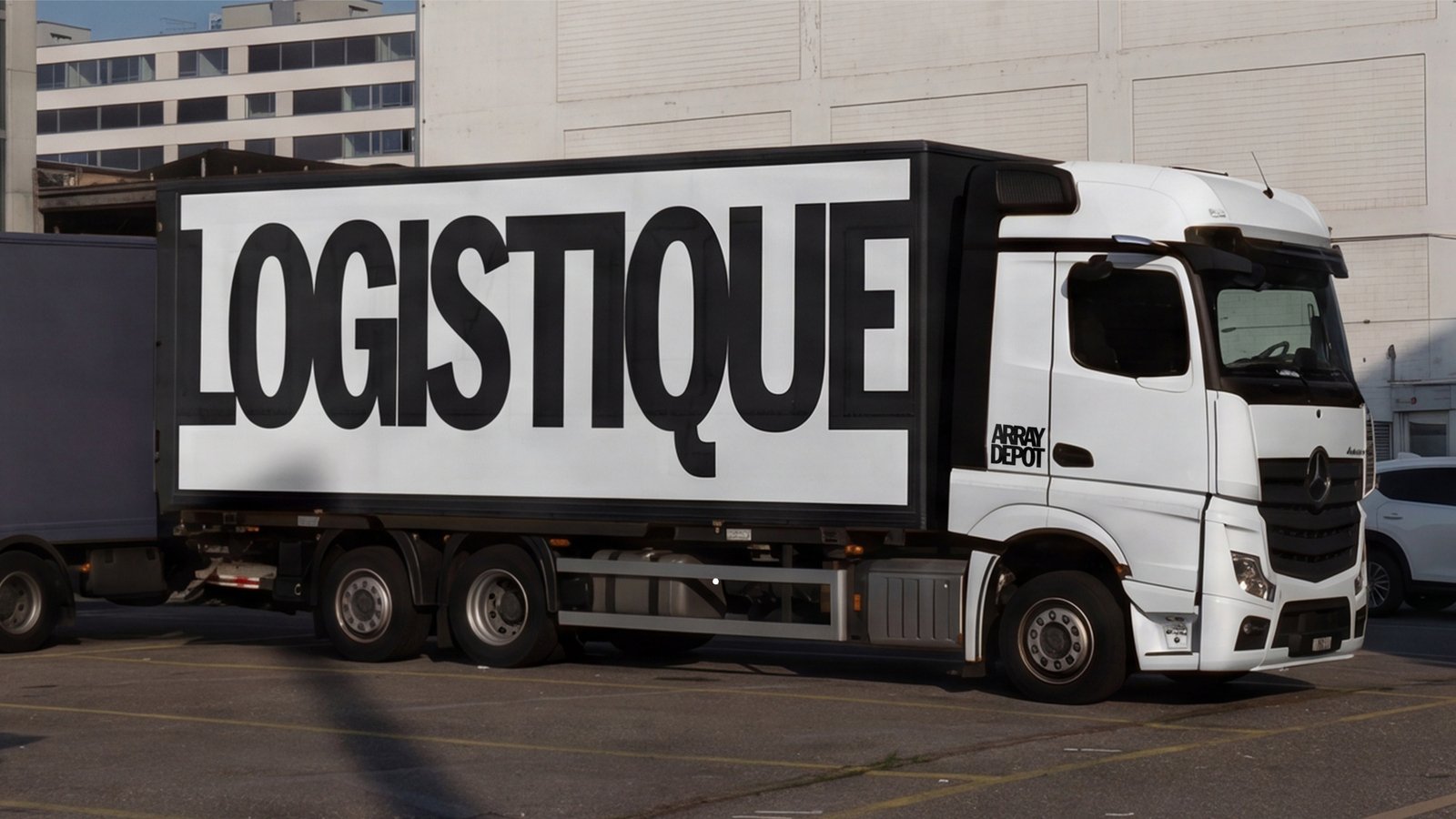
As part of the redesign and evolution of the project, the conceptual coding system has been translated from theory to a physical hardware startup: static paper tags and covers have been transformed into an ecosystem of e-ink smart modules.
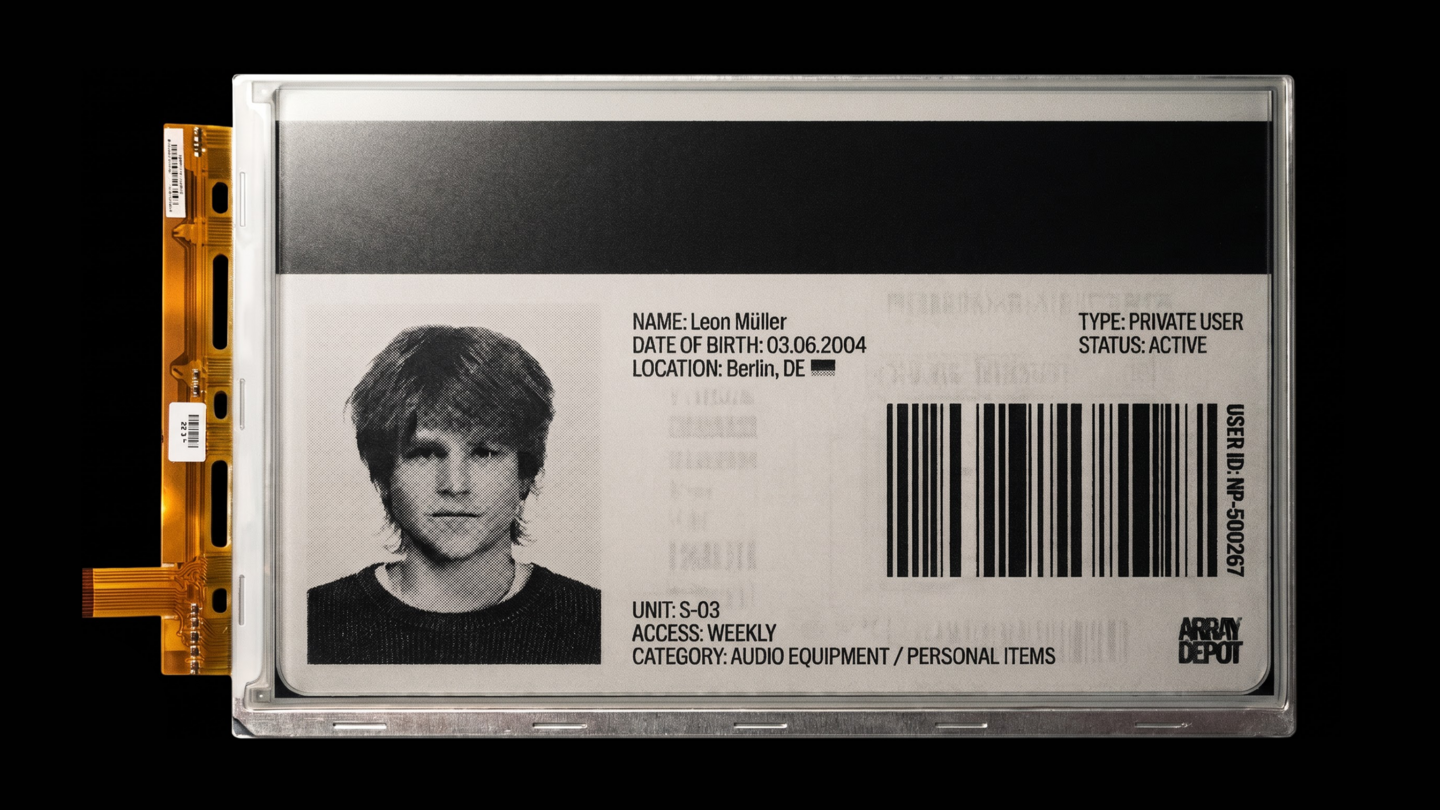
Transform the flat black-and-white technical typography and layout from the reference image into a hyper-detailed macro photograph of a physical monochrome E-Ink (electronic paper) display screen filling the entire frame edge-to-edge. Strictly preserve the exact typography, barcodes, country silhouettes, certification marks, and grid structure from the reference image without altering or distorting the characters. Render the white background as a matte, slightly warm chalky micro-textured e-paper substrate with subtle faint ghosting artifacts from previous screen refreshes, and render the black typography as ultra-crisp, dense matte electrophoretic carbon ink pixels embedded just beneath a thin anti-glare etched glass layer. Orthographic 90-degree flat front view. Gritty, noisy analog photography aesthetic with heavy, coarse 35 mm film grain and high ISO digital noise, faded matte shadow areas, harsh directional studio flash creating a subtle diffused specular sheen across the matte glass surface, raw underground editorial look, 8k, hyper-detailed textures, strictly monochrome black, white, and neutral grays. pure black background
The physical E-Ink module displaying technical information serves as the unified Key Visual, dynamically altering its internal layout, proportions, and scenario based on the user’s point of contact.
Close-up architectural street photograph of the side cargo panel of a matte pitch-black #000000 industrial delivery van parked in a brutalist concrete city underpass. Physically recessed and bolted directly into the black sheet-metal body of the van is a large, functional monochrome E-Ink display module protected by a flush industrial glass shield, revealing its internal milky-white epoxy bezel edge, top-left alignment eyelet, and amber-copper FPC ribbon cable routed into a sealed metal port on the van body. The matte light-gray physical e-paper screen actively displays a crisp 1-bit black-and-white dot-matrix dithered transit manifest: use image references. Gritty, noisy analog photography aesthetic with heavy, coarse 35 mm film grain and high ISO digital noise, faded matte shadow areas, harsh directional studio flash reflecting off the glass bezel and matte black paint, raw underground editorial look, 8k, hyper-detailed textures.
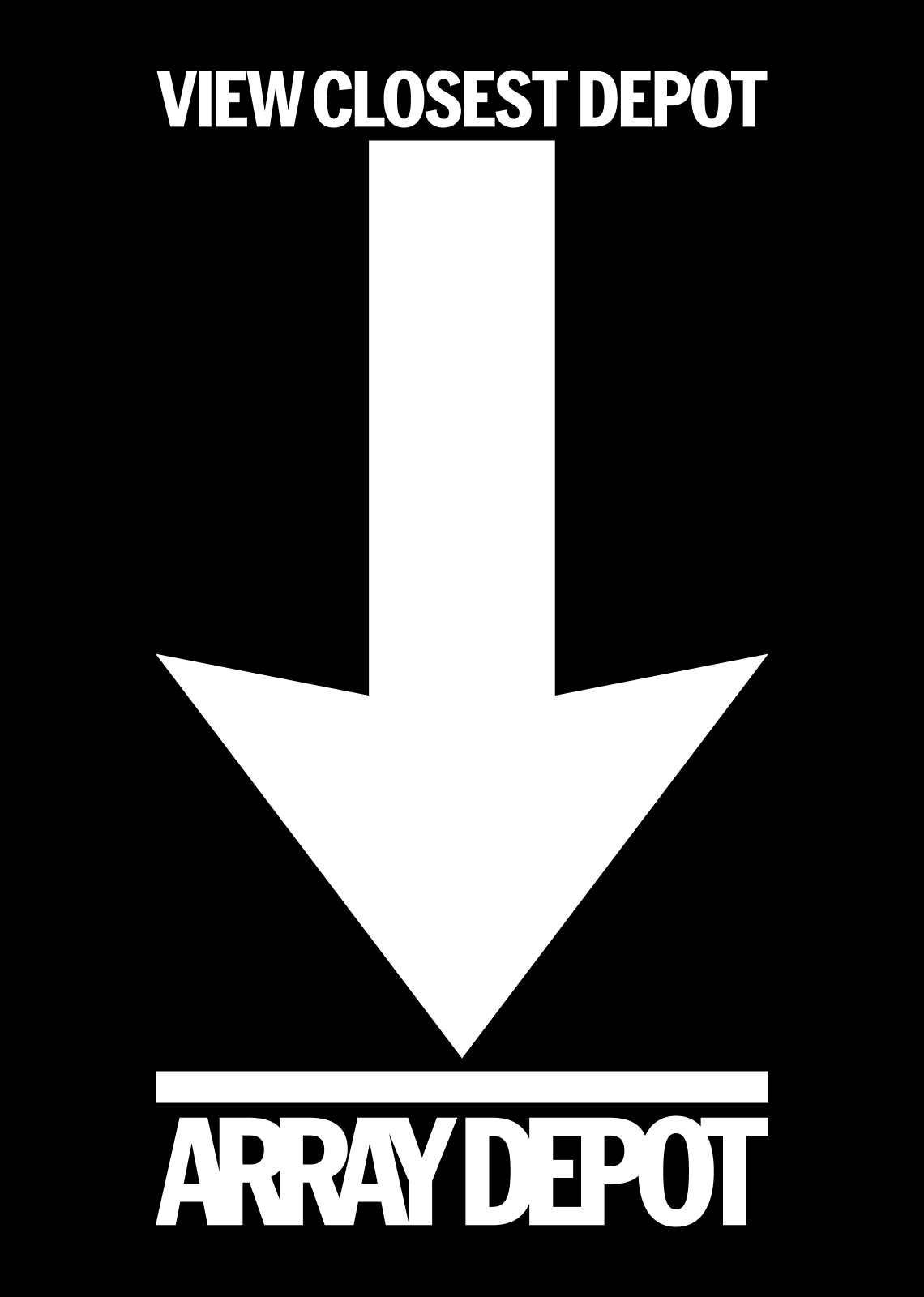
Interior editorial shot of two brushed steel elevator doors in a brutalist residential apartment lobby, with a vertical black advertising display screen mounted on the concrete wall between them. The screen features a pure pitch-black #000000 background displaying the Array Depot key visual oriented vertically: a bare hardware E-Ink display module connected by a copper FPC ribbon cable. The matte e-paper screen showcases a giant 1-bit pixel-dithered downward arrow, the bold text «VIEW CLOSEST DEPOT, ” „ARRAY DEPOT, ” „UNIT: S-03 [HOME] [SPRT], ” „140M AWAY, ” and a sharp barcode. The aesthetic is gritty, noisy analog photography, characterized by heavy, coarse 35 mm film grain and high ISO digital noise, faded matte shadow areas, and harsh direct on-camera flash reflecting subtly off the elevator metal—a raw underground editorial look, 8k, hyper-detailed textures.
Full list of tools and models used
Google Flow — the primary workspace for cascaded generation, managing multi-references (Image-to-Image / Multi-Reference Conditioning), and sequential storyboarding.
Nano Banana Pro — generative models utilized for photorealistic object synthesis, transferring 2D typography onto 3D surfaces while maintaining text legibility, and creating consistent multi-angle series.
Gemini LLM Prompt Engineering Agent — development of structured meta-prompts (Autonomous Agent Execution Protocols) for multi-step product and merchandise photoshoots.
Studio macro product photograph of an industrial smart storage lock-tag isolated on a pure pitch-black #000000 background. The device consists of a heavy-duty matte black anodized aluminum frame housing a raw bare monochrome E-Ink display module with its visible milky-white epoxy border, top-left alignment eyelet, and amber-copper FPC ribbon cable tucked beneath a clear polycarbonate window. A thick braided stainless steel security cable loops from the top of the unit into a heavy industrial clasp stamped with image reference. On the matte light-gray 1-bit dot-matrix dithered e-paper screen is crisp black pixel data: image reference, and a sharp barcode. Gritty, noisy analog photography aesthetic with heavy, coarse 35 mm film grain and high ISO digital noise, faded matte shadow areas, harsh directional studio flash, raw underground editorial look, 8k, hyper-detailed textures.
To counteract the «sterility» of AI generations, a cross-cutting block of analog post-processing was embedded in every project prompt:
Gritty, noisy analog photography aesthetic with heavy, coarse 35 mm film grain and high ISO digital noise, faded matte shadow areas, harsh directional studio flash, raw underground editorial look, 8k, hyper-detailed textures
Complex product shots were composed by simultaneously feeding the form standard, the attached gadget standard, a dimension icon, and the logo with clearly defined roles (Image 1–4) into the prompt text.
Multi-angle capture via AI agent (Reference Locking): A final render of the bomber was locked into the image_references parameter. Subsequently, four angles and states were generated along the prompt chain.
Raw underground fashion editorial back-and-three-quarter studio shot of an invisible model wearing an oversized, industrial, Rick Owens-style crop bomber jacket made of crinkled, matte-white, heavy-duty Tyvek thick paper-membrane fabric, isolated on a pure, solid pitch-black #000000 background. Physically recessed and stitched into a transparent, heat-welded TPU hardware frame across the upper back of the jacket is a large, real, bare monochrome E-Ink display module with its visible milky-white epoxy border, top-left alignment eyelet, and amber-copper FPC ribbon cable routed into a sealed seam pocket. The matte, light-gray, 1-bit dot-matrix dithered e-paper screen on the jacket back actively displays «ARRAY DEPOT», m size label, txtl label, and a barcode. A second, smaller E-Ink hardware module is embedded into the left forearm sleeve cuff; it depicts NL borders. Gritty, noisy analog photography aesthetic with heavy, coarse 35 mm film grain and high ISO digital noise, faded matte shadow areas, harsh directional studio flash, raw underground editorial look, 8k, hyper-detailed textures. Use the exact E-Ink display module design from the reference image as the advertisement graphic.
Extreme Macro Detail — Crinkled Tyvek Seam, Copper FPC Ribbon, and Black Lining Contrast
Use BOTH Image 1 and Image 2 as strict visual references. Tight macro, angled close-up studio shot focusing on the tactile intersection of the bomber jacket’s materials against a pure pitch-black #000000 background: the translucent heat-sealed TPU frame of the E-Ink display module with its amber-copper FPC ribbon cable entering the crinkled white paper-like Tyvek slot in the foreground, paired with a folded edge of the unzipped front placket revealing the matte pitch-black interior lining and heavy black metal zipper teeth just behind it. Gritty, noisy analog photography aesthetic with heavy, coarse 35 mm film grain and high ISO digital noise, harsh directional studio flash, 8k, hyper-detailed micro-textures.
Raw underground fashion editorial front-view medium shot of an invisible mannequin wearing the exact oversized crinkled matte-white Tyvek bomber jacket against a pure solid pitch-black #000000 background. The heavy-duty matte-black industrial front zipper is unzipped halfway down the chest, folded slightly open to clearly reveal the stark pitch-black matte technical interior lining inside the jacket and inside the white ribbed bomber collar. Heat-sealed onto the left chest in an identical translucent TPU pocket is a compact bare monochrome E-Ink display module with a visible amber-copper FPC ribbon cable, displaying crisp 1-bit pixel data: «ARRAY DEPOT [TXTL] B12-R03» and a barcode. On the right forearm, the edge of the sleeve E-Ink module («NL» map) is visible. Gritty, noisy analog photography aesthetic with heavy, coarse 35 mm film grain and high ISO digital noise, harsh directional studio flash, 8k, hyper-detailed crinkled Tyvek textures.
Dynamic Over-the-Shoulder Profile Pose (Showing Back E-Ink, Sleeve E-Ink & Open Collar)
Use BOTH Image 1 and Image 2 as strict visual references. Low-angle three-quarter side-and-back editorial shot of the model dynamically twisting their torso against a pure solid pitch-black #000000 background, pulling the unzipped front edge of the crinkled white Tyvek bomber jacket forward with one hand to expose a flash of the pitch-black interior lining. In the same dynamic frame, capture the large back E-Ink module («ARRAY DEPOT [TXTL]» with its amber FPC ribbon) across the shoulder blades and the right forearm E-Ink module («NL» map) raised in the foreground. Gritty, noisy analog photography aesthetic with heavy, coarse 35 mm film grain and high ISO digital noise, harsh directional studio flash, 8k, hyper-detailed textures.