Edible Identities: Cranberry | Series of Posters
'Edible Identities: Visual Narratives of Russian Ingredients' Workshop by Liron Tzanhany, 5, 6 and 9 December 2025
At the beginning of December, HSE Art and Design School in Saint Petersburg invited the Israeli food designer Liron Tzanhany to lead a three-day workshop called Edible Identities: Visual Narratives of Russian Ingredients. Throughout the workshop, Liron aimed to explore Russian cultural identity through local ingredients. Each participant chose one ingredient commonly used in Russian cuisine and examined it through various lenses: scientific, material, cultural, linguistic and others. The results of this research provided a solid theoretical foundation, enabling each of us to create a series of posters about the cultural significance of our chosen ingredient. In this way, we created a visual narrative of Russian identity and organised a small exhibition.
Day 1: Choosing an Ingredient
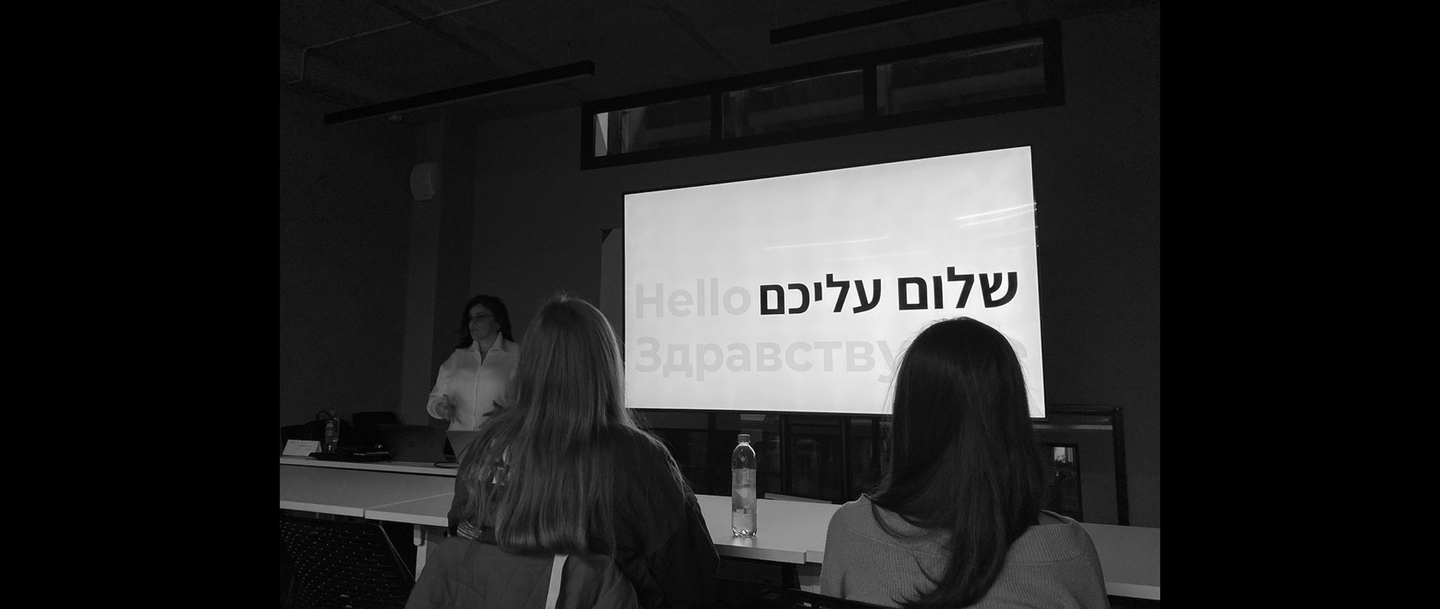
Before our first workshop session, we had the opportunity to attend Liron’s lecture on her design journey and favourite projects. Inspired by her background and design approach, we began the first short session. Liron suggested that we think about Russian ingredients that are ordinary for us but unusual for foreigners. She shared several research approaches we could use. For instance, we could work with cultural memory to identify ingredients that appear in almost every Russian’s personal memories.
It occurred to me that berry picking is one of my core childhood memories. When I was a child, my mother would buy kilos of cranberries at the local market every autumn, but I never liked them. They were sour and not at all tasty. I clearly remember blaming nature for not giving me sweet, «normal» berries. Now, I have decided to give cranberries another chance.
Day 2: Searching for a Visual Language
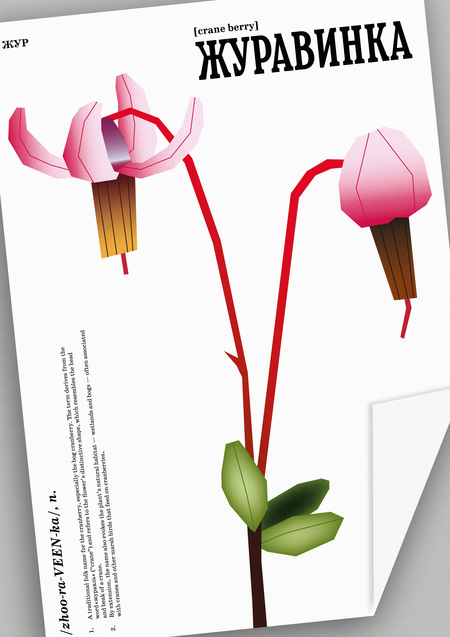
The second day was mainly dedicated to research. I used the suggested lenses to search for information about cranberries. Starting with the scientific perspective, I discovered that cranberry flowers resemble cranes, that the berries do not sink, and that under a microscope they contain vivid, acidic particles. I also learned about the cultural links between cranberries and cranes, as well as linguistic expressions and folk beliefs related to berry picking. I collected so much information that it was difficult to choose the main facts for the visual concept.
Day 3: Presenting Our Visual Stories
We created our posters at home so that we could present our work and organise an exhibition on the third day of the workshop. We discussed our ideas and shared insights after a period of diligent and inspirational work.
Results
I decided to focus on illustrations because they reflect my perspective as an insider — a bearer of Russian culture. I have always wanted to incorporate illustrations into my posters, and the workshop gave me the opportunity to do so. It was valuable to practise conveying cultural meanings through visuals and to reflect more generally on what constitutes one’s identity. After discussing my work with Liron and receiving her useful feedback, I finalised my posters.
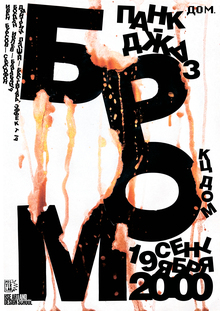
Liron once mentioned that we were going to create a visual dictionary of Russian ingredients. This instantly became a metaphor for my work, as I had found many different folk names for cranberry. Each poster is structured like a dictionary entry, with short academic articles explaining the meanings of the words and an alphabetical index. Initially, the posters resembled pages from a new book, with strict typography and precise illustration placement. However, I realised that our project is about memory, history and culture, so I decided to create the effect of pages torn from a shabby illustrated dictionary and scanned, with notes added.
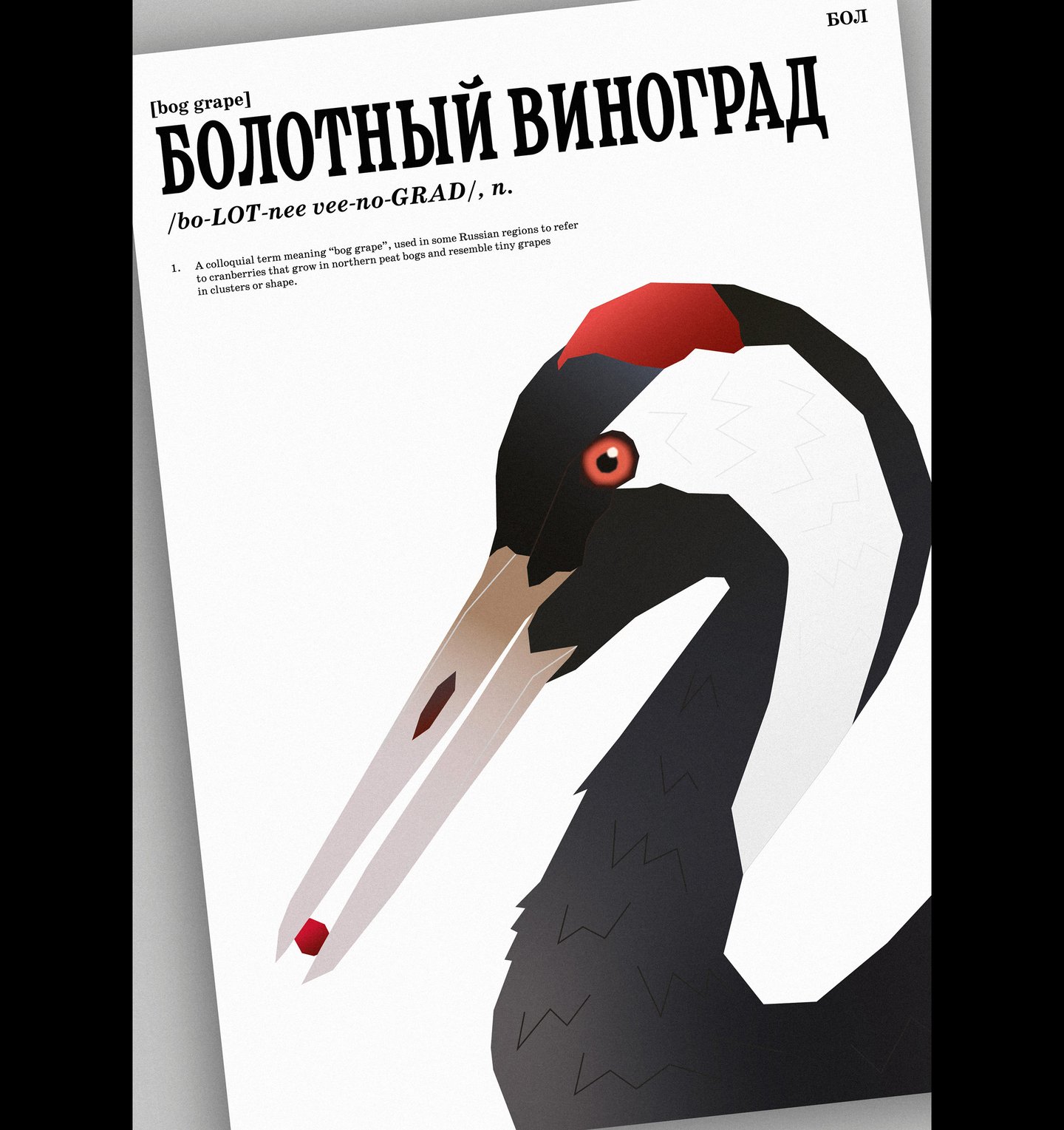
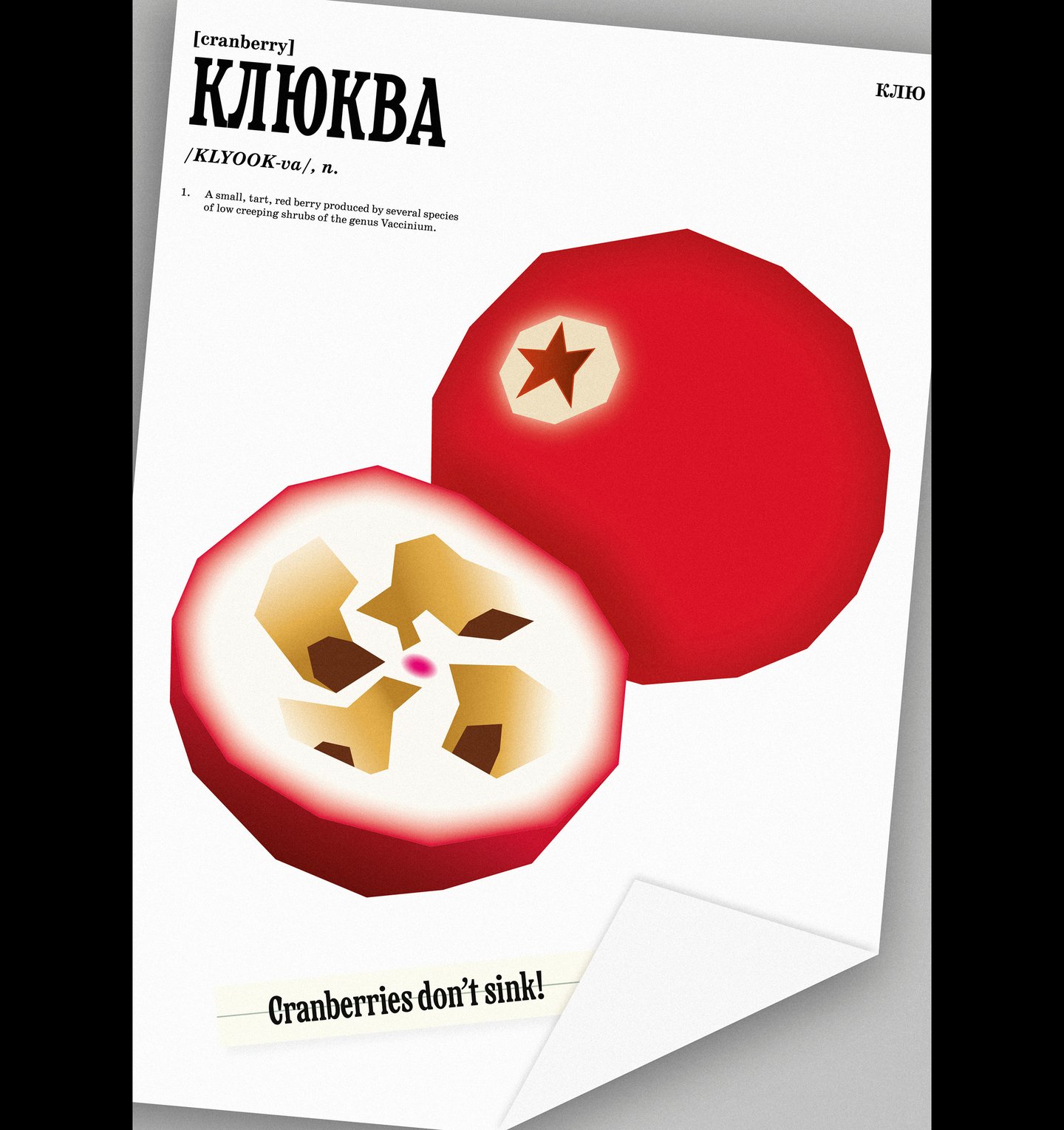
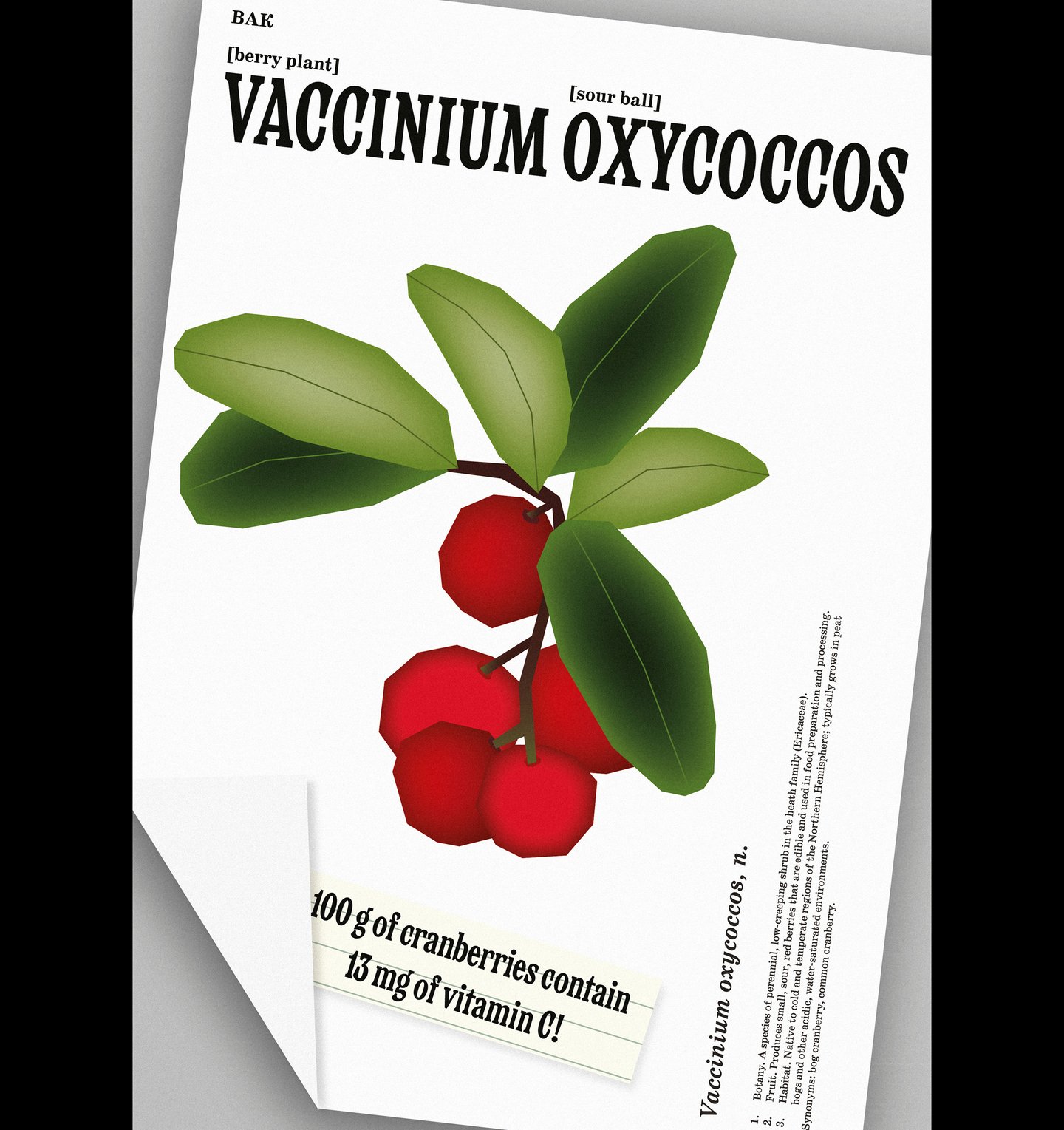
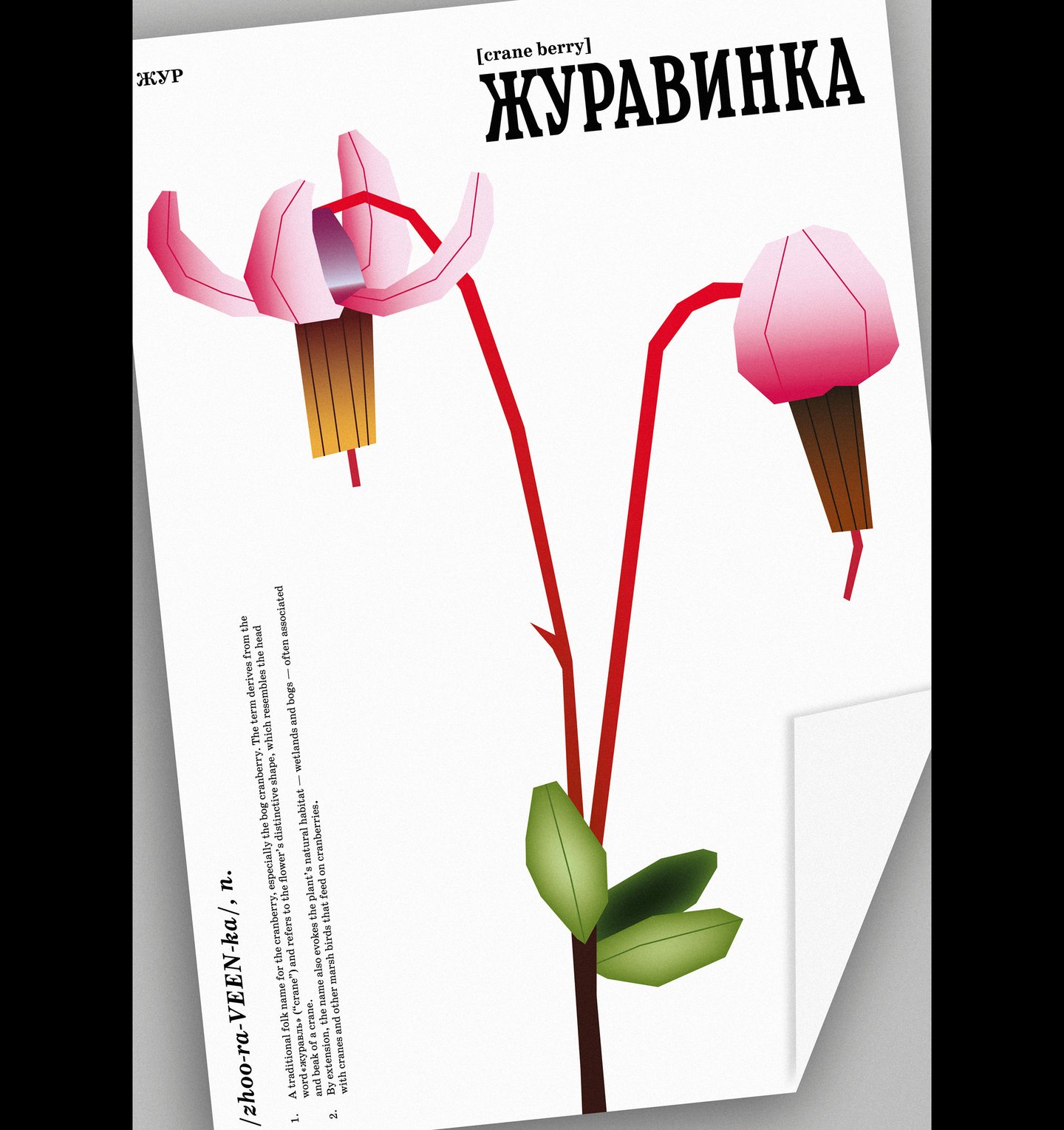
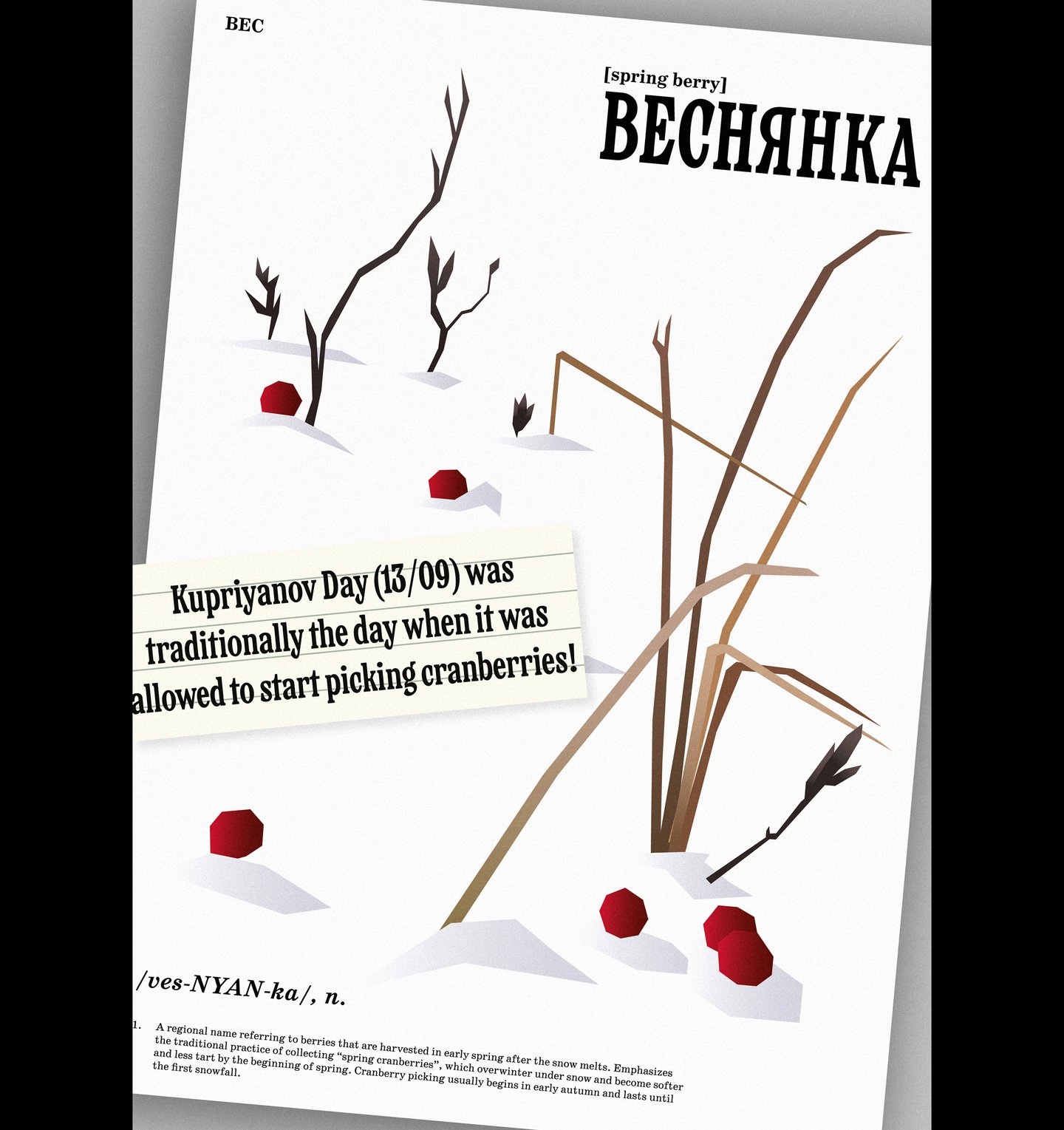
The names of berry, like illustrations, reflect its life circle, cultural history and local rituals.
The order of the posters can be changed. Viewers can organise them alphabetically, try to restore cranberry’s life circle, or even create their own visual stories.
Thank you! Cranberries are good for your immune system!