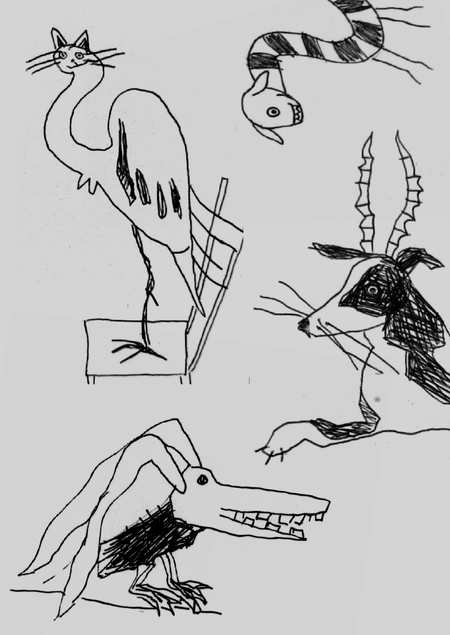
Concept
This project is dedicated to the research and visual expansion of Tatiana’s mystical dream from the poem «Eugene Onegin.» In the original text, the heroine encounters grotesque, hybrid creatures («Monsters sit all around: One with horns and a dog’s snout, another with a rooster’s head…»).
The goal of the project is to utilize the capabilities of generative art to create new, previously undescribed monsters that seamlessly integrate into the overall artistic universe.
A dataset of original graphic illustrations was collected to serve as the genetic code for training the neural network.
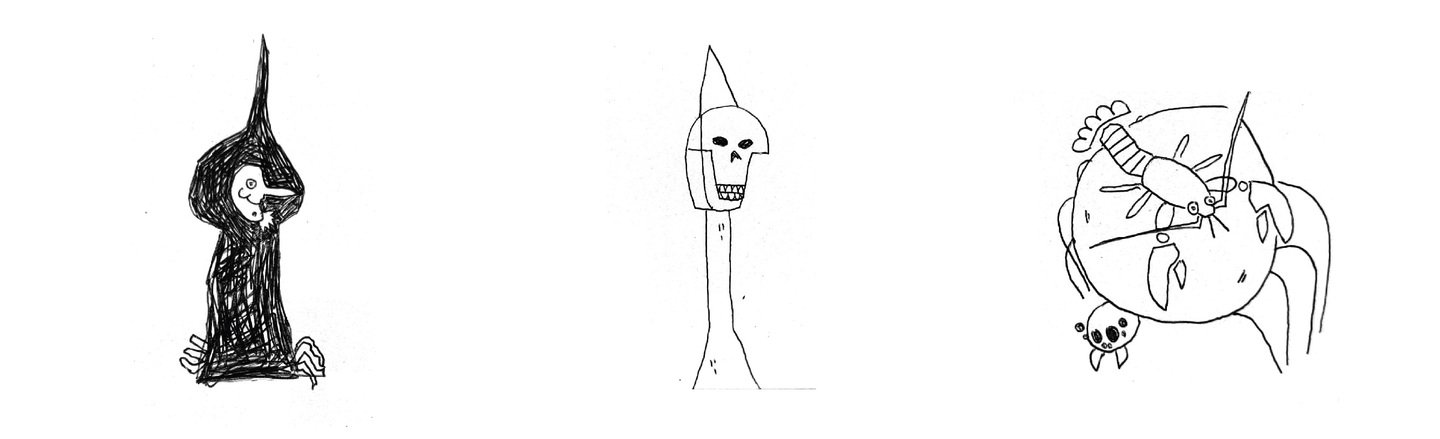
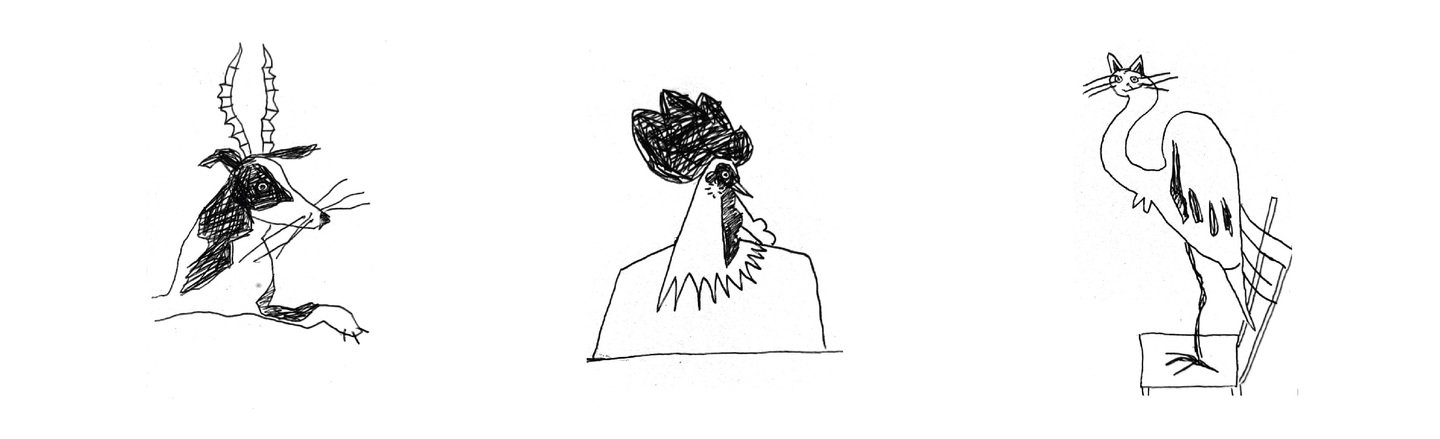
Resulting Image Series
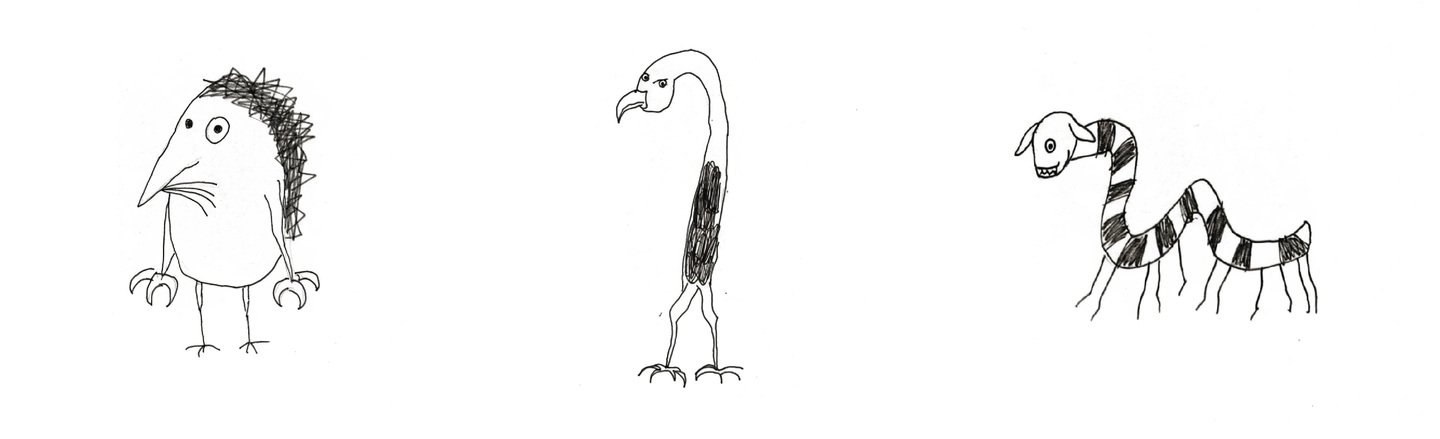
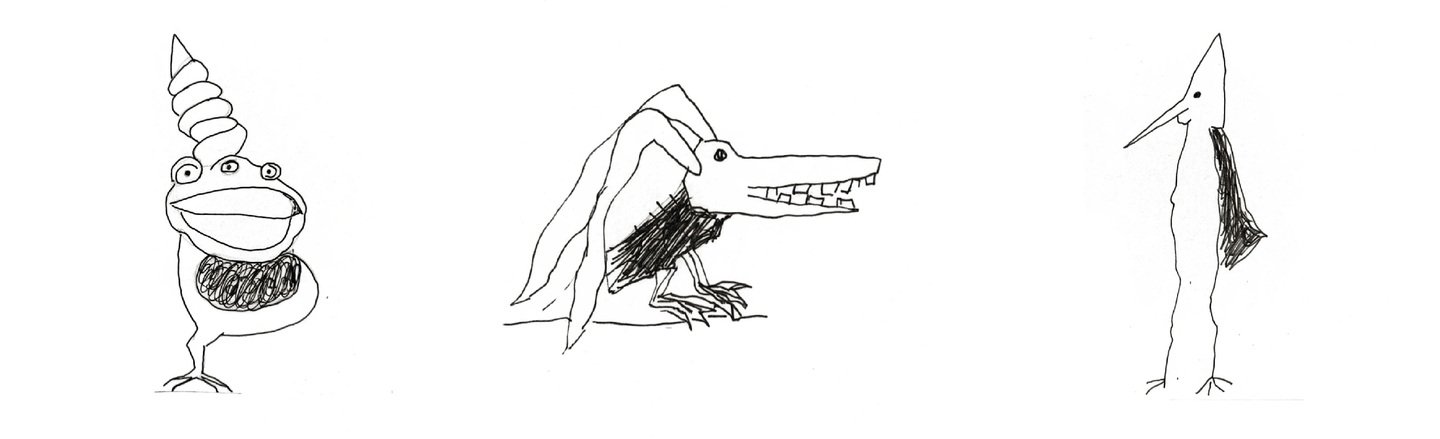
Visual Analysis of the Series
Connection to Concept: The final image series presents new manifestations of Tatiana’s dream—hybrid creatures that combine the traits of birds, amphibians, reptiles, and anthropomorphic figures. All characters appear to be a logical extension of the bestiary, expanding the mystical atmosphere of the Pushkin text.
The trained neural network accurately captured and reproduced the DNA of the author’s signature style. The model mastered the palette (pure black drawing on an isolated white background).It succeeded in conveying the specific «trembling» and expressive linear contour of the liner, as well as the texture of dense, chaotic cross-hatching done with a black marker (especially noticeable in the dark areas on the creatures' bodies).
The key characteristics remain: the flatness of the graphics and the naive, grotesque nature of the proportional distortion.
Generation Details and Data Processing
To clean the generations of digital «noise, ” gradients, and three-dimensional shadows, a negative prompt was used (color, realistic, 3d, shading, gradient, blurry, canvas texture). This helped keep the model within the scope of clean, two-dimensional graphics.
Visual Analysis of Variations
Despite strict stylistic consistency, the images demonstrate high variability in form.
We see various creatures: an elongated, bird-like monster with a massive beak and ruffled feathers, an arthropod hybrid creature with a striped pattern, and a detailed, frog-like monster with spiraled shell-horns on its head.
The neural network didn’t just duplicate the source material; it was able to reimagine the texture of the line, distributing it across entirely new anatomical structures.
Description of the learning process and code laptop
Fine-tuning the generative model to match the author’s graphic style was achieved by creating LoRA weights based on the Stable Diffusion XL (base-1.0) architecture within the Google Colab environment.
Base Model: stabilityai/stable-diffusion-xl-base-1.0 (chosen for its deep understanding of text prompts and high-quality handling of high resolution).
Total Steps: 1500 optimization steps.
Unique trigger token (style activator): tatianasdream style