About the Project and Structure
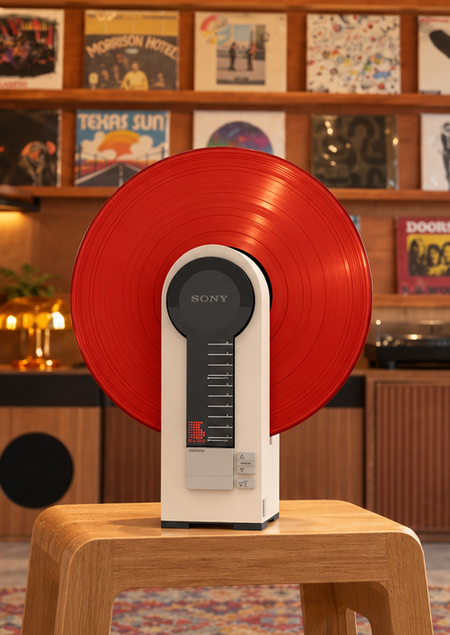
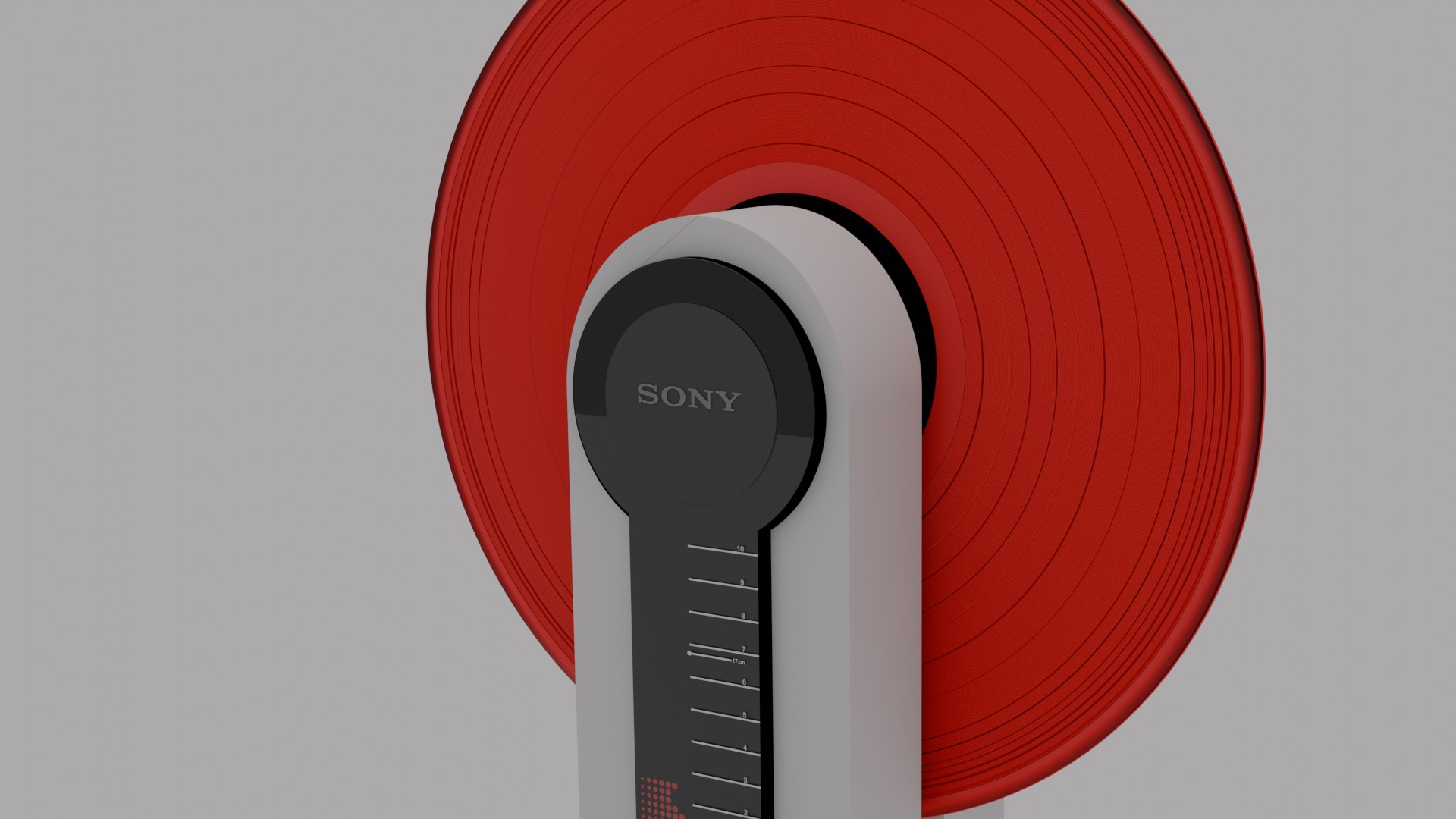
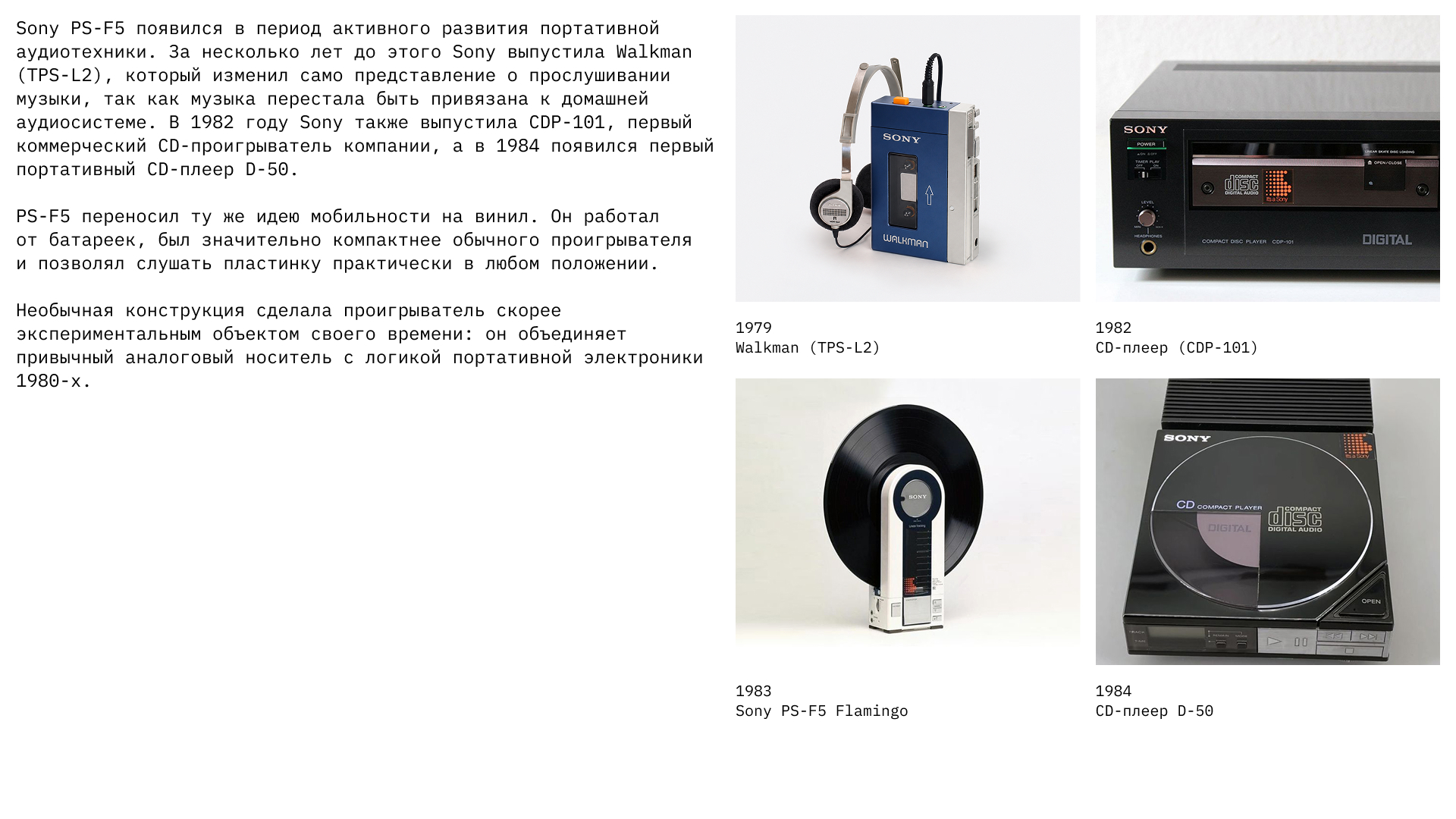
Sony PS-F5 Flamingo is a portable upright turntable released by Sony in 1983.
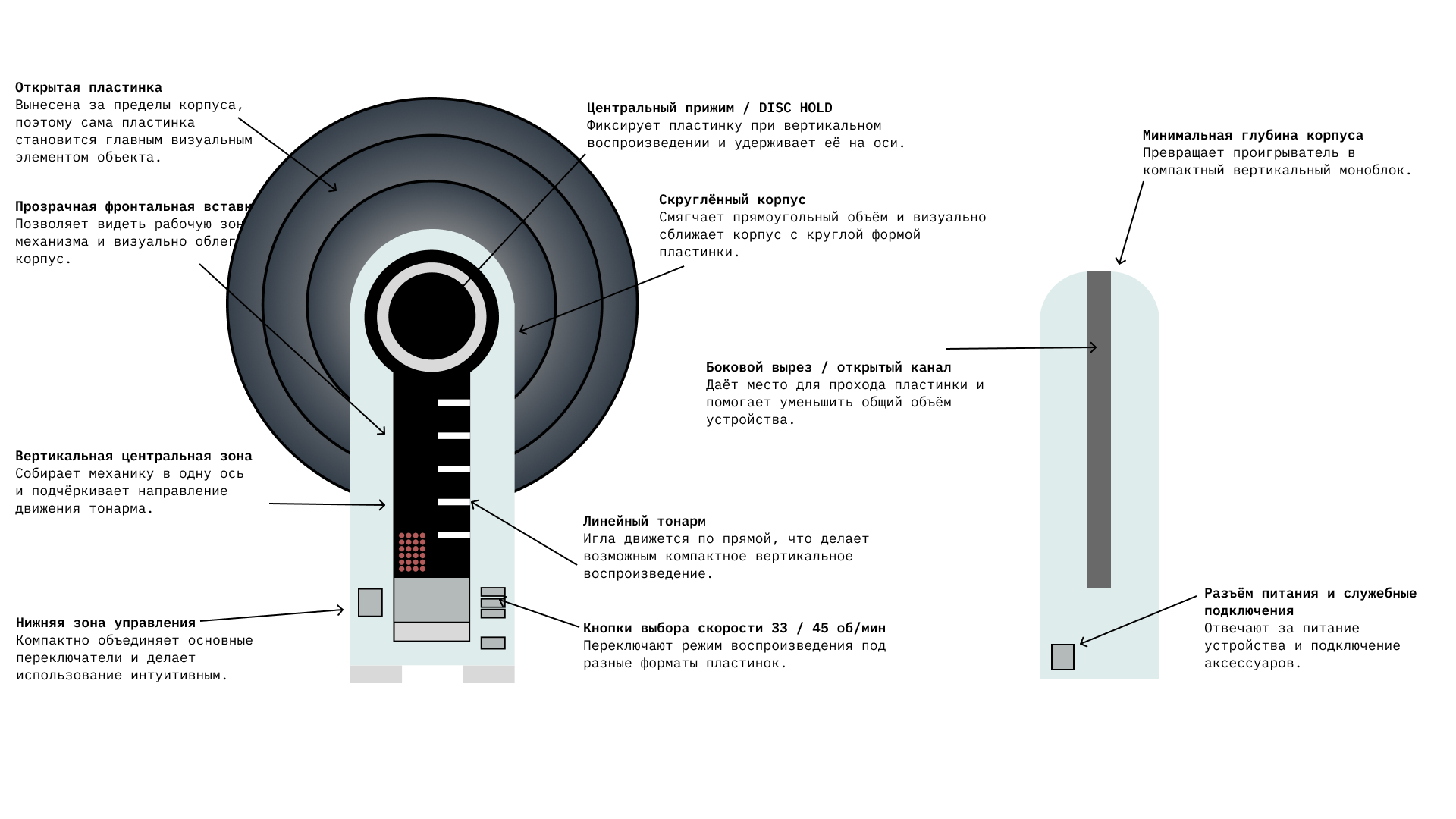
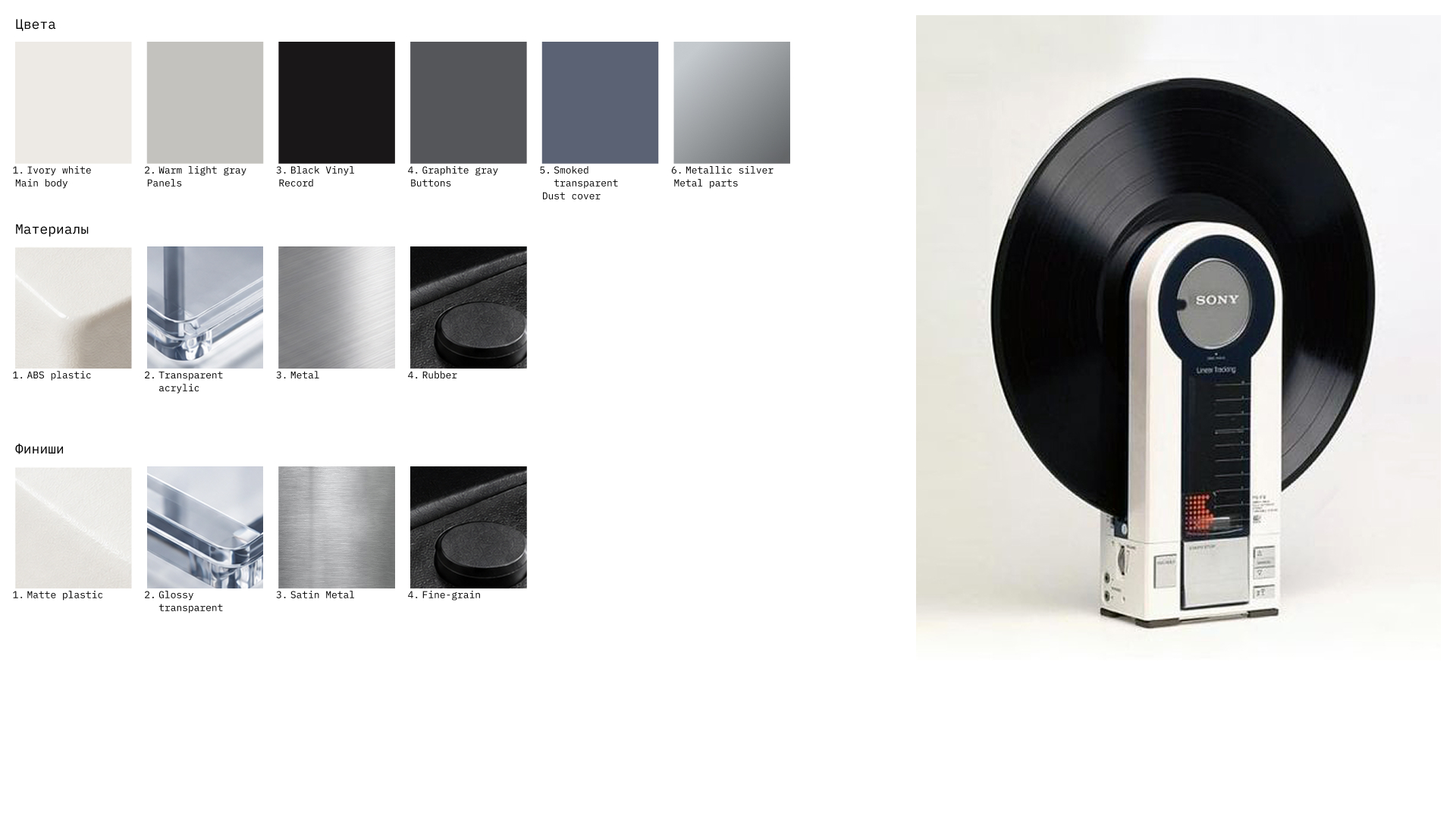
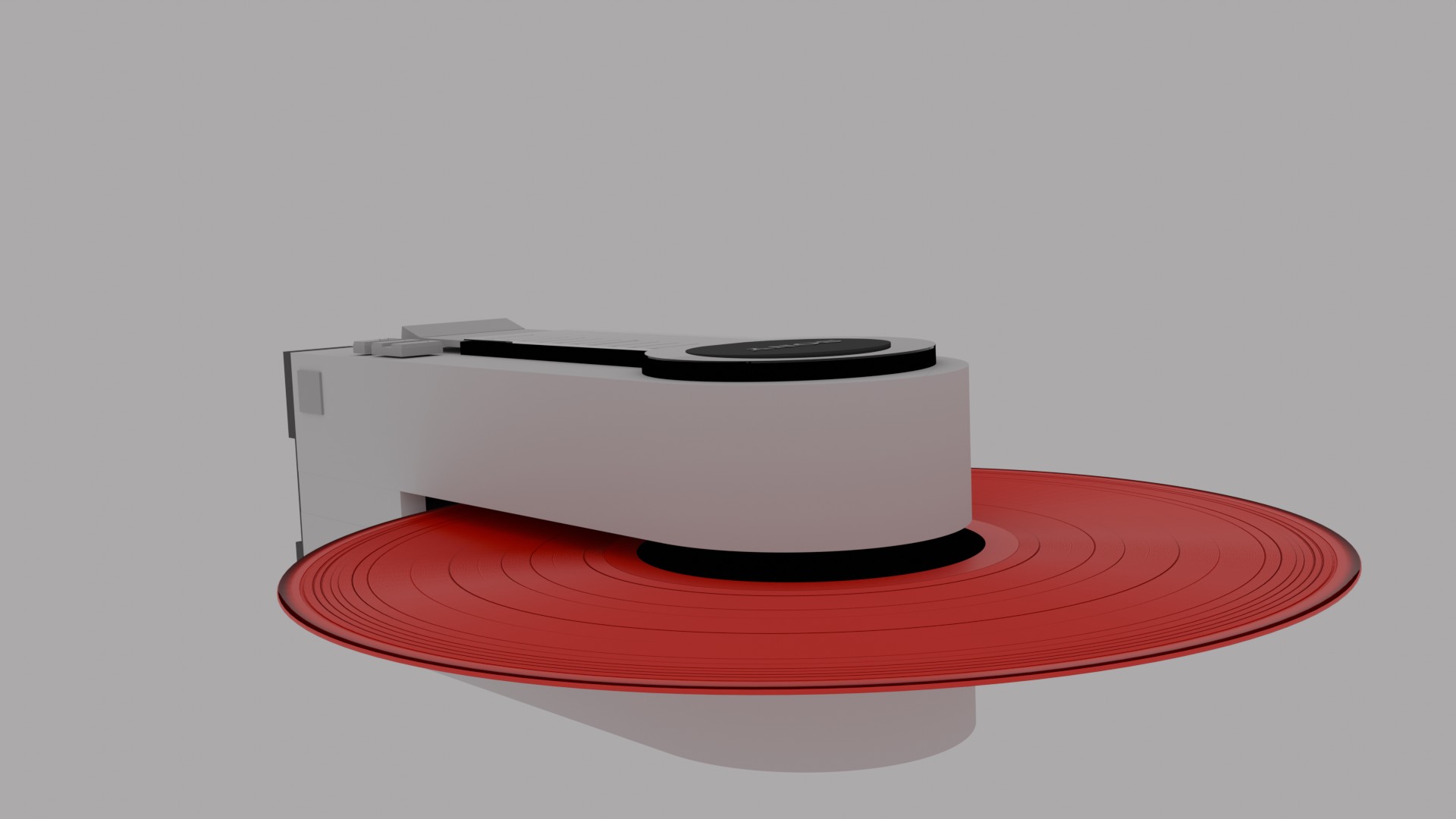
The model operates with 7 and 12-inch records. Thanks to its linear tonearm and record clamping system, the player can operate not only horizontally but also vertically.
The interest in this device stems from its unusual form, which reveals a new way to use vinyl turntables. This project is dedicated to researching and recreating the portable upright turntable, the Sony PS-F5 Flamingo—an example of experimental industrial design from the early 1980s.
The goal of this work is to analyze the principles of form creation, construction, and the visual language of the device, identify the relationship between function and form, and reproduce the main features of the casing in a 3D model. The project tasks include researching the historical context, analyzing the geometry and materials, and creating catalog visualizations of the object.
Historical Context
Form Generation
CFM
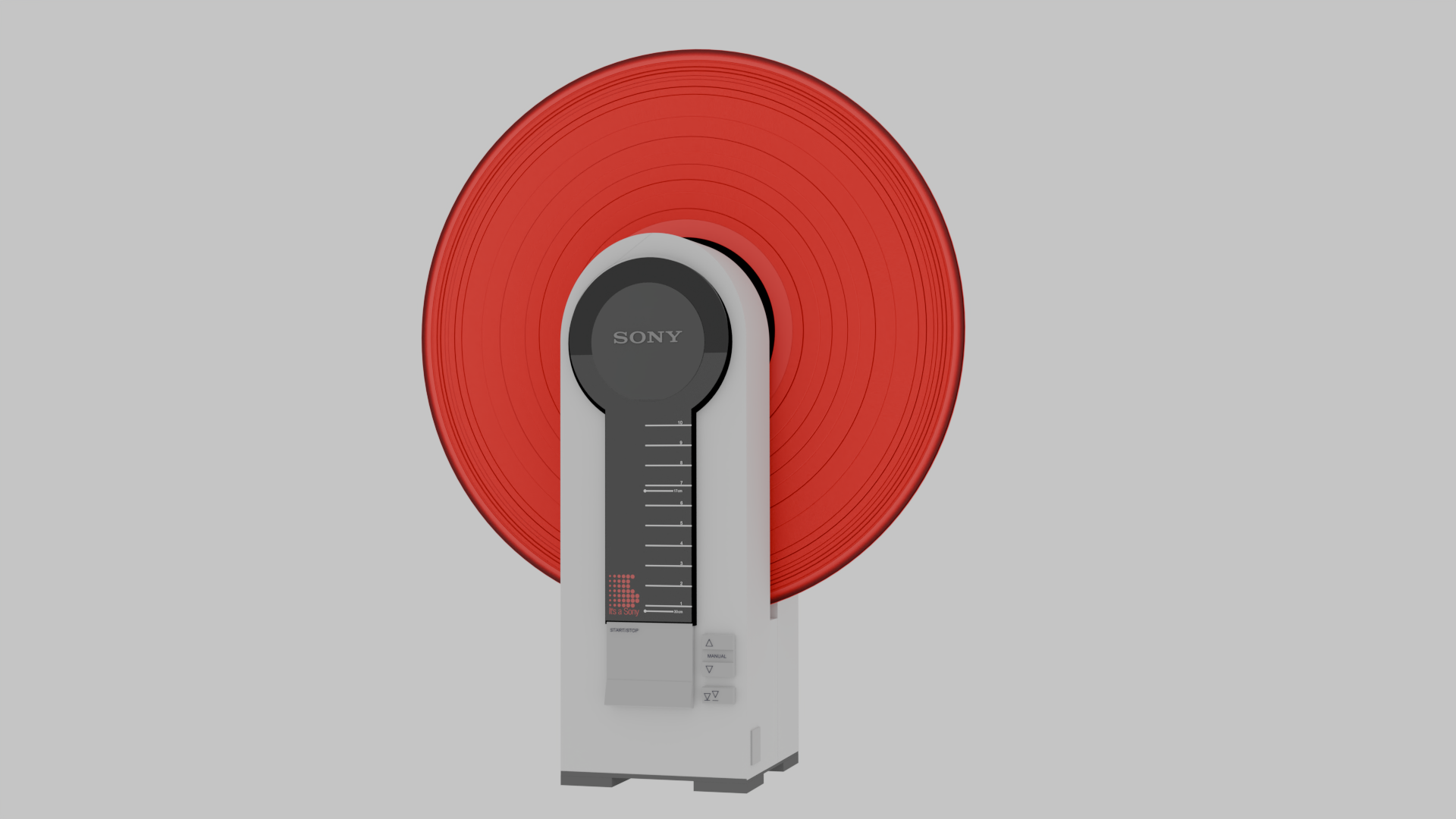
Renders
Conclusion
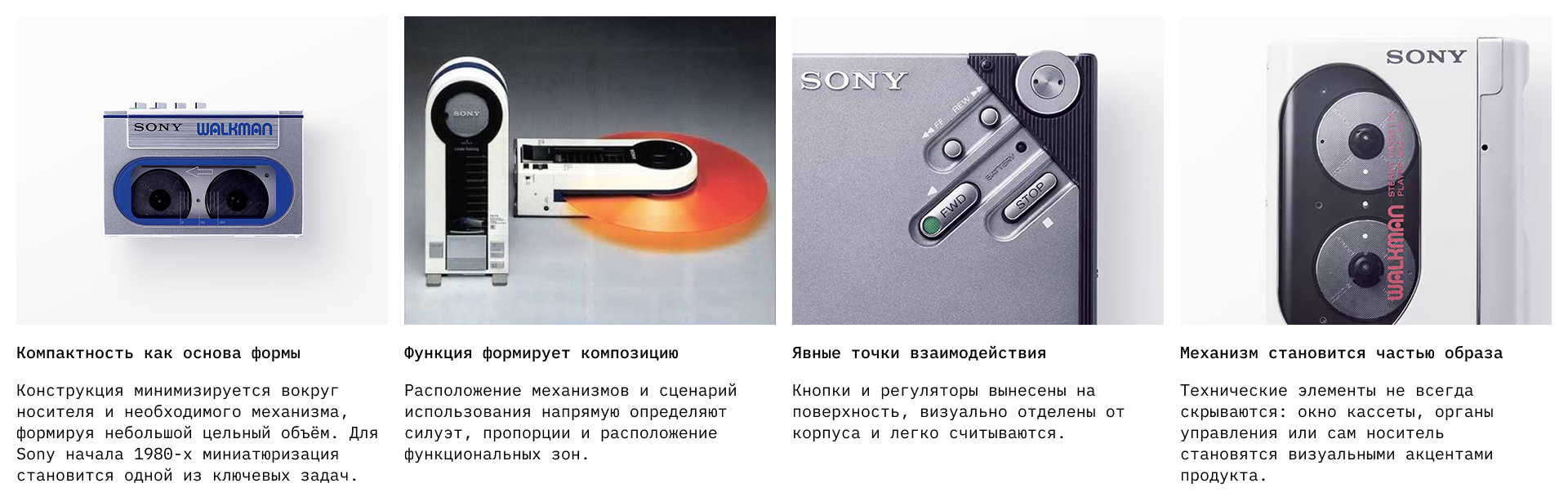
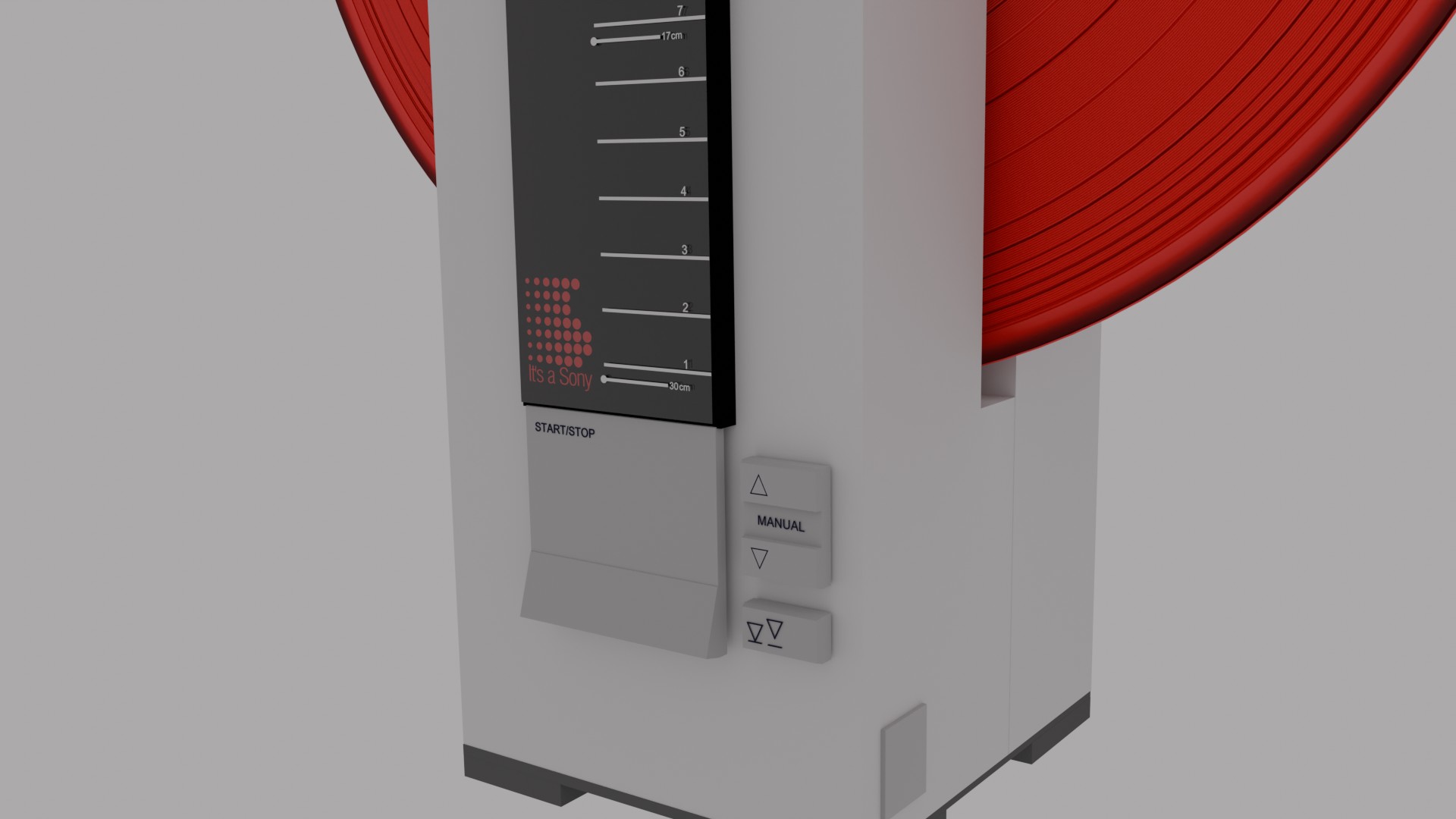
The investigation of the Sony PS-F5 Flamingo revealed a direct relationship between the device’s design and its visual form. The vertical usage scenario dictates the elongated geometry of the chassis, the record platter fixing system, and the placement of the linear tonearm—the platter itself becoming an integral part of the player’s silhouette. Analyzing the historical context, geometry, materials, and design language of Sony allowed us to identify the device’s key characteristics: compactness, functionality, open construction, and the combination of simple geometry with technical elements. These principles were reproduced in the 3D models and visualizations of the object.