Технологии дизайна. Анимация 2 курс
Development of a series of animation exercises to master the principles and technologies of 2D animation.
Course Instructor — Polina Campioni
Course Topic Information
From its inception, animation developed as a technique for bringing things to life—initially through sequences of drawings, then through stop-motion work using puppets, collages, and photographs. The technical methods of animation are closely tied to the history of its media: from celluloid films and cut-outs to computers and digital cameras. Each technique offered a distinct way of viewing motion, a unique language of plasticity and editing.
As early as the early 20th century, artists such as Émile Cohl, Winsor McCay, and later Walt Disney, the Fleischer Brothers, and Lotte Reiniger began establishing the foundations of expressive movement: concepts of acceleration, inertia, trajectory, and deformation. These observations were formalized into the «12 Principles of Animation, ” developed by Disney studio animators in the mid-20th century. Since then, every animation process has been built upon an understanding of the physical and visual laws of motion.
Alongside this, the diversity of techniques grew. Claymation, object animation, drawn animation, cut-out animation, rotoscoping, particle animation, and other forms of frame-by-frame animation allow for varied approaches to the challenge: animating a form, expressing rhythm, or emphasizing character. Today, animation is not just about characters and stories—it is also about the structure of perception: how an object moves within the frame, how the viewer processes rhythm, and how interaction is constructed both within and between scenes.


Max Fleischer Studios, «Bubbles, ” 1922
The «Animation Technologies» course introduces students to the fundamentals of animated motion through a series of practical assignments. It covers key topics: — principles of movement and deformation; — editing and visual rhythm; — the interaction of form and sound; — transitions between techniques; — spatial thinking in animation. This course explores how animation functions—technically, visually, and compositionally—and how an animator can guide the viewer’s attention through movement, material, and structure. The final project will be a showreel composed of animation sketches created during the course.
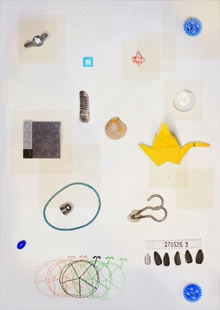
Nastya Polyakova, Olya Kolbasova, Liza Kutepova, «Clay,» 2021
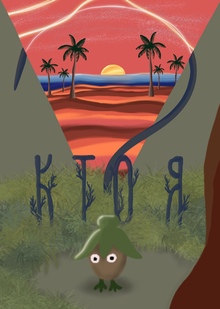
Kamila Faskhutdinova, «KHIYA!», 2021
Course Target Audience
— For students and aspiring animators interested in the fundamentals of movement in animation and the variety of techniques—from drawn and claymation to object and mixed media. — For those who want to learn how to control rhythm, composition, and editing, and understand how movement can convey character and emotion.
Duration: 1 academic year. Contact hours: 288 academic hours. Format: In-person (with online availability).
What students will learn in the course
— Apply fundamental animation principles (easing, squash and stretch, pendulum arc, wave arc, object damping/follow-through) — Utilize claymation techniques in stop-motion filming — Edit a music video keeping tempo and rhythm in mind — Create cutout animation — Develop illustrated action animations using computer software — Produce expressive animation interactions involving five characters — Create circular (360°) camera movement in dynamic interaction with characters — Create object animation — Develop documentary animation — Edit a showreel applying principles of clip editing
Practical Assignments
— Animating a mechanism using fundamental animation principles (slow in/slow out, squash and stretch, pendulum arc, wave arc, object damping/follow-through) — Shooting a stop-motion study of a plasticine bacterium — Montage exercise: creating a music video from disparate clips — Animation exercise: animating the gait of a paper puppet — Dynamic study featuring action movement — Animation exercise: choreographing the interaction of five characters — Dynamic study featuring a circular (360°) movement of two characters — Exercise: creating a commercial spot from any objects — Workshop on creating documentary animation, followed by a seminar discussion — Exercise: assembling a showreel from animations created during the course
Nastya Polyakova, «In the Subway, ” 2021
Thematic Plan
Introduction to Animation: From Zoetrope to Digital Graphics Composition and Shot Design in Cinema Color and Light as Expressive Elements Fundamental Principles of Animation Exercise. Mechanism Stop-Motion. Claymation and Object Animation Exercise. Clay Animation (in a Petri Dish) Scripting, Storyboarding, and Shot Directing Exercise. 3-Frame Editing Sound Design and Voice Acting Fundamentals of Editing: Rhythm, Timing, and Tempo Working with Musical Score in Animation Exercise. Music Video Editing Working with Form in Character Design Creating a Paper Puppet Exercise. Character Walk Cycle in 5 Different Techniques Cel Animation. Working with Line and Dynamics Exercise. Dynamic Sketch Combined Techniques: 2D + Real Objects Exercise. Interaction Between Two Characters with Camera Pan (360°) Exercise. Musical-Rhythmic Sketch (5 Characters in a Location) Sand and Powder Animation. Organic Structure Features of Found Object Animation Exercise. Sketch in Object Animation Technique Working with Space: Walls, Props, and Real Objects Exercise. AnimaDoc Exercise. Showreel—A Collection of Best Works to Music
Examples of Work