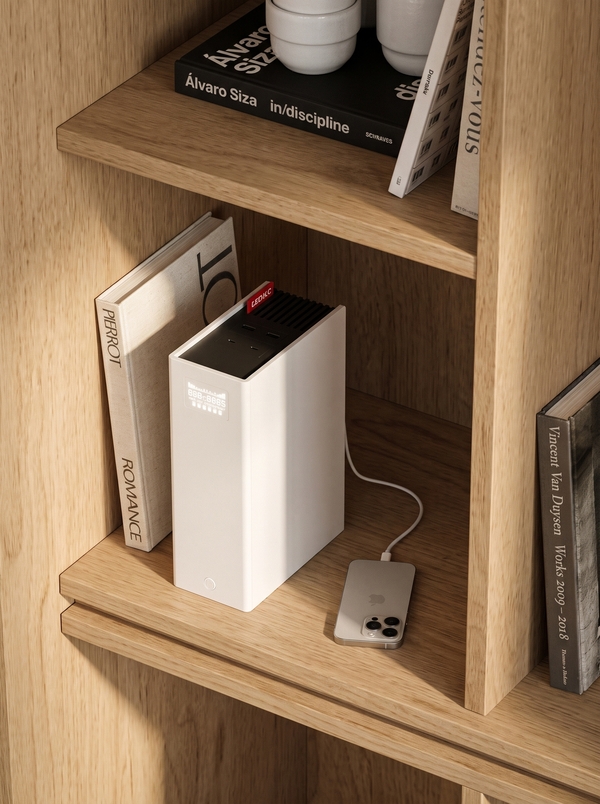
What is UPS?
When people first hear this abbreviated name, many do not understand what it refers to. This presentation will help you understand what it is and where it is applied. It will also explain why it is important to design these devices.
UPS (Uninterruptible Power Supply) is a device that provides temporary power to connected equipment when electricity is lost, and also helps protect it from voltage fluctuations.
Where can this device be found?
Three primary application areas are distinguished: 1. Office 2. Manufacturing 3. Home Each area has specific requirements regarding storage conditions, power specifications, reliability, and much more. Below is a table outlining the priorities for selecting a UPS for each specific field of activity.
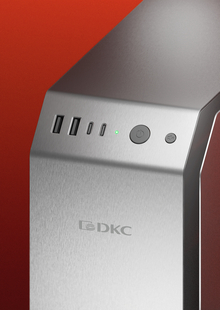
In a meeting with the client (DKS company), a request was identified for developing a more user-friendly visual design for the UPS. The home environment was chosen as the primary focus, as UPS units are frequently purchased for desktop computers and other appliances in this setting. Such devices help conserve energy when there are frequent power supply issues in an apartment.
Inconvenience and chaos.
Characteristics of using UPS
in home environments.
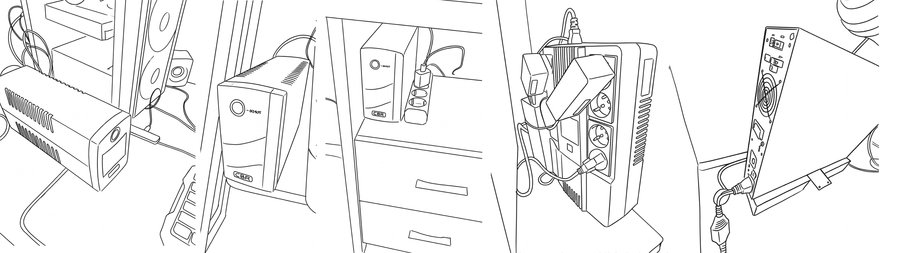
The use of Uninterruptible Power Supplies (UPS) was analyzed by searching information on marketplaces. In product comments, buyers leave numerous reviews with photos showing where and how they place the device.
This situation can be described through several points:
- The equipment is hidden behind televisions and monitors.
- It is placed on desks or shelves.
- It is positioned next to a desktop computer.
- It is mounted to the wall using brackets.
- It is placed on the floor near a workspace.
Conclusion: — There is no single correct storage location for a UPS in a home setting. (This cannot be changed). — The unattractive appearance of the product (people want to hide it, not place it in a visible spot).
Task: To develop a new visual system for UPS units integrated into a residential environment. Redefine the conventional look of the technical device, transforming it into an aesthetic piece of interior design that does not need to be hidden from the user.
After determining the direction, I moved to the sketching stage. It was important to consider the principles by which industrial design objects integrated into residential environments are designed. In general, they feature pleasant, rounded forms without sharp corners, a clear interface, and details that do not distract.
Search sketches helped us define the stylistic direction for the future project. Together with the instructor, we chose an image relatable to everyone—books. Things that reside in every home on a shelf, a bookcase, or a nightstand.After that, we began developing a mood board and a style board, which set the direction for developing the final piece.
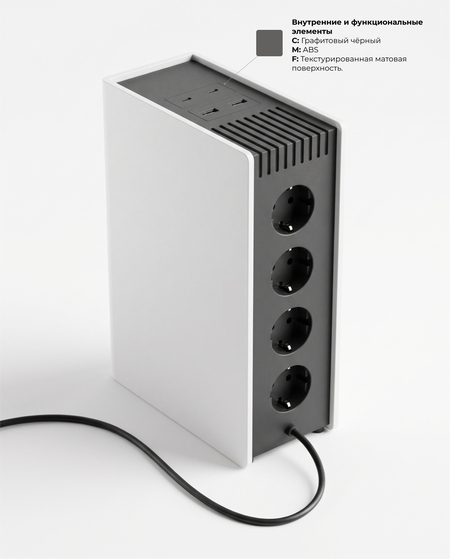
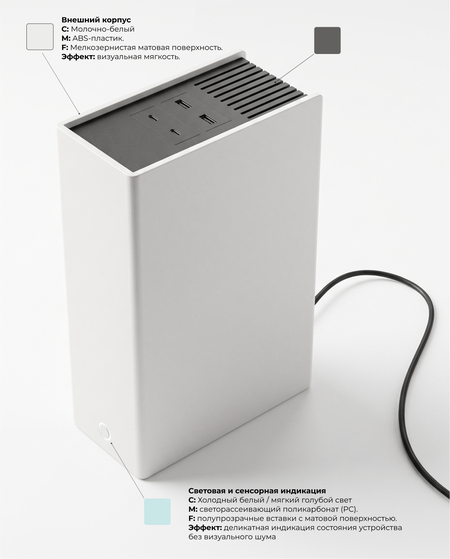
Neural network renders based on 3D models
Neural network renders based on 3D models