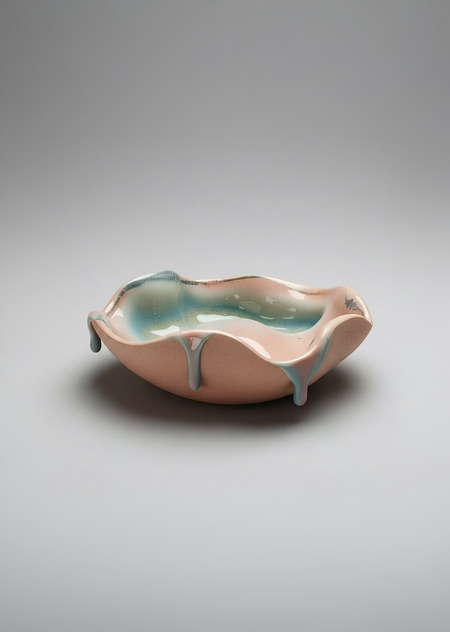
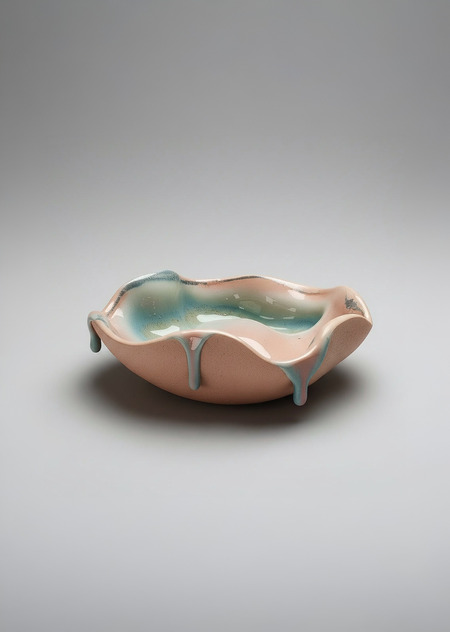
«Traces of Touch"—a ceramic sauce dish with a deliberately distorted form. The contrast between coarse grog and iridescent glaze transforms the utilitarian object into an art piece, holding the marks of the artist’s hand.
Project Concept
Concept: In a world where almost all objects are manufactured by machines with perfect geometry, the «Traces of Touch» project brings us back to tactility. It is an exploration of how the physical touch of the creator alters the form and meaning of an object.
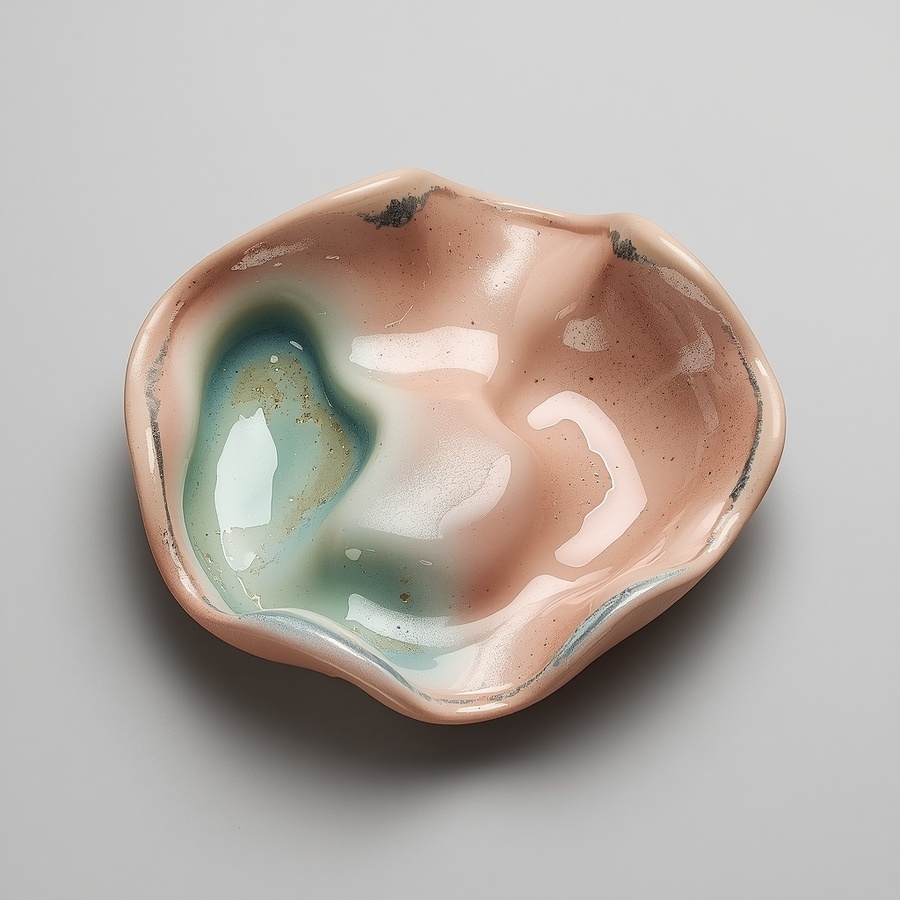
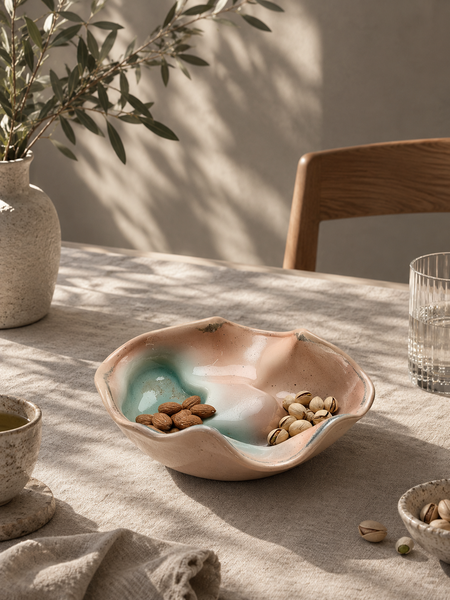
The serving dish deliberately lacks perfect proportions. Its edges seem to «ooze» and deform, as if the object hasn’t fully set or has just been squeezed by hand. This soft, fluid form conveys a sense of vital warmth. The inner iridescent glaze (pink-mint) contrasts sharply with the rough, unfinished rim. While the object retains its utilitarian function (it’s convenient for serving nuts or fruit), it transforms into a sculpture that invites close inspection and touch.
Materials and Technology
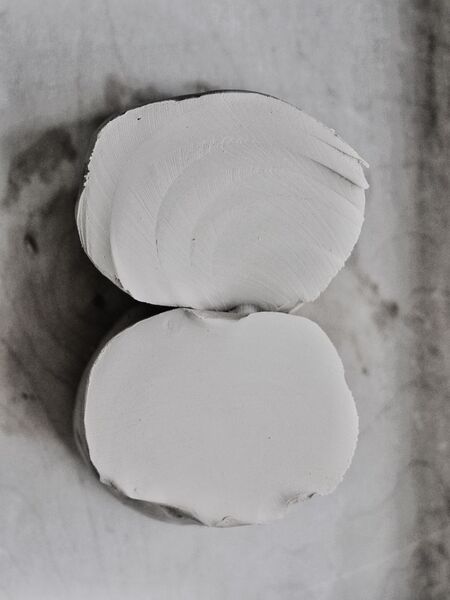
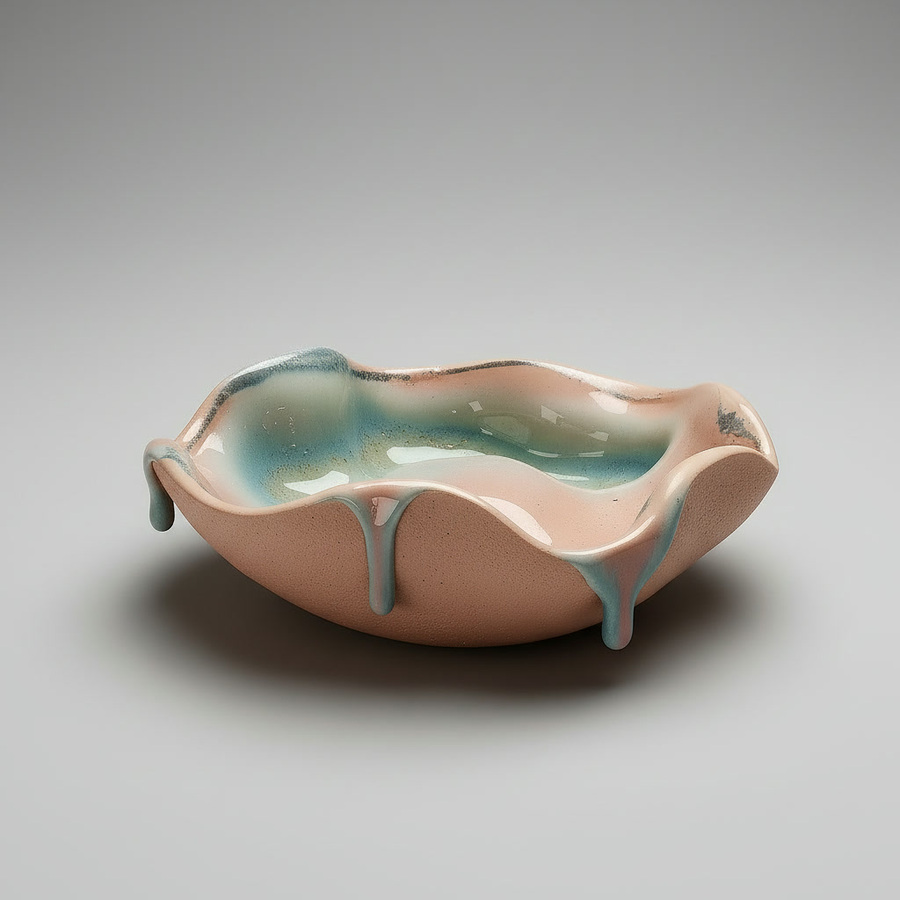
Shamot ceramic body. It was chosen for its ability to hold its shape while providing a noble, granular texture. For contrast, the outer edges remain unglazed (the natural color of the clay).
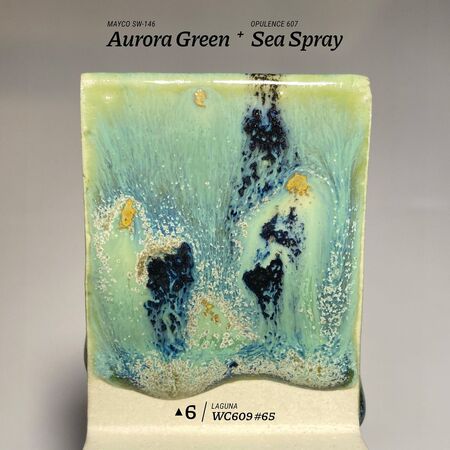
Glaze: Reactive (bleeding) glaze. The powder-pink color smoothly transitions into mint and turquoise. In the depressions, the glaze pools into glossy «puddles, ” creating the effect of a gemstone or a drop of water. Fine specks appear during the firing process.
Forming Technique: Hand-modeling from a slab (sculpture). At the raw clay stage, the form is deliberately deformed by the fingers—indentations, asymmetrical waves, and distortions are created. This fixes the author’s «fingerprints.»
Firing: Double firing. The first (bisque) firing is for strength. Next, glaze is applied (using the pouring method), followed by a final pouring firing at a high temperature (approx. 1200°C), during which the glaze «runs» and forms drips.
Visualizations