Topic
The project explores the boundary between documentary observation and staging, as well as the capacity of photography to instill a sense of verisimilitude in the viewer. I am interested in how context alters the perception of people and space, and at what point familiar reality begins to feel strange, artificial, or questionable. Photography is traditionally perceived as evidence that something genuinely existed before the camera. However, an image does not merely record reality—it constructs it: the choice of moment, angle, lighting, and object placement dictates how the viewer interprets what they see. I want to investigate this duality by combining documentary and staged photography. My goal is not to oppose the real with the fictional, but to find a situation where the distinction between them becomes ambiguous.
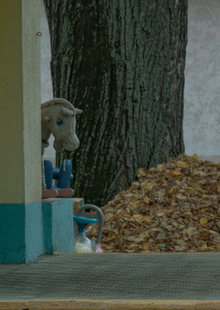
At the heart of the project are people and everyday spaces: residential interiors, stairwells, hallways, courtyards, streets, and other locations where daily life unfolds.
Principle
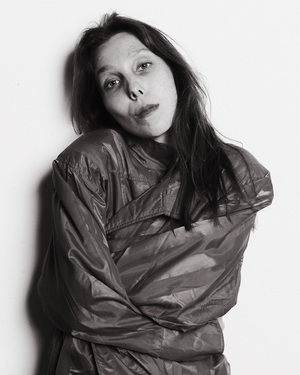
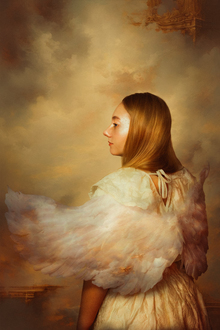
— The first layer of work will be based on observation. I plan to return to the same locations, photograph people in their natural environments, and document their behavior, gestures, interaction with space, and the traces of others' presence.I want to pay special attention to portraiture. I am interested in the moment when a person realizes the camera is present and their behavior begins to change. Even if the person isn’t deliberately posing, the act of being photographed creates a situation of interaction where natural behavior can transform into role-playing.— The second layer of the work will involve staging. I plan to return to the situations, people, and spaces I have found, recreate specific observations, and alter certain details within them. These details could include body posture, direction of gaze, distance between people, placement of objects, or the nature of interaction with the environment.— The staged scenes will retain the external believability of everyday life; in some instances, they will be based on real stories, but they will be a surreal interpretation. It is important to me that a new context emerges within a familiar reality and is discovered through subtle breaches of the accustomed order.Thematic Visual Exploration: The Surrealism of the Duplicate
The surrealism of the duplicate is an exploration of the visual methods through which the repetition of a person, object, space, or image disrupts the conventional perception of reality. I am interested in the moment when resemblance ceases to be neutral and begins to evoke a sense of strangeness, uncertainty, or unease. A duplicate may appear to be an exact copy of the original, yet simultaneously create the impression that there is an inexplicable difference between them.
The Double and Identity
An exploration of the visual duplication of the human form, the fracturing of identity, and the existence of multiple versions of a single character. Objects of analysis include: self-portraits, doppelgängers, identical figures, repetition of poses and gestures, disguise, and role and appearance shifts. Central question: At what point does the double cease to be perceived as a copy and become an independent character?
Mirror and Reflection
An investigation into the relationship between the original and its reflection—where the visible image aligns with or deviates from its source. Objects of analysis include: mirrors, display windows, glass surfaces, reflections, mirrored symmetry, and images with distorted reflection logic. Central question: Why might a reflection, which should confirm the original’s existence, cast doubt on its reality?
Seriality and Repetition
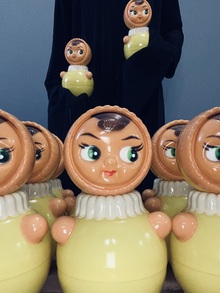
An examination of the multiple reproduction of a single object, human figure, action, or composition. Objects of analysis include: rows of identical items, recurring figures, sequences of nearly identical frames, and series with minimal variation. Central question: When does repetition stop being perceived as a pattern and begin to appear as a glitch in reality?
Substitution and False Original
An investigation into situations where a copy occupies the place of the original or becomes indistinguishable from it. Objects of analysis include: mannequins, dolls, masks, simulacra, imitation of human behavior, and the substitution of the living with the inanimate, and the genuine with the artificial. Central question: What visual cues allow us to distinguish the living from the artificial, and the authentic from the constructed?