About the Project
My project is an intelligent AI assistant for Telegram that helps with daily tasks, remembers habits, and provides personalized recommendations. It can analyze requests, map routes, set event reminders, and integrate with external services. I used DeepSeek for generating ideas and text, and GigaChat for creating images. The bot was developed in Python with the Aiogram library and operates on the GigaChat API for natural language processing. This is not just a chatbot—it is a personal assistant that learns from your actions and becomes smarter over time. In the future, I plan to add features for financial analysis, booking, and other automated solutions.
Why is it needed?
This AI assistant is designed to automate routine tasks—it consolidates a scheduler, personal assistant, and analyst into a single bot, replacing multiple applications. It saves time: instead of manually entering data, you simply tell it about your plans, and it will remind you at the appropriate time. The bot learns from your habits—the more frequently you use it, the more accurate its suggestions become, ranging from optimal routes to scheduling recommendations. It solves problems through integrations: it checks the weather, builds routes, and in the future, it can handle finances or book services. This project is particularly useful for busy individuals—entrepreneurs, freelancers, or students who need a «digital assistant» on call. Unlike standard bots, it doesn’t just answer questions; it anticipates your needs based on context. This is the first step toward a personalized AI that will eventually predict your requests.
Tools
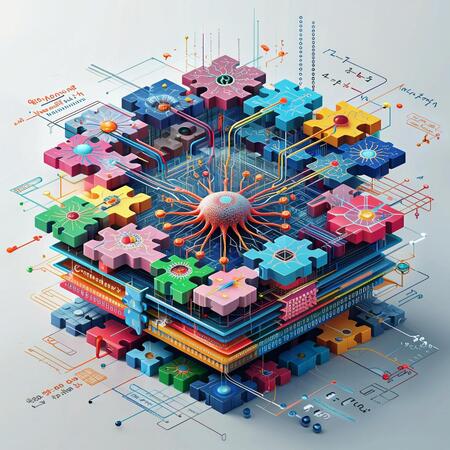
To create and promote the project, I utilized contemporary neural network technologies. DeepSeek helped shape the brand concept and generate textual content, while GigaChat created visual materials for the project presentation. These neural networks significantly accelerated the development process—from generating names and slogans to writing technical documentation. In brand promotion, AI tools proved indispensable: they analyzed the target audience, selected keywords, and even assisted in shaping the communication strategy. With neural network algorithms, I automated parts of the marketing process, including the creation of personalized content. Neural networks are especially valuable for analyzing promotion effectiveness—they process statistics and provide optimization recommendations. This experience demonstrated that the intelligent use of AI tools allows even a small project to compete with major brands in the digital space.
Skills
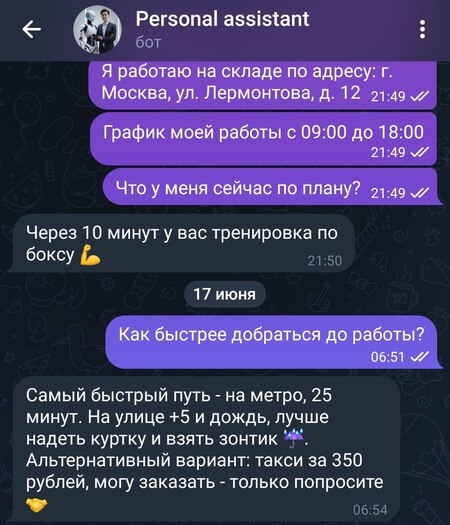
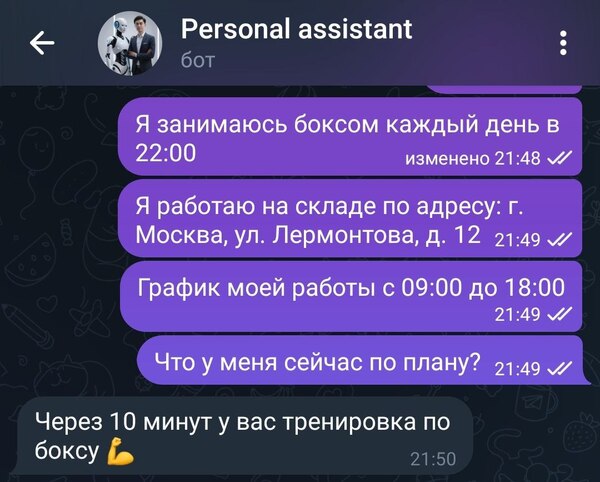
Example of communication in Telegram

When you ask the bot how best to get to work, it uses your saved home and work addresses, queries the Yandex Maps API to map the optimal route based on current traffic conditions, and selects the fastest option whether by transit or on foot. Simultaneously, through integration with Yandex Weather, the bot analyzes temperature, precipitation, and other weather conditions along your route, after which it provides personalized clothing recommendations—for instance, suggesting a warm jacket in sub-zero temperatures or carrying an umbrella when it’s raining. For drivers, the bot will alert you to black ice or traffic jams and recommend leaving earlier. If part of the route is on foot, the assistant will clarify the walking duration and give corresponding advice. Over time, the bot remembers your transportation preferences and offers more precise options tailored to your habits. As a result, you receive a comprehensive travel solution that accounts for all external factors and personal characteristics.

The bot can save important notes and reminders to a personal database, associating them with specific dates and times. You can say, «Remind me tomorrow at 10:00 about the client meeting,» and the bot will send a notification on Telegram right on schedule. All notes are organized by categories (work, personal, health) for easy searching. A key feature is that the bot analyzes your habits—if you regularly log workouts in the evening, it will automatically start reminding you about them. Reminders work flexibly: you can set a frequency (for example, «every Monday at 9:00») or tie them to geolocation («remind me to buy milk when I am near the store»). Over time, the bot learns to anticipate your needs, suggesting the creation of a reminder based on your typical actions and schedule.
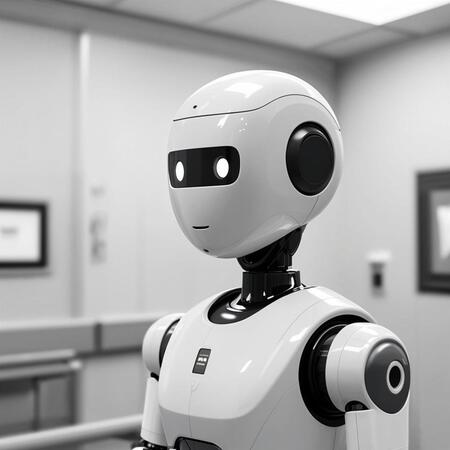
The bot assists in scheduling doctor appointments by analyzing your symptoms and matching you with the nearest available clinics. When you request, «Book me with a general practitioner, ” the bot determines your location using geo-data or utilizes the specified city if you are elsewhere. The system checks doctors' schedules via integration with medical services and suggests the three closest options, including pricing and appointment times. You select the suitable clinic, and the bot automatically fills out the booking form using your saved information (Full Name, phone number, insurance policy). After confirmation, the bot sends a payment receipt (if prepayment is required) and sends a reminder one hour before the appointment. Additionally, the bot can provide advice on necessary documentation and preparation for the visit, and it can save the clinic’s contact information to your Telegram medical record.

The bot analyzes your finances by connecting to banking APIs (with your permission) or by processing uploaded receipts and statements. It automatically sorts expenses into categories (food, transportation, entertainment), identifying your main spending areas. Every week, the bot generates a report complete with infographics that illustrate spending and savings trends. If spending exceeds set limits in specific categories, the bot sends alerts (e.g., «You have spent 80% of your dining budget this month»). Based on behavior analysis, the bot provides personalized budget optimization tips (e.g., «You could save 3,000₽ by ordering delivery less often»). For planning, the bot helps set financial goals (saving for a vacation) by calculating required monthly amounts and tracking progress. Over time, the bot learns your financial patterns and begins forecasting future expenses while accounting for seasonality and personal events.

The bot helps track mental well-being through daily mini-surveys (mood, stress level, sleep quality) and identifies anxious trends. It offers personalized relaxation techniques—from breathing exercises to meditations—tailored to your psychotype and current state. As a career consultant, the bot analyzes your experience (based on a resume or dialogue), identifies strengths and areas for growth, and matches them against the current job market. It recommends professional development courses based on industry trends and your desired career trajectory. The bot models possible career growth scenarios, calculating earning potential and job demand in 3–5 years. When facing work-related stress, it suggests not only psychological techniques but also practical steps—from negotiating workload to creating an exit plan.

The bot helps develop professional skills through a personalized learning plan, analyzing your current level and career goals. It selects optimal hard-skill courses and materials (programming, analytics, design) considering current market demands and your specialization. To develop soft skills (communication, time management, leadership), the bot offers practical case studies and exercises with the ability to practice in a conversational mode. The system tracks progress, adapting the curriculum based on your successes and challenges. The bot integrates with platforms like Stepik and Coursera to recommend relevant courses and automate enrollment. It sends reminders for sessions, conducts mini-quizzes, and compiles a portfolio of your achievements for potential employers.
Analytics
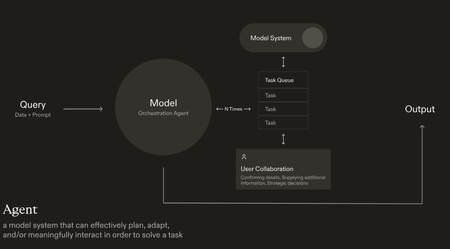
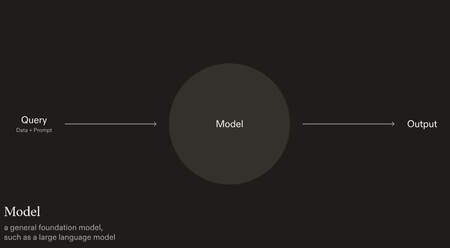
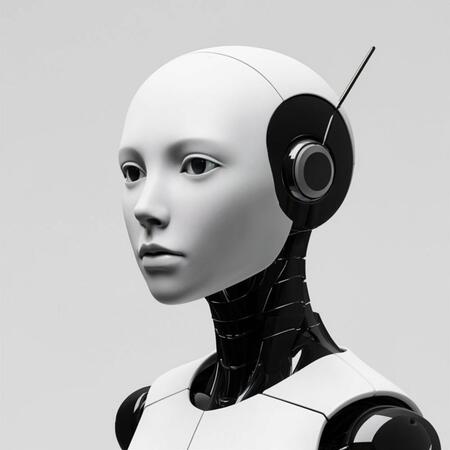
Conventional AI models (such as ChatGPT-based chatbots) simply answer questions without retaining context or performing actions in the real world. My AI agent goes further: it stores your data (schedule, preferences, geolocation) and uses it to provide personalized assistance. If a classic model gives a general answer to the question, «How do I get to work?», the agent will take into account your address, current traffic, weather, and even your usual mode of transport, proposing the optimal option. The main difference is the ability to act: to integrate with service APIs (Yandex Maps, banks, medical systems), send reminders, or book appointments without your involvement. The agent learns in the process—it analyzes your habits to anticipate your requests over time (for instance, it will automatically remind you about your workout if you typically go to the gym on Tuesdays). This is not just a text generator, but a digital assistant that takes care of the routine tasks.

The global market for AI agents in 2025 is valued at $7.92 billion, and experts predict it will grow to $236.03 billion by 2034. Venture investments in AI agents have reached record levels: in the first quarter of 2025, the AI sector captured $59.6 billion in global funding, representing 53% of all venture investments. A major trend in the global AI agent market is the shift toward multi-agent systems, where several specialized agents collaborate to solve complex problems. Autonomous AI agents with self-learning capabilities are gaining popularity, as they can adapt to changing conditions without constant human intervention. The Russian market for AI agents is expected to grow from 50 billion rubles to 0.3–0.6 trillion rubles by 2028, demonstrating a Compound Annual Growth Rate (CAGR) of around 50%.
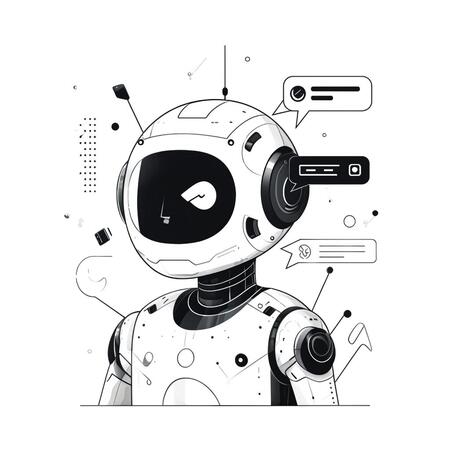
The market for AI agents is growing rapidly—this is a global trend supported by the demand for automating everyday tasks. Telegram, particularly in the CIS region, remains one of the most popular platforms with an active user base, where users are accustomed to bots and convenient services. The combination of these two trends creates ideal launch conditions: users are looking for intelligent assistants, and Telegram offers a flexible API for integration. Unlike Western counterparts, local AI agents better understand the CIS context (for example, they can integrate with Yandex.Maps or SberBank). Monetization for such solutions is diverse: subscriptions, paid features, or partnerships with services. This is not only a high-demand product but also an opportunity to capture a niche before major players arrive.
Promotion
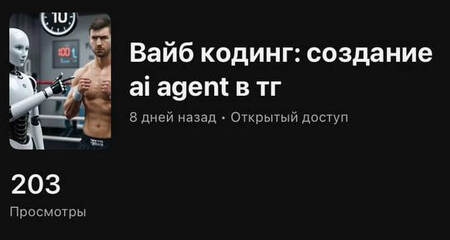
I used an AI-generated voice (such as Yandex SpeechKit) for the voiceover to achieve a clear, professional sound free of background noise. The video content centers on demonstrating the bot’s key features: I showed how it maps routes, sends reminders, and analyzes finances—all in a dynamic 60-second format. The core concept of the video is: «Imagine a personal assistant that learns from your habits and saves you 2+ hours every day.» For promotion, I focused on specific audience pain points: «Tired of forgetting important things?» or «How to stop losing money on impulsive purchases?"—and added a call to action to sign up for a trial. I am promoting the video through targeted advertising on Telegram and YouTube Shorts, leveraging keywords like «smart assistant in Telegram» or «how to automate routine.» I analyze viewership statistics to determine which features generate the most interest and adapt the content to meet audience demands.
Advanced skills

Throughout the bot development process, I significantly deepened my knowledge of modern AI technologies, learning how to effectively integrate neural network APIs into real-world products. Working with GigaChat and DeepSeek allowed me to grasp the principles of natural language processing and content generation, which is critically important for creating intelligent conversational systems. I mastered techniques for fine-tuning AI models for specific tasks, such as query analysis, need forecasting, and response personalization. By developing integrations with external services (Yandex Maps, banking APIs), I learned to combine disparate technologies to build comprehensive solutions. The continuous testing and refinement of the bot provided me with valuable experience in assessing the efficiency of AI algorithms and optimizing them for user needs. This project served as a powerful catalyst for my professional growth, demonstrating how the judicious application of AI tools can solve complex, everyday challenges.