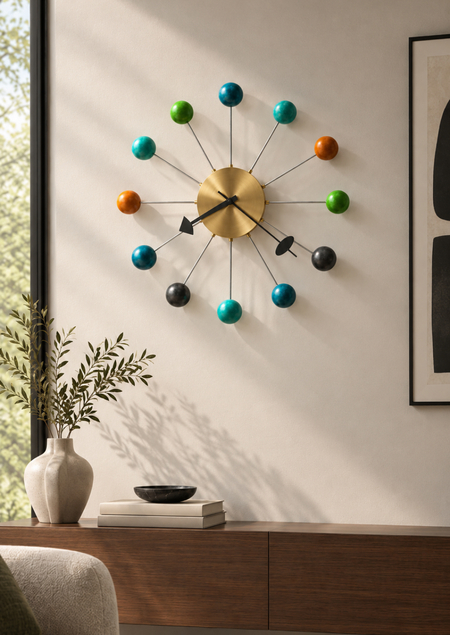

The Ball Clock, or Model 4755, is the first of over 150 and one of the most recognizable models in the collection of clocks created by the George Nelson Associates studio for Howard Miller Clock Company in the late 1940s.
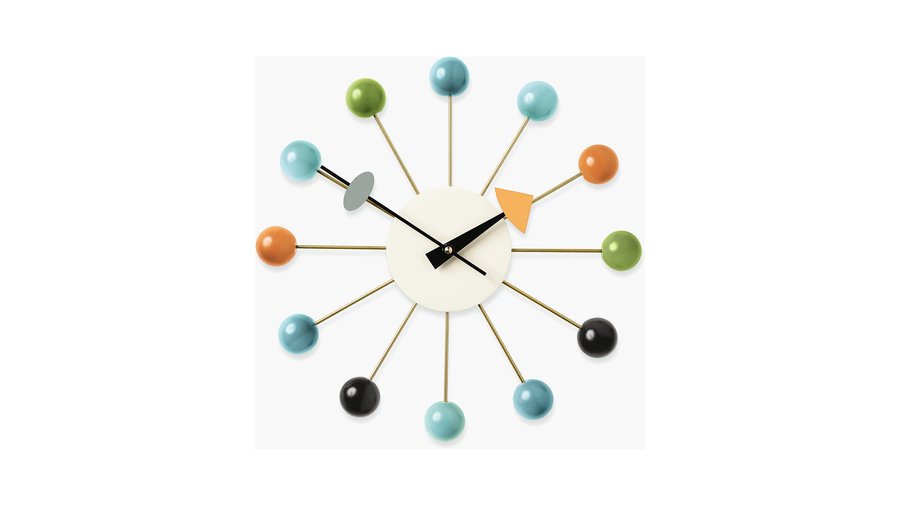
TO BALL CLOCK
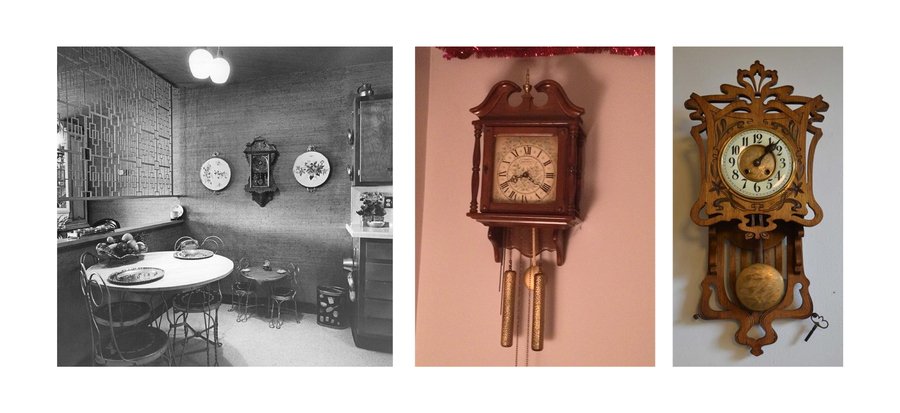
In American interiors of the 1940s, clocks typically maintained a fairly traditional appearance—wooden cases, dark woods, decorative elements, a heavier composition, and a conventional dial featuring numbers.
Wristwatches allowed individuals to keep accurate time right on their person, thereby reducing the need to constantly consult large wall clocks.
CREATION
The development of the idea involved George Nelson, Irving Harper, Isamu Noguchi, and Buckminster Fuller.
While Irving Harper is often credited as the author today, the creation story was collective. Later, Nelson himself stated that he wasn’t sure who exactly came up with the final form of the Ball Clock. Therefore, it is more accurate to call it the result of the George Nelson Associates' work.
Target Audience
Ball Clock was designed for post-war American homes, where the clock needed to serve both a practical and a decorative function simultaneously.
The buyer acquired the watch not solely because they needed to tell time. The watch was meant to: — function as a practical instrument; — complement contemporary furniture; — serve as a visual focal point; — showcase the owner’s interest in modern design.
JOURNEY MAP WITH JOBS TO BE DONE
ERGONOMICS
The second hand on models made from natural wood and black/brass.
STRUCTURE
MATERIALS
Wood Metal Acrylic lacquered finish High-quality quartz movement
COMPARISON
Traditional Clock
Dark wooden casing Decorative ornament Closed dial Presence of numerals Hidden mechanism Primarily a timepiece Vertical, sculptural case