COURSE
AS A SYSTEM
At the heart of Caffè Otto is an exploration of the Moka Express, the stovetop coffee maker created by Alfonso Bialetti in 1933. I am interested in why such a simple kitchen object with a straightforward design became one of the most recognizable icons of Italian industrial design. The project integrates the object’s history, the principle of coffee brewing, the physical structure, an analysis of its form-making, Bialetti’s design language, and its material and color solutions. The outcome of this research is a 3D model that faithfully reproduces the main proportions and construction details of the coffee maker. The central question of the project is: how does a technical challenge transform into a durable visual identity that requires almost no updating over decades?
About the Structure
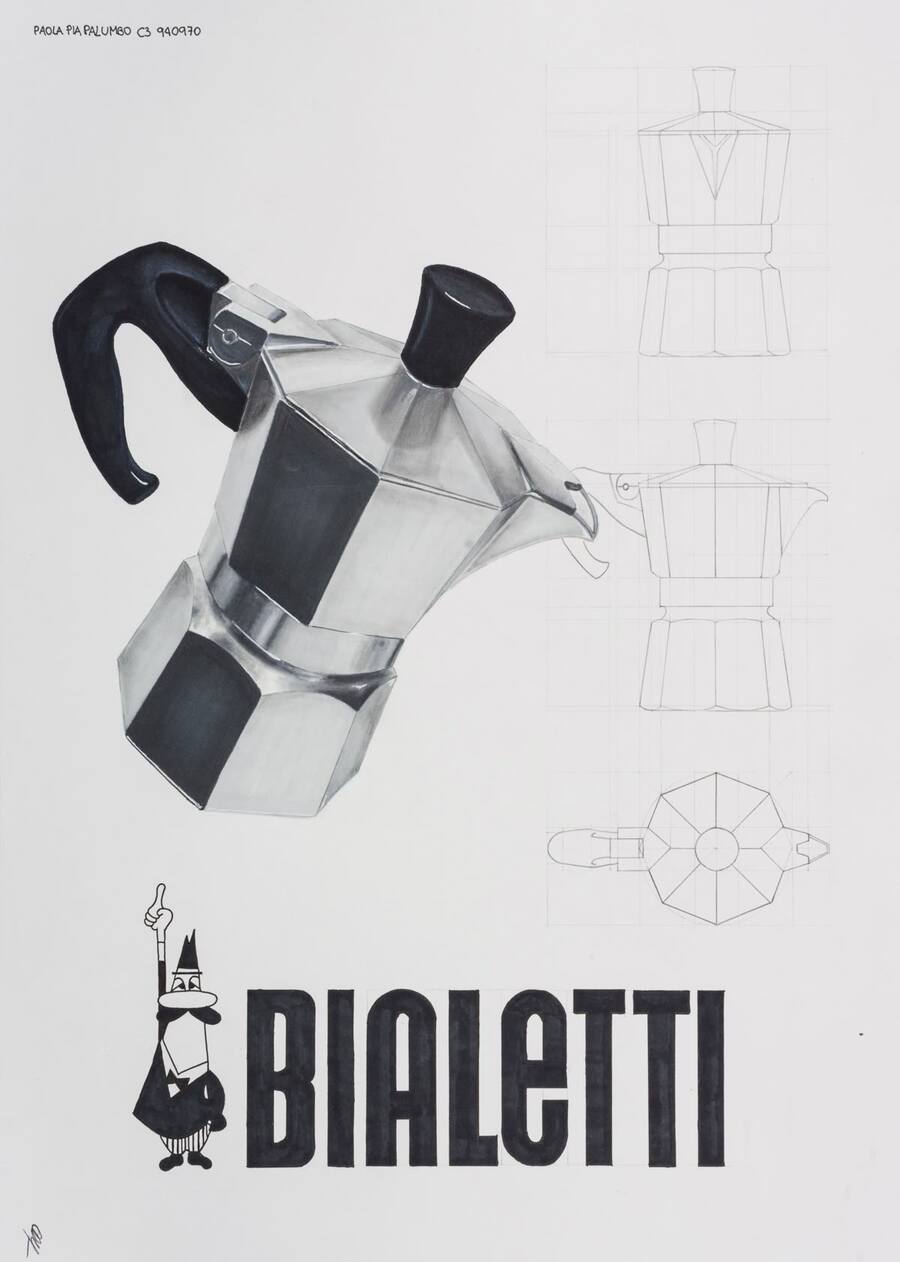
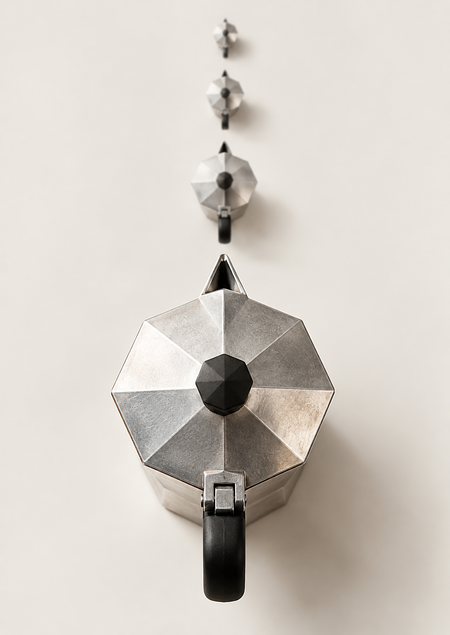
Moka Express — a metal stovetop coffee maker for brewing rich coffee. Externally, it consists of two octagonal chambers connected by threading. The upper section is finished with a lid featuring a button and a spout; a black handle is located on the side. The water heats up in the lower reservoir, ground coffee rests in the intermediate funnel, and the finished beverage collects at the top. There is no electric drive here—operation is powered by the pressure generated when the water heats up. The form is compact and almost entirely dictated by the device’s function. Every discernible detail—from the central «waist» to the handle—relates directly to its assembly or use.
Why Moka Express?
The coffee maker is familiar from home kitchens, cafes, films, and product photography. You can recognize it by its silhouette even without the logo: faceted body, narrow seam in the middle, high spout, and an angled handle. Unlike electronics, where the appearance must constantly change with technological advances, the Moka Express maintains its operating principle and visual structure. This makes it a convenient example for analyzing the relationship between form and function.
1919–1933 / From Aluminum to Coffee Maker
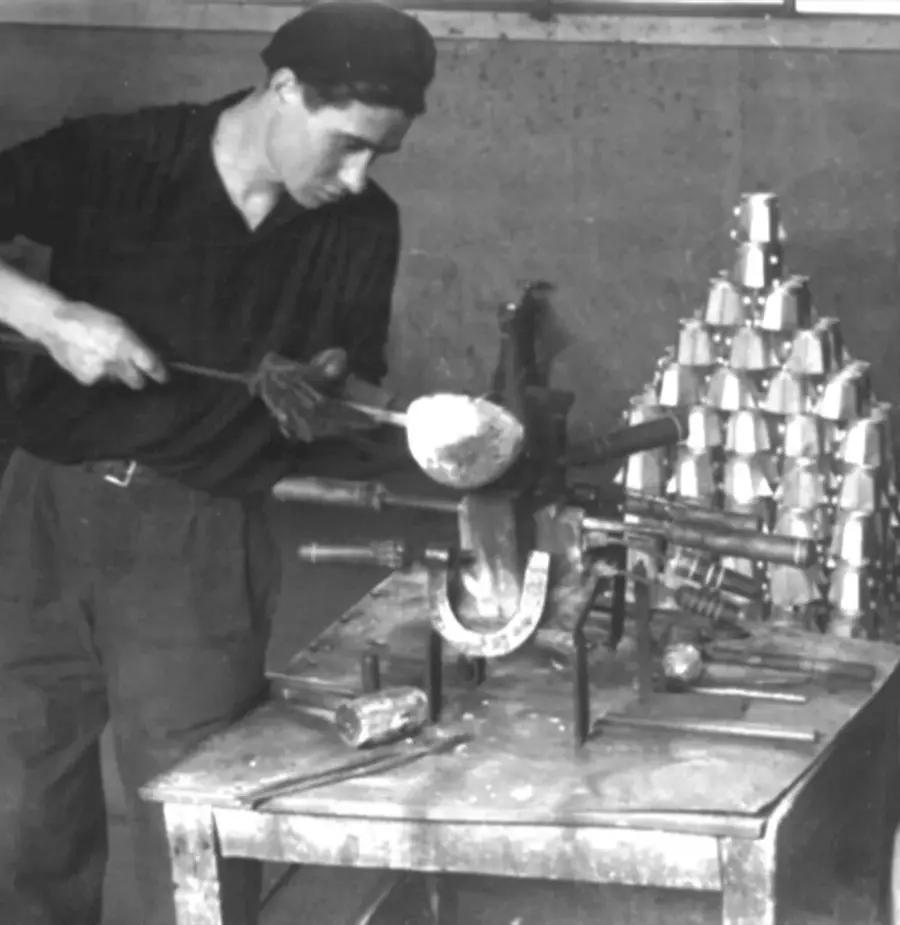
1919 Alfonso Bialetti opens a workshop near Kruziallo, close to Omegna, specializing in aluminum processing. Working with this metal becomes the foundation for future mass-produced items. 1933 The Moka Express is introduced. Its aluminum body, funnel-shaped filter, and two threaded chambers fold into an affordable stove-top brewer. The name Moka refers to the port of Mocha in Yemen, which is historically connected to coffee trade.
«The Mustachioed Man» The famous mustachioed man, who originally appeared in a cartoon, gained prominence through the television program «Carousello.» Becoming an icon also thanks to the advertising slogan «Sembra facile» («It seems easy»), he is always depicted with a raised finger, as if ordering an espresso.