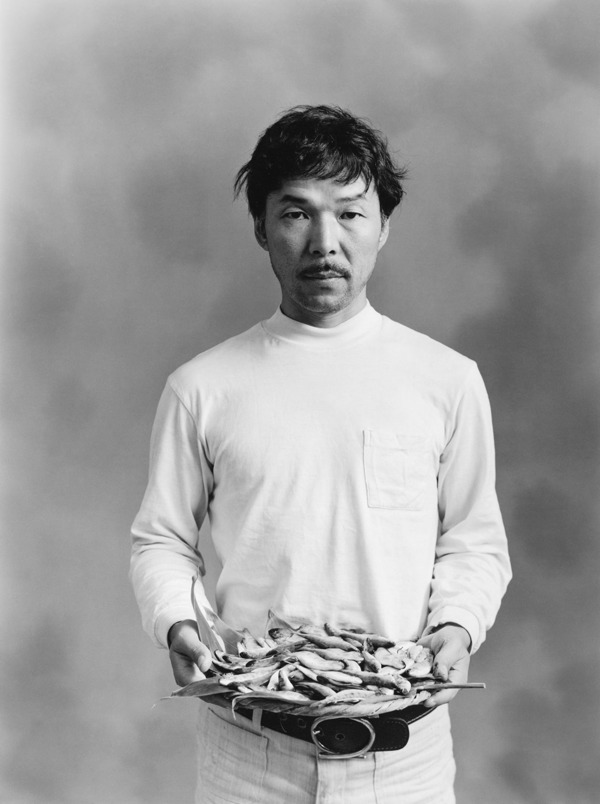
Memory is often preserved today in material, artificial environments—sites of memory such as museums—but it can also exist in everyday objects—family photographs and possessions. The Japanese context is particularly interesting, given post-war changes and the rapid modernization of daily life. Specifically, how contemporary Japanese artists engage with traces of memory and under what conditions an object acquires the significance of a site of memory.
I am comparing the ideas of the Japanese philosopher Kitaro Nishida of the Kyoto School, the French sociologist Maurice Halbwachs, and the historian Pierre Nora. Their concepts allow us to examine memory in Japanese contemporary art through the interaction between individuals, the historical world, social frameworks, and sites of memory.
Kitaro Nishida: Basho
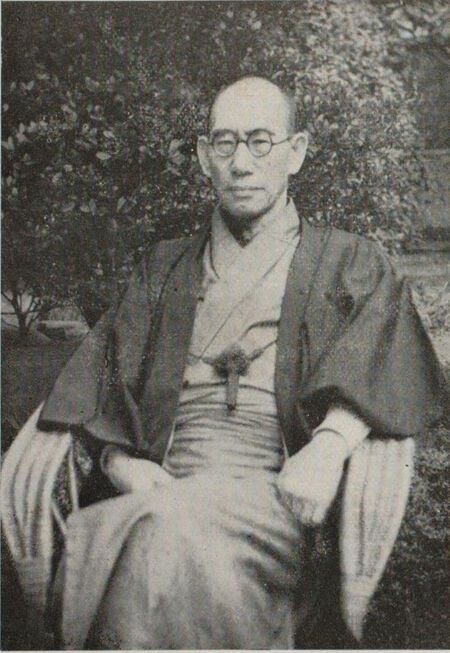
Nishida developed the logical concept of basho. This denotes a universal space, which, in turn, is divided into three categories: the place of things, the place of consciousness, and the place of absolute nothingness. Nishida links the latter to the Buddhist idea of an objectless and non-subjective «repository» that makes possible the existence of both the material world and human consciousness. According to his concept, the «historical world» is a reality formed precisely through the active interaction of people, the environment, the psychological, and the material worlds.Nishida’s argument is built on rejecting the opposition between subject and object. Humans act within the world and are simultaneously shaped by that action. The artist perceives and analyzes reality, and only then transforms it into a work, while the viewer, in turn, becomes involved in that relationship. Therefore, the work is an element of the historical process in which both the artist and the viewer are formed.———————————————————— Kitaro Nishida[2]
The historical world moves from the created to the creating.
This means that what has already been created is not left as a dead relic of the past. It continues to participate in shaping new actions, perceptions, and relationships. The trace of human activity remains in the environment and continues to function even when the participants in the events disappear. The existence of basho forms an environment where human beings, objects, and the world mutually shape one another, creating history and memory.
Maurice Halbwachs: memory and social frames
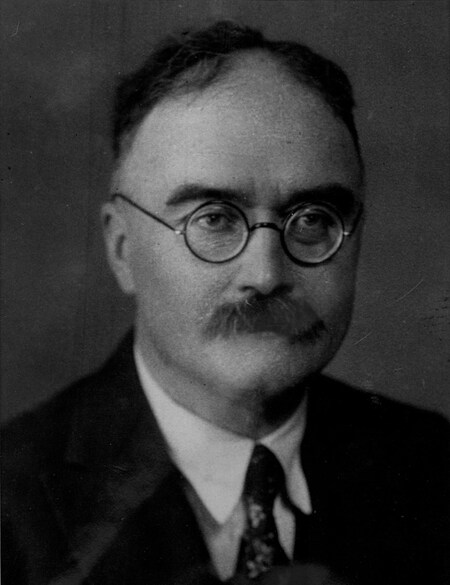
French sociologist Maurice Halbwachs demonstrated that memory is not exclusively an individual process. People recall the past through language, family histories, religious practices, space, and other social frameworks. With the help of collective memory, a social group interprets its past and maintains its identity.———————————————————— Halbwachs Maurice[3]
To recall feelings, one must place them within a collection of facts, people, and thoughts that constitute our perceptions of society.
Halbwachs’s concept of space plays a special role: it stabilizes memory because a group connects shared practices and experiences to a specific place. A family home, a photo studio, or a specific neighborhood helps maintain a collective identity as long as the living connections between people endure.
Pierre Nora: sites of memory
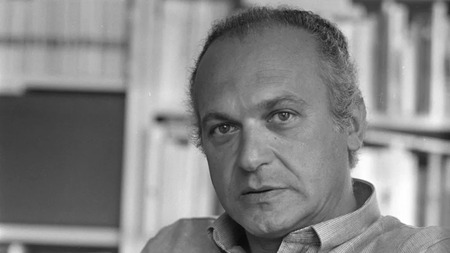
In contemporary society, memory increasingly takes on an individualized character, becoming the subject of personal search and conscious human effort. Pierre Nora contrasts this form of memory with «authentic memory, ” which naturally exists within social groups and manifests in collective recollections, separate rituals, and even gestures.
———————————————————— Pierre Nora. Photograph by Sophie Bassault[4]
Contemporary memory is, above all, archival. It relies entirely on the materiality of the trace.
As traditional society fades under the pressure of rapid urbanization, a phenomenon known as «accelerated history» emerges—an increasing gap between the present and the past, during which memory ceases to function and «live» within a traditional setting. As a result, people, fearful of forgetting anything, create mnemonic spaces where memory begins to be artificially preserved.
The Manifestation of Memory in Contemporary Japanese Art
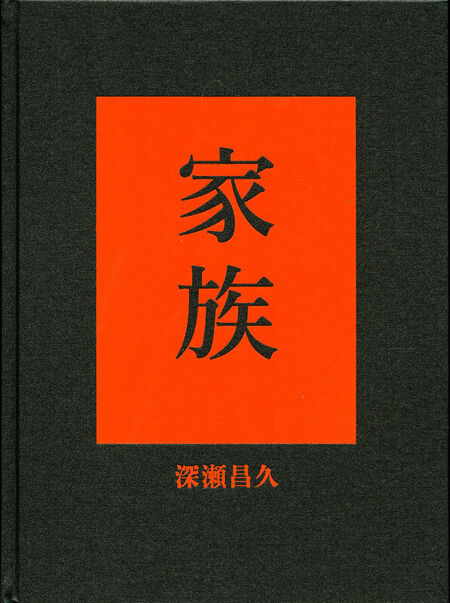
Masahisa Fukase is a Japanese photographer who worked with the theme of family.
He worked in a photography studio on Hokkaido that his family maintained for many years. Starting in 1971, he took family portraits every year. In parallel, he also created a series on the life, aging, and death of his father.
———————————————————— Masahisa Fukase. Family, 1991[5]
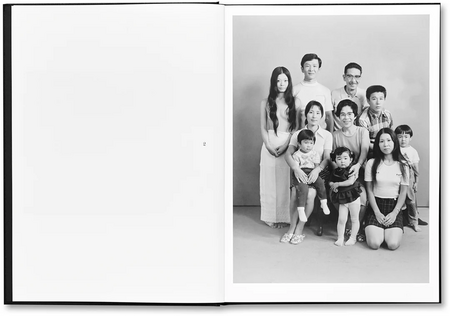
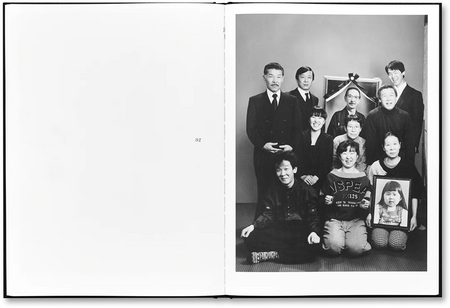
Masahisa Fukase. Family, 1991[5]
The «Family» project began as a typical family portrait, but gradually evolved into an archive of its dissolution. In 1989, the studio closed, and the family effectively dispersed.
The photography studio is part of a historical world in which memory was formed through regular family gatherings. In Halбваx’s concept, family photographs serve as a social support for memory, allowing for the preservation and reconstruction of shared experience. This develops Nora’s thesis on the lieux de mémoire (sites of memory): the closure of the studio and the departure of the former family structure lend the photographs the significance of sites of memory—they become material testimonies to a world that no longer exists in the same form.
Chiharu Shiota. Keys in hand, 2015[6]
Chiharu Shiota is a Japanese artist who also works with themes of memory. Her signature technique involves using threads into which she intertwines various objects belonging to different people. She describes this as «presence in absence»: an old object allows one to feel the person who is no longer there.
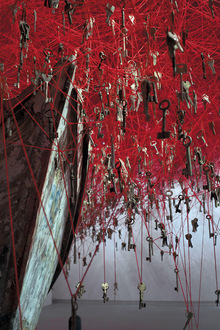
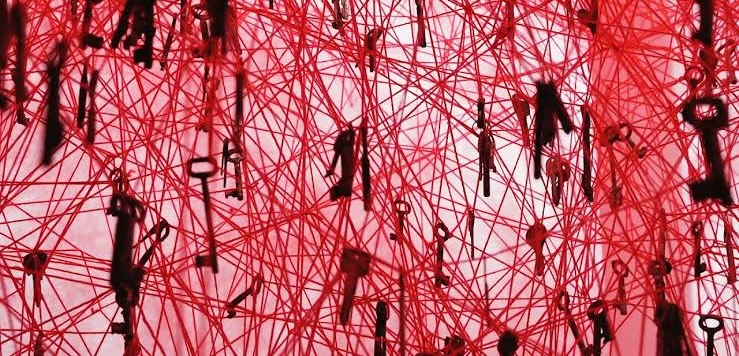
Chiharu Shiota. Key in Hand, 2015[7]
Furthermore, the artist also draws upon symbols important to Japan, especially the image of a boat. For her, the boat symbolizes a person’s life journey—a voyage where they arrive at various shores. The threads entangled in the boats represent stories and people who are forgotten over time or, conversely, never fade from memory.
Everyday objects, such as keys or the aforementioned boats, do not exist in isolation; they exist within a historical world. They may retain traces of family life, habits, and shared experiences, which are further illuminated by the thread motif. When a former owner disappears and the associated relationships and circumstances recede into the past, an object can acquire a new meaning: it ceases to be purely an item of daily life and becomes a locus of memory, preserving a connection to a lost world.
Ayako Sato. Map of Everyday Memory: Fukagawa and Kiyosumi-Shirakawa, 1960–2019, 2019[8]
Ayako Sato created a map of the neighborhood’s personal memory. She uses a personal memory mapping method, charting the daily lives, attachments, and significant places of residents in the Fukagawa and Kiyosumi-Shirakawa districts of Tokyo. Through this, she demonstrates how the relationship between the people and the area has changed over the last sixty years.
By exchanging memories from parents, grandparents, and layering them upon one another within the same location, one can perceive the passage of time.
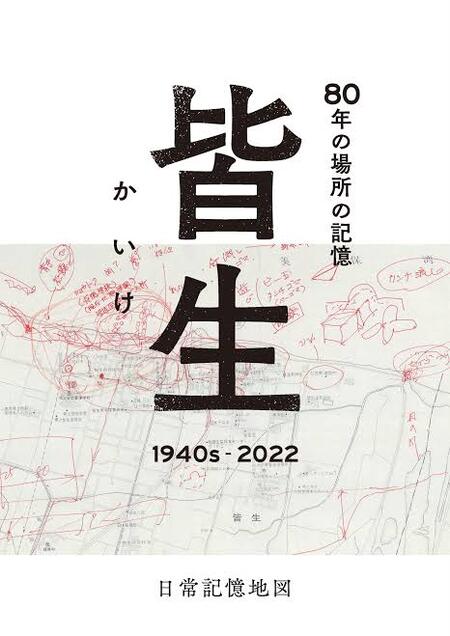
Sato’s map is connected to the history of postwar Tokyo: its urbanization, reconstruction, and the dissolution of old forms of neighborhood life. The area forms a locus of historical human relations, in which the map becomes a social frame for collective memory. Furthermore, according to Pierre Nora’s concept, the map can be a site of memory where vanishing recollections of neighborhood rituals and lifestyles are artificially preserved.
Following the Tokyo project, Ayako Sato is conducting research in the city of Kaike in Tottori Prefecture and is also releasing a memory map based on the recollections of its residents.
——————————————————
Map of the Everyday Memories of Kaike Residents 1940–2022: A Journey Through the Lives of People Living in Kaike [9]
Conclusion
A site of memory isn’t necessarily tied to a monument or a museum; it can be a family photograph, an old object, or a neighborhood that retains traces of the past. The ideas of Nisbet, Halbwachs, and Nora allow us to examine this phenomenon from different perspectives: through the human connection to the historical world, the social mechanisms of preserving memories, and the evolution of how memory is transmitted over time.Examining contemporary Japanese art shows that a site of memory is not always something immutable. Its significance can gradually form and shift alongside people, objects, and urban space. In this sense, artistic practice enables us to rethink their meaning for the present.
Bibliography1. Time, Space, and History in the Philosophy of Kitaro Nishida in the 1930s // CyberLeninka URL: https://cyberleninka.ru/article/n/vremya-prostranstvo-i-istoriya-v-filosofii-nisidy-kitaro-1930-h-godov (Accessed: October 27, 2026). 2. Nora P. Memory and History. — St. Petersburg: Publishing House of St. Petersburg University, 1999. — pp. 5–50. 3. Social Frameworks of Memory // LiveLib URL: https://www.livelib.ru/quote/42379585-sotsialnye-ramki-pamyati-moris-halbvaks (Accessed: October 28, 2026). 4. Halbwachs M. Social Frameworks of Memory. — Moscow: Novoie Izdatelstvo, 2007. — 348 p. 5. Basho // Global Critical Philosophy of Religion URL: https://globalcritical.barefield.ua.edu/self-and-persistence/basho/ (Accessed: October 27, 2026). 6. Masahisa Fukase. Family // Fotodepartament URL: https://shop.fotodepartament.ru/shop/books/document/masahisa-fukase-family (Accessed: October 28, 2026). 7. Masahisa Fukase’s Family Portraits Taken Over 20 Years // Creative Review URL: https://www.creativereview.co.uk/masahisa-fukase-family-mack/ (Accessed: October 28, 2026). 8. Nishida Kitarō // Stanford Encyclopedia of Philosophy URL: https://plato.stanford.edu/entries/nishida-kitaro/#TheHisWor (Accessed: October 27, 2026). 9. The Largest, Most Comprehensive Exhibition Ever of Shiota Chiharu’s Work // Mori Art Museum URL: https://www.mori.art.museum/en/exhibitions/shiotachiharu/03/ (Accessed: October 28, 2026). 10. Wandering, Mapping // MOT URL: https://www.mot-art-museum.jp/en/exhibitions/mot-satellite-2019/ (Accessed: October 28, 2026). 11. «Daily Memory Map: Fukagawa and Kiyosumi Shirakawa Compiled 1960–2019» (Tokyo Museum of Contemporary Art MOT Satellite 2019: «Expanding Maps») // Daily Memory Map URL: https://my-lifemap.net/motsatellite2019-fukagawa (Accessed: October 28, 2026). 12. Regarding the Release of «Daily Memory Map: Mina-sei 1940s–2022» on Demand // Kaike LAB URL: https://kaike-lab.com/3518/ (Accessed: October 28, 2026).
Image List1. Over two decades, this photographer created a «family album» documenting the dissolution of his family // The Washington Post URL: https://www.washingtonpost.com/photography/2020/01/10/over-two-decades-this-photographer-created-family-album-documenting-dissolution-his-family/ (Accessed: October 27, 2026). 2. NISHIDA Kitaro // Portraits of Modern Japanese Historical Figures URL: https://www.ndl.go.jp/portrait/e/datas/6069 (Accessed: October 28, 2026). 3. Social Frameworks of Memory // Piter URL: https://www.piter.com/collection/mastera-psihologii/product/sotsialnye-ramki-pamyati (Accessed: October 28, 2026). 4. On the Catwalk of History // TIMES LITERARY SUPPLEMENT URL: https://www.the-tls.com/lives/autobiography/jeunesse-pierre-nora-book-review-richard-vinen (Accessed: October 27, 2026). 5. Masahisa Fukase. Family // Fotodepartament URL: https://shop.fotodepartament.ru/shop/books/document/masahisa-fukase-family (Accessed: October 28, 2026). 6. Chiharu Shiota The Key in the Hand // News Information Available Works Artists Gallery Search Anna Schwartz Projects URL: https://annaschwartzgallery.com/exhibition/the-key-in-the-hand (Accessed: October 28, 2026). 7. Chiharu Shiota. Installation «The Key in the Hand»: From Home, Memories, or Unknown Worlds? // Museum of Design URL: https://museum-design.ru/the-key-in-the-hand-installation-by-chiharu-shiota/ (Accessed: October 28, 2026). 8. «Everyday Memory Map: Fukagawa & Kiyosumi Shirakawa Edition 1960–2019» (Tokyo Museum of Contemporary Art MOT Satellite 2019 «Expanding Map») // Everyday Memory Map URL: https://my-lifemap.net/motsatellite2019-fukagawa (Accessed: October 28, 2026). 9. On the Release of «Everyday Memory Map: Minei 1940s–2022» On-Demand Edition // Kaike LAB URL: https://kaike-lab.com/3518/ (Accessed: October 28, 2026).