Доступная типографика. Основные понятия и методика их использования на примере создания леттеринга
Accessible Typography. Core Concepts and Methodology for Their Use, Demonstrated Through Lettering Design.
What is this course about?
Typography is the art of text arrangement—one of the most popular fields in graphic design. However, despite its popularity, it is often overlooked when designing creative activities for children or teens.
Typography has potential as a creative focus when working with individuals on the autism spectrum because it is heavily based on clear rules and principles. This makes its study more visual and predictable. Furthermore, this course is well-suited for working with students who have hyperlexia.
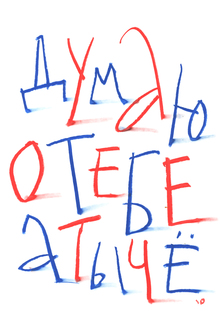
This course is dedicated both to studying the theoretical foundations of typography and to teaching individuals on the autism spectrum these principles, including through the use of templates. The course focuses on discovering new letterforms, stylizing typefaces, and lettering.
The culmination of the course will be the students with autism spectrum disorder creating lettering pieces under the guidance of an instructor.
This course is suitable for:
Students in corrective pedagogy, teachers and tutors working with individuals with ASD, educators from general education institutions, parents of individuals with ASD, and those without a background in design education
Course duration: 8 weeks.
Contact hours: 26 academic hours.
Classes are held online.
Course PrerequisitesA foundational understanding of the educational needs of individuals with Autism Spectrum Disorder (ASD). Familiarity with the core principles of Applied Behavior Analysis (ABA).
During the course, students will learn to:
— organize an accessible environment for working with teens on the autism spectrum (ASD);— select visual examples based on the creative concept;— utilize and adapt methodological materials for sessions with individuals on the autism spectrum (ASD);— create graphic works using lettering techniques.
During the course, students will complete the following assignments:
— Presentation-photo report on the topic of «Transforming My Space»— Gathering references on the topic— Adapting and/or filling out the methodological template— Completing the creative assignment to practice typographical techniques
Thematic Syllabus:
Guidelines for Organizing a Creative Environment for Teens with ASD (Space and Use of Prompts, Choice-Simplification Methods, and Motivation System) (Lecture)
Presentation and Critique of Works on the Topic «Transforming My Space» (Seminar)
The Letter in Historical Context: How the Sign Was Formed and What Factors Influenced It (Lecture)
Studying Basic Typography Concepts: Typeface, Contrast, Slant, Proportions, Serif, Aperture, Ligature, Rhythm (Lecture)
Developing Design Thinking: Idea Formulation, Associative Gathering, Metaphor Finding, and Reference Collection. Selecting the Final Project Topic (Lecture)
Consultation on Interim Results of Creative Assignments
Various Types of Methodological Templates and How to Use Them in Sessions with Individuals with ASD (Lecture)
Completing One of the Templates (Independent Work)
Presentation and Critique of Creative Assignments—Final Project
2nd Year
Accessible Typography. Typeface and Layout.
What is this course about?
This course builds upon the concepts covered in «Accessible Typography: Basic Principles and Usage Methodology with Lettering Examples.» In this course, the focus shifts from traditional techniques to computer graphics. The focus moves from creating individual letters and words to developing a custom typeface and executing layout design. The final project involves creating a proprietary font and laying out a multi-page text document.
This course is suitable for:
Students from correctional pedagogy programs, educators and tutors who work with individuals with ASD, regular teachers from general education institutions, and parents of individuals with ASD who do not have a design education
Course duration: 8 weeks.
Total contact hours:
26 academic hours.
Classes are held online.
Course PrerequisitesBasic understanding of the educational needs of individuals with Autism Spectrum Disorder (ASD). Familiarity with the core principles of Applied Behavior Analysis (ABA).Completion of the first part of the course (core concepts and their methodology) or possession of knowledge of fundamental typographic concepts (stroke, contrast, slant, proportion, serifs, aperture, joining, rhythm) and skills in the letterpress technique.
During the course, students will learn to:
— process sketches in Adobe Photoshop;— create typefaces using Adobe Illustrator and FontLab;— perform text layout in Adobe InDesign;— create mockups.
During the course, students will complete the following assignments:
— sketch refinement in Adobe Photoshop;— creation of a starter character set and its import into FontLab;— layout of the selected text fragment in Adobe InDesign.— mockup creation*It is preferable to collaborate with a student with ASD, but independent completion by the educator is also permitted.
Thematic Course Plan:
— Typography: types of fonts and the principles of their design (lecture).— Creating a font sketch (homework).— Studying Adobe Photoshop and processing the sketch (workshop).— Creating a font in FontLab using Adobe Illustrator (workshop).— Presenting the creative assignment on font design and error review (seminar).— Book space and methods of controlling it: columns, alignment, leading, paragraphs, and folios (lecture).— Selecting text for typesetting (homework).— Typesetting in Adobe InDesign (workshop).— Presenting the creative typesetting project (seminar).— Mockups and their role in monetizing creative work. Course wrap-up (lecture).