Concept
Dance is one of the most expressive ways to convey emotion, mood, and the beauty of movement. In European art before the 19th century, artists attempted to capture this lively, kinetic action within static forms—in paintings and sculptures. This was inherently difficult, as painting and sculpture do not move. This is precisely why it is fascinating to observe how masters strived to «animate» their works so that the viewer could sense the rhythm and motion.
In this study, I examine how artists depicted dance across different eras—from Ancient Greece through Romanticism. Some were inspired by mythology, while others drew from folk festivals, balls, or fairy tales. For them, dance was not merely an aesthetic posture; it expressed feelings, worldviews, notions of the body, joy, and freedom.
To convey movement, artists employed various techniques: similar poses, circles, or diagonals within the composition, flowing garments, the direction of gaze, or the motion of the hands. Sculptors added inclines, twists, and curves—making the figure appear alive. Sometimes, it almost seems as if the figure is about to begin dancing.
My research is structured chronologically—from antiquity to the 19th century. I chose the theme «Movement and Rhythm: Dance in European Art Before the 19th Century» to demonstrate how artists used dance to express ideas—such as joy, passion, playfulness, order, or mystery. Each era perceived dance differently, and this difference allows us to understand how attitudes toward humanity and the body have evolved.
Thus, my visual research illustrates how artists communicated movement and rhythm in art—and what that reveals about the time in which they lived.
How was dance depicted in European art before the 19th century, and what artistic means did painters and sculptors use to convey rhythm and movement in static forms of painting and sculpture?
My research hypothesis is that dance in European art before the 19th century was depicted not merely as bodily movement. It expressed the culture, emotions, and views of its time. Artists strove to convey rhythm and energy, to show passion, order, or joy.
To achieve this, they employed various visual techniques. For instance, they selected expressive poses, organized compositions in circles or along diagonals, paid attention to clothing, hand placement, or the direction of the gaze. All of this helped make the image feel «alive» and rhythmic.
Dance in art became more than just a scene—it became a means of expressing the mood and ideas of the era. Movement transformed into a symbol, and rhythm became the foundation of the entire composition.
This depiction of dance helped artists communicate what they felt and how they perceived humanity. Through dance, they spoke of beauty, harmony, life, and the soul.
Therefore, dance in art before the 19th century is not just movement, but a language through which artists conveyed what was most important.
Antiquity: The Origins of Dance Imagery
Antiquarian works convey the rhythm of dance through vibrant poses, body movements, and flowing garments. Dance was depicted as part of religious festivals, rituals, or lively revelries. Sculptures and vase paintings strove to capture a sense of movement and intense emotion, even when the figures themselves were static. Artists often portrayed figures as if in motion—with twisted torsos, tense musculature, and vivid gestures. These images formed the basis for how dance was later perceived in Europe—as something charged with energy, life, and connected to higher powers.
Amphora by Evphimidius, «The Three Revelers, ” circa 510 BCE.
On the amphora «The Three Revelers,» Euphimid depicted a scene of drunken revelry—three nude, bearded men dancing after a feast. The figures are shown from various angles (frontal, three-quarter, from the back), which creates a sense of volume and movement. Each reveler energetically throws their arms around and prances, their bodies turned in opposite directions, conveying the rhythm of a wild dance. Euphimid was among the first to employ complex perspectives on vases—for example, the torso of the middle dancer is rotated, and the legs are shown in perspective. These techniques enliven the scene: it seems as if the figures in the red-figure painting are moving and swirling in a merry circle. Such a bold composition clearly demonstrates the vase painter’s masterful depiction of the body’s plasticity in dance.
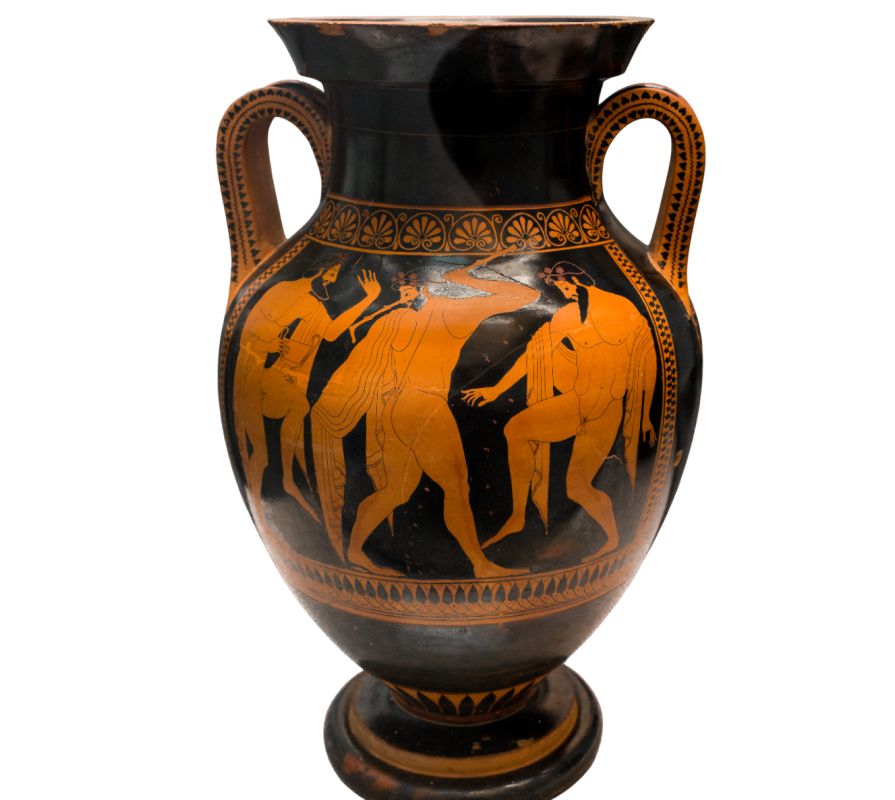
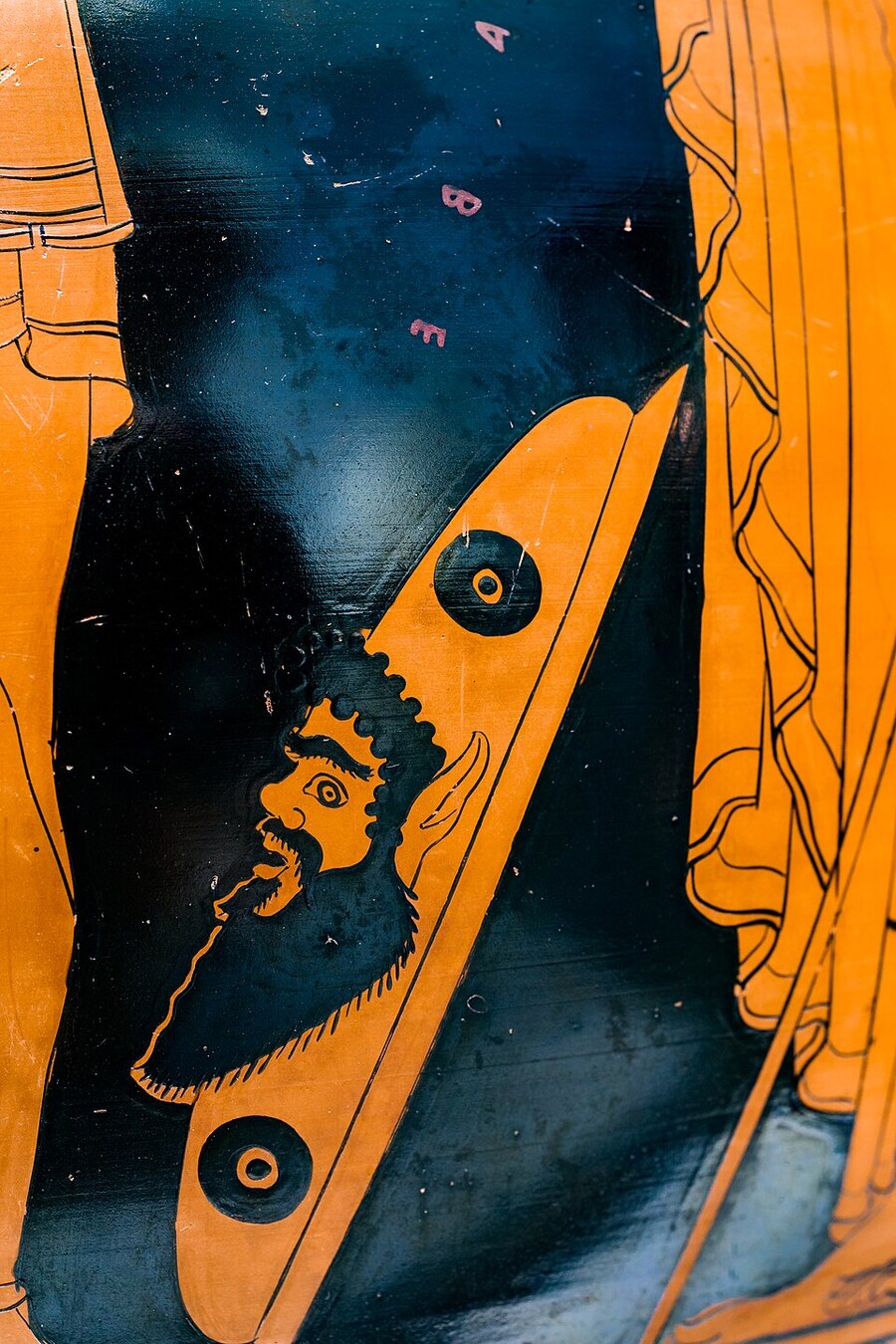
Amphora of Euphemides, «Three Revelers, ” c. 510 BCE
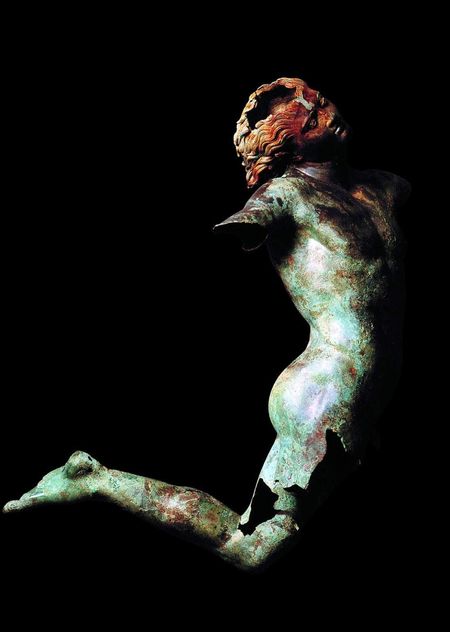
«Dancing Satyr, ” circa 4th century BCE
Bronze statue of a satyr, c. 4th century BCE, discovered in 1998 off the coast. Some researchers connect it to the circle of Praxiteles, known for the elegance and fluidity of movement in sculpture. Although the specific sculptor is unknown, the «Mazary Satyr» demonstrates the characteristic techniques of Late Classical and Hellenistic periods: an interest in conveying the body’s dynamism, curved posture, and a moment of motion captured in bronze. Metal analysis indicates that the surviving statue is likely a Roman copy from the 1st century BCE–1st century CE of a lost Greek original from the late 4th century BCE. Nevertheless, its execution remains exceptionally high, embodying the ancient masters’ ideas about rendering dance in sculpture.

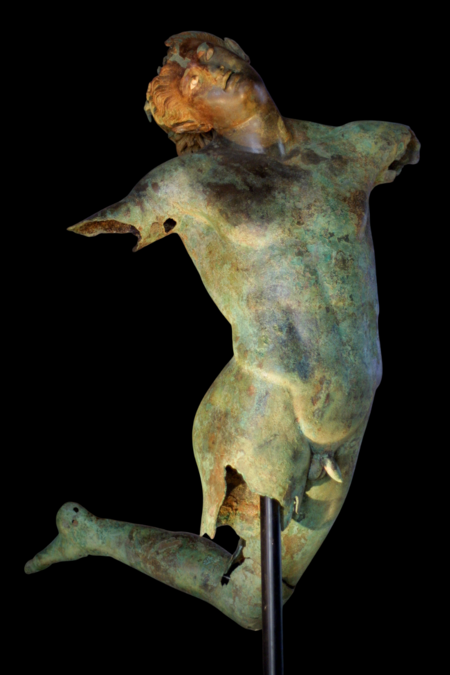
Bronze «Dancing Satyr,» circa 4th century BCE.
This is a large bronze statue of a satyr (or faun) discovered off the coast of Sicily. The artist is unknown; the sculpture was likely created during the Hellenistic period (c. 4th century BCE). The satyr is captured mid-leap: his head is thrown back, his back is arched, and his hair seems to lift with the motion. This posture and the «frozen» moment—like a slow-motion capture—convey an explosion of energy and joyous ecstasy. Despite the damage (missing arms and legs), the figure seems extraordinarily alive—one only needs to observe the contrast between the tense body and the rhythmic curve of the form.
«Dancing Faun, ” 2nd century BCE
The bronze statuette of the «Dancing Faun» (circa 2nd century BCE) was discovered in the House of the Faun in Pompeii. The artist is unknown, but the figure is executed with great skill and likely copies a Greek original. The Faun is a creature of nature and merriment, and here it is depicted precisely in the moment of dance: the pose is light, almost spring-like, and the figure appears lively and dynamic.
One leg is balanced on the toe, and the arms are raised upward; a smile adorns the face. Bells are hidden within the curls, seemingly amplifying the rhythm. The curve of the body and the free movements of the arms create a sense of lightness and joy. The sculpture conveys the feeling of dance and has become a symbol of the house where it was found.
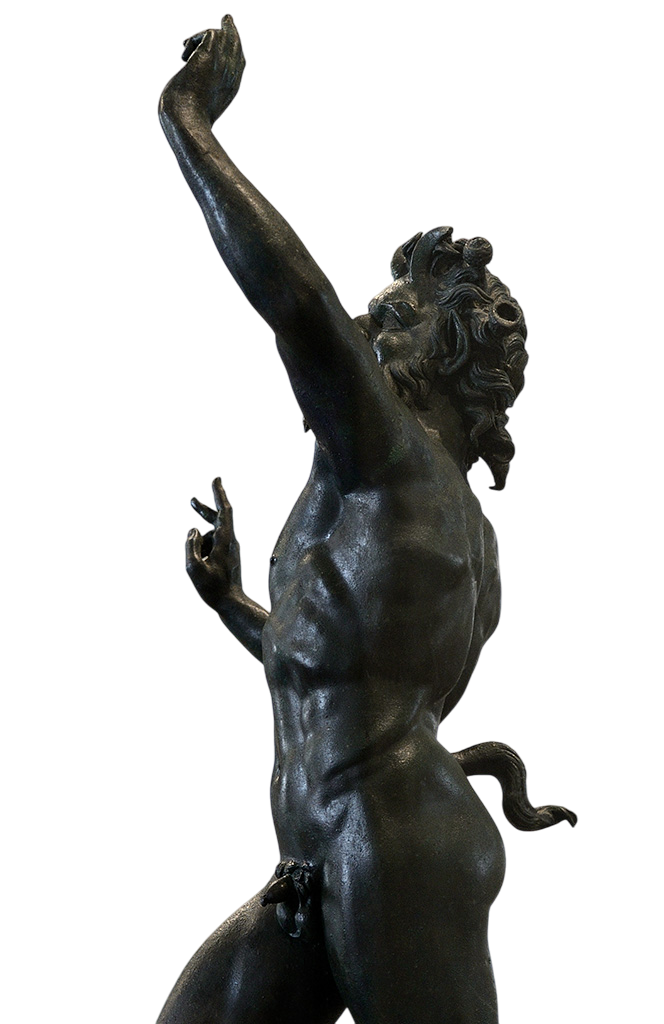
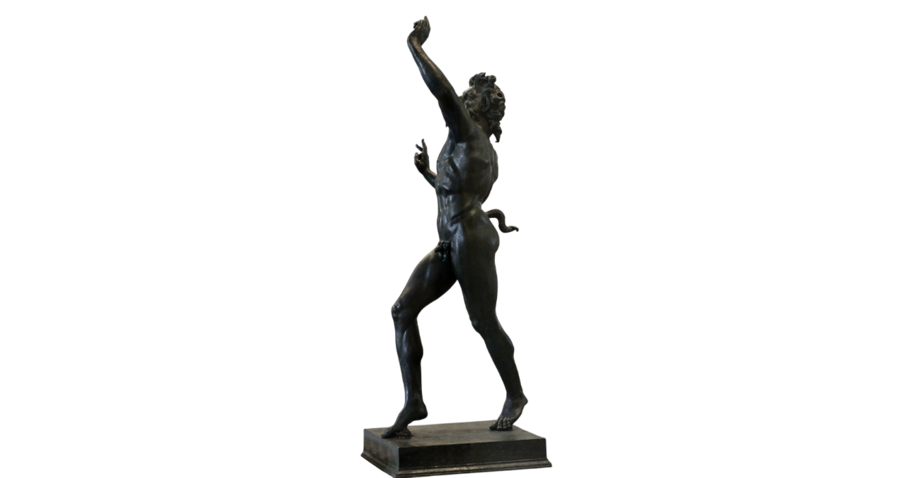
«Dancing Faun,» 2nd century BCE
«Bergère Dancer» (relief of the Bergère Dancer), 2nd century CE.
This is a marble relief from the 2nd century CE, created by an anonymous Roman sculptor in the Neo-Attic style. It originates from the Borghese Collection and was acquired by Napoleon for the Louvre in 1807. The composition is known as «Borghese Dancers» and features five graceful female figures (likely the Graces—goddesses of the seasons) unified in a circular dance against the backdrop of an arcade. The relief’s style emulates classical Greek art: the figures are elongated, the drapery clings to and streams from the bodies, emphasizing the fluidity of the movement. Art historians categorize this monument among the finest examples of Neo-Attic plasticity, where grace, restraint, and rhythmic harmony dominate the depiction of the dance.
Relief «The Borghese Dancer,» 2nd century CE
On the relief, five young women are dancing, holding hands, set against a backdrop featuring a colonnade. Each figure is captured in a graceful step. Semi-transparent chiton and himations cling to the dancers’ bodies, barely slipping from their shoulders, creating a sense of fabric movement in time with their steps. The two central figures are turned toward each other, clasping hands to form a sort of circle, while the outer figures complete the composition in symmetrical poses. Despite the static nature of the marble, the scene breathes life: the tilt of their heads, raised arms, and the varying folds of their garments form a continuous rhythmic pattern across the entire length of the relief. The sculptor masterfully balanced the recurring motifs of motion, achieving the impression of a calm, restrained dance by goddesses symbolizing the cycles of time. The relief is excellently preserved; in the 20th century, it inspired many artists as an exemplar of ancient dance.
Roman copy of Skopas’s maenad, «Dresden Maenad,» 1st century BCE
The original «Dancing Maenad» is attributed to Skopas, a Greek sculptor renowned for his ability to convey passion and motion in marble. Only a Roman copy, currently housed in Dresden, has survived to reach us. Skopas depicted the maenad in a state of ecstasy—with vigorous movement, a twisted pose, and a strained body—a stark departure from the tranquil classicism of the previous century.
Even without the arms, the figure appears alive: the head is thrown back, the drapery clings to and billows around the body, emphasizing the whirlwind of the dance. This sculpture radiates power, rhythm, and inner energy—which is precisely why ancient authors held Skopas in such high regard for his expressiveness.
Roman copy of Scapas’s Maenad, 1st century BCE.
The Renaissance (15th–16th Centuries): Allegory and Folk Merriment
Renaissance artists depicted dance either as part of nature’s harmony (grace, music) or as an element of folk merriment. In allegorical scenes, the ideal of plasticity was emphasized, whereas in genre scenes, the rhythm of daily life was highlighted. Attention to physicality, space, and compositional balance helped convey movement, and figures were arranged in circles or along diagonals, creating a sense of dynamism.
Sandro Botticelli, «Primavera, ” c. 1480
Botticelli aimed to depict not actual movement in his works, but an idealized, almost ethereal one. In Primavera, the Graces dance in synchronous and fluid grace, embodying the harmony of nature. He emphasizes lightness and elegance through their poses, gestures, and composition.
The three Graces are shown in a circular dance, holding hands. Their movements are soft, almost weightless, and their sheer robes flow along the lines of their bodies. The contours are smooth—everything seems to pulse to the rhythm of a spring melody. Here, the dance is rhythm, beauty, and unity.
Sandro Botticelli, «Spring, ” c. 1480.
Andrea Mantegna, «Parnassus, ” 1497
Mantegna was an Italian painter of the Early Renaissance. In «The Farnese,» the dance of the Muses is interpreted as a symbolic «orchestra» of harmony: Mantegna, having been educated in classical art, conveys movement through a sequence of graceful, almost sculptural poses. To enhance the rhythm, he employs a compositional circle (the Muses are arranged in an arc) and the repetition of motifs—this creates an impression of cohesion. The artist created a series of meticulous studies of dancing Muses (he is known for a drawing of one of the Muses in Berlin), striving for perfect clarity of movement. Thus, the dance in Mantegna’s work is not spontaneous merriment, but the embodiment of ordered rhythm.