EXPERIMENTAL POSTER: ANALOG TECHNIQUES AND DIGITAL PROCESSING
┃ WHAT IS THIS COURSE ABOUT?
What happens when you move letters during scanning? Can you assemble a word from crumpled paper? Can you use a shadow or a print as the main element of a poster?
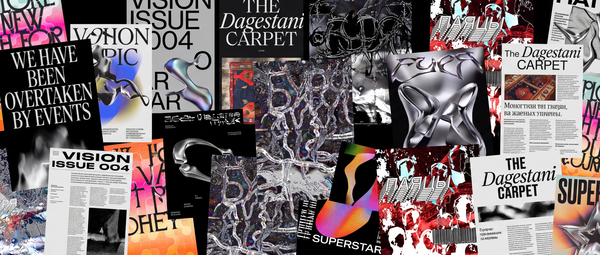
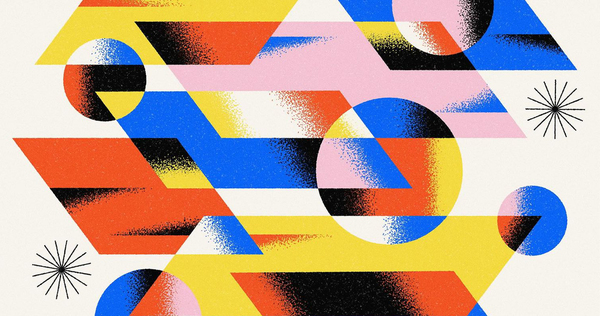
In this course, we will create graphics through experiments with materials, images, and text. We will master motion scanning, working with prints and textures, volumetric typography, and optical distortions.
We will then digitize, process, and transform these results into posters. For every solution, we will define the objective: what it needs to communicate and why the chosen technique helps convey that idea.
At the heart of the course is the connection between the material, the method of image creation, and the meaning of the poster.
┃ WHO IS THIS COURSE FOR?
• Students in design programs who wish to explore experimental methods of working with graphics.• Designers who require proprietary imagery, textures, and typographic solutions for their projects.• Illustrators and artists looking to translate material experiments into poster format.
┃ FORMAT AND DURATION
Duration: 6 weeks.
Total Workload: 48 academic hours, including 24 contact hours and 24 hours of independent study.
Format: Online, two sessions per week, each lasting two academic hours.
During the sessions, we will analyze examples, learn techniques, discuss experiments, and refine posters. Independent work includes creating source material, photography or scanning, and digital editing.
┃ WHAT DO YOU NEED TO STUDY?
Foundational knowledge of composition and typography. Proficiency in graphic editors: working with layers, masks, text, and image correction.For practice, you will need:• A computer with a raster editor and layout assembly software.• A smartphone with a camera.• Paper, cardboard, scissors, glue, paint, or ink.• A desk lamp and miscellaneous materials for experimentation.The assignment requiring scanning will need access to a flatbed scanner. If one is unavailable, an alternative experiment using paper strips and photography is provided. The projector should be used whenever possible; optical experiments can be performed with translucent objects.This is a self-paced course. Taking other poster-related courses is not required.
┃ WHAT WILL STUDENTS LEARN?
↗ Select an experimental technique to suit the poster’s message.↗ Create graphic material through deformation, printing, manipulation of volume, light, and optical distortions.↗ Conduct series of trials, vary experimental conditions, and select successful results.↗ Photograph or scan the material and prepare it for editing in graphic software.↗ Integrate the experimental graphics with text while maintaining hierarchy and readability.↗ Prepare the posters for printing and document your own workflow.
┃ PROJECT ASSIGNMENTS
01 / Letters in MotionCreate a series of text deformations by moving paper during scanning. Vary the direction and speed, and compare the characteristics of the resulting images.Alternative approach: Cut the printed text into strips, shift and bend them, then photograph the result.Objective: Convey movement or a change in state through the form of the letters
02 / Trace and SurfaceCreate your own imprints, stamps, and textures. Experiment with frottage: transferring the relief of a surface onto paper by rubbing with a pencil or other material.Digitize the results and examine how their expressiveness changes when scale, contrast, and color are altered.Objective: Select a texture that helps convey a specific message
03 / The Letter as ObjectAssemble a letter or a short word from paper, cardboard, or found materials. Photograph the object from various angles and lighting conditions.Objective: Use material, volume, and shadow to convey a chosen quality, such as fragility, weight, or tension.
04 / Optical DistortionCapture text or images through translucent objects. If a projector is available, try projecting onto paper folds or other surfaces.Task: Find an expressive distortion and determine which part of the text must remain legible.
05 / From Experiment to PosterSelect three mastered techniques and create one poster utilizing each. For every poster, formulate a message, select source material, and structure the composition.Add informative text, refine the images, and prepare the layouts for printing. The posters may address different objectives and are not required to form a single series.
┃ THEMATIC PLAN
01 / Experimentation as a Method The relationship between reception and message. Case study analysis. Problem definition. Motion scanning and text deformation.02 / Prints and Textures Stamp, frottage, and material traces. Test series. Digitization and preliminary processing.03 / Volumetric Typography Paper and object constructions. Working with perspective, light, and shadow. Capturing source material.04 / Optical Experiments Transparent surfaces, distortions, and projections. Controlling legibility. Selecting three methods for final projects.05 / Digital Processing and Composition Material selection and processing. Masks, contrast, and color. Integrating image and text. Developing three posters.06 / Refinement and Presentation Reviewing the message and legibility. Preparing files for print. Formatting the experiment catalog. Discussion of final projects
┃ COURSE OUTCOMES
Three custom A2 posters, created using three different experimental methods and prepared for print.
Digital Experiment Catalog, which compiles source materials, intermediate samples, and a process description.
For each chosen method, the student documents the materials, sequence of actions, and conditions for achieving the result. The catalog serves as a working resource that can be referenced in subsequent projects.
┃ HOW IS THE RESULT GRADED?
• Connection of the selected method to the poster’s message.• Presence of a series of trials and well-justified selection of results.• Quality of material digitization and digital processing.• Expressiveness of the composition, textual hierarchy, and readability.• Compliance of the layouts with the specified printing requirements.• Clarity of the process description, allowing for experiment replication.
┃ COURSE HIGHLIGHT
Participants independently create the initial graphic material and go through the entire process—from physical experimentation to final print layout. Each method is studied through a sequence: problem definition, trial series, selection, digital processing, and application in a poster. This approach helps students consciously select expressive means and apply mastered techniques to new projects.