Navigation
- Concept
- Technology of creating mummies in the film «The Mummy» (1999)
- Technology of creating mummies in the film «The Mummy» (2017)
- Comparative analysis of practical and digital technologies for creating mummies
- The influence of technology on the visual authenticity of the image
- Conclusion
- Bibliography
- Image Sources
Concept
This research examines the evolution of technologies used to create animated mummies in cinema. Using the films The Mummy (1999) and The Mummy (2017) as case studies, it explores the nuances of applying practical and digital visual effects. The primary focus is on methods for modeling human anatomy, creating skin texture and damaged tissue, character animation, and integrating CGI with live-action footage. This comparison allows us to trace how technologies and the visual fidelity of the created figures have changed over 18 years.
Research Objective — to trace the development of mummification creation technologies in film and to determine how the application of practical and digital effects has influenced the detail and visual authenticity of characters.
The interest in this topic stems from the opportunity to compare two approaches to creating the same type of fantastic character. The development of computer graphics has opened up new possibilities for depicting complex anatomical changes and realistically rendering body surfaces.
Key research question: How has the development of visual effects technology altered the methods of creating mummies and impacted the realism of their depictions?
Hypothesis: Improvements in CGI allowed for the creation of more detailed and visually authentic mummy depictions through advancements in digital modeling, animation, and compositing technologies with live-action footage.
Technologies of Mummy Creation in the Film «The Mummy» (1999)
In the film «The Mummy» (1999), director Stephen Sommers, Industrial Light & Magic (ILM) created the digital image of Imhotep under the supervision of visual effects supervisor John Burton.
John Burton from ILM is working on the film «The Mummy.»
The primary objective was to create a lifelike mummified body capable of movement and the gradual restoration of a human form. In the early stages, Imhotep appeared as a fully digital character with damaged skin, exposed muscles, and bones.
Various concepts of regeneration and decay stages of Imhotep, by Alex Loran.
Stills from the film «The Mummy» (1999) Directed by Stephen Sommers. VFX Supervisor John Burton. Special Effects Supervisor Chris Corbould. Makeup Effects Supervisor Nick Darmman.
When creating Imhotep, the ILM specialists developed a complex three-dimensional model encompassing the skeleton, musculature, and external body surface. The character’s anatomy was constructed taking into account various stages of decomposition and restoration. The artists meticulously detailed the bone structure, muscle placement, and the texture of damaged tissues, ensuring the digital body maintained convincing human proportions.
For creating Imhotep’s movements, state-of-the-art motion capture technology for the late 1990s was employed. The movements of actor Arnold Vosloo were recorded in real-time during filming using specialized sensors and markers placed on his body and face. This data served as the foundation for animating a complex digital model composed of a virtual skeleton, muscles, and semi-dissolving skin. Thanks to this approach, the computer character inherited the actor’s unique plasticity, posture, and facial expressions, making the screen image of the priest truly lifelike and terrifying.
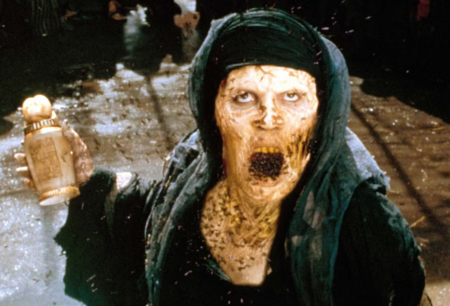
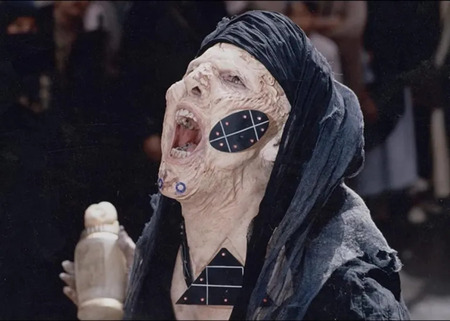
1. Still from the movie «The Mummy» (1999); Director Steven Sommers; 2. Specialized LED markers embedded in the cheek and neck prosthetics, affixed to Arnold Vosloo’s face.
The creation process and a still from the film «The Mummy» (1999) Director Stephen Sommers. VFX Supervisor John Burton. Special Effects Supervisor Chris Corbould. Makeup Effects Supervisor Nick Darmon.
As Imhotep began to recover, ILM specialists started combining computer graphics with Arnold Vosloo’s live footage. To create the missing sections of his face, digital makeup was used. Special markers helped track the actor’s head movements and facial expressions, after which the digital effects were composited with the recorded material. This approach allowed for the preservation of natural acting while simultaneously showcasing the character’s damaged anatomy.
The technology behind the mummification in the film «The Mummy» (2017)
In the film «Mummy» (2017), directed by Alex Kurtzman, the creation of the Amanet character was based on a combination of practical makeup and computer graphics. Several studios worked on the visual effects, including MPC, and Eric Nash served as the film’s visual effects supervisor. The primary technical challenge was creating a character whose appearance gradually transformed from a desiccated, mummified body to an almost fully restored human form. To achieve this, specialists utilized several digital versions of Amanet, prosthetic makeup, and body part replacement technologies.

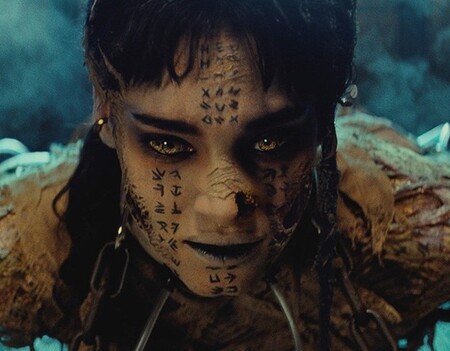
In the intermediate stages of restoration, specialists combined an image of Sofia Bottelli with computer graphics. Individual areas of the body were subjected to digital replacement: shoulders, arms, damaged parts of the face, and hair.Tracking was used to accurately align the digital elements with the actress’s movements. Plate-based image tracking technology was particularly important as it allowed the actress’s facial expressions to be tracked directly from the shot material without separate face capture.In the Nuke program, the image movement was analyzed, and the resulting data was then used to deform the three-dimensional model. This allowed the digital skin damage to replicate the actress’s facial movements, preserving the naturalness of her expressions.
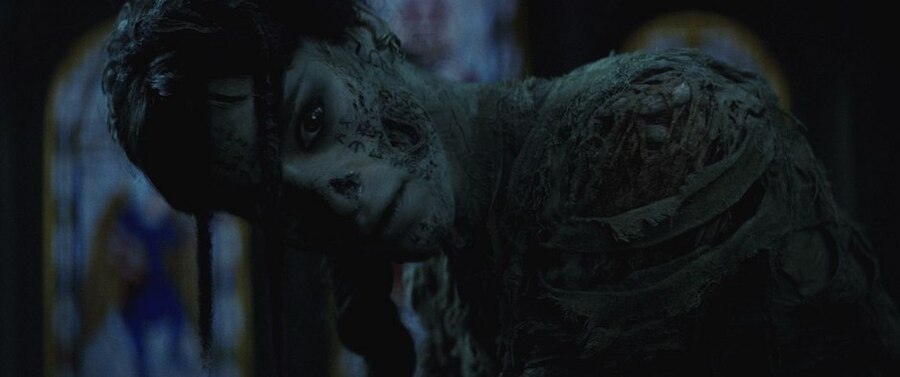
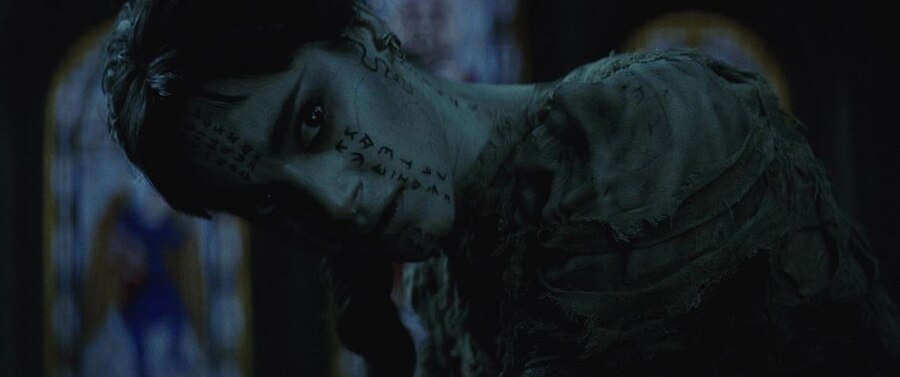
The creation process and final shot from the film «Mummy» (2017) Director Alex Kurtzman. VFX Supervisor Eric Nash. Special Effects Supervisor Dominic Tui
One of the key visual features in the look of Amanet was the split pupils. Initially, the creators considered using contact lenses, but dynamically, they did not provide the necessary control over the gaze geometry. Because of this, the specialists at MPC Studio decided to implement this effect entirely using computer graphics. To integrate the CG elements into extreme close-ups as seamlessly as possible, the compositing specialists preserved the natural micro-detail of the original frame: real eyelashes, tear film, blood vessels, and actual light reflections. Only the iris and pupils were digitally replaced, for which physically accurate shaders for depth and refraction were tuned. The most technically challenging task for the VFX specialists was precisely controlling the direction of the gaze. Even a minor shift during tracking or an error in parallax calculation would create a strabismus effect, so the position of the digital pupils was corrected manually on a frame-by-frame basis by the artists.
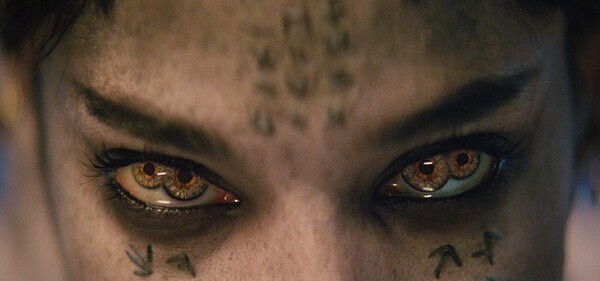
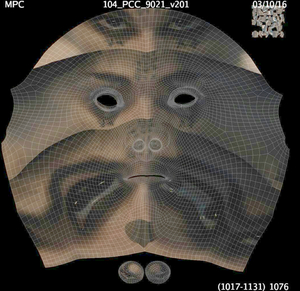
Before watching Tom Cruise’s «The Mummy, ” revisit the digital makeup, motion capture, and other VFX innovations from the 1999 film // vfxblog URL: https://vfxblog.com/2017/06/05/the-mummy-1999-vfx/ (Accessed: 11.13.2026).
https://vfxblog.com/2017/06/05/the-mummy-1999-vfx/ (Accessed: November 13, 2026)
https://vfxblog.com/2017/06/05/the-mummy-1999-vfx/ (Accessed: November 13, 2026)
https://monsterface.ru/prochie-monstry/mumiya/ (Accessed: November 13, 2026)
https://www.imdb.com/es/title/tt0120616/mediaviewer/rm19022848/ (Accessed: November 13, 2026)
https://www.fkprazdroj.cz/mumie/ (Accessed: November 13, 2026)