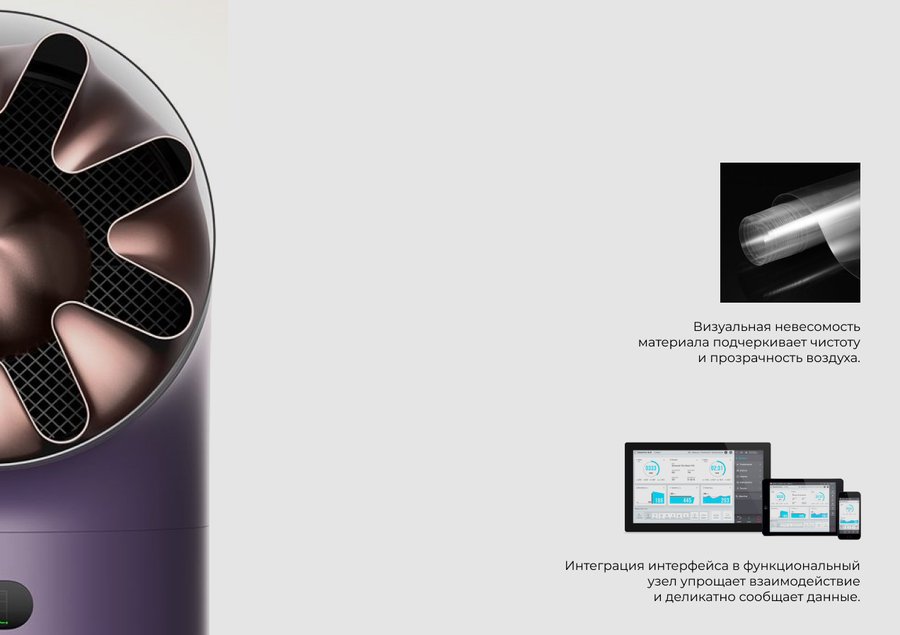
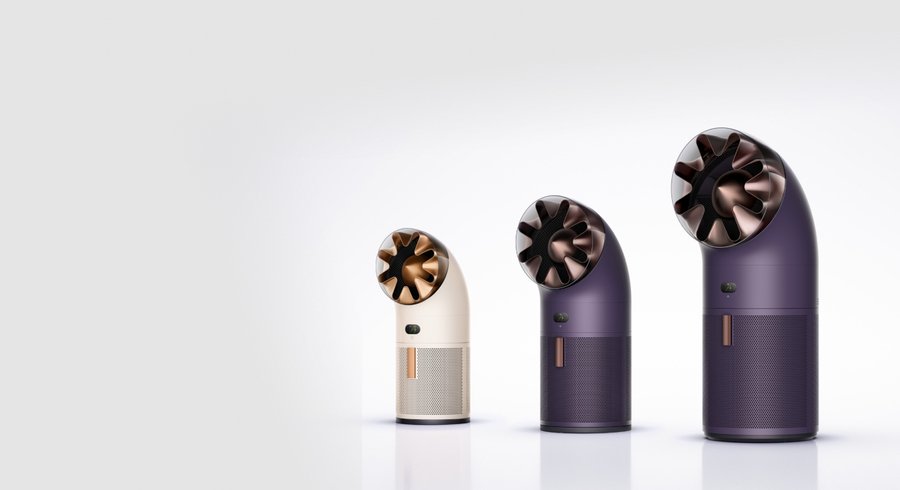
AirFlow Intelligence — an air purifier that autonomously maintains a comfortable and healthy indoor environment.
The device analyzes air quality, automatically adjusts the filtration system, and distributes the purified air throughout the space. The project transforms complex purification technology into a single object where the form reflects the engineering logic, and user comfort is achieved through automation.
Project Goal
Investigate and reproduce the structural and visual system of the Dyson HushJet through reverse engineering, identifying the relationship between its form language, airflow organization, and engineering logic.
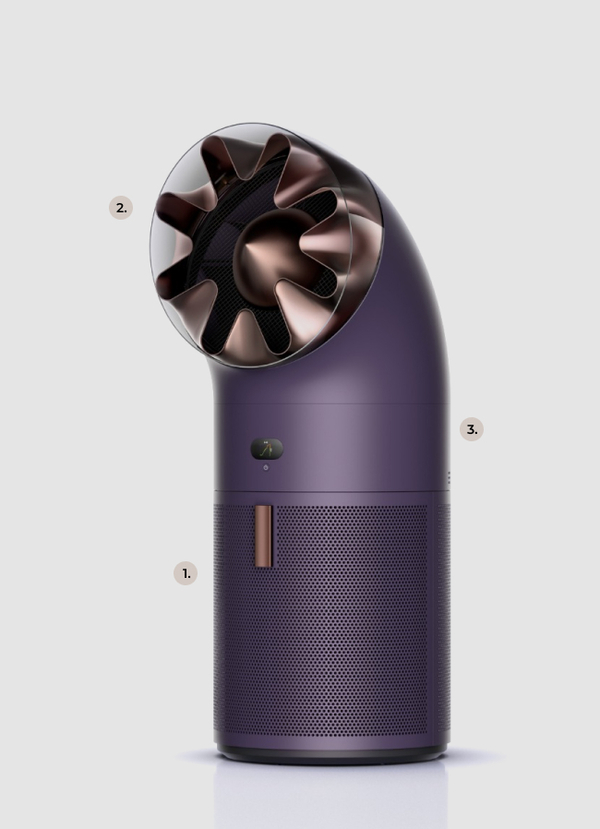
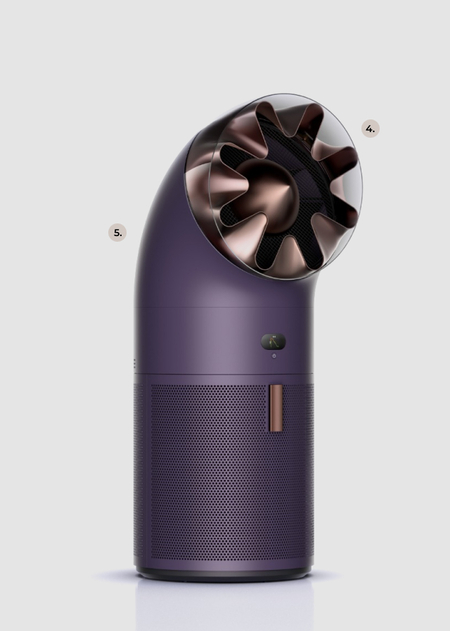
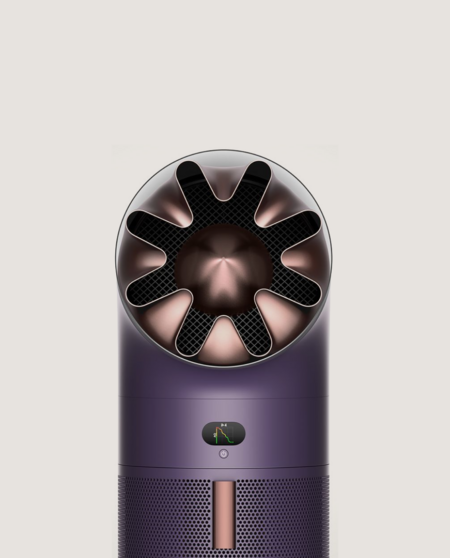
Dyson HushJet Air Purifier
· pronounced structural logic; · unusual aerodynamic form; · a clear relationship between form and function is evident.
Consumer Portrait
Target Audience: Urban dwellers with medium to high incomes, owners of spacious apartments and homes, and users of premium home appliances.Lifestyle: Active utilization of living space, remote work, and an interest in smart home technology and automating daily routines.Psychological Profile: Values comfort, environmental control, technological sophistication, and the aesthetic quality of interior design; prefers to delegate routine tasks to intelligent devices.
Key Needs: clean air throughout the entire space, noise reduction, automatic pollutant control, and minimal interference with device operation.Aesthetic Preferences: minimalism, concise forms, high-quality materials, visual coherence, and seamless integration of technology into the interior.
The consumer’s key need is to maintain comfortable air quality in a large living space without constant monitoring or the visual clutter of household appliances.
Solving the problems others ignore
The DNA of Dyson Design Products
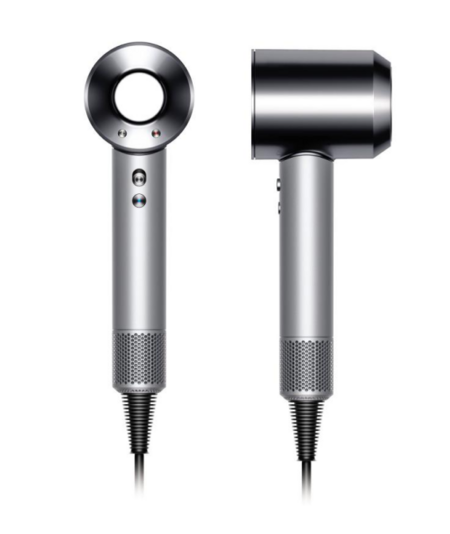
Dyson Supersonic Hair Dryer Abandoning the traditional bulky dryer head. The form reflects engineering configuration and a commitment to ergonomics.Form Generation: a compact head with a large central aperture, an elongated handle, and a visually shifted center of volume. The motor is housed in the handle, influencing the device’s balance.
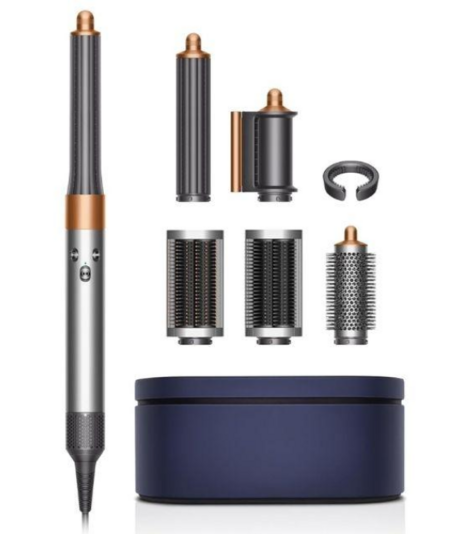
Dyson Airwrap Styler Aerodynamic principles form the foundation of the design.Form Generation: an elongated cylindrical body, interchangeable attachments, and expressive ringed and perforated elements. The composition is built around a central axis and modularity.
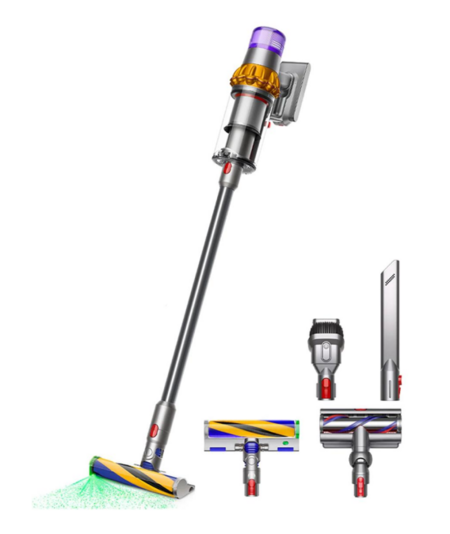
V15 Detect Vacuum Transparent and colored elements help users discern the function of each component, while the elongated design supports ergonomic handheld use.Form Generation: linear arrangement, exposed technical mechanisms, transparent container, and contrasting color accents. Individual elements visually articulate the device’s internal structure.
HushJet Analysis
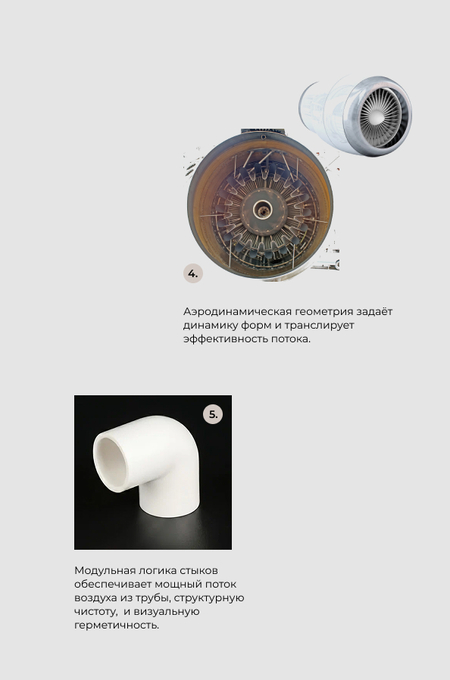
Visual Language and Form Generation. The design combines a vertical cylindrical body with a smoothly curved top and the expressive HushJet nozzle. The contrast between smooth and perforated surfaces emphasizes the device’s functional structure, while the shape of the nozzle becomes the main visual accent.Functionality. The device integrates air purification and cooling. Air enters through the perforated lower section, passes through a multi-stage filtration system, and is directed through the upper nozzle, ensuring circulation within the room.
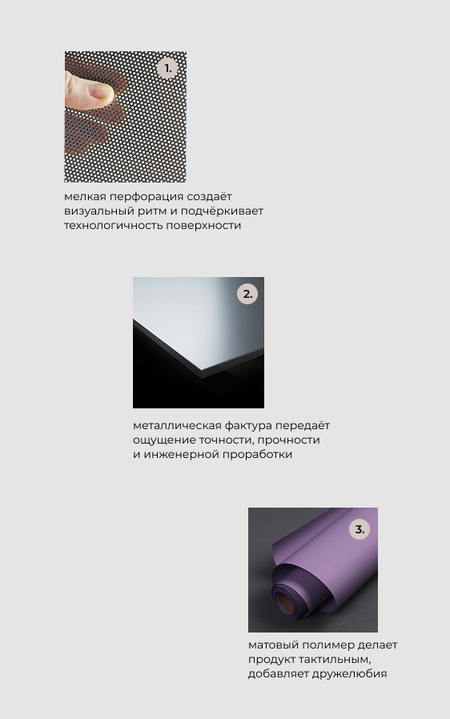
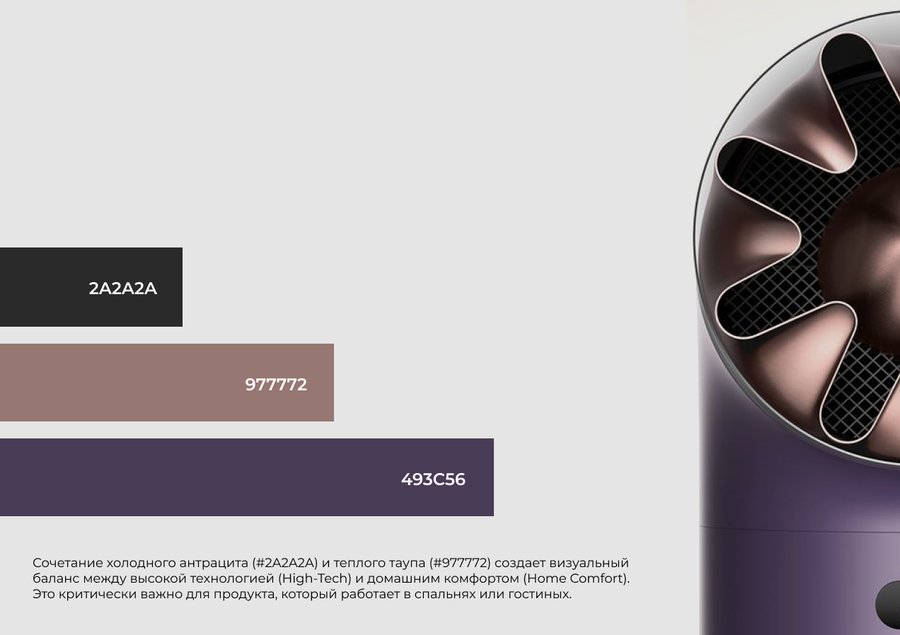
Color and Materials. The deep violet casing contrasts with metallic bronze and dark nozzle elements. Matte surfaces and fine perforation create tactile diversity, emphasizing the product’s technological sophistication and premium character.Design Feature. The cohesive vertical silhouette is paired with a distinctly articulated upper module—where the engineering function is not hidden, but actively shapes the device’s recognizable form.
Competitor Analysis
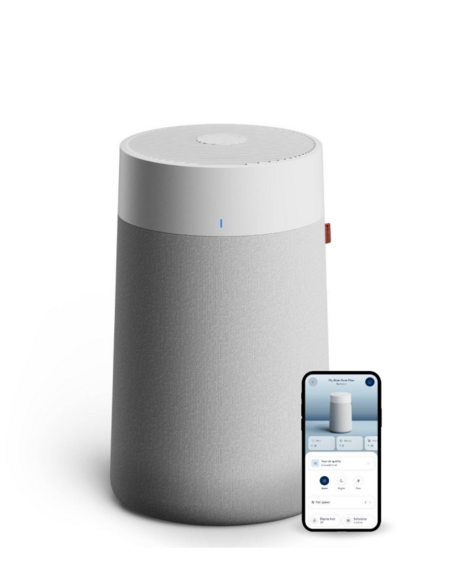
Blueair Blue Pure 211i Max Forming Characteristics: cylindrical housing with a textile prefilter, uniform side perforation, simple vertical geometry.Divergence from Aesthetic Direction: · the textile casing and simple cylindrical · shape lend the device the character of a traditional household appliance; · the visual image does not sufficiently emphasize the engineering complexity and airflow direction—which are crucial for the selected project; · the textile texture also pushes the perception toward a home accessory rather than a distinct technological object.
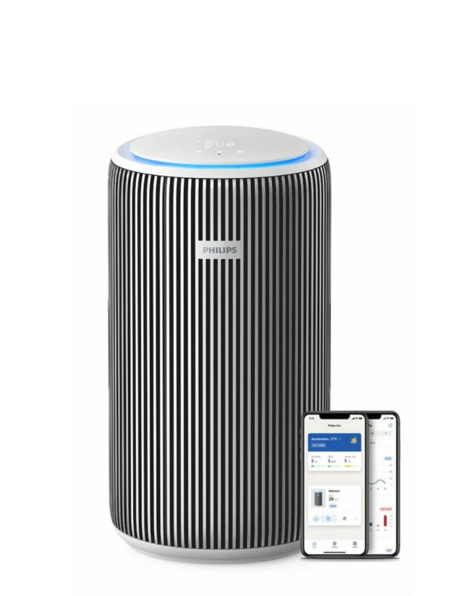
Philips PureProtect 3200 AC3220Forming Characteristics: A vertical body with rounded facets, restrained plastic, and an integrated air intake surface.Deviation from Aesthetic Direction: · The compact, smoothed body is oriented toward neutral integration into an interior space; · The form does not adequately emphasize the constructive hierarchy or the movement of airflow; · Compared to the chosen Dyson HushJet, where the upper nozzle forms a distinct visual accent, the Philips model appears more versatile and less expressive in terms of engineering aesthetics.
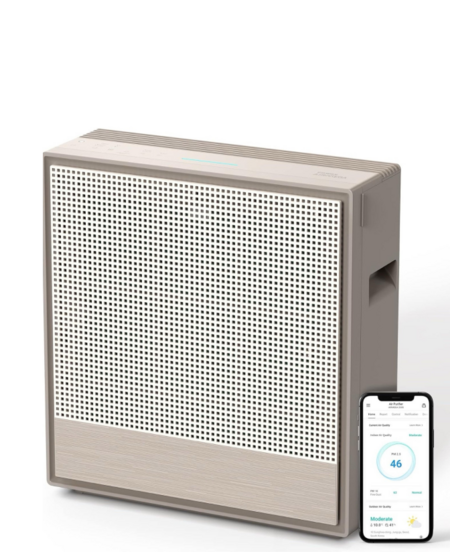
Coway Airmega 250Forming Characteristics: A rectangular body with rounded edges, a pronounced front panel, and horizontal volume segmentation.Inconsistency with Aesthetic Direction: · The broad rectangular shape and the pronounced division of the front surface create a static, utilitarian aesthetic; · The geometry is perceived as a functional housing for filters rather than a cohesive aerodynamic system. This approach less effectively conveys the dynamism and technological expressiveness characteristic of the chosen object.
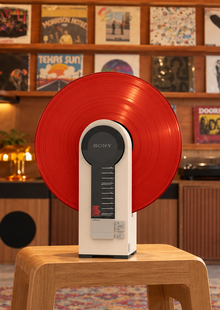
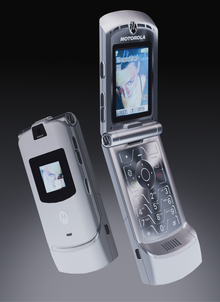
Moodboard