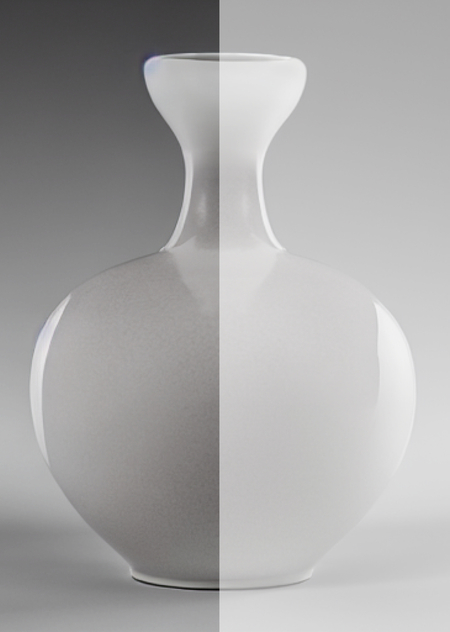
A series of imagined vessels unified by the aesthetics of museum still-life photography. A neural network, trained on porcelain photographs, reproduces characteristic silhouettes, soft lighting, and a neutral background.
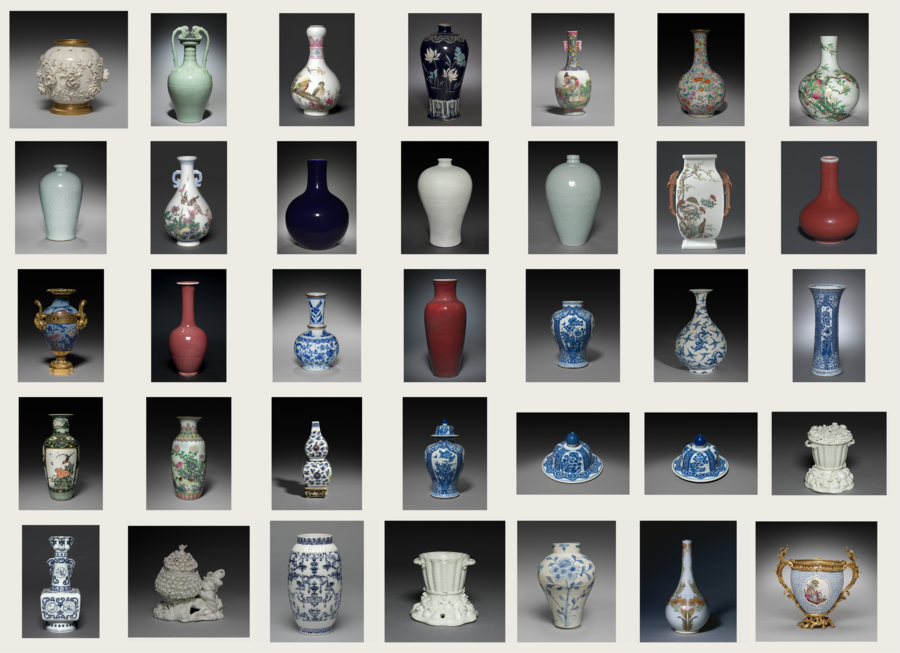
A dataset of 48 photographs of porcelain items, sourced from the Cleveland Museum of Art’s open collection, was compiled to train the Stable Diffusion 1.5 model using LoRA. Images licensed under CC0 were selected and prepared in a 1:1 square format.
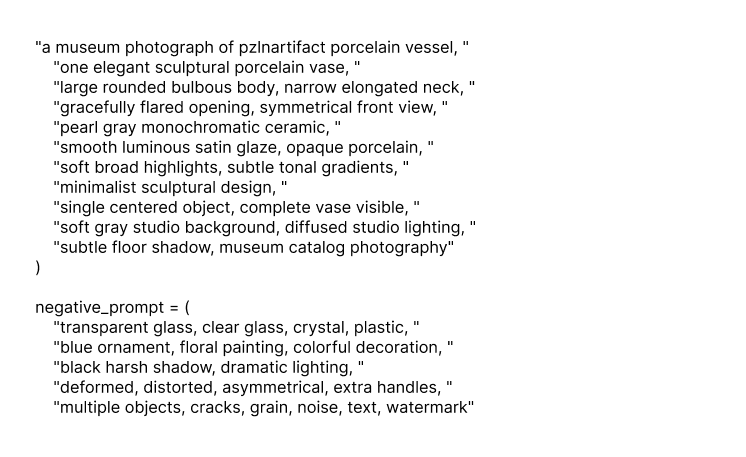
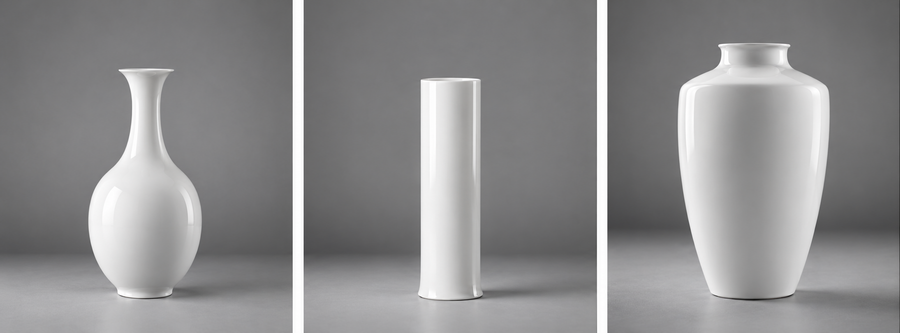
During the generation process, experiments were conducted with forms and materials: semi-transparent porcelain, milk glass, mother-of-pearl, and decorative textures.
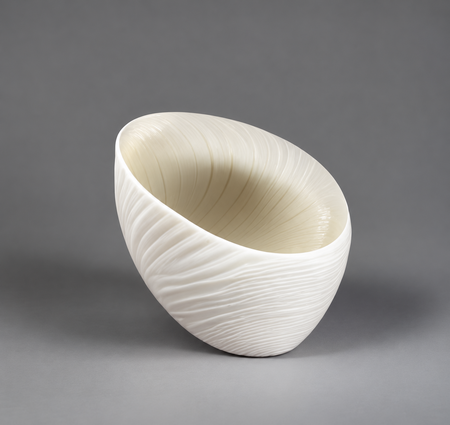
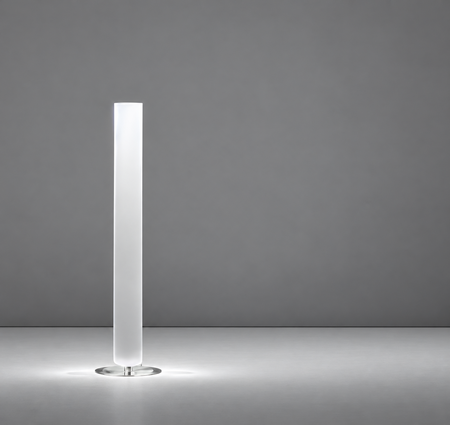
prompt: «A museum photograph of a sculptural vase shaped like a seashell, made of frosted milky white glass with soft translucency, on a neutral gray background."/"A museum photograph of a vase with a long, narrow neck, made of frosted milky white glass, on a soft gray studio background with diffused lighting.»
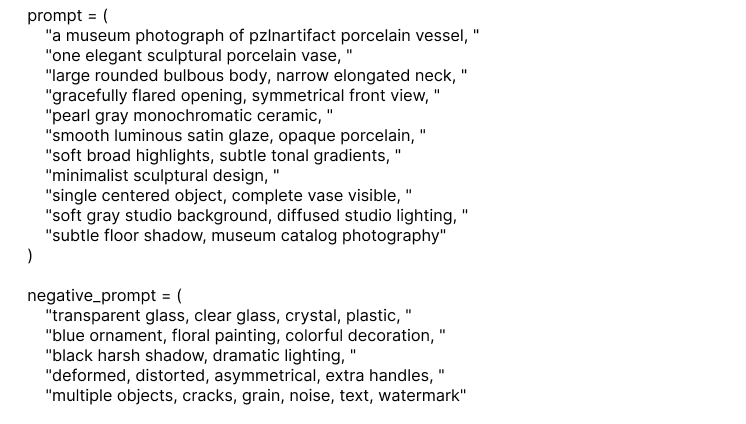
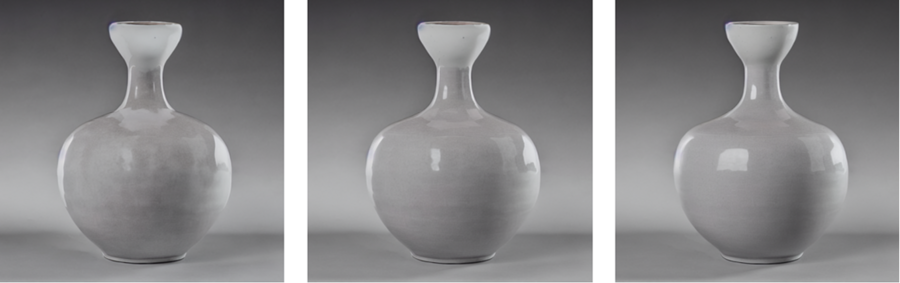
As a result, we successfully created a series of objects unified by museum aesthetics, yet distinct in silhouette, texture, and degree of realism. The final images align with the project’s initial concept—to present a collection of objects that could exist in a real museum, but were created exclusively through generative artificial intelligence.
Using a neural network
ChatGPT (coding assistance for dataset preparation and model training, help with prompt writing)
The work was carried out in two Google Colab notebooks due to GPU time limitations.