In contemporary art, artists increasingly turn to various forms and media to create artistic statements. Furthermore, painting, despite the emergence of new forms of artistic expression, remains a relevant medium.
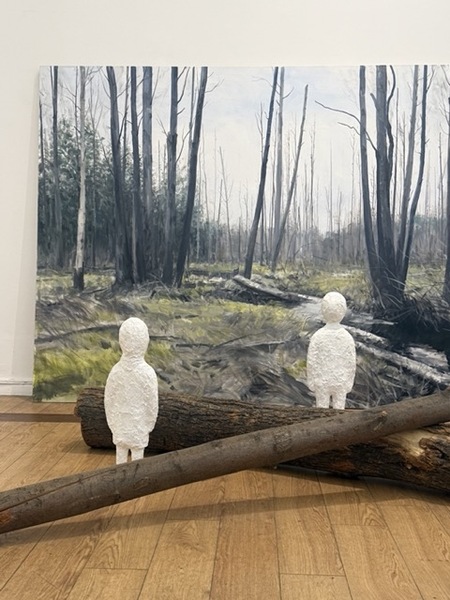
In the classical sense, a painting is a relatively autonomous object, contained by the plane of the canvas and the frame. It becomes a peculiar window into a world created by the artist, and the viewer perceives it from the other side of the image. However, with the development of contemporary art, this familiar model is gradually being re-examined. The advent of photography, Marcel Duchamp’s ready-mades, and new artistic practices calls into question not only the boundaries of individual media but also the very definition of a work of art. Artists are beginning to explore possibilities for expression beyond the traditional painting: engaging with gallery space, architecture, surrounding objects, and the digital environment. As a result, the canvas ceases to be the sole possible surface for painting, and the painting itself can be viewed not just as an image, but as a physical object interacting with its environment.
In its traditional sense, painting is perceived as an autonomous work, confined to the flatness of the canvas. However, this notion is gradually ceasing to describe all the possibilities of contemporary artistic expression. Artists are rethinking the boundaries of the painterly medium, transforming the painting into a physical object and integrating it into the surrounding space. Consequently, not only the form of the work changes, but also the nature of its interaction with the viewer.
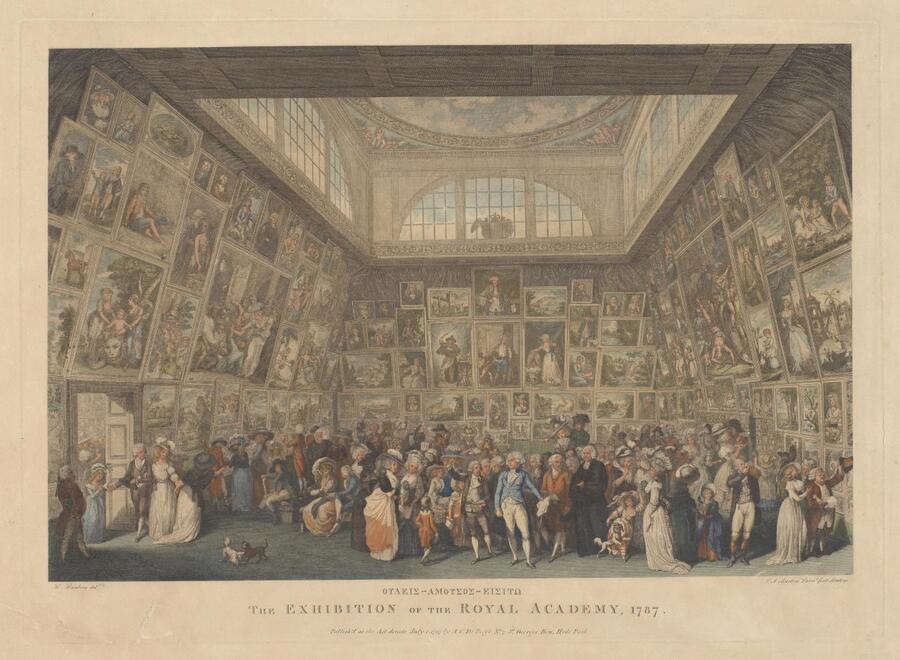
Historically, artistic expression was largely determined by external circumstances: patrons, the state, religion, and academic traditions. These institutions influenced the selection of subjects, forms, and methods of depiction. However, as art evolved, the artist’s position gradually shifted. The artist began to recognize the possibility of independently choosing their artistic language, the work’s form, and its content. The emergence of new forms of artistic patronage, including independent patronage, also expands the space for creative exploration. Attach card Freedom from conventional limitations becomes one of the conditions for rethinking the very concept of a work of art. Artists begin to experiment with materials, forms, and ways of presenting their work, moving beyond traditional notions of painting.
In this essay, I want to examine how contemporary artists continue to work with the traditional medium of painting while simultaneously expanding its boundaries. I am interested in what happens to a work when the painterly surface extends onto other objects and architectural elements, and when the form, material, and placement of the painting become part of the artistic statement. How, as a result, are the boundaries of the work, its meaning, and the viewer’s accustomed experience of interacting with painting altered?
To understand the changing boundaries of painting, one must examine the very concept of an artistic medium. In her book, Travels in the North Sea: Art in the Postmediality Age (1999), American art theorist Rosalind Krauss examines the transformation of traditional understandings of the medium and its role in contemporary art.
Within the modernist tradition, particularly in the theory of Clement Greenberg, the specificity of painting was primarily linked to its material properties—the flatness and the canvas surface. However, the evolution of artistic practices gradually called this understanding into question. Artists began to move beyond conventional categories, engaging with new materials and modes of creation, blending visual, textual, and spatial forms.
To explain these shifts, Krauss invokes the concept of postmediality.
The postmedial age is a state of art where traditional media (painting, sculpture, photography) lose their dominant status. Conceptual strategies move to the forefront, altering artistic practice by mixing various art forms, including elements of daily life, and blurring the lines between art and reality. Postmediality does not imply an outright rejection of the idea of the medium—rather, it demands its re-evaluation. Krauss specifically notes that postmediality is not the same as intermediality (which is often simply understood as the mixing of different media). Postmediality goes further—it deconstructs the very concept of the medium.
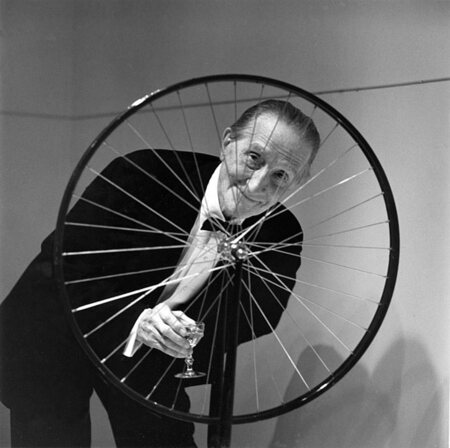
An artist is no longer obligated to follow pre-established rules of painting, sculpture, or photography, but can instead reconstruct the conditions for the work’s existence based on their own concept.
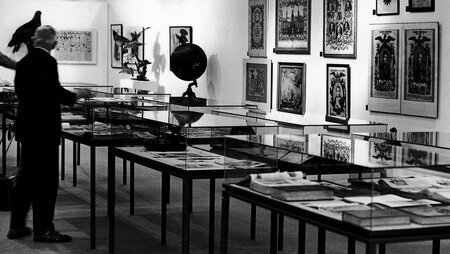
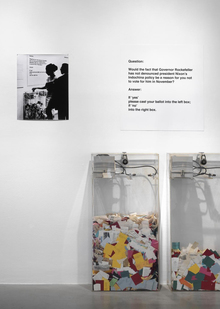
One of the key examples for Krauss is the work of Belgian artist Marcel Broodthaers. In the project «Museum of Modern Art, Department of Eagles» (1968–1972), the artist creates a fictional museum institution, replicating its familiar attributes: exhibition spaces, labels, designations, and the organization of the show. However, instead of traditional works of art, the viewer encounters images and objects related to the figure of the eagle. Thus, Broodthaers pays attention not only to the artistic object but also to the network in which the work of art is embedded, while situated within the walls of the gallery. The artist thus reflects on the question of how real institutions are structured, and who decides within them what constitutes art. The video work «Journey Across the North Sea» (1973–1974), which lent its name to Krauss’s book, also addresses the relationship between different forms of artistic expression, exploring the boundaries of image, text, and moving image. The work consists of a sequence of still frames. Each «episode» lasts about ten seconds and is accompanied by a title card indicating the page number (a total of 15). Krauss sees this work as a striking example of how an artist deconstructs the concept of medium. Broodthaers does not simply mix media—he forces contemplation on the nature of the artwork itself. He mimics the process of viewing a painting (from general to detail and back), but he does so through film, which limits the experience: we cannot flip back «pages» as we can in a book—the movement is strictly linear in time. In this way, the artist exposes the conventions of different media (cinema, painting, book) and shows that the specific character of the work is determined not only by the material but also by how the artist establishes a relationship with it.
Krauss’s engagement with Brotar’s practice allows us to view the medium not as a fixed material base, but as a system that the artist is capable of reinterpreting and reconstructing. Moving beyond the canvas does not necessarily mean abandoning the painting medium. On the contrary, it can become a way to expand its possibilities, wherein the artist approaches the selection of color, texture, and paint layer deliberately, paying attention to precisely how that choice communicates their concept. Paint can exist on new surfaces, or the canvas can interact with the surrounding space or the viewer.
Continuing the reflection on the boundaries of the pictorial medium, it is worth turning to the article «Painting Beside Itself» (2009) by American art historian David Joselit. The author proposes viewing painting not as an isolated artistic object, but as part of a broader system of relationships that includes architecture, exhibition space, other artworks, and social context. At the beginning of the article, Joselit references the statement by artist Martin Kippenberger, who argued that it is not enough simply to hang a painting on a wall and call it art. In his view, the entire surrounding system matters—the floor, the architecture, and even the color of the gallery walls. Thus, the focus shifts from the individual pictorial object to the network that encompasses the artwork. To describe this process, Joselit employs the concept of transitive painting. In this case, painting is not confined to its own boundaries; instead, it enters into relationships with other objects and contexts, changing its meaning depending on them. The artwork continues to exist not only as a material object but also as part of a constantly shifting system of connections. This idea allows for a new perspective on the possibilities of painting. If the canvas traditionally served as the primary surface for applying paint and forming an image, the painterly gesture can now extend beyond it, interacting with architecture and space. Meanwhile, painting itself does not necessarily lose its specificity: the color, texture, and materiality of the paint layer continue to be the primary means of artistic expression.
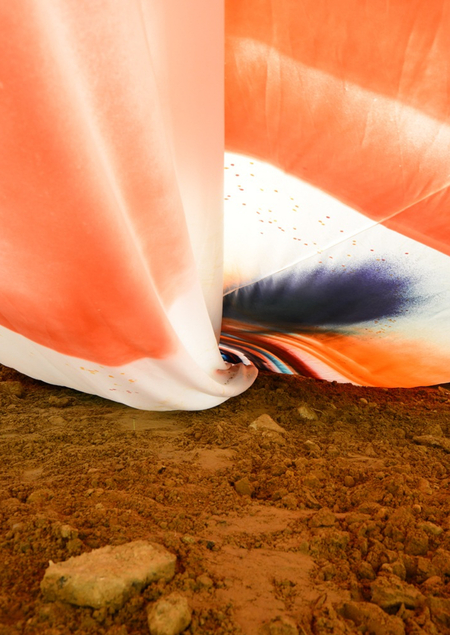
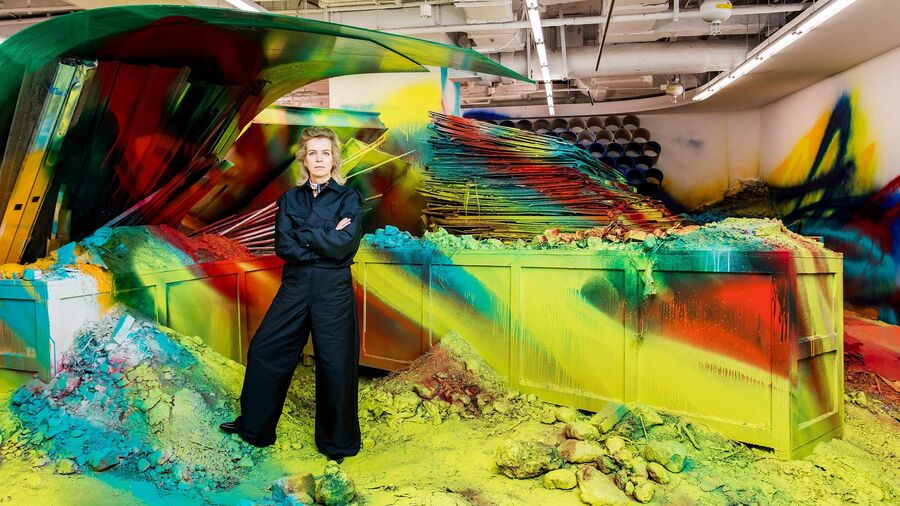
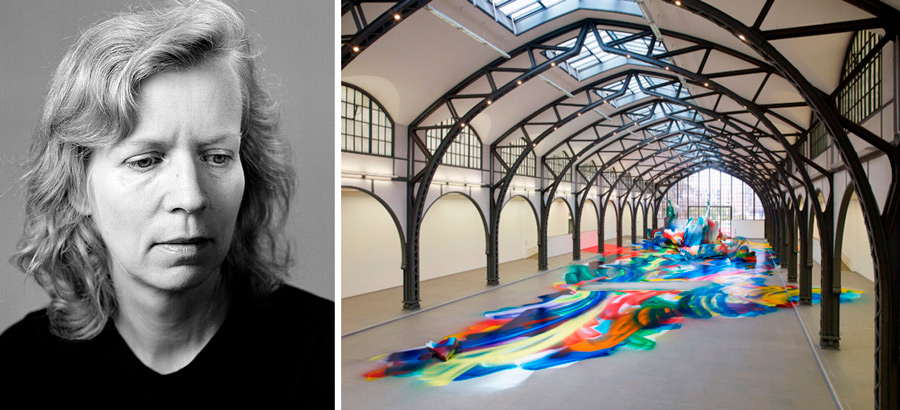
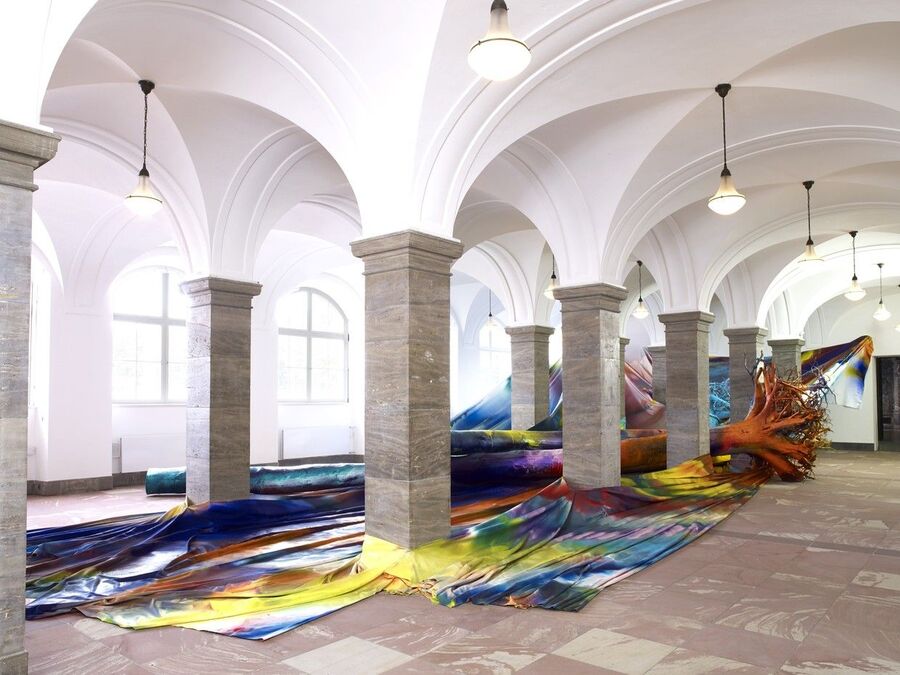
A similar approach can be seen in the practice of the contemporary artist Katarina Gross. Challenging the notion of painting as primarily a canvas-based art form, she creates large-scale installations that transform the gallery space into a monumental canvas. The artist moves painting from the canvas onto walls, floors, architectural structures, and surrounding objects. As a result, the boundary between the painted surface and space becomes fluid, and color ceases to be confined within a rectangular composition. Instead, it permeates the environment, forming a new spatial structure for the work.
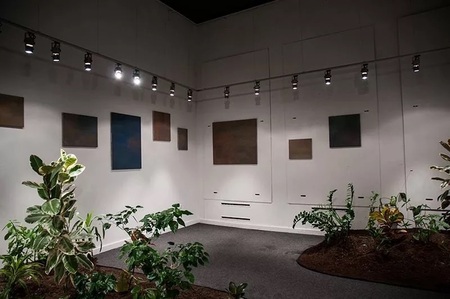
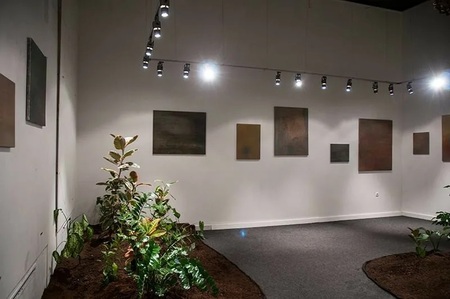
An interesting example of expanding the boundaries of painting is Ivan Novikov’s project, «Umwelt» (2013). In this work, the artist integrates paintings with living plants, arranging them so that the color of the leaves interacts with the palette of the canvases. «The plants themselves are no longer merely a subordinate part of the painting; they stand equal to the artworks. On some plants, the leaves are painted as if the painting were flowing off the canvas and onto them, ” the artist says. In this example, we see painting complemented by another element—without which the abstract painted canvases lose their essence of presence and become ordinary pictures. The interaction established by the artist in the core of the work is crucial here. Color and the painterly gesture continue to exist outside the canvas, engaging with real objects. As a result, the viewer perceives not a single painting, but a unified composition where the boundaries between the artwork and its surrounding environment become less defined.