Project Concept.
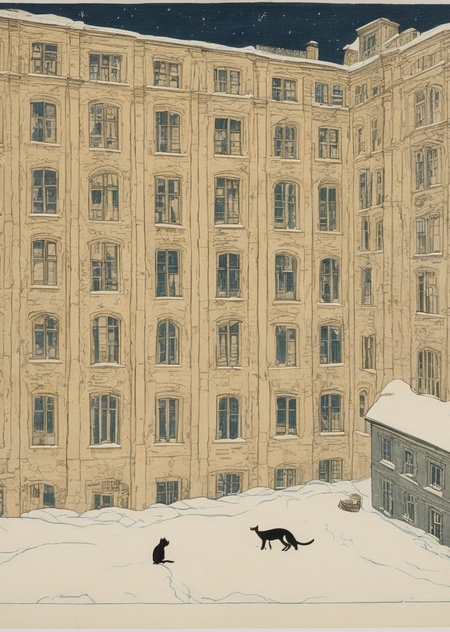
Between 1856 and 1858, Utamaro Hiroshige created the series «One Hundred Famous Views of Edo”—woodblock prints depicting the capital of Japan through its rivers, canals, bridges, snow, and rain. Edo was a city of water, and Hiroshige depicted not only landmarks but also daily life: pedestrians with umbrellas, boats, and merchants.St. Petersburg is also a city of rivers, canals, and bridges, a city of rain and snow. It sparked my curiosity: what would modern St. Petersburg look like if Hiroshige were to draw it? Drawbridges, the Lakhta Center, a courier on a bicycle in a downpour, and well-courtyard alleyways.To answer this question, I fine-tuned the Stable Diffusion XL neural network on 19th-century Japanese woodblock prints, teaching it a new stylistic „vocabulary, ” and generated a series of modern St. Petersburg views. One scene is an homage to Hokusai’s „The Great Wave off Kanagawa“: the wave of the Gulf of Finland by the embankment with the Lakhta Center on the horizon.
2. Dataset
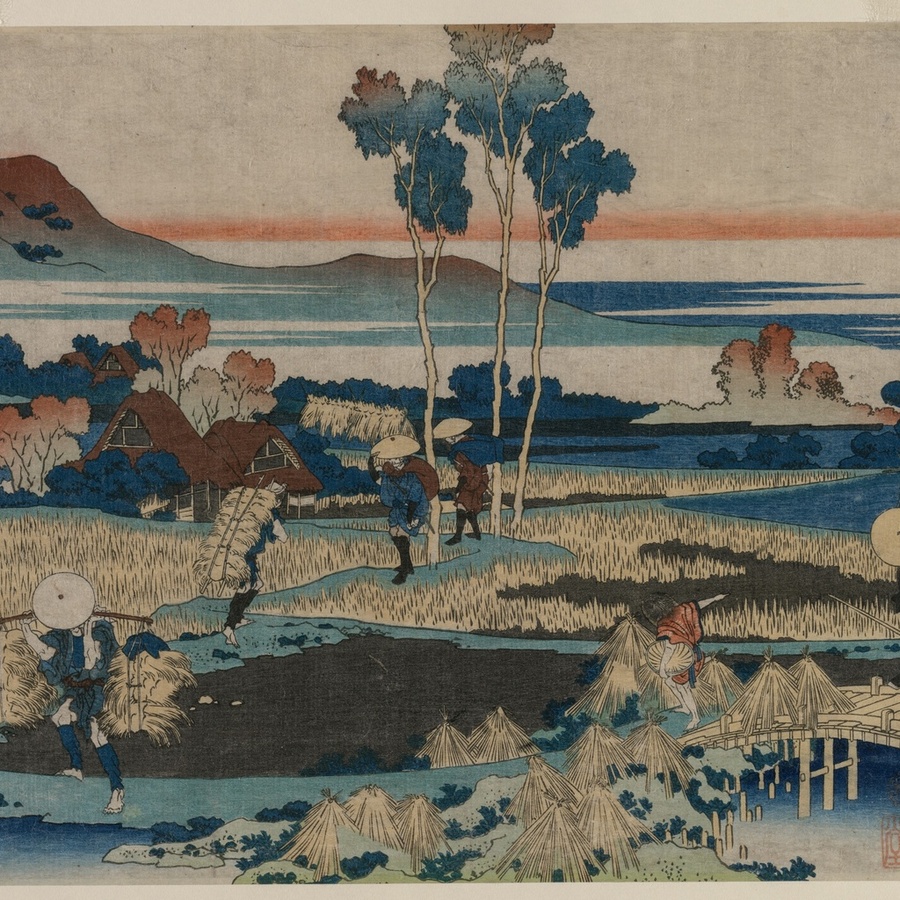
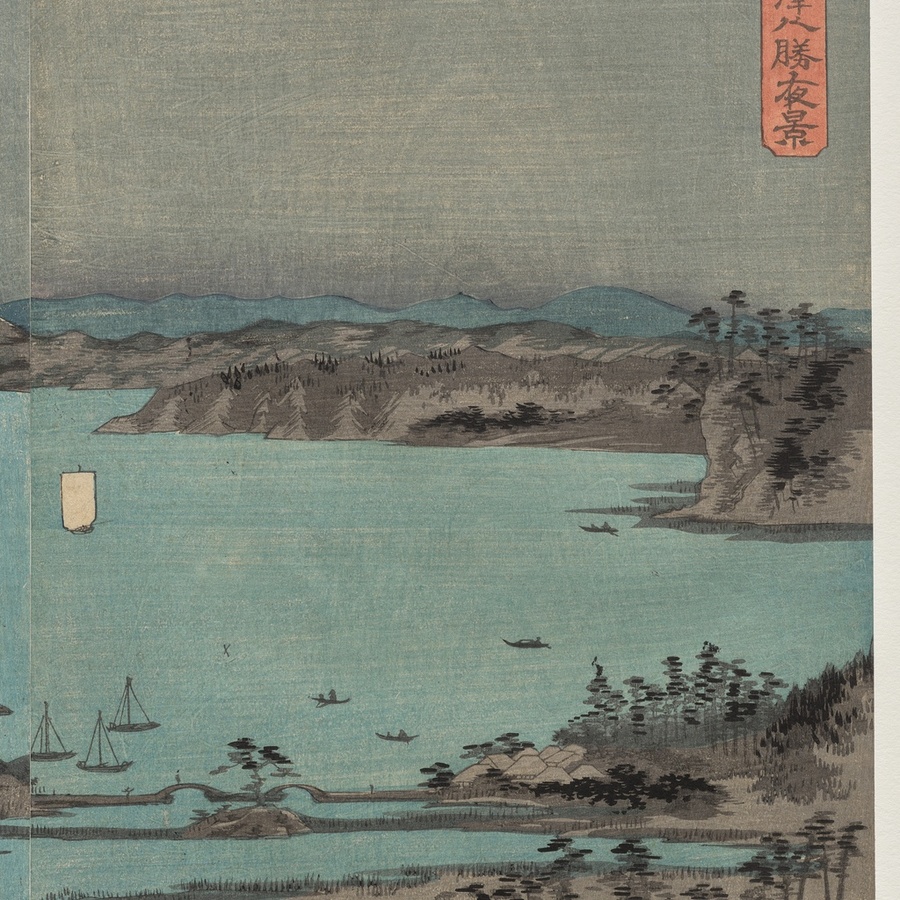
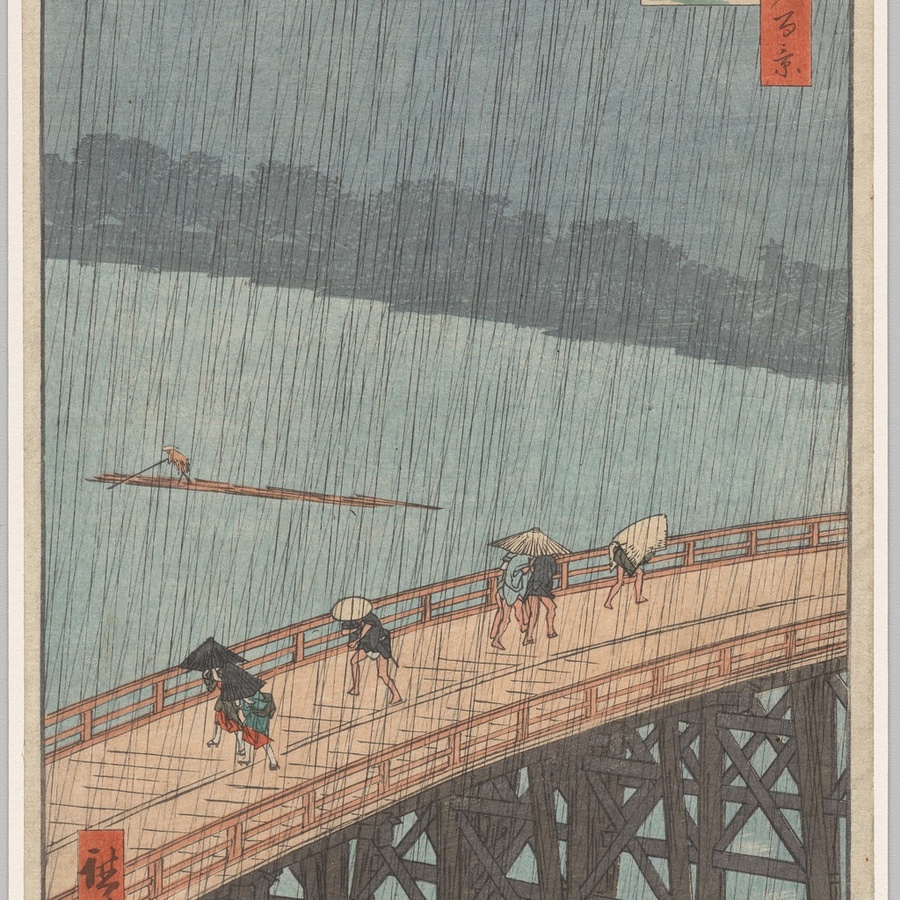
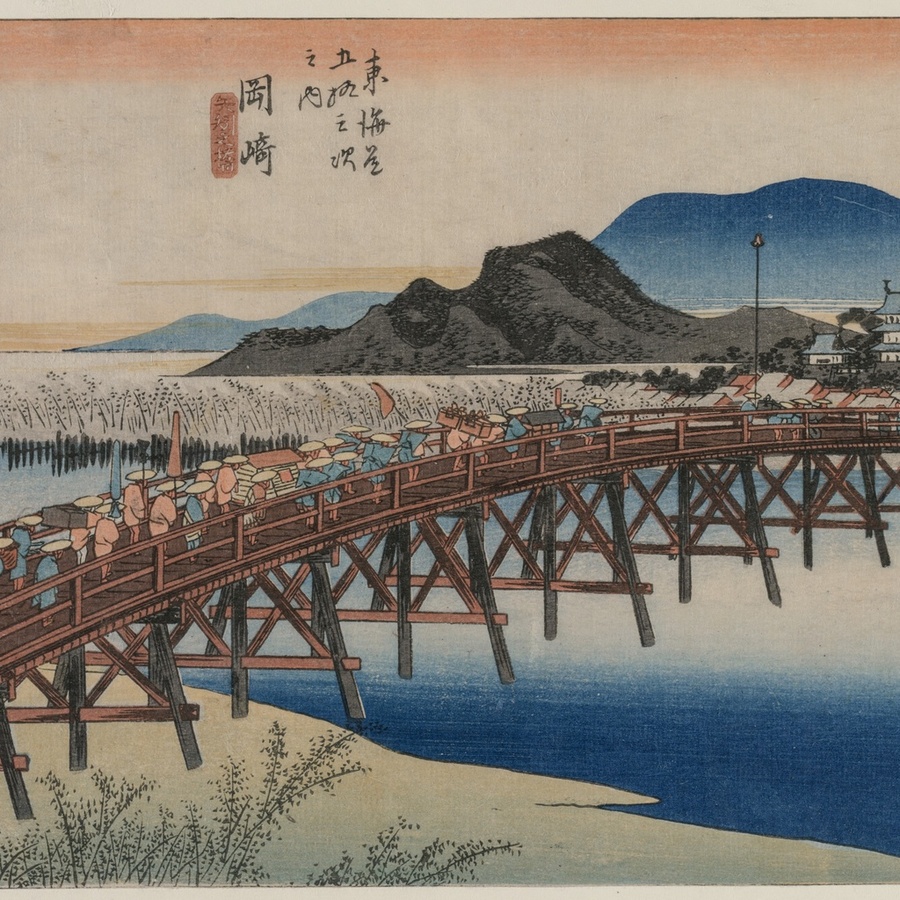
For this study, I curated 48 engravings by Utagawa Hiroshige (primarily from the series «One Hundred Famous Views of Edo» and «Fifty-three Stations of the Tōkaidō») and Katsushika Hokusai (the series «Thirty-six Views of Mount Fuji»).Hiroshige and Hokusai died in the 19th century, and their works are in the public domain. Museums publish their images under the CC0 license, which permits unrestricted use. A complete list of works, including titles and dates, is provided in the sources.Preparation. The images were cropped to a centered 1:1 square and resized to 1024×1024 pixels. I manually excluded 12 unsuitable pieces.
Images collected in the dataset