Luminism—light, energy, and the first step toward abstraction
About Artists and Style
Artists and Style Creation:
-Mikhail Larionov and Natalia Goncharova — creators of rayonism in Russia.
-Initial concepts emerged between 1906–1909; the first painting was «Glass.»
-1913 — The Manifest of Rayonism.
-A fusion of Cubism, Futurism, Orphism, and Russian folk art.
-Evolution from realistic rayonism toward pure abstraction.
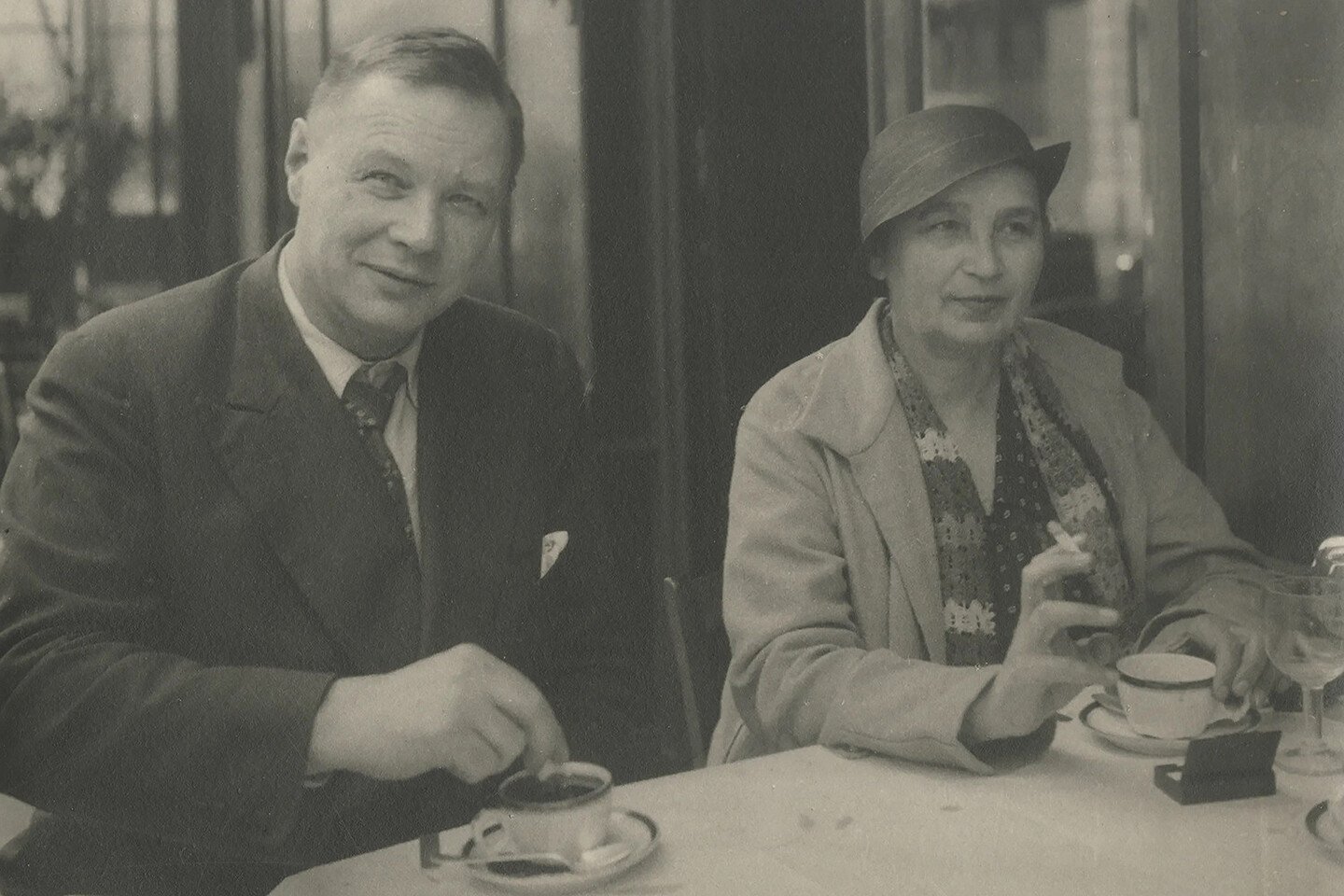
M. Larionov and N. Goncharova—leaders of Rayonism
Philosophy and Characteristics:
-The foundation is light and energy, not the external form of objects.
-Light is more important than objects: artists depict beams and rays of light.
-Bright, colorful lines, diagonal arrows, sharp angles.
-From a recognizable object—to its complete dissolution in the rays.
-Larionov utilized straight and clear rays, while Goncharova’s were soft and curved.
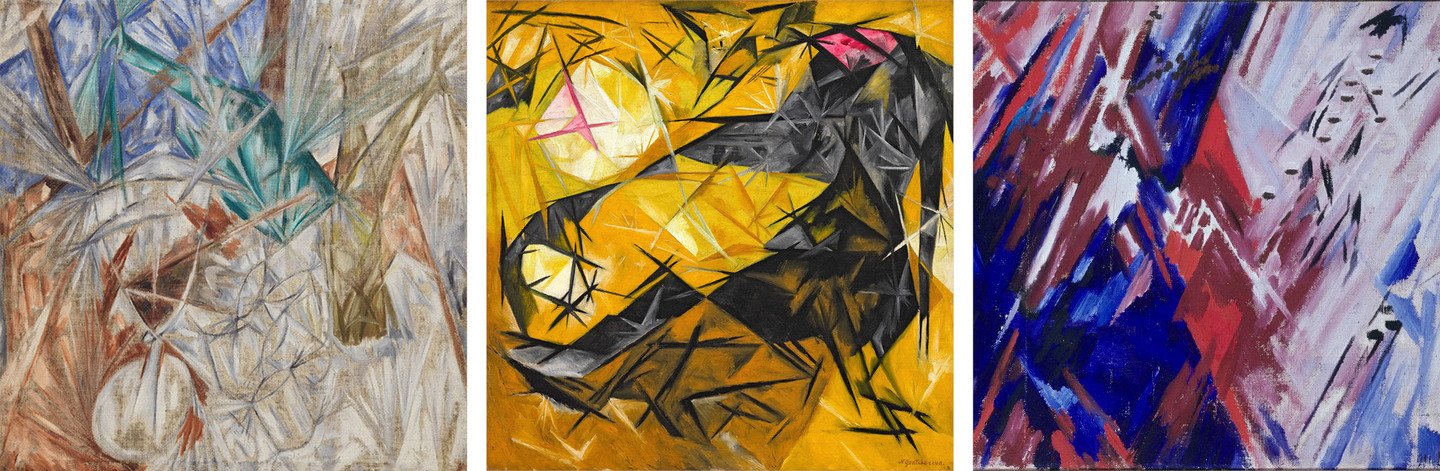
Mikhail Larionov—"Glass» (1909), Natalia Goncharova—"Cats» (1913), Mikhail Larionov—"Red-Blue Rayonism» (1911)
Location
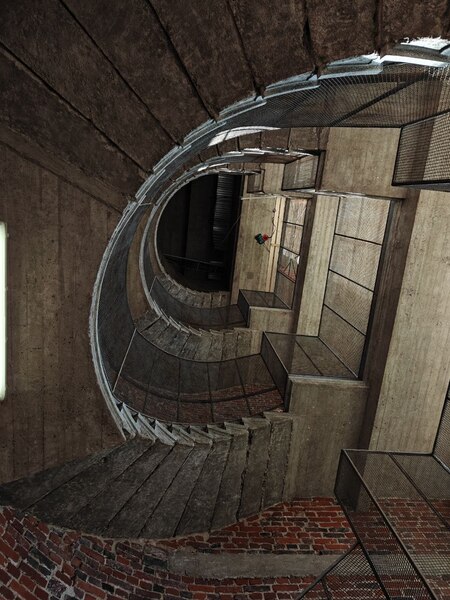
The water tower on Batareynaya Hill in Vyborg was built in 1930 based on the design by architect Vainio Keinänen. It was previously used for municipal water supply but eventually ceased that function. The project envisions creating a cultural space inside the tower while preserving its historical appearance. Suspended art objects shaped like droplets will be placed in the central staircase well. Each droplet represents a distinct direction in art, and their collective form is reminiscent of the building’s original purpose.
Водонапорная башня на Батарейной горе в г. Выборг
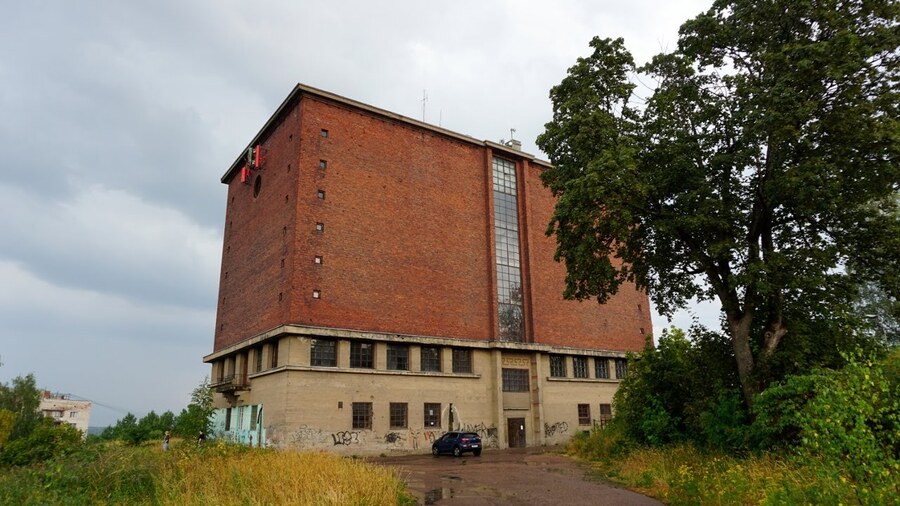
Лестничный проём
Sketches
Art Object Concept
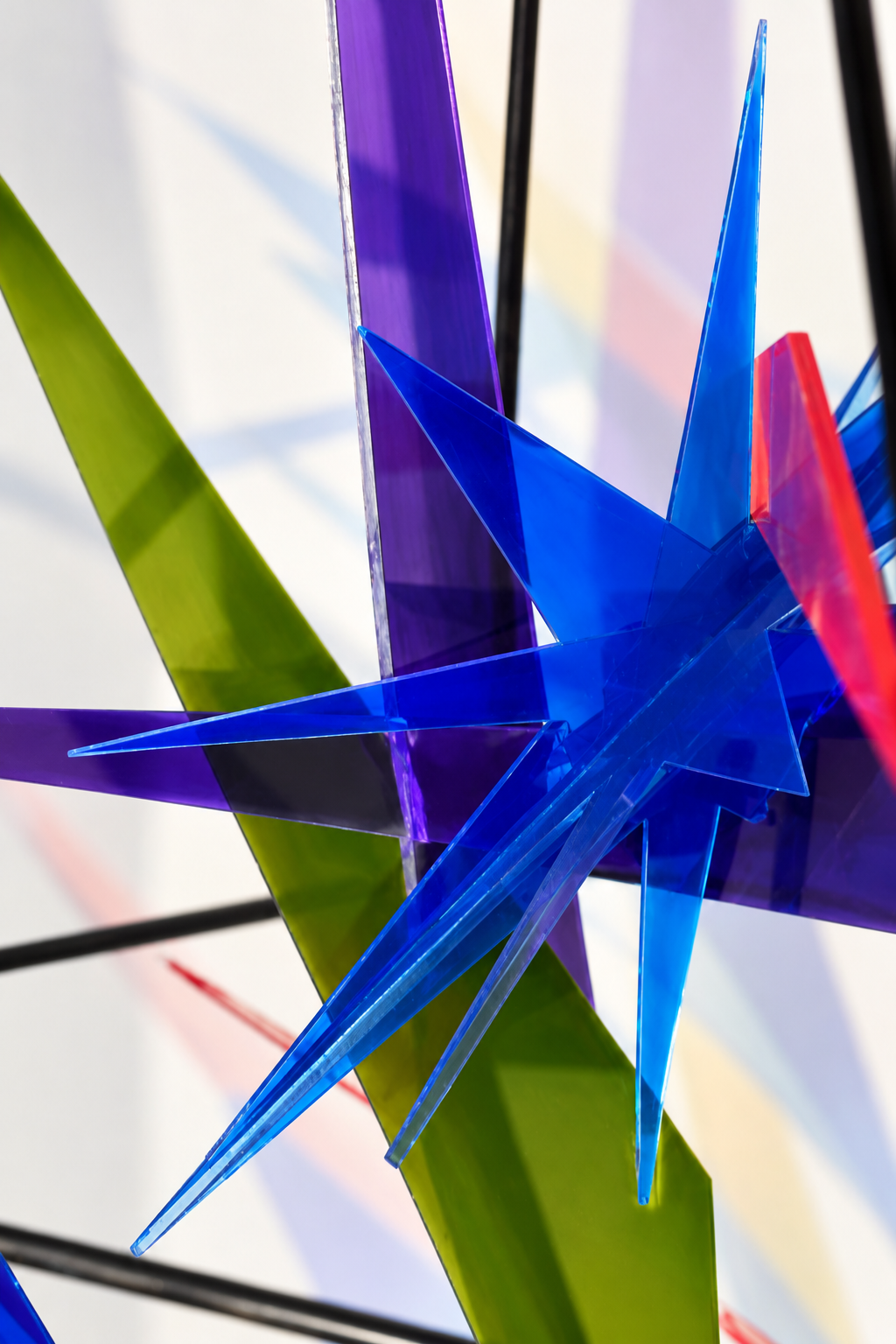
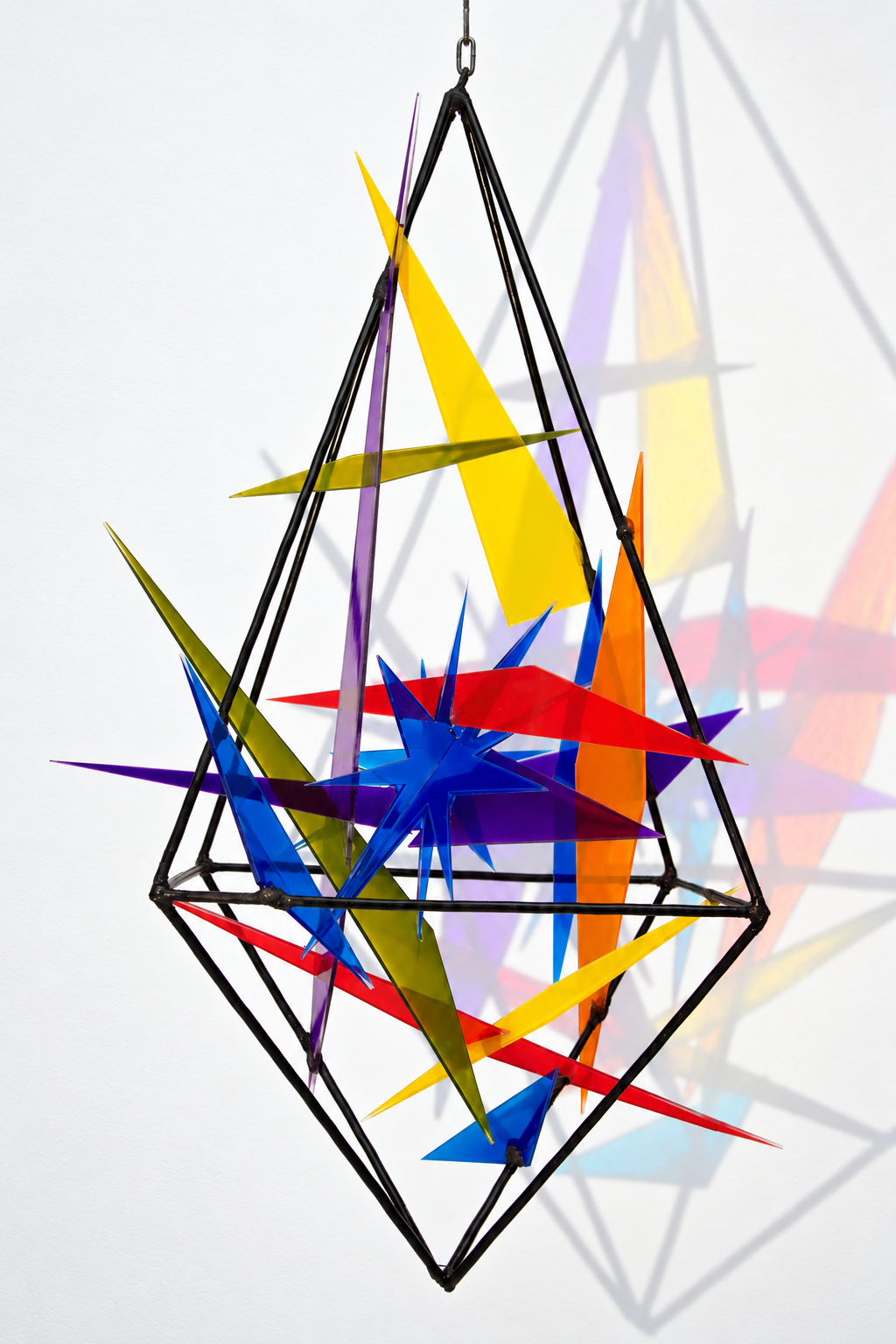
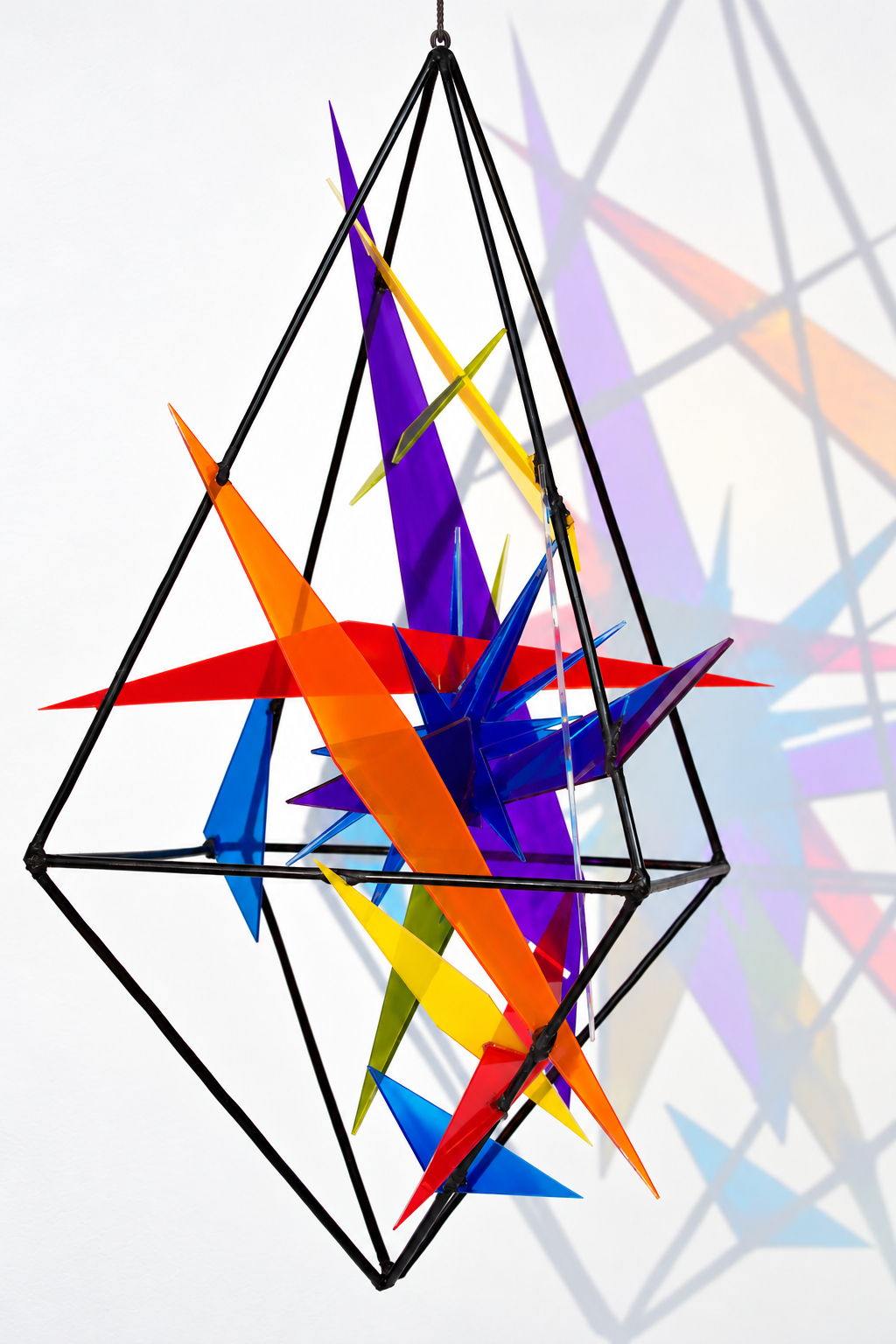
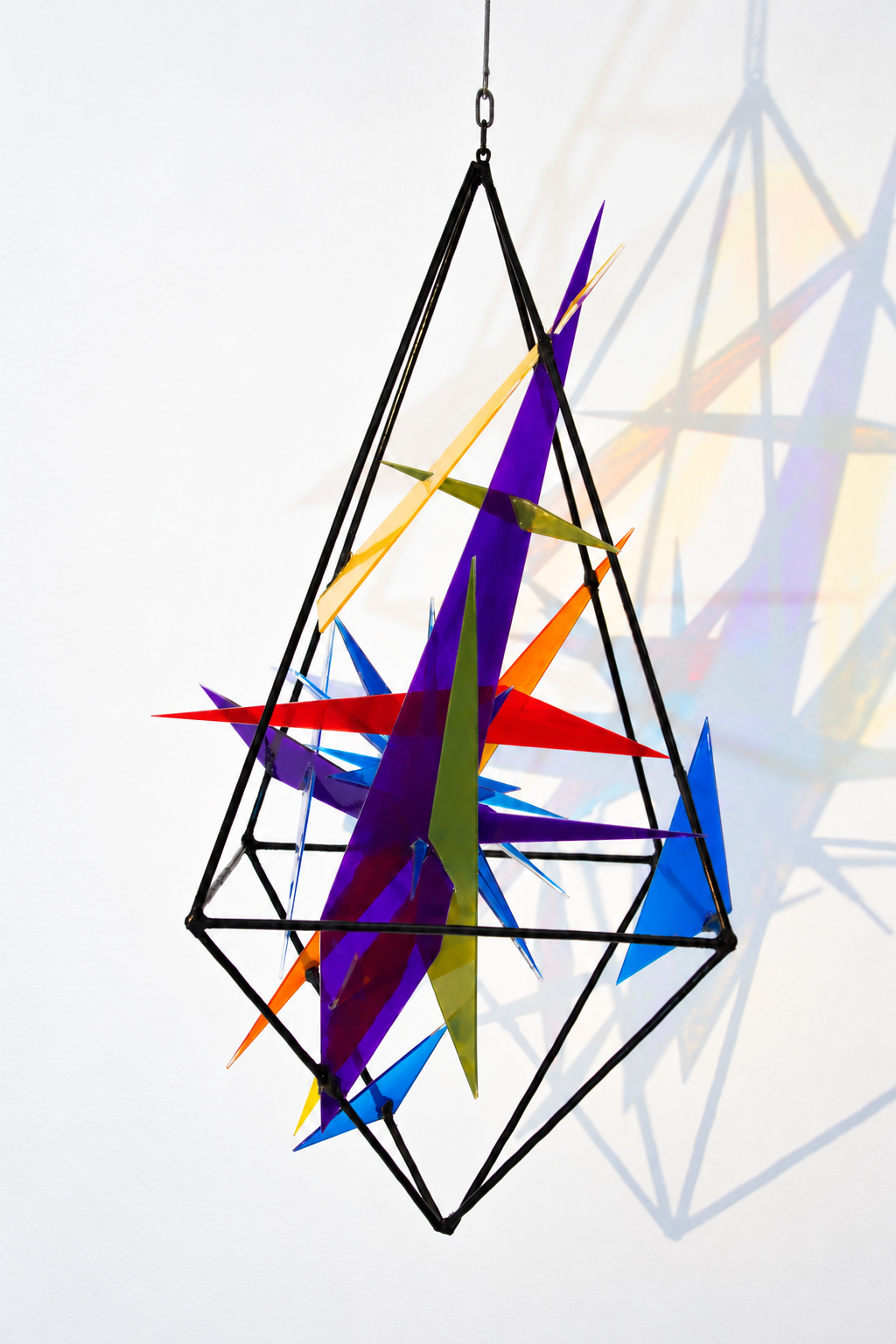
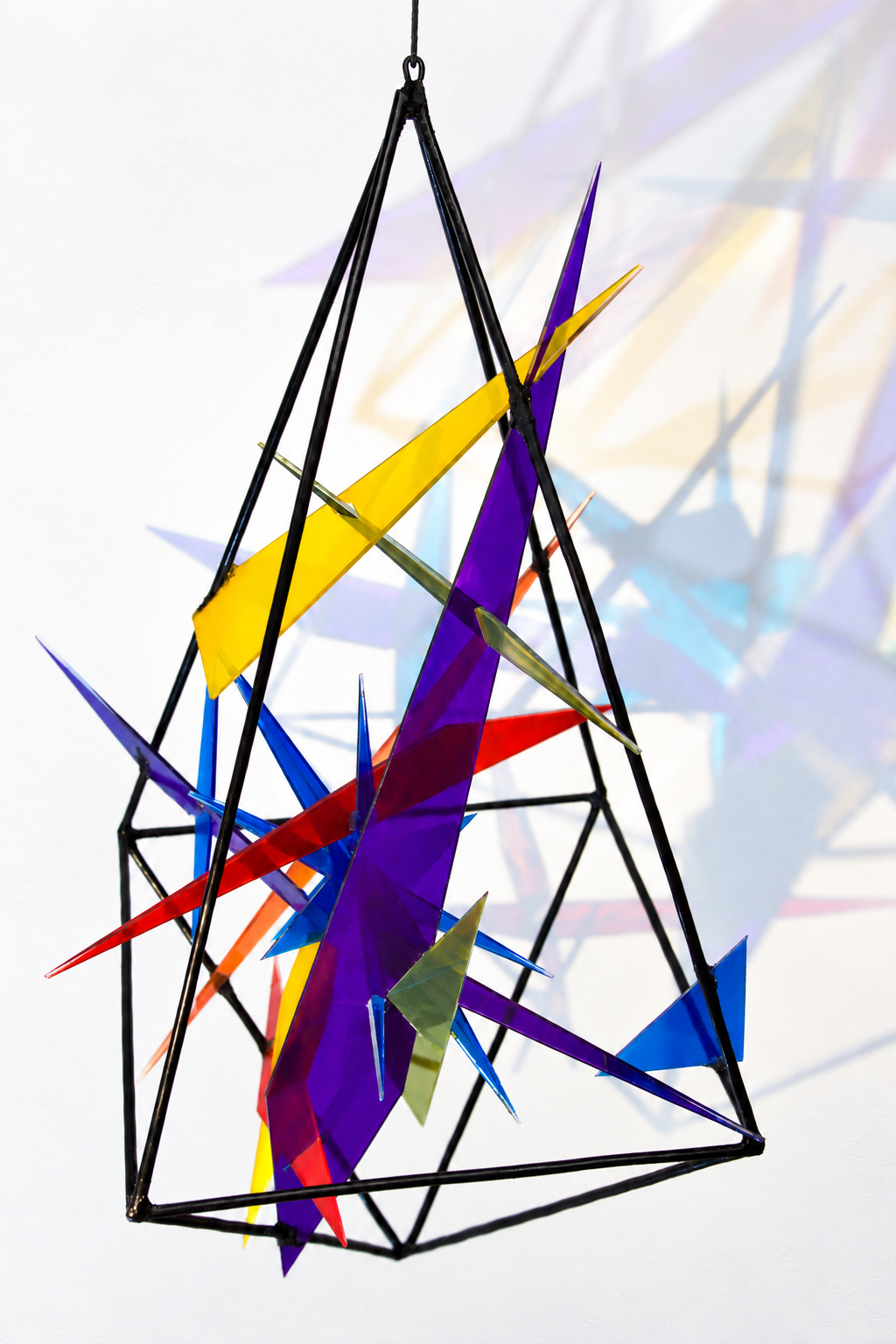
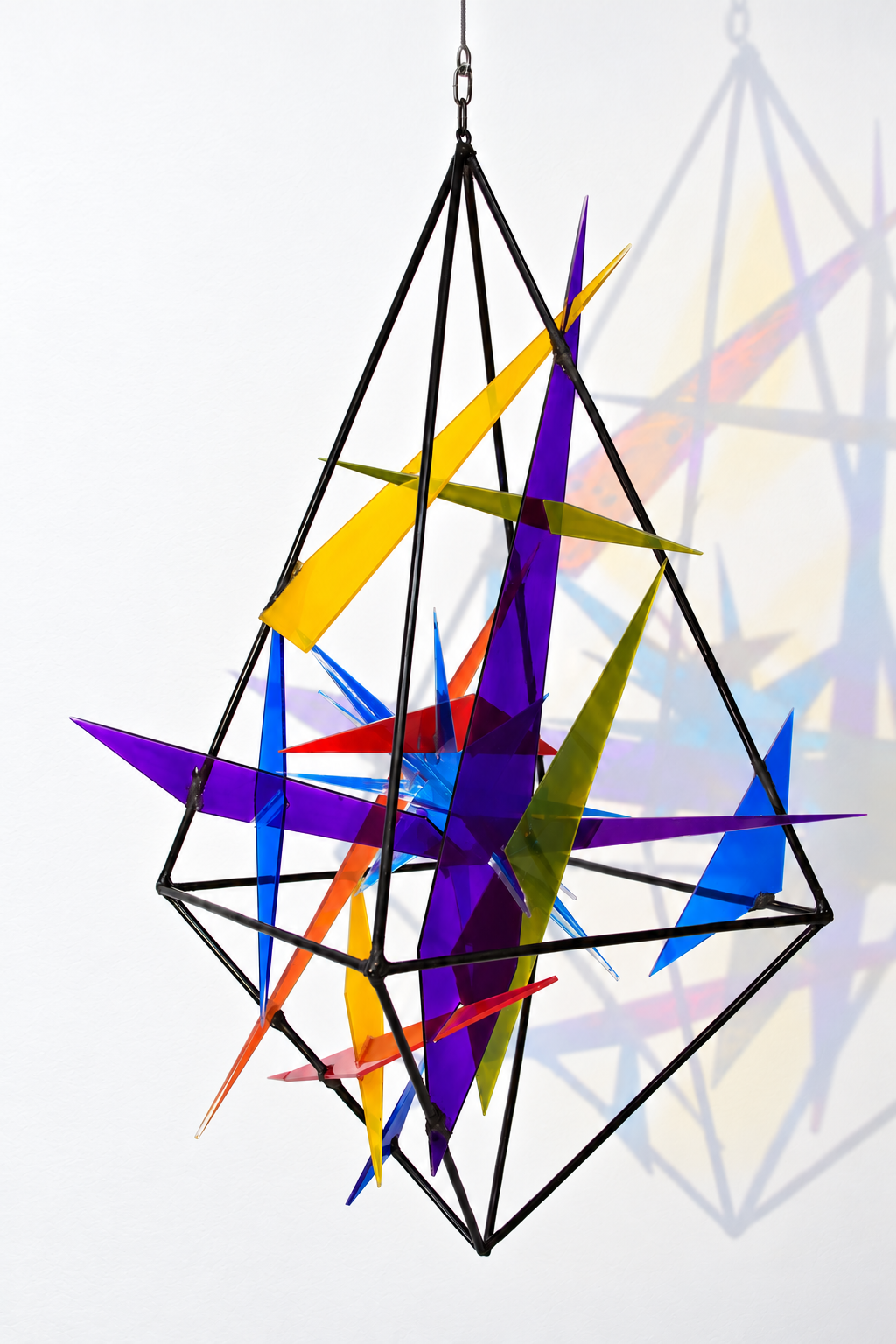
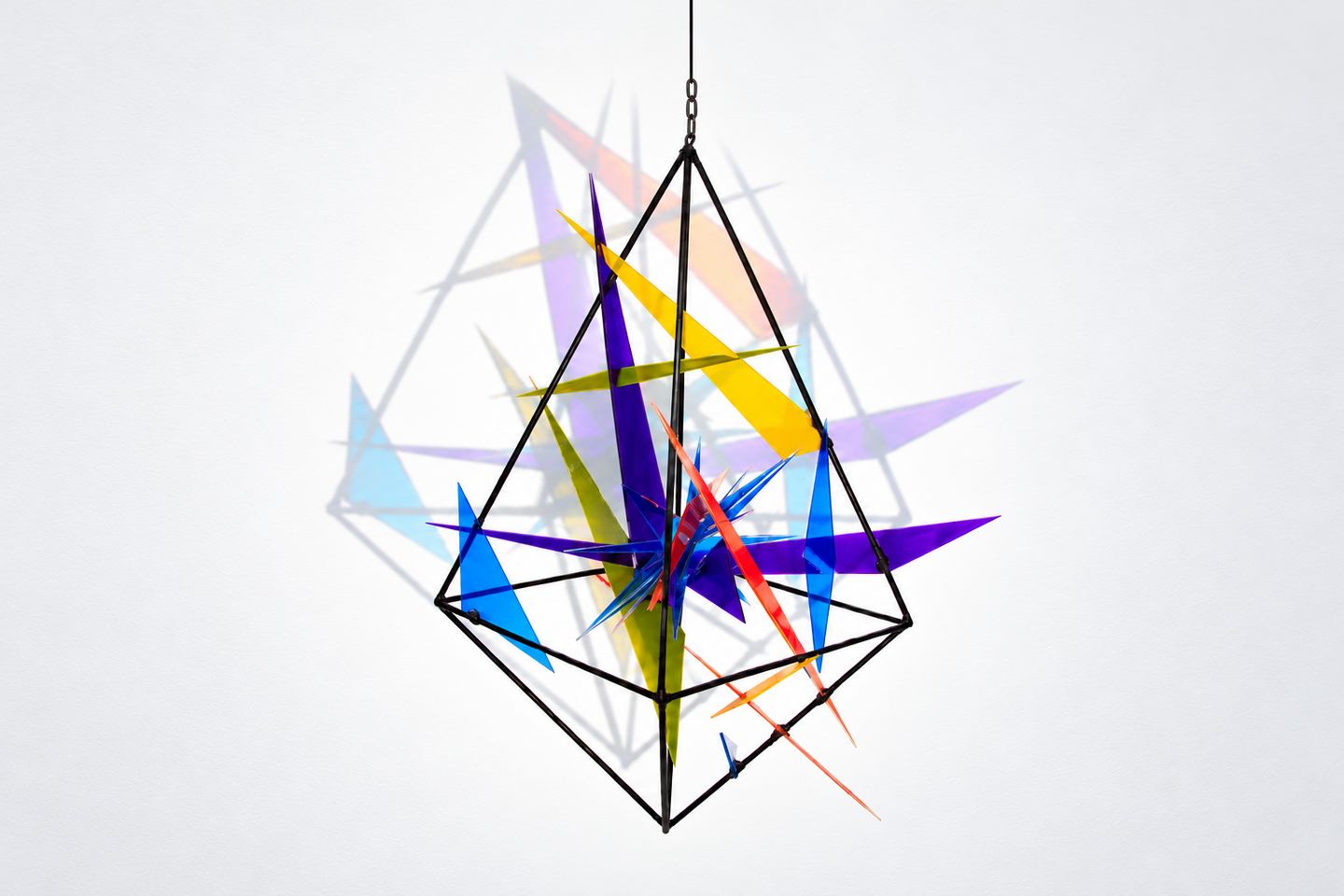
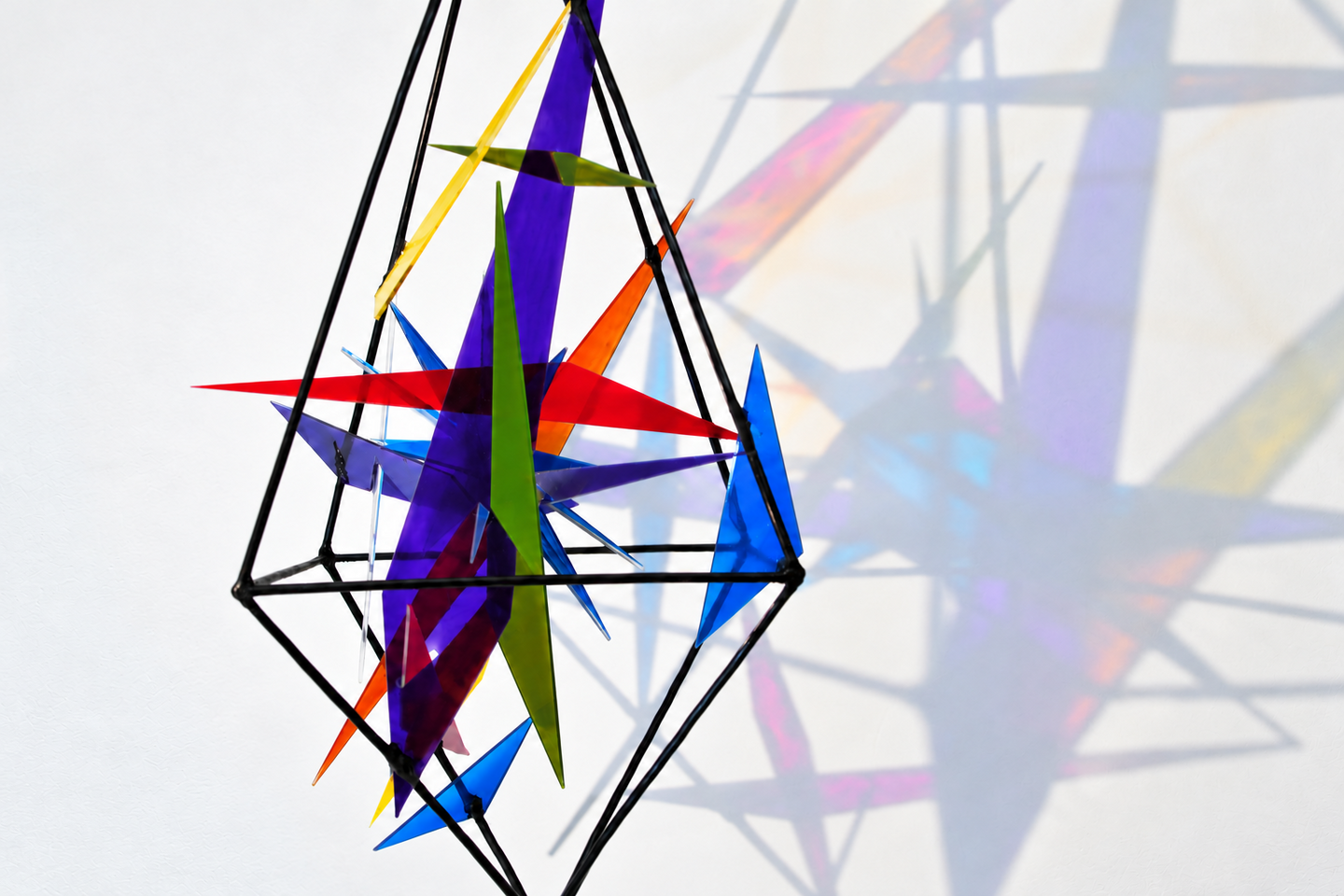
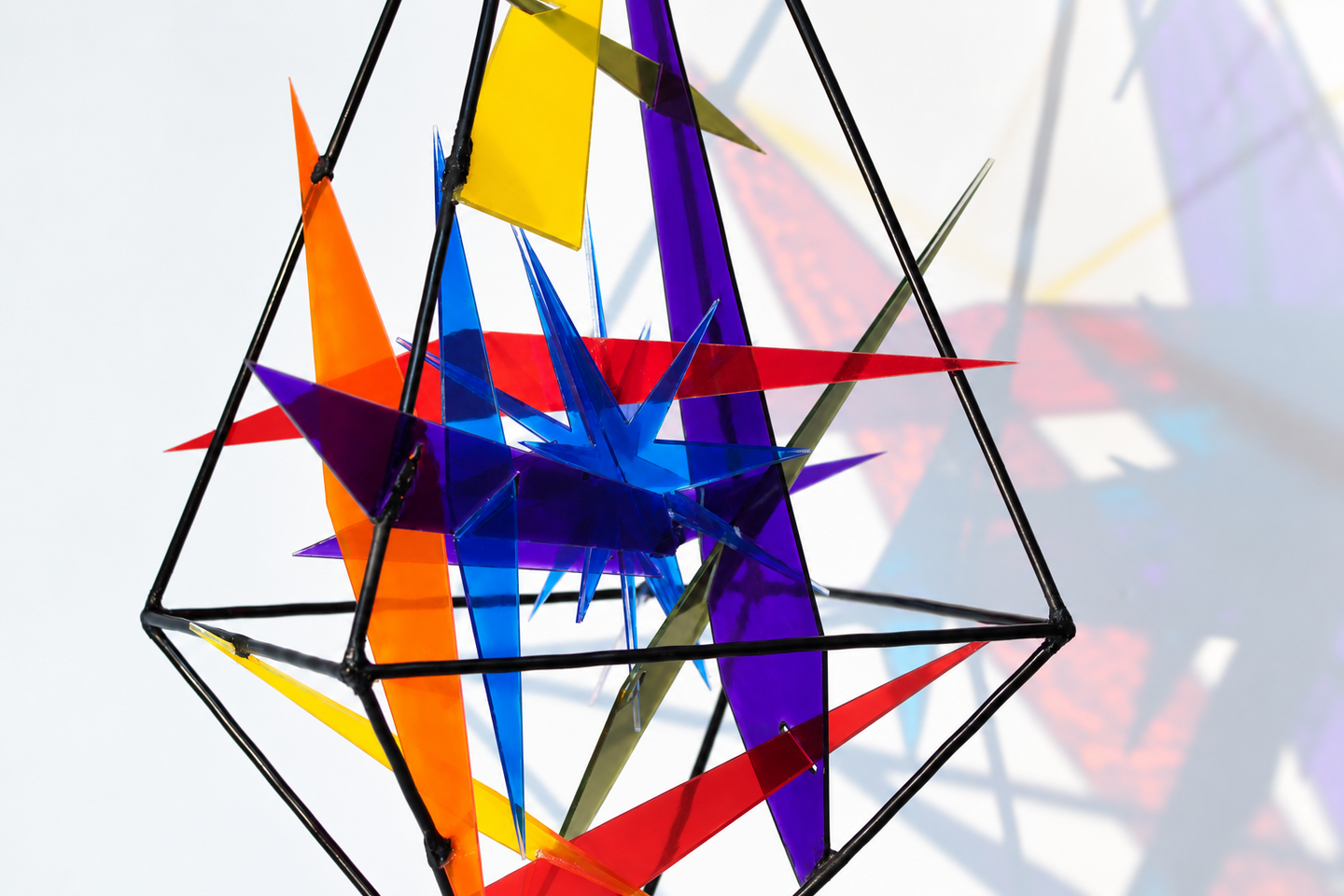
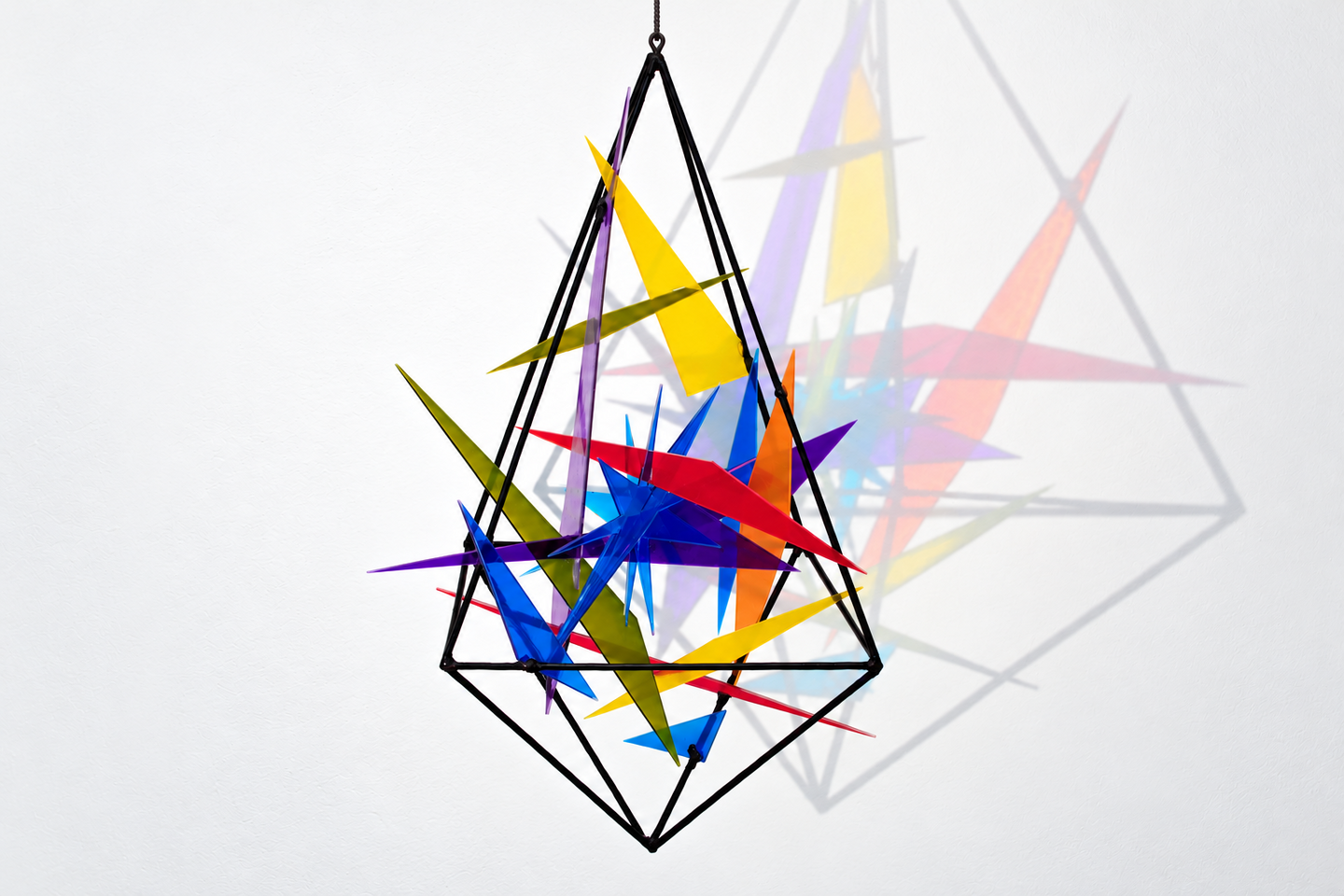
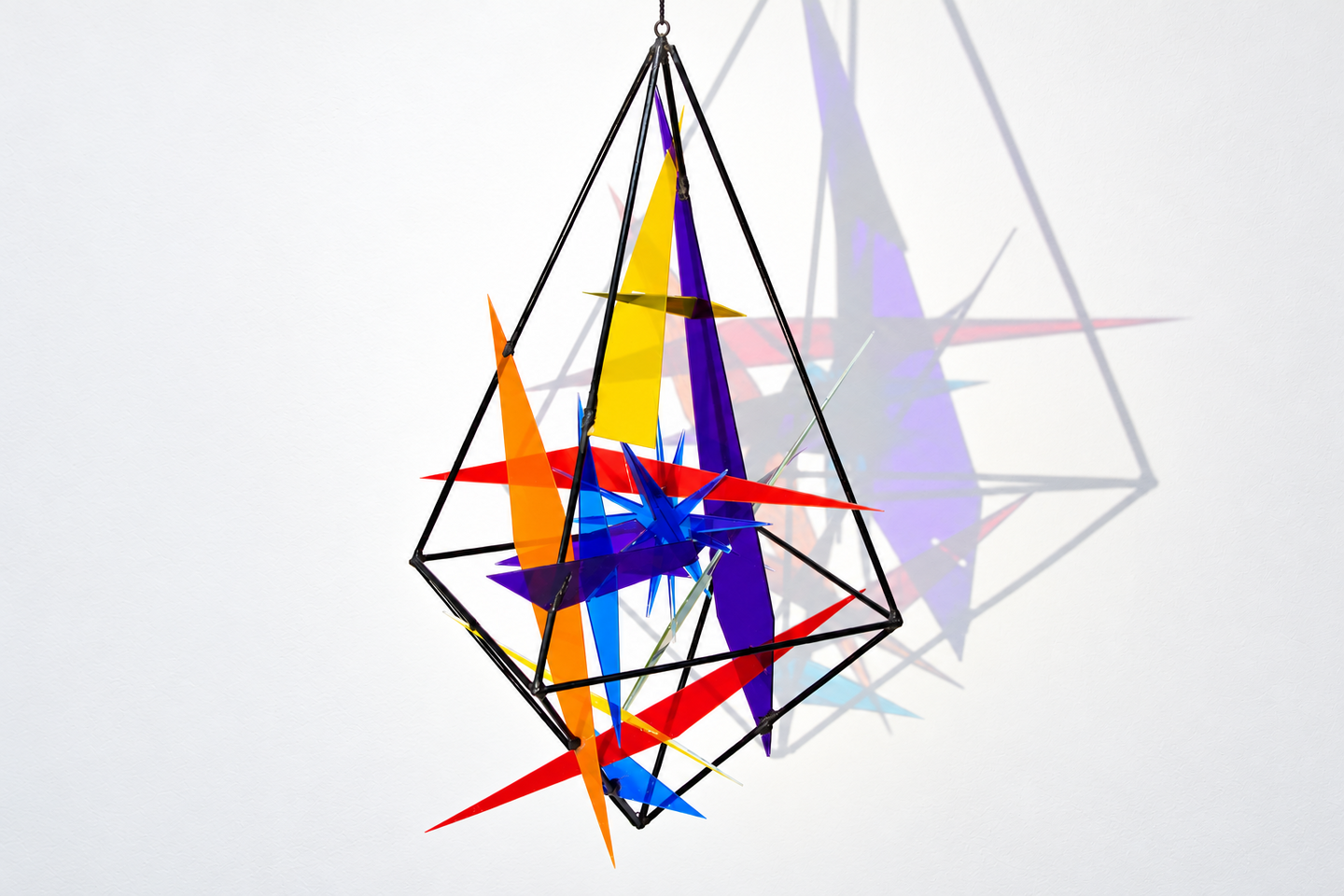
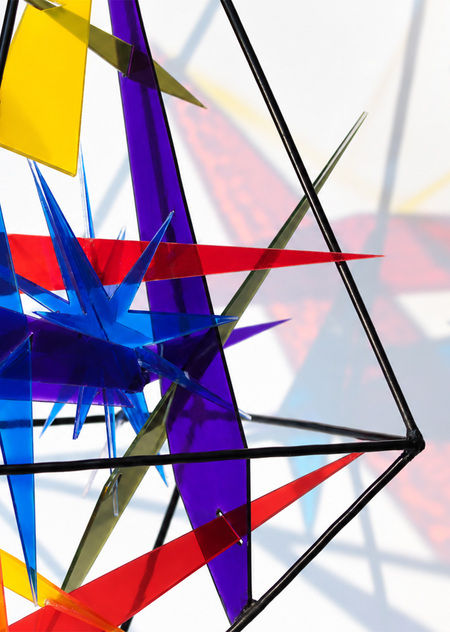
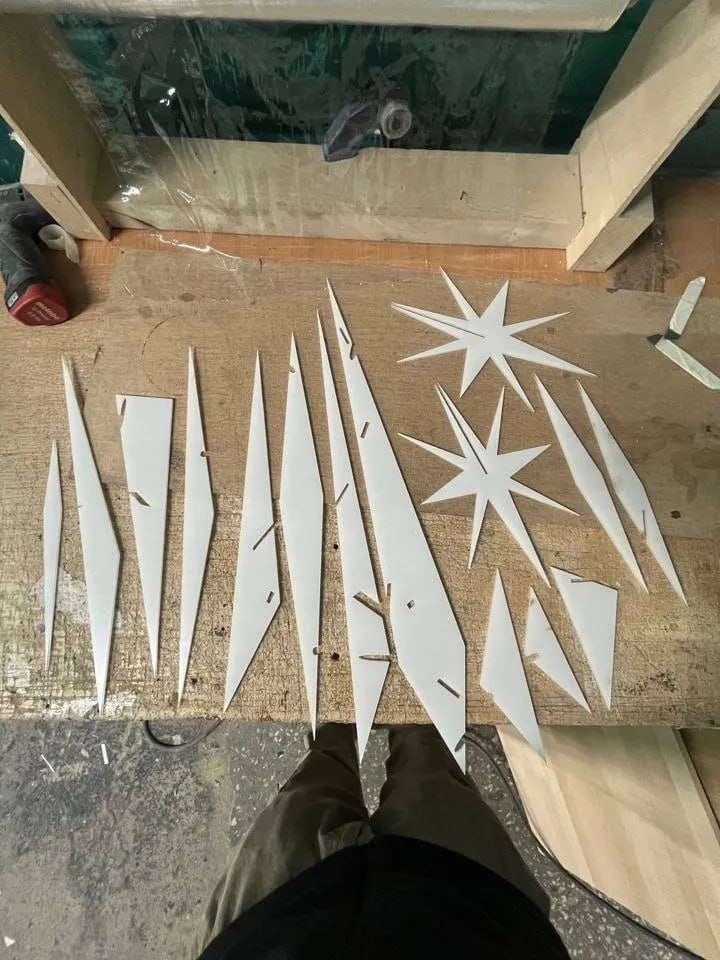
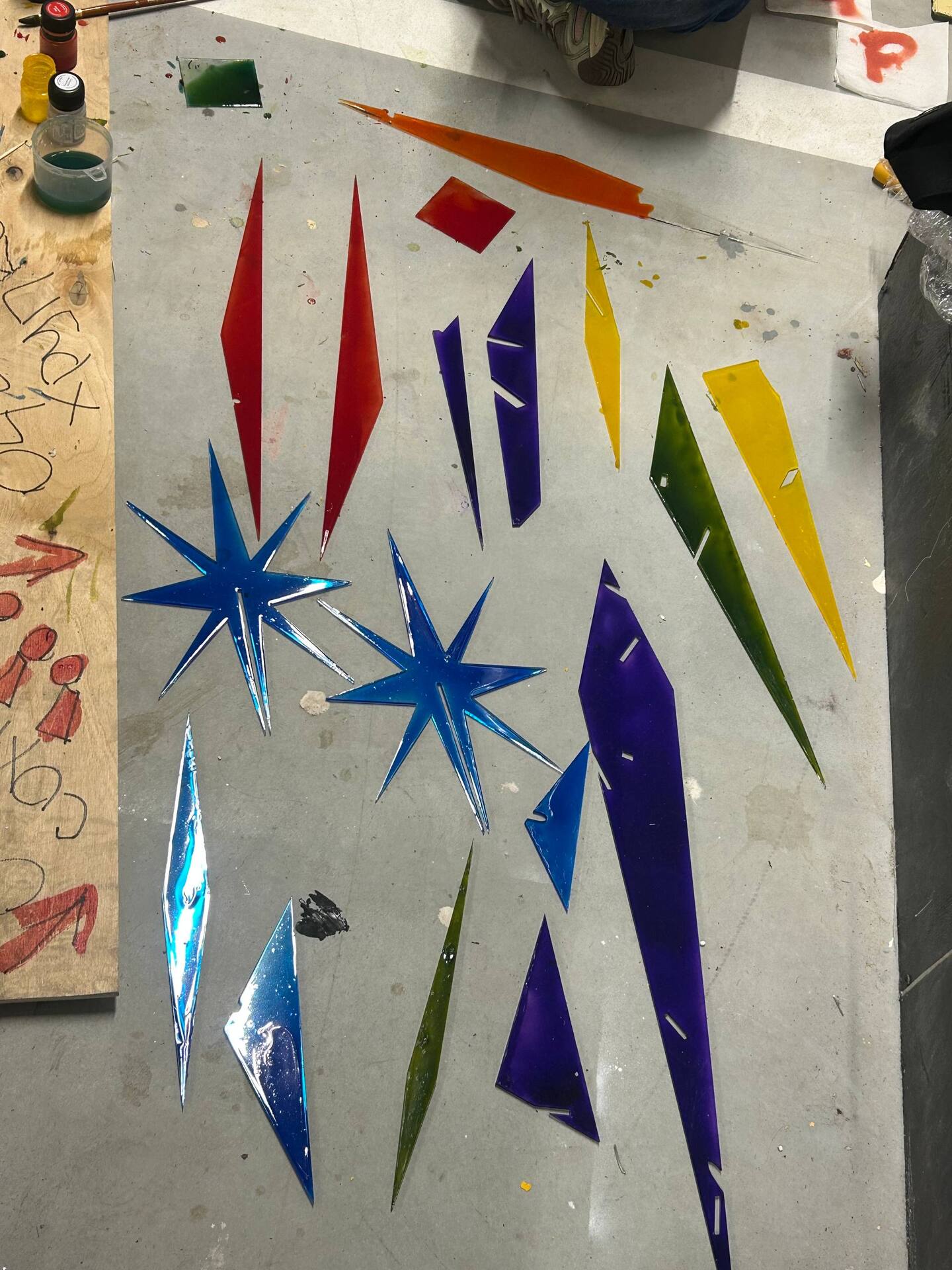
The art object takes the form of a teardrop-shaped frame containing translucent colored elements made of acrylic (3 mm).
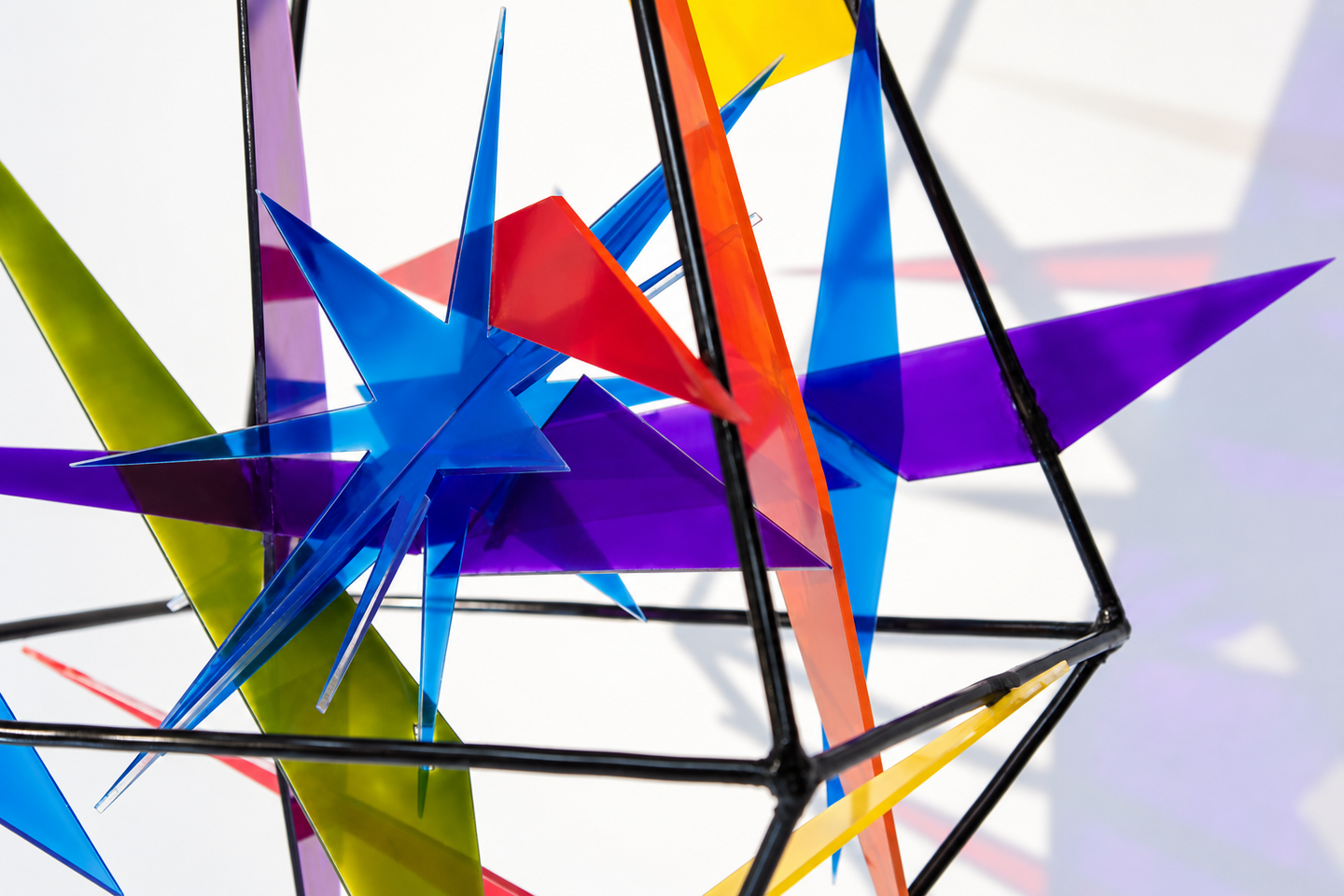
The core idea is to demonstrate the interaction of light and color in space. Light passes through the colored elements, which overlap to create new hues and color combinations.
The elements are positioned at various angles and distances from one another, meaning the composition is perceived differently depending on the lighting and the viewer’s perspective.
The object relates to the principles of Rayism, where the primary focus is not on specific objects, but on light, color, and their interaction. Here, these ideas are translated from painting into three-dimensional form.
Art Object Prototype
3D model of an art object
Dimensions and Materials of the Art Object
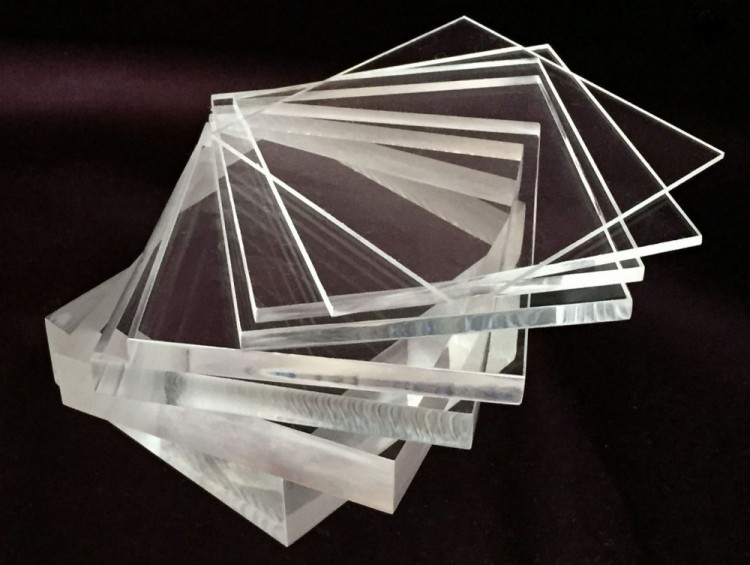
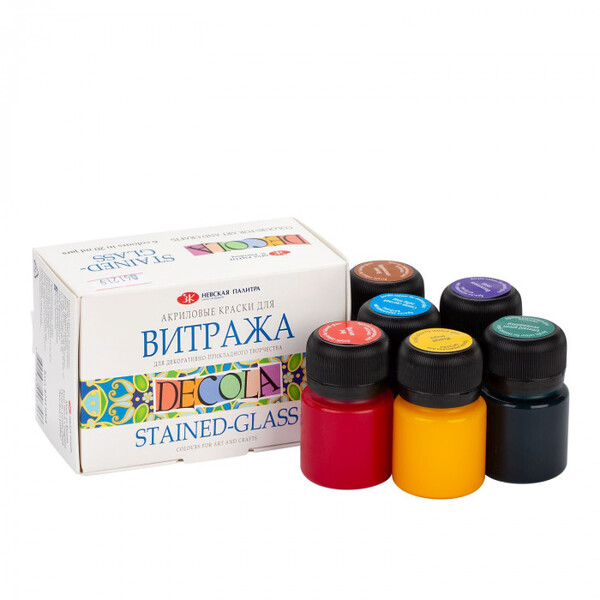
Materials: - acrylic glass - stained glass paints
Stages of Work
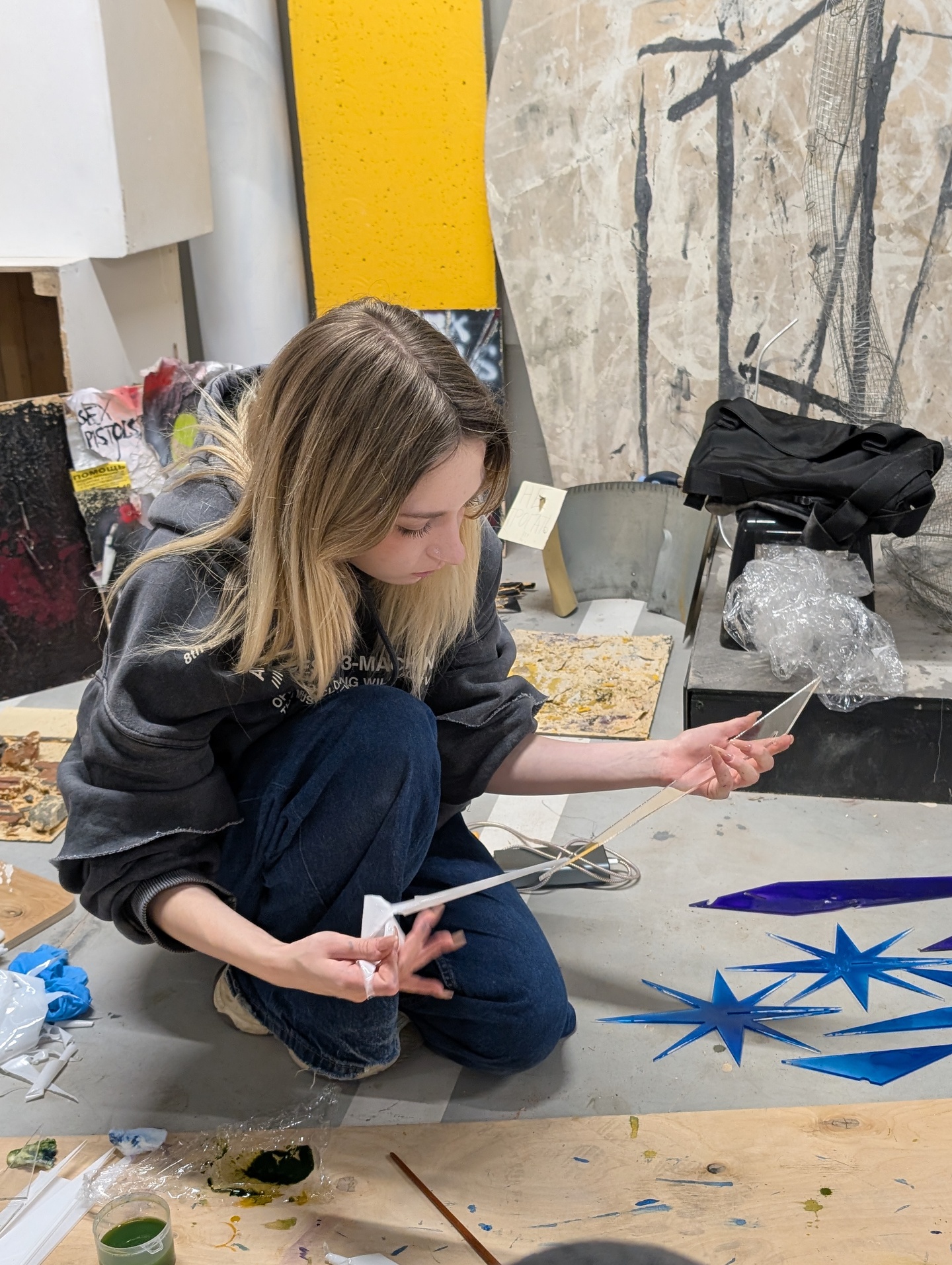
Art Object