Museums and galleries can often be uncomfortable. There are so many works, and attention gradually scatters—eyes and minds tire, and feet get tired. Sometimes, in front of certain pieces, you want to sit down and simply contemplate, but there is usually nowhere to sit. Are exhibition spaces accidentally uncomfortable for the body? My hypothesis is that galleries and museums need our perspective, but not necessarily our bodies, and that is why the body feels uncomfortable there. Over time, this has changed: bodies are no longer chased away, but restful spots are not available everywhere.
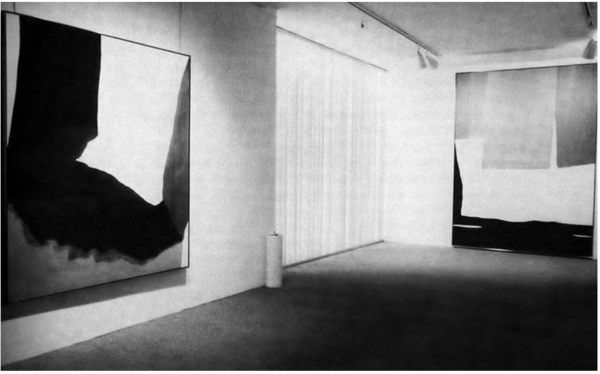
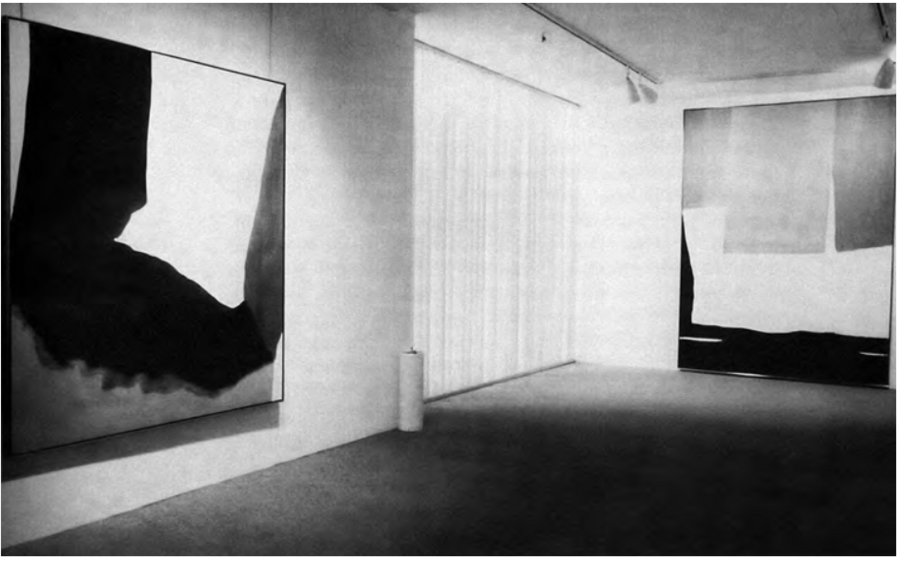
In his 1976 essay, Brian O’Doherty compares the gallery to a medieval temple: it is created «according to rules no less strict, ” segregated from the outside world, and only inside does art retain its „sacred status.“ In this space, „eyes and minds are welcome, but not bodies that take up too much space—they are tolerated only as kinesthetic mannequins.“ The gallery depicts eternity („to get in, one must already be dead“), while the body lives in time: it tires, gets distracted, and takes up space. O’Doherty notes that exhibitions are usually photographed empty: white walls, artworks, and no people. Such a photograph illustrates what the gallery wishes to be—a place where there is a gaze, but no body: „We view the exhibition without being in it.“
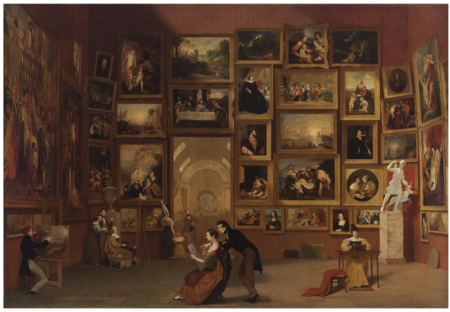
The Gallery Without Bodies—An Invention of Modernism: In Samuel Morse’s painting, the Louvre is full of copyists and visitors (Fig. 1), yet in the photograph of the Helen Frankenthaler exhibition in 1968, there is no one (Fig. 2).
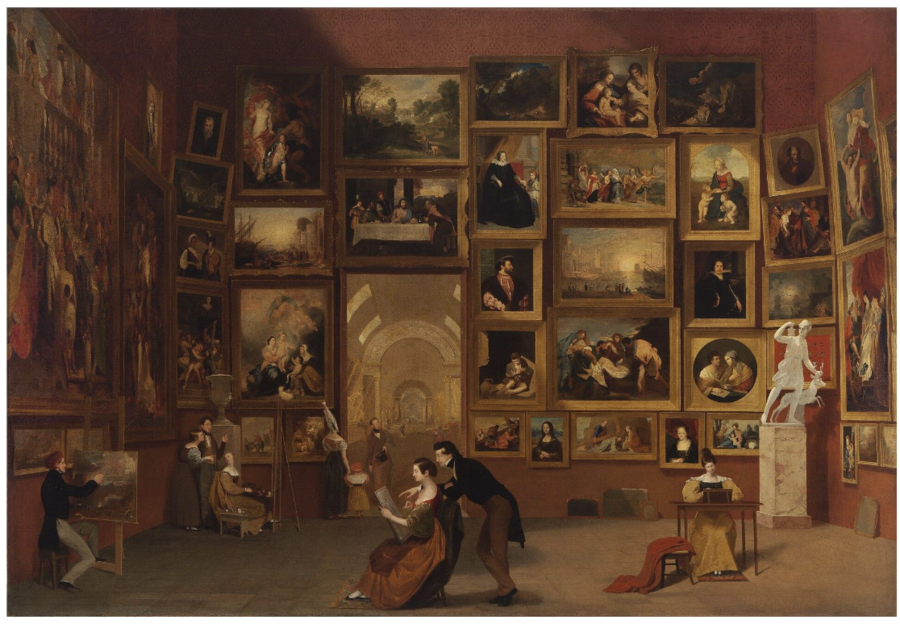
Morse, C. F. B. Exhibition Gallery in the Louvre. 1831–1833. Canvas, oil. 187,3 × 274.3 cm. The Terry Foundation for American Art, Chicago. — Image: Wikimedia Commons (see list of sources, No. 6).