Concept
The grand entrance doors in central St. Petersburg are disappearing—they are being replaced with metal and plastic doors, often without any attempt to preserve or replicate their original appearance. Blueprints and photographs of these lost doors are frequently unavailable, forcing restoration decisions to be made almost blindly.
Can a generative neural network help in such a situation?
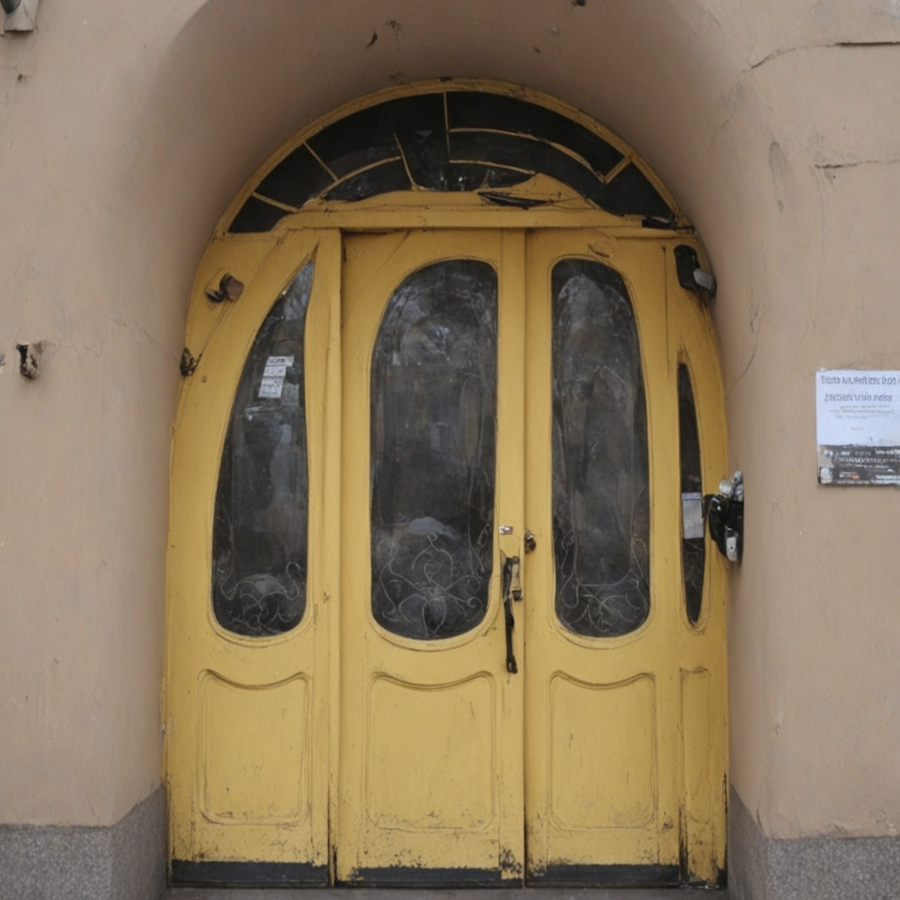
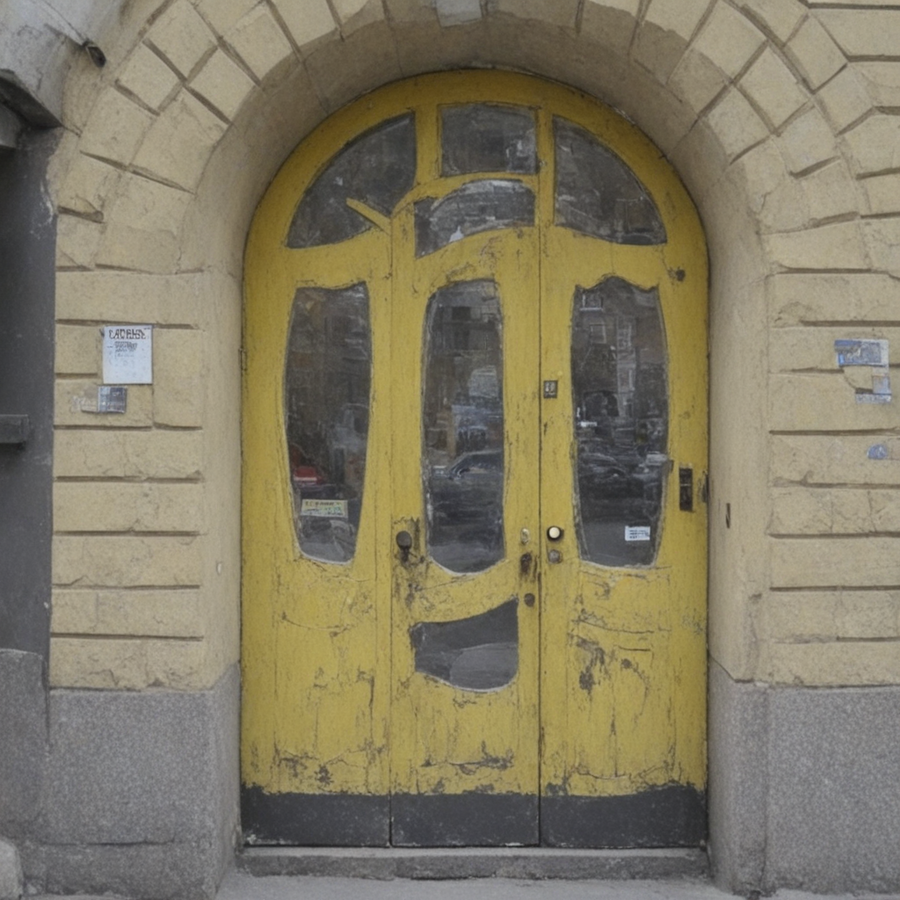
I am training Stable Diffusion on a dataset of 24 photographs of preserved St. Petersburg entrance doors from the late 19th to early 20th centuries. The model does not reconstruct a specific lost door, but it proposes plausible options structured according to the logic of the era. Therefore, the result should be viewed as a sketch for discussion, not as a reconstruction.
The final series consists of sketches of doors generated by the fine-tuned model. In the comments, I analyze which structural and decorative rules the model has assimilated and what these imperfections reveal about the limitations of the method.
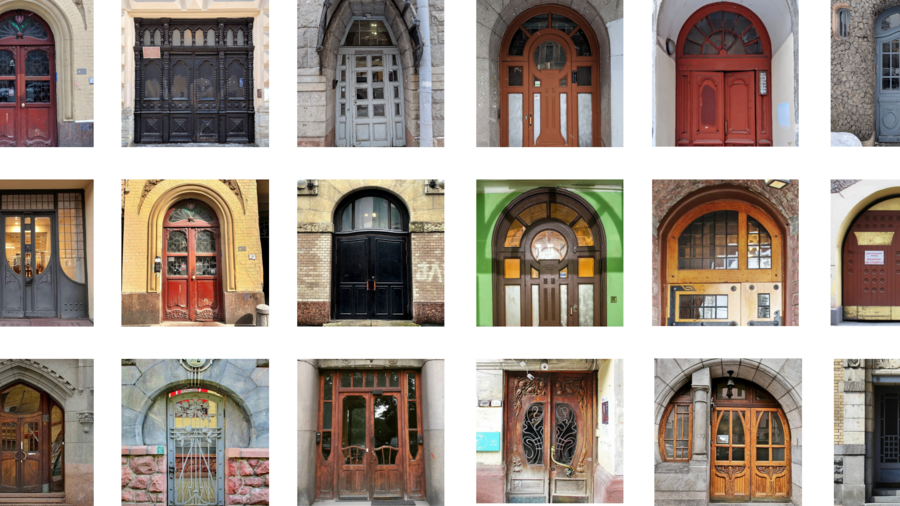
In the dataset, there are 24 photos of doors, each sized at 512 by 512 pixels.
Resulting Series
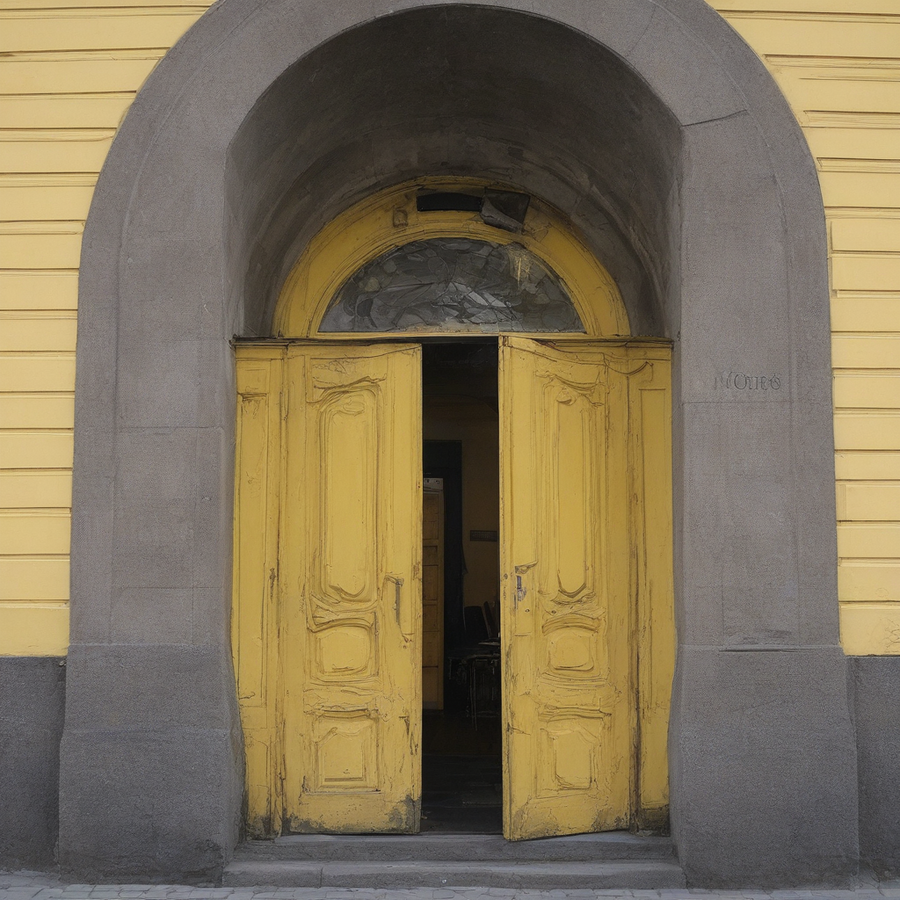
i. «a photo of an entrance door in the historical center of Saint Petersburg, a yellow door with dark-tinted glass»
Description of the generative model’s application
The following generative models were used in this project:
— Claude Sonnet 5.5 for thematic development and analysis of the resulting image series — Stable Diffusion XL for generating the resulting image series