Good evening, colleagues!
Today, I want to present my musical composition titled Secondbeat.
Let me tell you a little about its creation. The initial work on this track began during one of our sessions while I was completing a practical assignment involving an arpeggiator. Through experimentation, I developed several musical material variations. The first version, in my opinion, wasn’t entirely successful; however, the second turned out much more interesting and became the foundation for further developing the composition.
Initially, I planned to supplement the resulting musical foundation with percussion instruments to give the track a more conventional rhythmic structure. However, while working, I recalled SOPHIE’s composition «Is It Cold In The Water?» and considered that music doesn’t always need a traditional drum beat to establish an atmosphere or hold the listener’s attention.
As a result, I decided to slightly adjust the original concept, focusing specifically on the melodic and rhythmic development of the arpeggio while foregoing the use of drums.
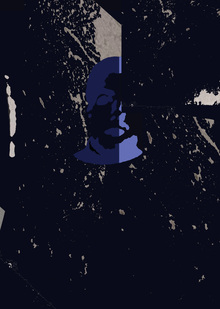
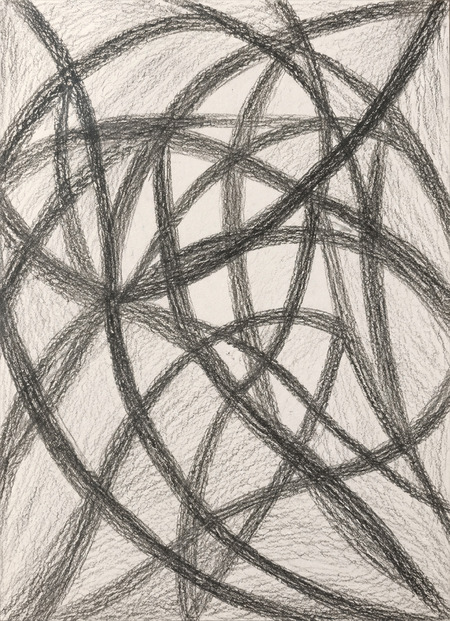
I paid special attention to the visual design of the composition. For the cover, I chose an abstract style reminiscent of neurography. In my view, this artistic choice perfectly reflects the character of Secondbeat: the intersecting, interwoven, and sometimes chaotic lines can be likened to the interaction of sound elements and repeating musical sequences in the track. Furthermore, the absence of a clear geometric structure or defined linear direction symbolizes the experimental nature of the composition—its movement and a certain unpredictability. I wanted the cover to do more than just accompany the music; I wanted it to visually convey its mood and idea.
Thus, Secondbeat became an experiment in musical expressiveness for me, one where the primary focus is on the sound itself, the sequence of notes, and the interaction of musical elements, rather than on a conventional rhythmic base.
I wanted to try exploring the musical idea in a different way and see how engaging a composition could be where the absence of drums becomes not a limitation, but a conscious part of the creative intent.